
Why your dental implant feels different than your natural teeth
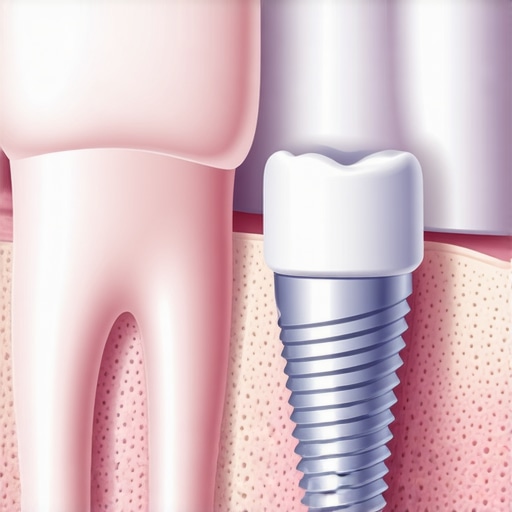
I remember the first time I sat down for a post-surgery dinner—a simple plate of pasta and a side of crusty bread. I took that first bite, expecting the familiar, springy sensation of my natural teeth. Instead, it felt like I was biting down with a tiny, porcelain-coated hammer. It wasn’t painful, but it was startlingly different. I spent the next three days convinced my body was rejecting the titanium, spiraling into a Google-fueled panic that I’d made a massive mistake in my journey toward a better smile. If you’ve just joined the ‘implant club,’ let me give you a virtual pat on the back and a dose of reality: your new tooth is going to feel weird for a while. Honestly, it is never going to feel 100% like the original equipment, but that is actually a good sign. Today, I am going to explain why that sensory gap exists and why it is proof your restoration is doing its job.
That Strange Muted Thud When You Chew
Most of us don’t realize that natural teeth are actually quite sophisticated sensors. They are suspended by a microscopic hammock of fibers called the periodontal ligament (PDL). When you bite something hard, these fibers act as shock absorbers and send a ‘hey, slow down!’ signal to your brain. This is exactly why your dental implant feels different than a natural tooth when you bite; an implant is fused directly into your bone. There is no hammock and no ‘give.’ It’s a solid, rigid connection. One major mistake I made early on was constantly ‘clicking’ my teeth together to see if the sensation would change. All I did was make my jaw sore. You have to accept that your brain is learning to interpret a new kind of feedback. You might even notice the reason your dental implant feels colder than your natural teeth during your morning coffee or while walking outside in the winter. Metals and ceramics conduct temperature differently than living pulp and dentin.
Is it normal for the tooth to feel like a piece of plastic?
It definitely can feel ‘dead’ compared to the others. Research published in the Journal of Oral Implantology notes that while natural teeth can detect pressures as light as 1 to 5 grams, dental implants often require nearly 50 grams of force before your brain registers the impact. This lack of sensitivity is why many people accidentally bite their cheek or tongue shortly after surgery. Have you noticed that strange, ‘hollow’ sound when you tap your teeth together? Let me know if that ‘clink’ is driving you as crazy as it drove me during my first month. Once you understand the mechanics, you can focus on the secret to making your dental implants last for the rest of your life rather than worrying about every tiny vibration. If you’re still in the early days of healing, keep a close eye on the specific sign your dental implant is rejecting, but remember that a lack of ‘feeling’ isn’t on that list—it’s just the new normal.
Relearn How to Eat Without Biting Your Cheek
Because your brain is missing that ‘tactile hammock’ we talked about, you essentially have to recalibrate your internal chewing map. For the first two weeks after my crown was placed, I felt like a toddler learning to use a fork. I remember sitting down with a medium-rare steak—my first ‘real’ meal—and I realized I was chewing with about 20% of my usual force. I had to consciously think about where my tongue was. If you rush this, you will end up with a sore jaw or a nipped cheek. Start by sticking to the best soft foods to eat right after getting a new dental implant like flaky fish, scrambled eggs, or well-cooked pasta. This isn’t just about protecting the implant; it is about giving your nerves time to stop panicking every time they feel that ‘clink.’ You might still notice why your dental implant feels hollow when you tap on it during these early meals, but that sound is actually a sign of successful osseointegration—the bone is so tight around the metal that it rings like a tuning fork.
Stop the Food Trap Before It Starts
One thing no one warns you about is the physical architecture of an implant. Natural teeth taper gently into the gum, but an implant is a post with a crown on top. This creates tiny ‘shelves’ where debris loves to hide. I spent my first month constantly poking at my gumline with a toothpick until my dentist told me I was doing more harm than good. You need to learn how to stop your dental implant from trapping food every time you eat by using specific angles when you brush. Instead of scrubbing back and forth, tilt your brush at a 45-degree angle toward the gumline. If you feel a sharp sensation, stop immediately; you might be seeing how to tell if your gums are receding from brushing too hard, which is a major risk for the metal post’s longevity.
Clean Your Implant Like a Pro
Traditional flossing is often insufficient for the unique shape of a restoration. When I first started using a water flosser, I was shocked at the pressure. It is completely normal to wonder why your gums throb after you use a water flosser for the first time, but that stimulation is actually helping the blood flow around the implant site. 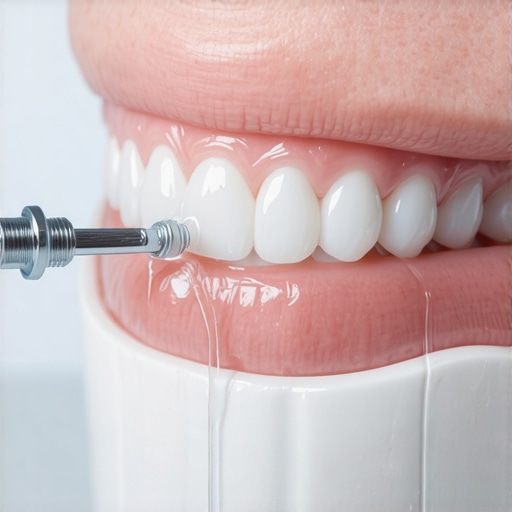 Use an interdental brush—those tiny little ‘tree’ brushes—to get into the gaps that a standard toothbrush misses. This is the secret to making your dental implants last for the rest of your life. If you let plaque sit at the base of the implant, you risk peri-implantitis, which is basically the ‘boss fight’ of gum disease. I make it a habit to use the water flosser on a low setting every single night before bed. It felt like a chore at first, but now that my implant feels like a permanent part of me, I wouldn’t skip it any more than I’d skip charging my phone.
Watch for the Vibration Warning Signs
While the ‘muted thud’ is normal, certain vibrations are not. If you feel a literal ‘wiggle’ when you chew, that is a red flag. I once thought my implant was failing because it felt ‘high’ when I bit down, but it turned out the crown just needed a microscopic adjustment. This is similar to how why your new zirconia crown feels taller than your other teeth—it only takes a fraction of a millimeter to throw your whole bite off balance. Don’t try to ‘tough it out’ or wait for it to wear down; porcelain and titanium are much tougher than your natural enamel and won’t just ‘settle’ on their own.Most people assume that when they get a crown, the goal is to find the hardest material available. It is the ‘diamond-is-forever’ mentality applied to dentistry. But here is the contrarian reality: if your crown is significantly harder than your natural teeth, it can actually act as a grindstone, wearing down the opposing tooth until you are left with a sensitivity nightmare. This is a critical nuance when choosing the right crown expert advice for long-lasting results. A restoration should mimic the wear characteristics of your natural enamel, not outperform it to the point of destruction. Research published in the International Journal of Prosthodontics confirms that the wear of antagonistic natural enamel is significantly higher when opposing certain types of monolithic zirconia. 
The High Spot Trap and Why Your Jaw is Panicking
The ‘Oops’ factor usually happens about three days after the chairside cement has dried. You feel a tiny ‘high spot’—perhaps it is only why your new zirconia crown feels taller than your other teeth when you bite down quickly. You might think it is best to just wait for it to ‘settle.’ That is the trap. Porcelain and zirconia do not settle; they are rigid. Your natural tooth just gets pushed deeper into its socket, causing ligament inflammation. If you have been wondering why your crown feels like it has a high spot only when you grind, it is because your jaw is desperately trying to find a comfortable resting position it no longer has.
Why Invisalign is More Than Just Clear Plastic
Similarly, many adults view Invisalign as a simple cosmetic tray system. However, the real heavy lifting in modern orthodontics is done by ‘attachments’—those tiny composite bumps on your teeth that the trays grip onto. If you are tempted by ‘at-home’ kits, you are missing the biomechanical control required for complex root movement. You might even find yourself searching for how to tell if your Invisalign trays are counterfeit if you bypass professional oversight. Truly understanding the hidden benefits of Invisalign for family dental care in 2025 means realizing it is about long-term joint health and bite alignment, not just the ‘social six’ front teeth. If you notice why your Invisalign attachments keep falling off on the same tooth, it is a sign of a mechanical conflict that needs expert adjustment, not something to ignore.
Can a Poorly Calibrated Bite Lead to Permanent Nerve Damage?
When a restoration is off by even a few microns, it triggers a cascade of issues. It often starts as a dull ache and can escalate to a point where the constant trauma actually kills the nerve, necessitating a root canal. Do not fall for the myth that persistent pain after the first week is just part of the process. It is your body’s alarm system. Consult the ultimate guide to crowns for a healthier smile to understand what a successful, balanced restoration should feel like. Have you ever fallen into the ‘it will just settle’ trap with a new dental restoration? Let me know in the comments.
The Gear That Actually Saves Your Gums
My bathroom counter looks like a miniature dental lab, but there is a logic behind every gadget I own. I transitioned to the Sonicare ProtectiveClean 6100 specifically because its pressure sensor is tuned to prevent mechanical trauma. This is essential for anyone who has worried about how to tell if your gums are receding from brushing too hard. When you have crowns or implants, the gum-to-restoration interface is the most vulnerable point for bacterial invasion. I also swear by GUM Proxabrush interdental cleaners. Unlike standard floss, these tiny brushes scrub the concave surfaces of teeth that floss simply skips over. This meticulous mechanical cleaning is the secret to making your dental implants last for the rest of your life. According to research published in the Journal of Clinical Periodontology, patients using interdental brushes show significantly lower indices of gingival inflammation compared to those using floss alone. If you are navigating an orthodontic journey, you should also master the trick to removing stubborn invisalign aligners without breaking a nail using an ‘ORTHOKey’ tool—it is a lifesaver for tight trays. 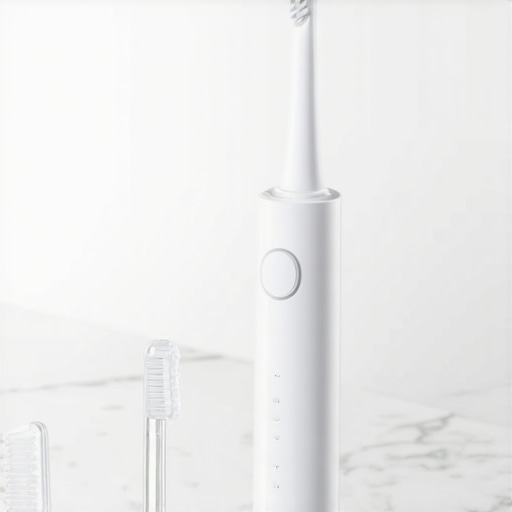
How do I maintain these expensive restorations over time?
Consistency is your only real insurance policy. For my Invisalign trays, I stopped using expensive proprietary crystals and moved to a simple, effective method: how to keep your Invisalign trays clear without buying expensive cleaners involves a basic daily soak that prevents that cloudy biofilm from forming. If you notice why your teeth feel furry only a few hours after brushing, it is a sign that your current technique is leaving behind a microscopic ‘pellicle’ layer where plaque thrives. I now use a high-alkaline mouthwash to neutralize my mouth’s pH after coffee, which protects the margins of my crowns from acid erosion.
Prepare for the AI Dental Revolution
Looking ahead, I predict a massive shift toward ‘Biometric Monitoring’ in home oral care. We are already seeing the first wave of the hidden benefits of Invisalign for family dental care in 2025, where AI-integrated apps analyze photos of your teeth to track movement and gum health in real-time. Soon, your toothbrush won’t just tell you how long to brush; it will likely detect chemical markers in your saliva that signal early-stage inflammation before you even feel a ‘throb.’ To stay ahead of the curve, I recommend adopting top oral health tips for your family’s bright smiles that prioritize preventive tech over reactive drilling. If your trays aren’t sitting perfectly, don’t just wait—learn how to seat stubborn invisalign trays using the munchie technique to ensure your bone is remodeling exactly as planned. My advanced tip for you this week: start using a ‘disclosing tablet’ once a month. These little purple pills dye the plaque on your teeth, showing you exactly where your brushing is failing around your crowns. It’s a humbling but necessary reality check for anyone serious about long-term oral health.
What I Learned After the Initial Panic Wore Off
After years of navigating the world of restorative dentistry, I realized that ‘different’ doesn’t mean ‘failed.’ The biggest mental hurdle is accepting that a titanium post or a zirconia crown is a high-performance tool rather than a biological replacement. You have to learn to trust the engineering behind the smile. I also discovered that the ‘adjustment period’ is more for your brain than your jaw; your neurological map is incredibly stubborn, and it takes time for it to stop flagging your implant as a foreign object. Finally, never wait for pain to visit your dentist. With modern restorations, the structure is so strong that the underlying bone or gum can be struggling long before the crown itself gives you a signal. It is about being proactive rather than reactive.
Tools That Actually Earned a Spot in My Cabinet
Maintaining high-end dental work requires more than a standard manual brush. If you are currently in clear aligners, an ‘ORTHOKey’ is non-negotiable; it is the trick to removing stubborn invisalign aligners without breaking a nail, especially when trays are brand new and tight. For my crowns and implants, I ditched standard string floss for a high-quality water flosser. It is completely normal to wonder why your gums throb after you use a water flosser for the first time, but that increased circulation is exactly what keeps the tissue firm around your hardware. I also transitioned to an electric brush with a dedicated ‘gum care’ mode because mastering the specific way to brush when you have gum recession is the only way to keep those expensive margins clean and protected for decades.
Take the First Step Toward Your Forever Smile
Embracing the future of dental care means moving beyond just fixing what is broken. Whether you are looking into family dentistry trends improving oral health for all ages or you are in the middle of choosing the right crown expert advice for long-lasting results, the goal is always the same: lasting confidence. Your oral health is the foundation of your overall well-being, and every step you take—from using your water flosser to seating your invisalign aligners properly—is an investment in your future. Don’t be afraid of the learning curve; the weird sensations of new crowns are simply the sound of progress. What was the most surprising thing you noticed during your first week with a new implant or crown? Let me know in the comments below!