
Stopping the sugar bug talk: Better ways to explain cavities to kids

I still remember the night I realized the “sugar bug” story was a total flop. My six-year-old was staring at me with wide, terrified eyes, refusing to let the toothbrush anywhere near her mouth because she was convinced there were literal, crawly insects living in her gums. I had tried to make it “fun” and “relatable,” but I ended up creating a miniature horror movie in my daughter’s bathroom. It was a classic parenting fail. I wanted to protect her teeth, but instead, I just made her dread the sink. We’ve all been there, trying to simplify complex dental concepts like why deep grooves trap food, only to realize our “simple” explanations are actually backfiring.
Stop Using Fear to Sell Brushing
The problem with the sugar bug narrative is that it’s based on a lie—and kids are smarter than we give them credit for. When we talk about “bugs” eating their teeth, we’re using fear as a motivator. Fear works for about three minutes until the kid realizes there are no visible monsters. Then, the trust is gone. Today, I’m going to show you how to pivot from scary stories to empowering facts. We’re going to talk about maintaining oral health with modern techniques that actually resonate with a child’s curiosity rather than their nightmares.
Is a simple name change really enough to change their habits?
You might be skeptical. After all, “sugar bugs” is a staple of parenting lore. But research suggests that clear, age-appropriate medical explanations actually reduce dental anxiety. According to the American Academy of Pediatric Dentistry, using “tell-show-do” techniques—where you explain the tool or process honestly—helps children feel in control. I made the mistake of thinking I had to “trick” my kids into health. The truth is, once I started explaining why sealants protect their molars as a “shield” rather than a “bug trap,” the resistance vanished.
The Reality of Explaining Tooth Decay
When we move away from the whimsical and toward the functional, we give kids a reason to care that lasts longer than a candy craving. Have you ever noticed your child’s eyes glaze over when you start the “sugar is bad” lecture for the tenth time this week? It’s because the connection isn’t tangible to them. We need to focus on what they can see and feel, like white spots on front teeth which are early signs of trouble, not invisible monsters. By treating them like capable little humans who can understand how their bodies work, we build a foundation for a lifetime of healthy smiles. Have you ever had a “sugar bug” explanation go horribly wrong in your house, or did it actually work for you?
Turn Your Child into a Dental Detective
To move away from fear, you have to move toward transparency. Last Tuesday, my youngest pointed to a dark area on her back tooth. Instead of jumping to the ‘sugar bug’ narrative, I grabbed my phone’s LED and we played ‘Dental Detective.’ We sat in front of the mirror and compared what we saw to professional guides to see how to tell if a dark spot is a cavity or just a deep groove. She wasn’t scared; she was fascinated. We found out it was just a stain, but the experience turned a potential panic attack into a science lesson. By letting her hold the light, I gave her the power. We spent ten minutes identifying the hidden spots most people miss while brushing their teeth, making it a game of accuracy rather than a chore of compliance. This hands-on approach changes the dynamic from a parent demanding a task to a team investigating health. It turns the bathroom from a battleground into a laboratory.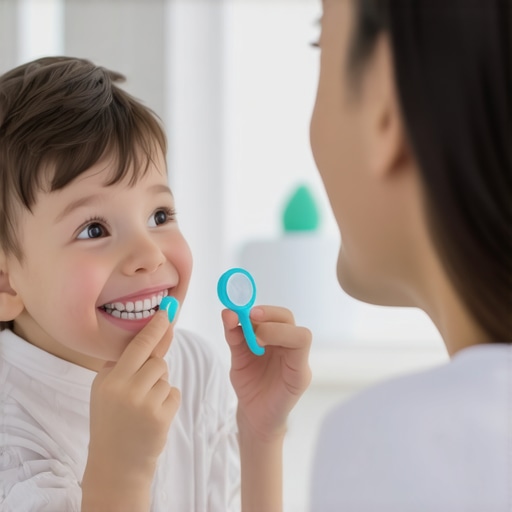
Why the Shield Approach Beats the Bug Story
When you talk about preventative care, use engineering analogies. Kids understand the concept of protection. When we discussed why your child needs a dental sealant on their molars, I didn’t mention decay. Instead, I explained that their new teeth have tiny canyons. We talked about why your childs new molars have deep grooves that trap food, and the sealant was simply a ‘smooth paved road’ that made it impossible for ‘crumbs’ to get stuck. This shift in language removes the shame of ‘getting a cavity’ and replaces it with the pride of ‘maintaining the equipment.’ Using family dentistry secrets for maintaining oral health with modern techniques means giving them the technical vocabulary to describe their own bodies.
Stop Hiding the Reality of Restorations
If your child or teen eventually needs a procedure, don’t sugarcoat it. When my son needed a restoration, we looked at the ultimate guide to crowns for a healthier smile together. I explained that a crown is like a custom-fitted helmet for a tooth that worked extra hard. By showing him the ‘before and after’ of how why crowns are a game changer in restorative dentistry, he saw the solution as a cool upgrade rather than a punishment for bad brushing. This honesty builds a bridge of trust that will last into their adult years.
Helping Teens Take Ownership of Their Smiles
As kids get older, the conversation naturally shifts toward aesthetics and long-term function. This is where modern tech really shines. For my teenager, we moved past ‘brushing better’ and started discussing how Invisalign transforms family dentistry in 2025. We sat down and addressed the common Invisalign myths debunked to ensure he understood the responsibility of wearing the trays. I didn’t make the decision for him; I provided the data. We even talked about the physical sensations he might expect, like why your teeth ache for the first two days of a new aligner tray, so he wouldn’t be surprised or discouraged. This level of detail makes the process predictable, and for a teenager, predictability is the antidote to anxiety.
I used to think that once a tooth was crowned, it was basically encased in a diamond-hard suit of armor for life. I wasn’t alone; most of my friends and even some of my patients in the early days believed that a crown meant that specific tooth was ‘done’ with decay forever. But here is the contrarian truth: a crowned tooth is actually more vulnerable to certain types of neglect than a natural one. While the porcelain or zirconia won’t rot, the margin—the tiny seam where the crown meets your gum line—is a magnet for plaque. If you treat it like it’s invincible, you’re essentially inviting a ‘hidden’ cavity to form underneath the restoration, which is why choosing the right crown expert advice for long-lasting results is about more than just the initial fit.
Your Crown Isn’t an Invincible Shield
The ‘oops’ factor here is assuming that the pain-free nature of a crowned tooth means everything is fine. Because the nerve is often protected (or removed via root canal), you might not feel a cavity developing at the base until the tooth structure is structurally compromised. I’ve seen beautiful work fail because the patient stopped focusing on top oral health tips for your familys bright smiles, thinking the job was done. It is a common trap to skip flossing around a restoration because it ‘feels different,’ but that’s exactly when you need to be most diligent. In fact, a study published in the British Dental Journal emphasizes that secondary caries at the margin is the leading cause of crown failure, proving that the ‘set it and forget it’ mentality is a dangerous myth.
Why does my new crown feel weird only when I bite down hard?
This is one of the most sophisticated nuances in restorative work. Often, a crown feels perfect during the day, but as soon as you eat something crunchy, it feels ‘off.’ This is frequently due to a ‘high spot’—a microscopic misalignment where the crown hits the opposing tooth a fraction of a second before the others. If you ignore this, the constant micro-trauma can bruise the ligament holding the tooth in place. You might even feel like your crown feels like it has a high spot only when you grind or chew. Getting this adjusted takes minutes but saves the tooth from long-term inflammation. It’s a classic case where ‘toughing it out’ actually causes more damage.
The Danger of Forcing Invisalign Progress
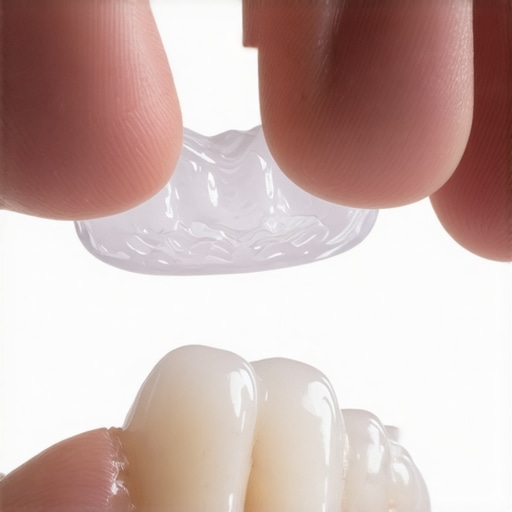
When it comes to alignment, there’s a common belief that ‘more pain equals more gain.’ I’ve had parents ask if their teen can switch trays every five days instead of seven to ‘speed things up.’ This is a recipe for disaster. Moving teeth is a biological process of bone remodeling, not just mechanical pushing. If you move a tooth too fast with excessive force, you risk root resorption—where the body actually dissolves the tooth’s own roots. This is why Invisalign myths debunked often focus on the science of ‘slow and steady.’ Pushing through the discomfort of a tray that hasn’t fully ‘seated’ yet can lead to permanent mobility issues. Instead of force, we use tools like the munchie technique to seat stubborn Invisalign trays, which uses gentle, consistent pressure to guide the tooth without trauma.
We have to stop looking at dental work as a product we buy and start seeing it as a relationship with our own biology. Whether you are looking at why crowns are a game changer in restorative dentistry or starting a clear aligner journey, the nuance is always in the maintenance. Have you ever fallen into the trap of thinking a dental fix was ‘indestructible’ only to be surprised later? Let me know in the comments.
The Toolbox That Keeps My Family Out of the Chair
I used to think a toothbrush and some generic floss were enough to keep my family’s dental health in check, but experience has taught me otherwise. When you have kids with deep grooves in their teeth or a teenager going through orthodontic work, you need specialized equipment. My absolute game-changer has been the water flosser. Most people use it once and quit because they end up soaking their bathroom mirror, but once you learn the trick to using a water flosser without making a total mess, it becomes indispensable for cleaning around crown margins and aligner attachments. I personally use it on a medium-pressure setting to ensure I’m flushing out the sulcus—that tiny pocket between the tooth and the gum—where traditional floss often misses the mark. It’s about being precise with your maintenance so that you aren’t paying for it later.
How do I make my dental work last a lifetime?
The secret isn’t just in the brushing; it’s in the data. In my house, we’ve moved toward a ‘preventative-first’ mindset. This means we don’t wait for a toothache to investigate a problem. We rely on what a 3D CBCT scan reveals, as these scans show bone density and root health that standard 2D X-rays can’t capture. This level of detail is why I’m such a proponent of maintaining oral health with modern techniques. If you can see a problem forming in three dimensions, you can stop it before a drill ever needs to touch the enamel. Whether it’s monitoring the hidden spots most people miss while brushing their teeth or checking the integrity of an old restoration, the tech makes the difference between a simple fix and a major procedure.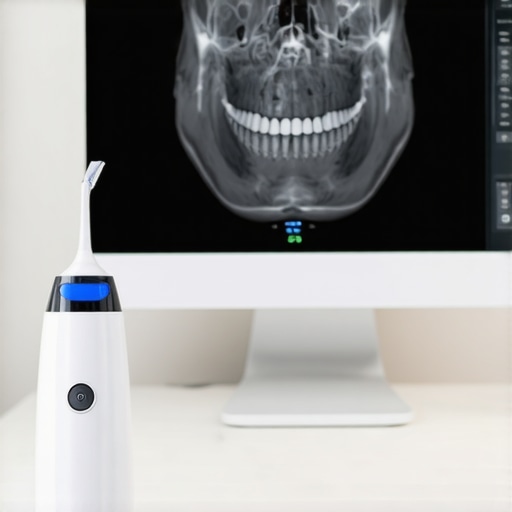
The Future Is Already Inside Your Mouth
I’m often asked where dental technology is headed, and the answer is clearly AI-driven diagnostics. We are already seeing software like Align Technology’s ClinCheck, which uses complex algorithms to predict tooth movement with terrifying accuracy. According to a study published in the Journal of Oral Rehabilitation, the use of predictive modeling in clear aligner therapy has reduced treatment times by up to 30% in some cases. This is why staying updated on Invisalign innovations and the future of family dentistry is so vital. We aren’t just guessing anymore; we are engineering smiles. In the next five years, I expect we will have at-home scanning apps that alert you the moment your crown margin shows signs of wear or when your Invisalign trays are turning yellow due to bacterial buildup, prompting a deep clean before it affects your health.
Commit to the Small Wins Every Single Day
Long-term results come from the boring, repetitive tasks. If you have a teen in aligners, don’t let them just ‘pop’ the trays in. I recommend they use a physical seater every single night. If you want to see progress, you have to use the munchie technique to seat stubborn Invisalign trays effectively. It ensures the plastic is fully engaging the tooth, which is the difference between a treatment that finishes on time and one that drags on for years. The same goes for restorations; knowing how to choose the right crown expert for long-lasting results is only half the battle—the other half is your daily commitment to the tools. My advanced tip for today: Try using an interdental brush dipped in a non-alcohol mouthwash once a week to specifically target the areas around your dental work. It’s a five-minute habit that can save you thousands in replacement costs.
Three Lessons I Learned After the Sugar Bug Fiasco
Reflecting on my journey from scare tactics to science-based parenting, I realized that the most powerful tool isn’t a toothbrush—it’s trust. First, I learned that transparency always wins; kids can handle the truth about how decay works when we frame it as biology rather than a battle. Second, consistency is more important than perfection. A missed floss on a Tuesday isn’t a disaster, but a lack of a system is. Third, I discovered that modern technology makes dental care fascinating rather than frightening. By moving away from myths and toward family dentistry secrets for maintaining oral health, we shifted the focus from ‘fixing’ problems to ‘optimizing’ our health.
#IMAGE_PLACEHOLDER_E#
The Essential Kit That Keeps My Family Out of the Dental Chair
I’ve curated a small but effective toolbox that has drastically reduced our time in the waiting room. We rely heavily on specialized tools that address the specific needs of our growing kids. For instance, I trust our 3D imaging results because I’ve seen what a 3D CBCT scan reveals compared to old-school films. To keep our daily routine efficient, we’ve mastered the trick to using a water flosser without making a total mess, which is vital for cleaning those tight spaces around dental work. For my teen, we don’t settle for ‘good enough’ alignment; we ensure he knows how to use the munchie technique to seat stubborn Invisalign trays properly every night. These tools provide the accuracy that manual brushing simply can’t match.
Building a Foundation for a Lifetime of Smiles
Your journey with your family’s oral health is a marathon, not a sprint. By embracing the hidden benefits of Invisalign for family dental care in 2025 and other modern advancements, you are doing more than just preventing cavities; you are teaching your children to respect and care for their bodies. It’s about creating a culture of health where the dentist’s office is a place of partnership, not a place of fear. Start today by applying these top oral health tips for your family’s bright smiles and watch how their confidence grows alongside their healthy teeth. What is one dental ‘myth’ you grew up believing that you’re finally ready to let go of? Let me know below.