
Why your teeth ache for the first two days of a new aligner tray
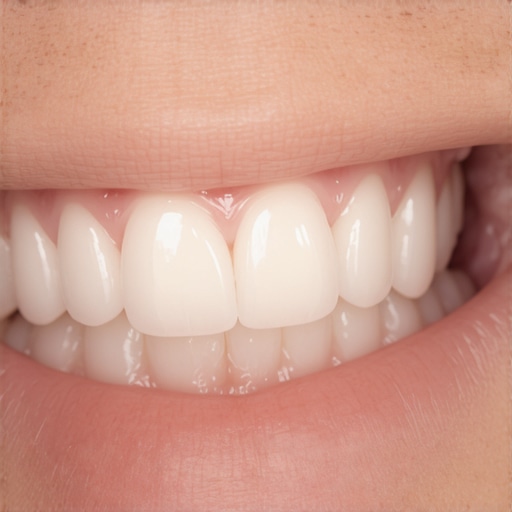
I will never forget the night I transitioned to my second set of trays. I was so excited to be moving forward with my smile that I snapped them in, brushed my teeth, and went to bed thinking I was a total dental pro. Fast forward to 2 AM, and I was wide awake, convinced my teeth were trying to stage a coup. It wasn’t just a little tightness; it was a dull, throbbing ache that made me regret every decision leading up to that moment. If you are sitting there right now with a fresh tray in your mouth, wondering if you have made a huge mistake, I have been exactly where you are. Early on, I made the rookie mistake of trying to eat a crunchy granola bar on Tray Change Day, and let us just say my jaw did not forgive me for hours. Today, I am going to help you get through those first 48 hours without losing your mind.
The Science Behind the Squeeze
That intense pressure you feel isn’t just a design flaw; it is actually the sound of progress. When you put in a new aligner, it is designed to be slightly different from your current tooth position. This mismatch is what forces your teeth to migrate. According to the American Association of Orthodontists, this process triggers bone remodeling, where the bone around your teeth temporarily softens so they can move into their new home. It is fascinating, but it hurts! This is why many people find themselves debunking myths about how comfortable these trays really are. If you are struggling to get them to stay put, you might need to learn how to seat stubborn trays properly to ensure the pressure is distributed evenly. Have you ever been tempted to leave your trays out for an extra hour just to catch a break from the pressure?
Is This Level of Pain a Sign Something is Wrong?
It is the number one question I get from friends starting their journey. The short answer is usually no, but there is a difference between good pressure and bad pain. If you are feeling a constant, dull ache that subsides after a day or two, you are right on track. During this window, you really should stick to soft foods that won’t irritate your sore jaw. However, if you notice sharp, stabbing pains or sores that won’t heal, it might be time to check in with your provider. For most of us, though, it is just the price of admission for a straighter smile. In the next few sections, I will show you exactly how I hacked my routine to make those first two days of a new tray feel like a breeze instead of a battle.
Swap Your Trays Right Before Bed
The single best piece of advice I can give you is to time your tray changes perfectly. Instead of popping a new set in at 10 AM and feeling the pressure build all day, wait until right before you hit the pillow. This gives your teeth a solid eight hours to adjust while you are unconscious. I remember when I started Tray 7; I was impatient and swapped them at lunch. By 4 PM, I was so distracted by the ‘tightness’ that I couldn’t focus on my work. Now, I make it a bedtime ritual. By the time I wake up, the initial ‘teeth-moving shock’ has mostly subsided, and I can actually function.
Chew Your Way to a Better Fit
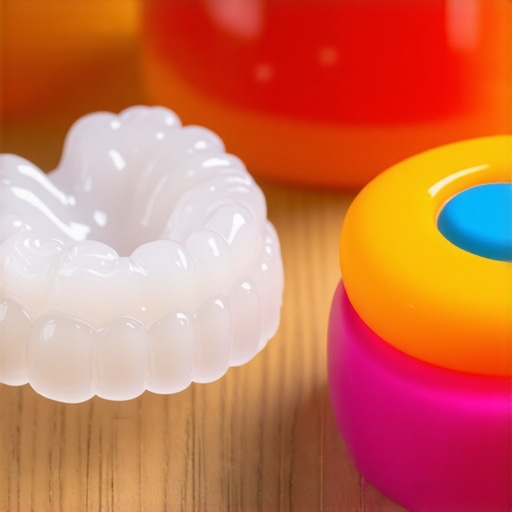
Sometimes the tray doesn’t sit perfectly on its own, especially if you have complex movements. Think of it like trying to put a tight lid on a plastic container—if one corner is up, the whole thing feels off. This is where ‘Munchies’ or chewies come in. You bite down on these silicone cylinders to push the tray firmly onto your teeth. I learned how to seat stubborn trays properly early on because my lateral incisors just wouldn’t track. If you don’t seat them, the pressure isn’t even, and that is when the real discomfort starts. I remember a frantic Sunday morning when I lost my chewie and my tray felt like it was floating. I ended up using the edge of a clean silicone spatula to get that satisfying ‘snap’ into place. It sounds silly, but that full engagement of the tray is the difference between a dull ache and a sharp, nagging annoyance.
Pick Your Menu Like a Toddler Would
For the first 24 to 48 hours of a new tray, treat your jaw like it’s on vacation. You want to avoid anything that requires significant biting force. Imagine trying to hammer a nail into a wall that is still wet—that is your tooth root right now. Stick to soft foods that won’t irritate your sore jaw, such as Greek yogurt, mashed potatoes, or protein shakes. I once tried to eat an apple on a fresh tray day, and the ‘zing’ I felt when I bit down was enough to make my eyes water. It felt like my teeth were loose in their sockets. If your gums feel extra tender during this transition, a quick saltwater rinse hack for immediate gum relief can work wonders for reducing inflammation. This is especially helpful if you are also juggling other hardware like crowns which can sometimes feel more sensitive when aligners are exerting new force.
How to Handle Those Sharp Plastic Edges
Occasionally, a new tray might have a tiny manufacturing burr that feels like a razor blade against your tongue. Don’t suffer through it. You can find the simple fix for a sharp Invisalign edge by using a clean nail file to gently smooth the offending spot. I keep a dedicated glass file in my dental kit just for this reason. One night, a sharp edge on Tray 12 was making it impossible to talk without a lisp. Two seconds of buffing the plastic edge, and the irritation was gone. It is a small tweak that prevents a weekend of mouth sores and lets you stay consistent with your wear time.
Beyond the physical comfort of the plastic, there is a deeper layer of oral health that most patients—and even some general practitioners—frequently gloss over. We often talk about ‘straightening’ as a cosmetic finish line, but the real biological work happens within the bone, and that is where the most common expertise-level mistakes occur. One of the biggest ‘oops’ factors I see is the dangerous assumption that if a tooth does not hurt, it must be healthy. This is especially risky when it comes to complex restorative work. You might think you are out of the woods once a procedure is done, but choosing the right crown expert advice for long-lasting results is about more than just the immediate fit; it is about the long-term biological response of your gingival tissue and jawbone.
The Retention Trap You Need to Avoid
Everyone says the goal is to reach that last tray, but in my experience, the ‘retention phase’ is actually the most volatile part of the entire process. There is a common, yet flawed, belief that your teeth are ‘set’ the moment you finish your final active aligner. This is a total myth. Research often cited in the Journal of Clinical Orthodontics suggests that the periodontal ligaments and the bone surrounding the teeth remain in a state of flux for many months after active movement stops. If you skip your retainer even for a few nights during this critical window, you are not just losing progress; you are fighting against the body’s natural tendency to return to its original ‘crowded’ state. This is why deciding on Invisalign vs braces which solution fits your lifestyle should involve a very serious conversation about your commitment to the ‘aftercare’—because the trays are only 50% of the battle for a permanent smile.
Why Your Crown Might Fail Without Any Pain
Another common trap people fall into is the ‘no pain, no problem’ mentality regarding older dental work. When you have a restoration, it is remarkably easy to forget it is even there. However, if your new zirconia crown feels taller than your other teeth, it is not just a minor annoyance; it is a significant mechanical imbalance. Over several months, this micro-trauma can cause the underlying tooth to become chronically inflamed. By the time you finally feel a throbbing sensation, the internal damage might have progressed to the point of requiring a root canal. It is far better to have a dentist adjust the bite early on than to wait for a biological alarm bell that sounds way too late.
When a Standard X-Ray Just Is Not Enough
We live in an era of incredible dental technology, but even the best tools have hidden nuances. While many offices still rely solely on 2D bitewings, understanding what a 3D CBCT scan reveals that standard x-rays miss entirely can be a total game-changer for complex cases. For example, a 3D scan can identify ‘silent’ infections in the jawbone or hidden canals in a tooth root that a flat X-ray simply cannot detect. If you are dealing with persistent discomfort that your dentist cannot explain, asking for a more detailed imaging profile is the true expert move. 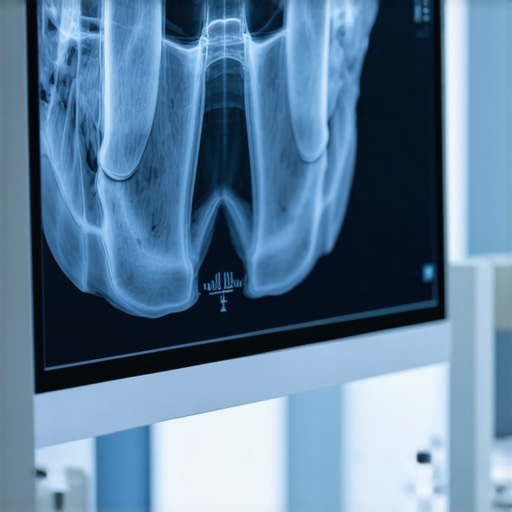 This level of diagnostic precision is part of how we are currently debunking myths about dental health being a ‘one size fits all’ experience. Have you ever fallen into the trap of ignoring a small dental issue only for it to turn into a weekend emergency? Let me know in the comments below!
Stop Scrubbing and Start Vibrating
For the longest time, I thought a stiff toothbrush and some elbow grease were the gold standard for keeping my aligners clear. I was dead wrong. Manual scrubbing actually creates micro-abrasions in the plastic, which become tiny apartments for bacteria to move into. This is exactly why your invisalign trays are turning yellow even with regular cleaning. I eventually invested in a dedicated ultrasonic cleaner—specifically the Zima Dental Pod. It uses high-frequency sound waves to create cavitation bubbles that blast debris off the trays without scratching them. If you’re not ready for the gadget, at least try the vinegar soak that safely sanitizes your retainers and guards to keep things fresh. It’s a low-tech hack that saved my sanity during Tray 20 when things started looking a bit murky.
How do I keep my smile looking new for decades?
Maintenance is not a ‘set it and forget it’ situation, especially when you have restorative work like crowns. I’ve learned that the margin where the crown meets your natural tooth is the most vulnerable spot in your entire mouth. To protect this, I transitioned to the Modified Stillman brushing technique. Instead of just scrubbing back and forth, you angle the bristles 45 degrees toward the gum line and use a vibrating, rolling motion. It’s a game-changer for blood flow and prevents the recession that leads to those ugly black lines at the gum. If you’re struggling with hardware, knowing how to clean a dental bridge without those annoying threaders can also save you ten minutes every single night.
The Water Flosser is Your Best Friend
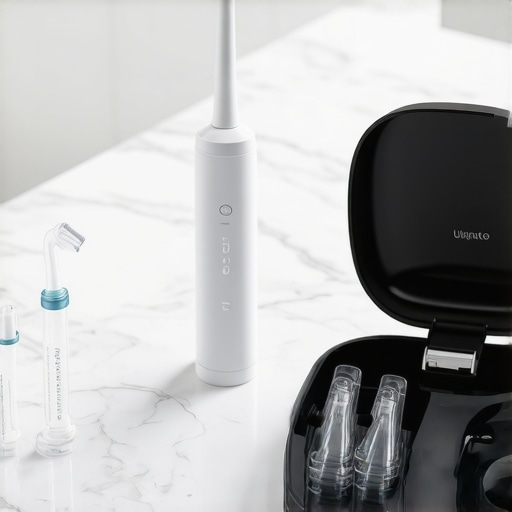
I used to be a total floss-hater until I realized that traditional string can be a nightmare around permanent retainers or tight contact points. However, a water flosser is only effective if you use it right. Most people spray their tongue or the ceiling by accident, so you really need to master the trick to using a water flosser without making a total mess. I personally use the Waterpik Aquarius on setting six—it’s powerful enough to dislodge anything but gentle enough not to irritate my gums. This is vital for long-term oral health with modern techniques because it flushes out the ‘biofilm’ that a toothbrush simply cannot reach. According to research published in the Journal of Prosthetic Dentistry, the longevity of a restoration is directly tied to the health of the surrounding periodontium, meaning your gums are the literal foundation of your investment.
The Future of Your Bathroom Counter
Looking ahead, I predict we are moving toward an era of ‘Passive Monitoring.’ We are already seeing invisalign innovations like AI-powered dental monitoring apps where you take a weekly selfie of your teeth and the software detects tracking issues before they become painful. This level of data is going to make the transition between invisalign vs braces even more lopsided in favor of clear aligners. In the next few years, don’t be surprised if your toothbrush tells your phone exactly which molar you’re neglecting. For now, my advanced tip for you is this: tonight, try the ‘disclosing tablet’ test. Chew one of those little red pills after you think you’ve brushed perfectly; the remaining pink spots will show you exactly where you’re failing. It’s a humbling but necessary reality check for anyone serious about their smile.
I will never forget the night I transitioned to my second set of trays. I was so excited to be moving forward with my smile that I snapped them in, brushed my teeth, and went to bed thinking I was a total dental pro. Fast forward to 2 AM, and I was wide awake, convinced my teeth were trying to stage a coup. It wasn’t just a little tightness; it was a dull, throbbing ache that made me regret every decision leading up to that moment. If you are sitting there right now with a fresh tray in your mouth, wondering if you have made a huge mistake, I have been exactly where you are. Early on, I made the rookie mistake of trying to eat a crunchy granola bar on Tray Change Day, and let us just say my jaw did not forgive me for hours. Today, I am going to help you get through those first 48 hours without losing your mind.
The Science Behind the Squeeze
That intense pressure you feel isn’t just a design flaw; it is actually the sound of progress. When you put in a new aligner, it is designed to be slightly different from your current tooth position. This mismatch is what forces your teeth to migrate. According to the American Association of Orthodontists, this process triggers bone remodeling, where the bone around your teeth temporarily softens so they can move into their new home. It is fascinating, but it hurts! This is why many people find themselves debunking myths about how comfortable these trays really are. If you are struggling to get them to stay put, you might need to learn how to seat stubborn trays properly to ensure the pressure is distributed evenly. Have you ever been tempted to leave your trays out for an extra hour just to catch a break from the pressure?
Is This Level of Pain a Sign Something is Wrong?
It is the number one question I get from friends starting their journey. The short answer is usually no, but there is a difference between good pressure and bad pain. If you are feeling a constant, dull ache that subsides after a day or two, you are right on track. During this window, you really should stick to soft foods that won’t irritate your sore jaw. However, if you notice sharp, stabbing pains or sores that won’t heal, it might be time to check in with your provider. For most of us, though, it is just the price of admission for a straighter smile. In the next few sections, I will show you exactly how I hacked my routine to make those first two days of a new tray feel like a breeze instead of a battle.
Swap Your Trays Right Before Bed
The single best piece of advice I can give you is to time your tray changes perfectly. Instead of popping a new set in at 10 AM and feeling the pressure build all day, wait until right before you hit the pillow. This gives your teeth a solid eight hours to adjust while you are unconscious. I remember when I started Tray 7; I was impatient and swapped them at lunch. By 4 PM, I was so distracted by the ‘tightness’ that I couldn’t focus on my work. Now, I make it a bedtime ritual. By the time I wake up, the initial ‘teeth-moving shock’ has mostly subsided, and I can actually function.
Chew Your Way to a Better Fit
Sometimes the tray doesn’t sit perfectly on its own, especially if you have complex movements. Think of it like trying to put a tight lid on a plastic container—if one corner is up, the whole thing feels off. This is where ‘Munchies’ or chewies come in. You bite down on these silicone cylinders to push the tray firmly onto your teeth. I learned how to seat stubborn trays properly early on because my lateral incisors just wouldn’t track. If you don’t seat them, the pressure isn’t even, and that is when the real discomfort starts. I remember a frantic Sunday morning when I lost my chewie and my tray felt like it was floating. I ended up using the edge of a clean silicone spatula to get that satisfying ‘snap’ into place. It sounds silly, but that full engagement of the tray is the difference between a dull ache and a sharp, nagging annoyance.
Pick Your Menu Like a Toddler Would
For the first 24 to 48 hours of a new tray, treat your jaw like it’s on vacation. You want to avoid anything that requires significant biting force. Imagine trying to hammer a nail into a wall that is still wet—that is your tooth root right now. Stick to soft foods that won’t irritate your sore jaw, such as Greek yogurt, mashed potatoes, or protein shakes. I once tried to eat an apple on a fresh tray day, and the ‘zing’ I felt when I bit down was enough to make my eyes water. It felt like my teeth were loose in their sockets. If your gums feel extra tender during this transition, a quick saltwater rinse hack for immediate gum relief can work wonders for reducing inflammation. This is especially helpful if you are also juggling other hardware like crowns which can sometimes feel more sensitive when aligners are exerting new force.
How to Handle Those Sharp Plastic Edges
Occasionally, a new tray might have a tiny manufacturing burr that feels like a razor blade against your tongue. Don’t suffer through it. You can find the simple fix for a sharp Invisalign edge by using a clean nail file to gently smooth the offending spot. I keep a dedicated glass file in my dental kit just for this reason. One night, a sharp edge on Tray 12 was making it impossible to talk without a lisp. Two seconds of buffing the plastic edge, and the irritation was gone. It is a small tweak that prevents a weekend of mouth sores and lets you stay consistent with your wear time.
Beyond the physical comfort of the plastic, there is a deeper layer of oral health that most patients—and even some general practitioners—frequently gloss over. We often talk about ‘straightening’ as a cosmetic finish line, but the real biological work happens within the bone, and that is where the most common expertise-level mistakes occur. One of the biggest ‘oops’ factors I see is the dangerous assumption that if a tooth does not hurt, it must be healthy. This is especially risky when it comes to complex restorative work. You might think you are out of the woods once a procedure is done, but choosing the right crown expert advice for long-lasting results is about more than just the immediate fit; it is about the long-term biological response of your gingival tissue and jawbone.
The Retention Trap You Need to Avoid
Everyone says the goal is to reach that last tray, but in my experience, the ‘retention phase’ is actually the most volatile part of the entire process. There is a common, yet flawed, belief that your teeth are ‘set’ the moment you finish your final active aligner. This is a total myth. Research often cited in the Journal of Clinical Orthodontics suggests that the periodontal ligaments and the bone surrounding the teeth remain in a state of flux for many months after active movement stops. If you skip your retainer even for a few nights during this critical window, you are not just losing progress; you are fighting against the body’s natural tendency to return to its original ‘crowded’ state. This is why deciding on Invisalign vs braces which solution fits your lifestyle should involve a very serious conversation about your commitment to the ‘aftercare’—because the trays are only 50% of the battle for a permanent smile.
Why Your Crown Might Fail Without Any Pain
Another common trap people fall into is the ‘no pain, no problem’ mentality regarding older dental work. When you have a restoration, it is remarkably easy to forget it is even there. However, if your new zirconia crown feels taller than your other teeth, it is not just a minor annoyance; it is a significant mechanical imbalance. Over several months, this micro-trauma can cause the underlying tooth to become chronically inflamed. By the time you finally feel a throbbing sensation, the internal damage might have progressed to the point of requiring a root canal. It is far better to have a dentist adjust the bite early on than to wait for a biological alarm bell that sounds way too late.
When a Standard X-Ray Just Is Not Enough
We live in an era of incredible dental technology, but even the best tools have hidden nuances. While many offices still rely solely on 2D bitewings, understanding what a 3D CBCT scan reveals that standard x-rays miss entirely can be a total game-changer for complex cases. For example, a 3D scan can identify ‘silent’ infections in the jawbone or hidden canals in a tooth root that a flat X-ray simply cannot detect. If you are dealing with persistent discomfort that your dentist cannot explain, asking for a more detailed imaging profile is the true expert move. This level of diagnostic precision is part of how we are currently debunking myths about dental health being a ‘one size fits all’ experience. Have you ever fallen into the trap of ignoring a small dental issue only for it to turn into a weekend emergency? Let me know in the comments below!
Stop Scrubbing and Start Vibrating
For the longest time, I thought a stiff toothbrush and some elbow grease were the gold standard for keeping my aligners clear. I was dead wrong. Manual scrubbing actually creates micro-abrasions in the plastic, which become tiny apartments for bacteria to move into. This is exactly why your invisalign trays are turning yellow even with regular cleaning. I eventually invested in a dedicated ultrasonic cleaner—specifically the Zima Dental Pod. It uses high-frequency sound waves to create cavitation bubbles that blast debris off the trays without scratching them. If you’re not ready for the gadget, at least try the vinegar soak that safely sanitizes your retainers and guards to keep things fresh. It’s a low-tech hack that saved my sanity during Tray 20 when things started looking a bit murky.
How do I keep my smile looking new for decades?
Maintenance is not a ‘set it and forget it’ situation, especially when you have restorative work like crowns. I’ve learned that the margin where the crown meets your natural tooth is the most vulnerable spot in your entire mouth. To protect this, I transitioned to the Modified Stillman brushing technique. Instead of just scrubbing back and forth, you angle the bristles 45 degrees toward the gum line and use a vibrating, rolling motion. It’s a game-changer for blood flow and prevents the recession that leads to those ugly black lines at the gum. If you’re struggling with hardware, knowing how to clean a dental bridge without those annoying threaders can also save you ten minutes every single night.
The Water Flosser is Your Best Friend
I used to be a total floss-hater until I realized that traditional string can be a nightmare around permanent retainers or tight contact points. However, a water flosser is only effective if you use it right. Most people spray their tongue or the ceiling by accident, so you really need to master the trick to using a water flosser without making a total mess. I personally use the Waterpik Aquarius on setting six—it’s powerful enough to dislodge anything but gentle enough not to irritate my gums. This is vital for long-term oral health with modern techniques because it flushes out the ‘biofilm’ that a toothbrush simply cannot reach. According to research published in the Journal of Prosthetic Dentistry, the longevity of a restoration is directly tied to the health of the surrounding periodontium, meaning your gums are the literal foundation of your investment.
The Future of Your Bathroom Counter
Looking ahead, I predict we are moving toward an era of ‘Passive Monitoring.’ We are already seeing invisalign innovations like AI-powered dental monitoring apps where you take a weekly selfie of your teeth and the software detects tracking issues before they become painful. This level of data is going to make the transition between invisalign vs braces even more lopsided in favor of clear aligners. In the next few years, don’t be surprised if your toothbrush tells your phone exactly which molar you’re neglecting. For now, my advanced tip for you is this: tonight, try the ‘disclosing tablet’ test. Chew one of those little red pills after you think you’ve brushed perfectly; the remaining pink spots will show you exactly where you’re failing. It’s a humbling but necessary reality check for anyone serious about their smile.
Hard Truths I Discovered Between Tray Changes
One thing I wish someone had told me is that the ‘visual’ progress often lags behind the ‘felt’ progress. You might feel a ton of movement, but when you look in the mirror, things might look the same for weeks. Don’t let that stop you. I realized that if a tray isn’t fitting perfectly, you cannot just hope for the best; you must actively use how to seat stubborn invisalign trays using the munchie technique to stay on track. Another lightbulb moment was noticing how easily I over-brushed my gums during the process. It is vital to learn how to tell if your gums are receding from brushing too hard so you don’t trade straight teeth for damaged gum tissue. Finally, the social transition of ‘popping teeth out’ at a restaurant gets easier, I promise—eventually, you will do it with the stealth of a secret agent.
The Survival Kit That Kept My Smile on Track
I would not have made it through 40+ trays without a few specific tools that turned my bathroom into a professional-grade station. First, a high-quality water flosser is non-negotiable for flushing out debris from attachments. Once you master the trick to using a water flosser without making a total mess, you will never go back to string. Second, I recommend a simple ‘Invisalign survival kit’ containing a travel toothbrush, a chewable seatant, and a high-quality aligner case. Lastly, having a trusted partner in family dentistry trends helps navigate the technical side of the journey. If you ever feel like your progress has stalled, do not hesitate to contact us to ensure your plan is still optimized for your unique anatomy.
Your Journey to a Perfect Smile Starts Tonight
Embarking on a journey with invisalign or intensive restorative care is a major commitment to your future self. It is about more than just aesthetics; it is about establishing a foundation for lifelong oral health. While the technology behind invisalign innovations is moving at lightning speed, your consistency remains the most important variable. Take it one tray at a time, listen to what your body is telling you about pressure vs. pain, and remember that every night of minor discomfort is a step toward a lifetime of confidence. Have you ever accidentally thrown your aligner trays away in a napkin while eating out? Let me know your most embarrassing story in the comments below!