
How to prevent your coffee habit from ruining your new veneers
I remember the moment the local anesthetic wore off and I finally saw my new reflection. My smile was flawless, but as I walked past my favorite local coffee shop, a sudden wave of panic hit me. I am the kind of person who needs a heavy dark roast just to function as a human being. I spent months researching crowns versus veneers to find the perfect fit, and here I was, terrified that a single latte would ruin the whole investment. I almost turned back to the clinic to ask if I could return them for a refund because the thought of giving up my morning brew felt like losing a piece of my soul. But here is the good news: you don’t have to quit the bean. Today, I am going to show you exactly how to navigate your caffeine habit without watching your pearly whites turn a dingy yellow, based on my own trial, error, and one very frantic call to my dentist.
Why You Don’t Need to Choose Between Caffeine and Confidence
I will be the first to admit my big mistake. When I first got my work done, I assumed porcelain was indestructible. I figured if it wasn’t “real” tooth structure, I could treat it like a ceramic mug and just rinse it whenever. I was wrong about how the margins—those tiny edges where the veneer meets your gum—and the bonding material react to pigments. If you are wondering how to keep your smile white while drinking daily coffee, you need to understand that while high-quality porcelain is dense, it isn’t magic. In fact, according to the American Academy of Cosmetic Dentistry, while porcelain itself is highly stain-resistant, the composite resin used to bond it to your tooth is much more porous and prone to discoloration over time. I initially worried about why your veneers might feel bulky when you first get them, but the real challenge was realizing that the “weak link” for staining isn’t the front of the tooth, but the seams. Implementing top oral health tips for your family’s bright smiles is your best defense against the dreaded brown tint. Have you ever felt that heart-sink moment when you realize your favorite habit might be hurting your expensive dental work?
Do these expensive shells really stain like normal enamel?
The short answer is no, but the long answer is more complicated. Porcelain is non-porous, meaning the coffee can’t soak into it the way it does with natural enamel. However, surface stains can still build up like a film on top of the glass-like surface, especially if you have a habit of sipping slowly over several hours. When I stopped gulping my coffee and started really looking at the maintenance required, I realized the strategy isn’t about avoidance, but about management. We are going to look at the practical, daily moves that keep that film from ever settling in.
Cut the Coffee Window Down to 30 Minutes
I used to be a ‘sipper.’ I’d carry a large cold brew around for three hours, taking a tiny hit every ten minutes. My dentist explained that this is the worst possible thing for dental work. Think of your smile like a pristine white countertop; if you spill wine and wipe it up instantly, there is no trace. If you let it sit for hours, it sinks in. When you sip slowly, you are essentially bathing your teeth in a constant acid and pigment bath. I had to train myself to finish my caffeine fix in a focused 20-to-30-minute window. This limits the contact time and allows your saliva to naturally neutralize the pH levels in your mouth. If you find that drinking faster makes your teeth throb, you might want to look into why your new crown feels sensitive to cold drinks before continuing your morning ritual.
The Water Chaser Rule for Instant Cleansing
This is the simplest move I ever made, and it had the biggest impact. Every time I take a sip of coffee, I follow it with a swig of plain water. This isn’t just about hydration; it is a mechanical rinse that clears the ‘biofilm’ of coffee before it can settle into the bonding resin. I remember being at a high-end brunch once, trying to look sophisticated while frantically swishing water like a maniac. It felt awkward until I realized that keeping my $20,000 smile bright was more important than a stranger’s opinion. This habit is one of the best family dentistry secrets maintaining oral health with modern techniques because it protects both natural enamel and porcelain. 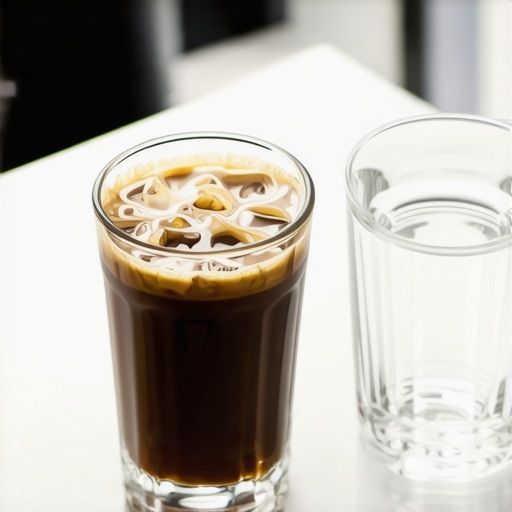
Why Brushing Too Fast Actually Hurts Your Smile
My biggest blunder was running to the bathroom the second I finished my latte to scrub the stains away. I thought I was being proactive. In reality, coffee is acidic and temporarily softens the surface of your teeth and the edges of your restorations. Brushing immediately acts like sandpaper on that softened surface. I once did this so aggressively I felt a sharp, electric shock in my front tooth. If you have experienced this, you should learn how to stop the painful zing when you drink iced coffee rather than just powering through. Now, I wait at least 30 minutes for my mouth to return to a neutral state before I even touch a toothbrush.
Pick the Right Tools to Protect the Margins
The ‘weak link’ I mentioned earlier—the margin where the crown or veneer meets the gum—is a magnet for coffee pigments. I started using a water flosser on a medium setting specifically to blast out any liquid that gets trapped under that tiny lip. Learning the trick to using a water flosser without making a total mess was a game changer for my morning routine. It’s far more effective at clearing the staining agents from the ‘seams’ than traditional string floss. Whether you are following the ultimate guide to crowns for a healthier smile or just maintaining your natural teeth, these mechanical tools are your best defense against the dark pigments in your favorite roast.While my morning coffee ritual was my first big hurdle, I soon discovered a much deeper nuance that most patients—and even some general practitioners—gloss over. Let’s dig deeper into why the ‘bulletproof’ mentality is actually dangerous. There’s a common belief that once you’ve invested in high-end restorative work, your teeth are essentially ‘shielded’ from the world. We treat them like indestructible glass. But here is the contrarian truth: porcelain doesn’t decay, but the natural tooth structure underneath and the gum tissue surrounding it are actually more vulnerable than they were before. When you compare crowns versus veneers, the real winner isn’t the material itself, but how well you manage the ‘micro-gap’—that microscopic space where the restoration meets your organic tooth. If you ignore this area, you aren’t just risking a stain; you’re risking ‘recurrent decay,’ which is the most common reason these expensive pieces fail prematurely. 
Don’t Fall for the ‘Bulletproof’ Dental Myth
Most people think the hard part is over once the numbness fades. The ‘trap’ I fell into was assuming I could use any old drugstore toothpaste to maintain my transform your smile how crowns boost oral health confidence journey. I reached for the most aggressive ‘extra-whitening’ charcoal pastes I could find, thinking I was being proactive. This was a massive mistake. In reality, many whitening toothpastes are essentially liquid sandpaper. While they can’t ‘scratch’ the porcelain easily, they can wear down the composite bonding and irritate the gum line. If you’ve noticed why your dental crown feels like its shifting or appearing longer at the base, it might actually be your aggressive cleaning habit causing recession.
Could the very toothpaste you use for whitening be ruining your investment?
It sounds counterintuitive, but for those of us with extensive work, ‘gentle’ is the only way forward. The Journal of the American Dental Association (JADA) notes that toothpaste with a Relative Dentin Abrasion (RDA) score over 100 can be significantly more abrasive to exposed root surfaces and resins. High RDA toothpastes can create micro-scratches that actually trap more coffee pigments over time. It’s a vicious cycle: you brush harder to get the stains off, which creates more scratches, which leads to more stains. I eventually switched to a low-abrasive gel, which is one of the most underrated family dentistry secrets maintaining oral health with modern techniques. If you’re also navigating alignment, don’t let Invisalign myths debunked what you need to know today fool you into thinking those trays are any less sensitive to chemical abrasion. Choosing the right crown expert advice for long-lasting results means looking for a dentist who talks about the ‘chemistry’ of your mouth, not just the ‘cosmetics.’ Have you ever fallen into this trap of over-cleaning your dental work? Let me know in the comments.
I’ve spent a small fortune on my dental work, and I refuse to let a five-dollar tube of abrasive paste or a lazy flossing habit ruin the investment. Once I moved past the initial fear of staining, I realized that maintenance isn’t just about ‘brushing better’; it’s about using the right equipment to protect the integrity of the bond. I treat my mouth like a high-performance engine now. You wouldn’t put low-grade oil in a Ferrari, so why use subpar tools on a $20,000 smile?
The Water Flosser Is Your New Best Friend
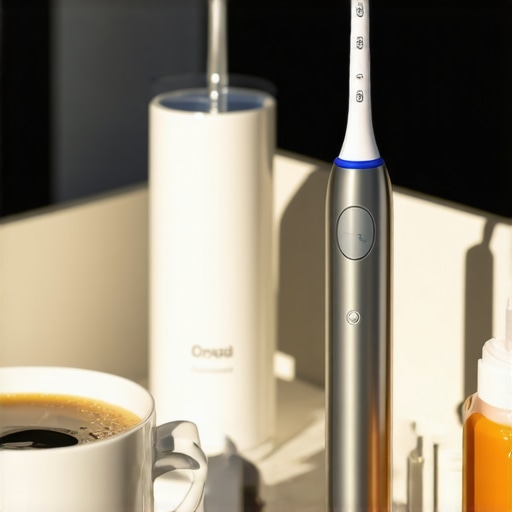
If you aren’t using a water flosser, you are leaving the most vulnerable parts of your dental work exposed. I personally use a professional-grade countertop model because the handheld ones just don’t have the sustained pressure I need to clear the sulcus—that little pocket of gum around your crowns. I found that the trick to using a water flosser without making a total mess is all about the lean-and-aim technique, which ensures you aren’t just spraying the mirror while trying to reach the back molars. This tool is non-negotiable for anyone who wants to avoid why your porcelain crown has a tiny chip on the edge due to underlying tissue inflammation or decay. It’s a mechanical deep-clean that string floss simply can’t replicate.
How do I keep my dental work looking new for a decade?
The secret isn’t just cleaning; it’s monitoring the chemistry of your mouth. I started carrying pH strips in my bag. It sounds obsessive until you realize that many ‘healthy’ sparkling waters have a pH of 3.0, which is acidic enough to soften the resin bonds holding your veneers in place. According to technical research published in the International Journal of Prosthodontics, the hydrolysis of silane coupling agents—the stuff that ‘glues’ the porcelain to your tooth—is significantly accelerated in acidic environments. By keeping my mouth neutral, I’m literally extending the shelf life of my smile. If you’re also dealing with alignment, you’ve likely learned how to seat stubborn invisalign trays using the munchie technique, but remember that the same ‘tight fit’ logic applies to your crowns. If they don’t feel perfectly seated, the bond is at risk.
Predicting the Future of At-Home Dental Monitoring
I predict that within the next five years, we won’t just be ‘guessing’ if our teeth are clean. We are moving toward AI-integrated smart toothbrushes that use intraoral cameras to scan for micro-fractures and early signs of why your dental crown feels like its shifting before you ever feel a ‘zing.’ We are already seeing Invisalign innovations the future of family dentistry revealed through virtual care apps that track tooth movement in real-time. This high-tech shift is making family dentistry secrets maintaining oral health with modern techniques accessible to everyone, not just those with a celebrity budget. I’m already looking into teledentistry options that allow me to send scans of my margins to my doctor every six months. My advice? Start by testing your favorite morning beverage with a simple pH strip today—if it’s below 5.5, use that water chaser immediately to save your enamel.
Realizations That Changed How I View My Dental Work
After years of trial, error, and meticulous maintenance, I’ve realized that keeping a flawless smile while being a coffee enthusiast isn’t about restriction; it’s about strategic awareness. One of the most important things I learned is that the longevity of your dental investment depends entirely on the health of the underlying tooth. While we often focus on the porcelain, understanding why crowns are a game-changer in restorative dentistry requires acknowledging that the natural structure is still prone to decay if neglected. I also discovered that your gum health is the true anchor for your aesthetics. If you stay updated on family dentistry trends improving oral health for all ages, you quickly see that the future of dentistry is focused on preserving your natural biology alongside the restorations. Lastly, the ‘perfection’ you see on day one can last a decade if you stop treating your teeth like tools and start treating them like fine jewelry.
The Everyday Kit for a Coffee-Proof Smile
I get asked all the time what products I actually use to keep my smile from dimming. Here is the exact toolkit I trust to keep both my natural enamel and my dental work in peak condition:
- A Dedicated pH Testing Kit: I use these to check my favorite coffee roasts. Knowing which beans are less acidic helps me manage the risk of bond hydrolysis.
- Low-Abrasive Hydroxyapatite Toothpaste: Instead of harsh whitening pastes, I use this to remineralize my natural teeth without scratching my porcelain work. This is one of the most effective top oral health tips for your family’s bright smiles.
- Smart Oral Monitoring: I follow how invisalign transforms family dentistry in 2025 to stay ahead of alignment shifts that could create new ‘trap’ areas for coffee stains.
#IMAGE_PLACEHOLDER_E#
Reclaim Your Confidence and Your Morning Routine
You don’t have to live in fear of your favorite beverage or regret your decision to enhance your smile. Whether you are following the ultimate guide to crowns for a healthier smile or just starting your cosmetic journey, the key is consistency. By managing your coffee window, rinsing with water, and using the right tools, you can enjoy the best of both worlds. Your smile is a reflection of your self-care, and your coffee ritual is a reflection of your joy—there is plenty of room for both in a healthy lifestyle. If you have any concerns about how your restorations are holding up, don’t hesitate to contact a professional for a personalized assessment. Have you ever felt like you had to choose between your caffeine fix and your dental health? Let me know in the comments below!