
The reason your jaw feels tight after a long flight
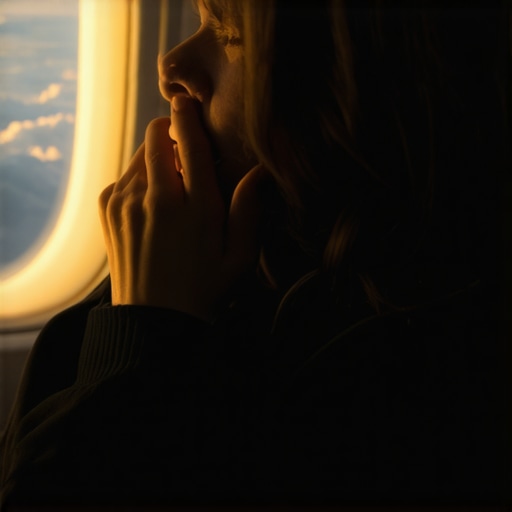
I remember landing in Heathrow after a grueling eight-hour flight, ready to dive into some local food, only to realize I could barely open my mouth. My jaw felt like it had been locked in a vice. At first, I blamed the cramped middle seat and the lack of sleep, but after it happened three flights in a row, I knew it wasn’t just ‘travel fatigue.’ If you have ever stepped off a plane feeling like your face is made of lead, you are not alone.
Your Jaw Tension is a High-Altitude Problem
It is not just in your head; there is a physical reason your face feels like it has gone through a workout while you were just sitting still. When we fly, the cabin pressure fluctuates constantly. This can lead to a phenomenon known as barodontalgia, where trapped air in your teeth or sinuses expands and contracts, putting immense pressure on your nerves. I once made the mistake of thinking I just needed to ‘power through’ the discomfort. I ignored it until a simple flight turned into a week-long headache that felt like a localized thunderstorm behind my molars. You might even find that managing a toothache when you are flying becomes a top priority because that pressure radiates directly into the temporomandibular joint. Many of us also instinctively clench our teeth during turbulence or while trying to sleep in a vertical position. This constant tension is why stopping your teeth from grinding during a stressful day of travel is so critical. According to the National Institutes of Health, pressure changes can exacerbate existing dental issues, making a minor alignment problem feel like a major jaw injury.
Does travel stress really cause this much physical pain?
You might be skeptical. You might think, ‘It is just a flight, why would my jaw care?’ But the body reacts to the dry air, the recycled oxygen, and the micro-stressors of travel by tightening the muscles in the neck and face. Early in my travels, I made the rookie mistake of chewing gum aggressively for the entire descent to help my ears pop. I thought I was helping. In reality, I was overworking my TMJ at the exact moment it was most vulnerable to pressure-induced inflammation. I have since learned that the reason your jaw clicks more when you are feeling tired is often linked to this exact kind of physical exhaustion. Have you ever noticed that your jaw pain gets significantly worse the moment the captain announces the final descent? Let me know if you’ve felt that sudden ‘lock’ when the wheels hit the tarmac. We are going to look at the specific moves you can make mid-flight to ensure you arrive at your destination ready to actually eat and speak comfortably.
Stop the Clench Before the Cabin Pressure Hits
To keep your jaw from locking up, you have to be proactive. Most people wait until they feel that sharp twinge during descent to react, but by then, the inflammation has already started. Think of your jaw like a high-tension spring; if you keep it compressed for hours, it won’t just snap back into place when you land. During a brutal thirteen-hour flight from New York to Tokyo last year, I decided to test a specific relaxation routine. Usually, by the time we hit the halfway point over the Pacific, my temples are pulsing and my molars feel like they’ve been hammered into my gums. By implementing these moves every hour on the hour, I landed in Narita feeling like I could actually enjoy a bowl of ramen rather than reaching for an ice pack.
Master the N-Position for Instant Relief
The single most effective move you can make is finding the ‘N-position.’ Gently place the tip of your tongue on the roof of your mouth, just behind your front teeth, as if you are starting to say the word ‘No.’ When your tongue is in this spot, your upper and lower teeth should not be touching. This creates a tiny, crucial gap that prevents the masseter muscles from engaging. This is essentially the move to stop your teeth from grinding during a stressful day, and it is even more vital at 30,000 feet. If you are wearing aligners, this position is a lifesaver. You might be weighing Invisalign vs braces which solution fits your lifestyle, but regardless of the hardware, keeping that physical gap prevents the constant micro-clenching that leads to travel headaches. 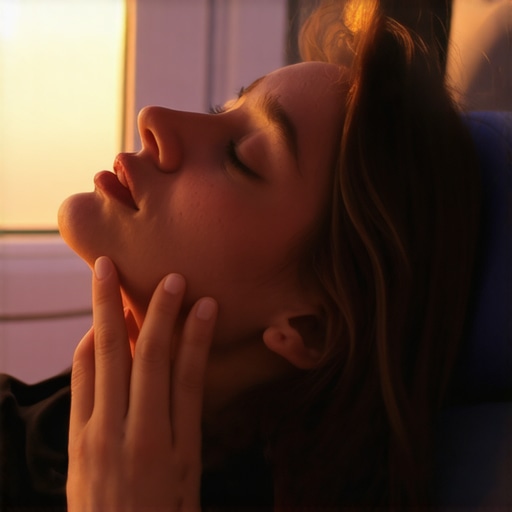
Don’t Let Dry Air Turn Your Jaw Into Sandpaper
The recycled air in a plane is notoriously dry, which leads to mouth breathing. When your mouth dries out, your soft tissues become irritated, and you are more likely to swallow frequently to compensate, which involves—you guessed it—more jaw movement and pressure. This is a similar sensation to why your mouth feels dry right after using mouthwash containing alcohol. Sip water constantly rather than chugging it all at once. Keeping the oral cavity hydrated ensures that the TMJ ‘disc’ stays lubricated. If you have restorative work, like those described in the ultimate guide to crowns for a healthier smile, dehydration can make the margins of those restorations feel more sensitive to the shifting cabin air.
Address the Sinus Connection Before You Descend
Your upper teeth sit right beneath your maxillary sinuses. When the plane descends, the air in those sinuses needs to equalize. If they are even slightly congested, the ‘vacuum’ effect pulls on the nerves of your teeth. You must understand the connection between your sinus infection and your tooth pain to realize that your ‘toothache’ might actually just be air pressure. Use a saline nasal spray thirty minutes before descent. This keeps the passages open so that air doesn’t get trapped. If you find your face still feels tight after the flight, the salt water rinse trick for a sore mouth can help reduce local inflammation in the gums that might be contributing to that heavy, ‘locked’ feeling. Much like why your jaw feels sore after a long phone call, the culprit is often a combination of static posture and repetitive pressure that needs to be actively unlearned.
Don’t Fall for the “Settling In” Trap
Most people view dental crowns as simple protective shells, but the real secret to a pain-free life isn’t just the material—it’s the occlusal integration. A common myth I hear is that a slightly “high” crown will just “settle” into the jaw over time. In my experience, this is a recipe for disaster, especially if you fly frequently. That extra tenth of a millimeter acts like a lightning rod for pressure during cabin descent. If you ignore what to do when your crown feels taller than your other teeth before a flight, you are essentially inviting acute pulpitis. I have seen patients who thought their discomfort was just travel stress, only to realize the pressure was driving the crown into the nerve space because the fit wasn’t perfectly calibrated. This is one of the many family dentistry secrets that distinguish a standard procedure from high-performance restorative care. 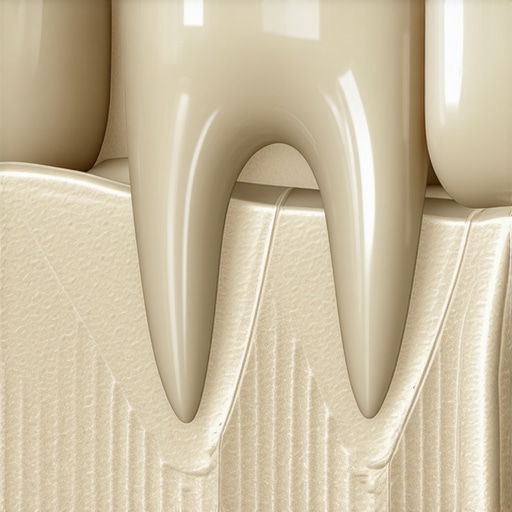
Why does my bite feel different after crossing time zones?
It sounds like science fiction, but your circadian rhythm actually influences your oral health. A study published in the Journal of Oral Rehabilitation highlights that systemic inflammation, often spiked by the lack of sleep and cortisol changes during travel, can cause the periodontal ligaments—the tiny fibers holding your teeth in place—to slightly swell. This microscopic swelling makes you hyper-aware of your bite imperfections. It is the same reason why your Invisalign trays feel tighter on some days than others or why a crown that felt fine at home suddenly feels like a boulder in your mouth in London.
Precision Engineering Beats the High-Altitude Ache
The “oops” factor most people encounter is choosing restorations based on price rather than precision. A crown that isn’t perfectly sealed can harbor tiny pockets of air. At high altitudes, that air expands, causing sharp, stabbing pain. This is why you need choosing the right crown expert advice for long-lasting results: always ensure your dentist uses high-definition digital impressions. In my practice, I have found that why finding the best dentistry in culpeper va usually starts with a 3d cbct scan is because it allows us to see the exact proximity of the nerve to the restoration before you ever step foot on a plane. These invisalign innovations in digital mapping have changed how we prevent travel-induced jaw pain. Have you ever fallen into this trap of ignoring a minor tooth sensitivity before a long-haul flight? Let me know in the comments.
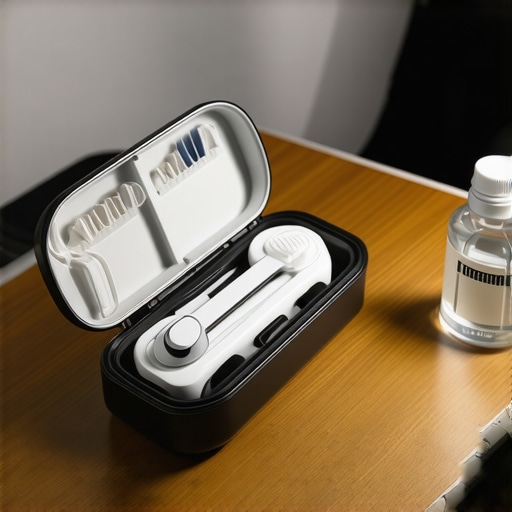
I used to be that person who thought a quick brush and some string floss was enough to protect my investment in my smile. But after a few long-haul flights and a chipped molar in Madrid, I realized that maintenance is about managing mechanical stress, not just hygiene. When you are dealing with restorative work, you have to treat your mouth like a piece of high-performance machinery. I have learned that choosing the right crown expert advice for long-lasting results is only the first step; the real work happens in how you handle the daily grind—literally. For me, that meant switching to an electric toothbrush with a smart pressure sensor. Why? Because I was unknowingly scrubbing the gumline of my crowns so hard that I was risking recession. If you want to keep your margins clean without causing damage, a tool that vibrates at 62,000 brush movements per minute while warning you when you press too hard is a game-changer.
Stop Treating Your Teeth Like Steel
Your teeth are resilient, but the ceramic in a crown or the plastic of an aligner has different physical properties than natural enamel. One of the most overlooked family dentistry secrets is that the longevity of your work depends on the ‘periodontal ligament’ staying healthy and uninflamed. According to the Kois Center clinical protocols, any interference in your ‘envelope of function’—the way your lower teeth move against the upper ones—can cause a crown to fail prematurely. This is why I am obsessed with my night guard. I never travel without it. It acts as a shock absorber during those pressurized descents where my jaw naturally wants to clench. If you are currently in treatment, you also need to know how to prevent bad breath when you are wearing a retainer or aligner, because bacteria buildup can actually weaken the seal of a nearby crown over time. I use ultrasonic cleaning pods for my trays because they vibrate at a frequency that breaks up biofilm that a manual brush simply cannot reach.
How can I keep my dental work from failing when I am away from home?
The key is consistency and the right kit. Beyond the toothbrush, I recommend carry-on-sized interproximal brushes. These are far more effective than string floss for cleaning the ‘contacts’ around a bridge or crown. When you are at high altitudes, your gums can slightly swell, making traditional flossing abrasive. These tiny brushes slide into the gaps without tugging on the restoration. This is a critical part of the ultimate guide to crowns for a healthier smile—it is the micro-maintenance that counts. I also keep a small bottle of alcohol-free fluoride rinse. Most travelers rely on whatever the hotel provides, but those often contain high levels of alcohol which can dry out your mouth and lead to the jaw tension we discussed earlier.
Your Phone Might Soon Be Your Most Important Dental Tool
Looking ahead, the future of maintaining our oral health is moving toward ‘teledentistry’ and AI-driven monitoring. We are already seeing invisalign innovations that allow patients to scan their teeth using a smartphone attachment. I predict that within the next five years, we will all have apps that can detect micro-cracks in our crowns or shifts in our bite before we even feel pain. This ‘preventative tech’ will be essential for frequent flyers. Instead of waiting for a crown to feel ‘tall’ or a jaw to lock, your phone will alert you that your clenching levels have spiked and suggest a specific relaxation routine. This level of data will make dental emergencies a thing of the past. My challenge to you for your next trip: try the ‘N-position’ for just five minutes during your mid-flight movie. Place your tongue on the roof of your mouth, keep your teeth apart, and breathe through your nose. You might be surprised at how much lighter your face feels when you finally land.
The Dental Realities My Frequent Flyer Miles Taught Me the Hard Way
After years of crossing time zones, I realized that my jaw was the first thing to experience jet lag. The hardest lesson I learned is that a crown is never just a cap; it is a precision-engineered part of your anatomy. If it feels even slightly off, that pressure will multiply when you are at 30,000 feet. I now know that listening to your body is the first step in choosing the right crown expert advice for long-lasting results. If you feel a tall spot, get it adjusted before you pack. I also discovered that systemic inflammation is a silent enemy; when you are tired, your periodontal ligaments swell, making even the best restorative work feel foreign. Lastly, your sinuses are the gateway to your tooth comfort. If you ignore congestion, you are inviting a localized discomfort into your molars that no amount of Ibuprofen can fully fix.
The Minimalist Gear I Never Board Without
I have refined my travel kit to focus on mechanical protection and hydration. First, I never travel without high-quality interproximal brushes. They are the best way how to clean a dental bridge without those annoying threaders and keep the margins of your crowns debris-free during long travel days. I also pack a small saline nasal spray because I now understand the connection between your sinus infection and your tooth pain; keeping those passages clear is the secret to a painless descent. Finally, a smart electric toothbrush with a pressure sensor ensures I do not scrub away my gumline while I am exhausted in a hotel bathroom. These tools, combined with top oral health tips for your familys bright smiles, keep me out of the emergency dental chair while I am abroad.
#IMAGE_PLACE_HOLDER_E#
Your Smile Deserves a First-Class Experience
Travel is meant to expand your horizons, not your pain threshold. By being proactive with your oral care and understanding how pressure affects your restorations, you can ensure that your only focus is the destination. Whether you are maintaining natural teeth or have discovered why crowns are a game-changer in restorative dentistry, your comfort is within your control. Take a deep breath, reset your tongue to the N-position, and enjoy the journey knowing you have the tools to protect your smile. Have you ever felt that sharp, high-altitude toothache during a descent? Let me know in the comments below!