
The Reason Your Dentist Prefers a 3D CBCT Scan Over Standard X-Rays
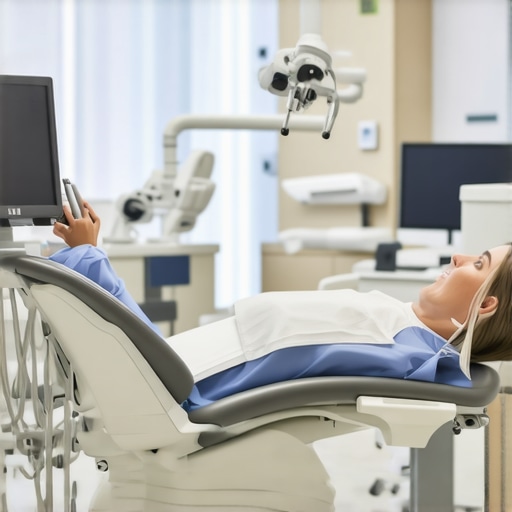
The Reason Your Dentist Prefers a 3D CBCT Scan Over Standard X-Rays
By Chris Bingham – Dental Imaging & Digital Dentistry Specialist
The Evolution of Dental Vision: From Flat Maps to 3D Landscapes
For decades, the standard of care in dental diagnostics was the traditional 2D X-ray. While these images served us well, they were essentially flat maps of a three-dimensional world. Imagine trying to navigate the complex, winding streets of a historic town using only a paper map from the 1950s; you can see the intersections, but you have no sense of the elevation, the depth of the buildings, or what lies hidden behind a corner. In modern dentistry, we have moved beyond the paper map. At all smiles dentistry, we believe in providing our patients with the clarity of “Google Earth” for their oral health.
As a specialist in dental imaging, I have seen firsthand how the transition to 3D Cone Beam Computed Tomography (CBCT) has revolutionized patient care. When you visit a culpeper dentist, you deserve the highest level of diagnostic precision. While traditional bitewing X-rays are still a foundational part of prophy dentistry and routine screenings, complex cases – such as dental implants, root canals, and structural jaw issues – require a depth of field that only 3D technology can provide. In this guide, we will explore why this technology is the gold standard and how it ensures your safety and successful treatment outcomes.
What Exactly is a CBCT Scan?
Cone Beam Computed Tomography, or CBCT, is a specialized type of X-ray equipment used when regular dental or facial X-rays are not sufficient. This technology uses a cone-shaped X-ray beam that rotates 360 degrees around the patient’s head. During this single rotation, the scanner captures hundreds of high-resolution images, which are then digitally reconstructed into a detailed 3D model of your entire craniofacial structure.
The “cone” shape is the secret to its efficiency. Unlike medical CT scans that use a “fan” beam and require multiple passes (often resulting in higher radiation exposure), the CBCT captures the necessary data in one go. This single scan provides a comprehensive view of bone structure, tooth position, soft tissues, and even the delicate pathways of nerves and blood vessels. For a dentist in culpeper va, having this data at their fingertips means the difference between estimating a treatment plan and executing one with “millimeter precision.”
In my experience with digital intraoral radiography platforms, the jump to CBCT represents the most significant leap in diagnostic capability since the invention of the X-ray itself. We are no longer looking at shadows; we are looking at the actual anatomy in a virtual space.
3D vs. 2D: Why Your Dentist Prefers the Depth
The primary limitation of a standard 2D X-ray is “superimposition.” Because a 2D image flattens all structures into one plane, the roots of one tooth might appear to overlap with another, or a dense area of bone might hide a small infection or a hidden canal. When a dentist in culpeper va uses 2D imaging, they are essentially looking through a stack of glass panes; everything is visible, but it is difficult to tell exactly which pane holds the flaw.
CBCT eliminates this problem by allowing the clinician to view “slices” of the jaw from any angle – front to back, side to side, and top to bottom. This is vital when diagnosing the source of a throbbing toothache that doesn’t show an obvious cavity on a bitewing. It might be a vertical root fracture or an accessory canal that is simply invisible on a 2D film. By seeing the tooth in 3D, we can identify the exact location of the problem, leading to more conservative and effective treatments.
Furthermore, CBCT provides accurate measurements of bone volume and density. In 2D, a jawbone might look wide enough for an implant, but the 3D scan might reveal that the bone is actually quite thin or concave, requiring a bone graft before proceeding. This level of foresight is why many culpeper va dentists consider 3D scans an essential part of the modern diagnostic toolkit.
Clinical Applications: When is 3D CBCT Necessary?
While CBCT is a powerhouse of information, it is typically reserved for specific dentistry services where structural detail is paramount. It is a cornerstone of primary care dentistry when moving beyond basic preventive maintenance.
1. Dental Implant Placement
Precision is everything with dental implants. A 3D scan allows the dentist to map out the exact location of the mandibular nerve and the maxillary sinuses. By using this data, clinicians can create “surgical guides” – 3D-printed templates that fit over the teeth during surgery to ensure the implant is placed at the perfect depth and angle. For more on this, see our guide on The Bone Health Secret for Long-Lasting Dental Implants.
2. Advanced Endodontics (Root Canals)
Teeth are complex. Some molars have hidden “MB2” canals that are frequently missed in traditional root canal therapy, leading to reinfection. A CBCT scan allows the specialist at allsmilesdentalculpeper.com to see the internal anatomy of the tooth before the first incision is made, significantly increasing the success rate of the procedure.
3. Airway Analysis and Sleep Apnea
Modern dentistry is increasingly involved in overall systemic health. CBCT scans can measure the volume of the airway, helping to identify obstructions that might contribute to obstructive sleep apnea. This allows for a more holistic approach to patient care, connecting oral health to restorative sleep.
4. Impacted Teeth and Oral Surgery
When wisdom teeth are impacted, they often sit dangerously close to the alveolar nerve. A 2D X-ray can show the proximity, but a CBCT shows the exact relationship in 3D space. This allows the surgeon to plan a path of extraction that minimizes the risk of nerve damage, ensuring a safer recovery for the patient.
Whether it’s planning for Invisalign or managing a complex dental abscess, the 3D view provides a level of certainty that 2D simply cannot match.
Addressing the Radiation Question: Safety and the ALARA Principle
As a specialist, I am often asked about the safety of CBCT scans. It is a valid concern. At All Smiles Dentistry, we take dental preventive care services seriously, and that includes radiation hygiene. We adhere strictly to the “ALARA” principle, which stands for As Low As Reasonably Achievable.
It is important to put the numbers in perspective. While a CBCT scan does involve more radiation than a single bitewing X-ray, research shows that modern dental CBCT devices can emit up to 96% less radiation than a conventional medical CT scan (Source: sbdental.com). In fact, the radiation from a dental CBCT is often comparable to the amount of natural “background” radiation a person receives over a few days of normal living or during a cross-country flight.
We only recommend a CBCT when the diagnostic benefit – such as preventing nerve damage or ensuring implant success – far outweighs the minimal exposure. By using the latest digital sensors and adjustable fields of view, we can focus the scan only on the area of interest, further reducing exposure. This commitment to safety is a hallmark of Family Dentistry Secrets in the digital age.
The Patient Experience in Culpeper, VA
One of the most surprising benefits of CBCT technology is how much more comfortable it is for the patient. If you have ever struggled with the “gag reflex” while biting down on sharp plastic X-ray sensors, you will appreciate the CBCT experience. The process is completely non-invasive. You simply stand or sit in the center of the machine, and the arm rotates around your head. There is no biting down, no discomfort, and no waiting for film to develop.
The scan itself is remarkably fast, typically lasting between 10 and 40 seconds. The results are available instantly, allowing your dentist culpeper to review the 3D images with you on a large monitor. This visual aid is incredibly helpful for patient education; it is much easier to understand why you need a specific treatment when you can see your own jaw and teeth in 3D.
When searching for a dental care clinic near me, looking for one that invests in this level of technology is a clear indicator of best dentistry practices. It shows a commitment to accuracy, safety, and a better overall patient experience. Whether you are a long-time resident or new to the area, dentists in culpeper va and culpepper family dentistry providers like Dr. Sanie utilize this “millimeter precision” to transform lives.
If you ever find yourself in a situation where you need temporary relief for a chipped tooth or an emergency visit, having your 3D records on file allows for much faster and more accurate triage.
Conclusion: The Gold Standard of Modern Dentistry
While traditional X-rays will always have a place in routine check-ups and prophy dentistry, 3D CBCT imaging has become the indispensable gold standard for complex dentistry services. It provides a level of detail that protects patients, enhances surgical outcomes, and allows for a truly personalized approach to oral health.
At All Smiles Dentistry, we are proud to offer this advanced technology to the Culpeper community. We believe that better vision leads to better care. If you are considering dental implants, need a complex root canal, or simply want the most thorough oral exam possible, we invite you to experience the difference that 3D imaging can make.
Ready to see your smile in a whole new dimension? Visit allsmilesdentalculpeper.com today to schedule your comprehensive exam or contact us for your 24hr dental care needs. Your health deserves the precision of the 21st century.