
The specific sign your dental implant is rejecting instead of healing
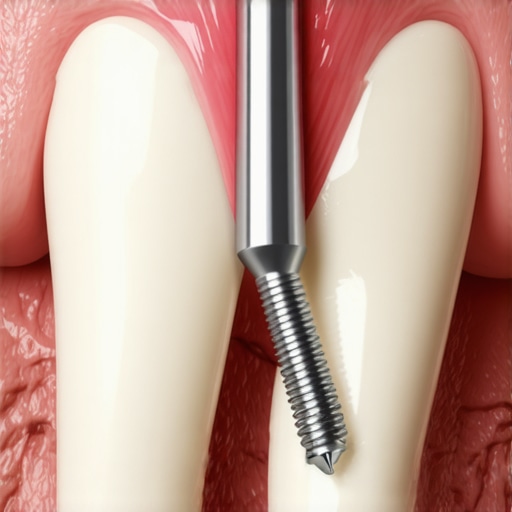
I remember sitting at the dinner table, pushing a piece of soft salmon around my plate, and feeling that terrifying click. Not a sound, really, but a sensation deep in my jawbone where my new implant lived. I’d spent months saving up for this. My dentist said it was the gold standard for modern oral health, but that tiny, almost imperceptible wiggle sent a cold shiver down my spine. I tried to tell myself it was just the crown settling, or maybe I was overthinking the click test used to see if an implant crown is seated. Spoiler alert: It wasn’t just settling. If you are reading this, you are probably in that same middle-of-the-night-panic phase. You are poking your gums with your tongue, wondering if that dull ache is normal recovery or a total disaster. We are going to cut through the dental jargon today. I want to show you the one specific sign that differentiates a slow healer from a failing implant so you don’t lose sleep or your investment. Have you felt that weird sensation where the tooth feels slightly mobile, even just a hair? Let me know in the comments because catching it early is the only way to save it.
Stop Guessing Whether Your Implant is Actually Failing
Early on in my dental journey, I made the classic mistake of assuming sharp pain was the only indicator of failure. I thought if it didn’t hurt like a throbbing root canal, I was in the clear. But dental implants are sneaky. The real red flag isn’t always a sharp jab; sometimes it is a subtle, persistent discomfort that feels more like an itch you can’t scratch. You might even notice the metal starting to show through the gum line, which is a major sign that the tissue isn’t happy. It is a terrifying realization, especially when you are trying to figure out how to tell if your dental implant is rejecting or just healing slowly. I waited too long to call my doctor because I didn’t want to be “that” patient. Don’t be like me. If that area feels “off” or you notice the area throbs specifically when you lie down at night, your body is sending you a flare.
Can my body really just reject a piece of titanium?
It sounds like science fiction, but it happens. While titanium is incredibly biocompatible, your body still has the final say in the matter. According to the Journal of Oral Implantology, while success rates are remarkably high, roughly 5% to 10% of implants can fail due to factors like peri-implantitis or a simple lack of bone density. This is often why surgeons look for the sign that you need a bone graft before surgery to ensure the post has a solid home. When the bone doesn’t fuse—a process called osseointegration—the implant becomes a foreign object. This lack of fusion is exactly why you might feel that your dental implant feels hollow when you tap on it. If it doesn’t feel like a solid part of your skeleton, we need to talk about what happens next.
Run the Finger-Pressure Test Before You Panic
To figure out if you are dealing with a crisis or a minor adjustment, you need to get hands-on. I remember the afternoon I finally worked up the nerve to actually test my own implant. I grabbed a piece of sterile gauze—standard bathroom cabinet stuff—and gripped the crown firmly between my thumb and forefinger. I wasn’t trying to yank it out; I was looking for even a fraction of a millimeter of horizontal movement. If the tooth moves but the gums don’t, you might just have a loose abutment screw. However, if the whole structure, including the tissue, seems to shift, that is a sign of bone loss. This is often why your dental crown feels like its shifting even when the underlying metal is supposed to be “permanent.”
Identify if the Issue is the Screw or the Bone
Think of your implant like a bolt in a wall. If the bolt is loose in the drywall, the whole thing wobbles (bone failure). If the bolt is tight but the picture frame attached to it is shaking, the screw just needs a turn (abutment failure). You can often tell the difference by performing the click test to see if an implant crown is properly seated. If you hear a sharp “tink” when you bite, it’s usually the mechanical connection, not your jaw bone. 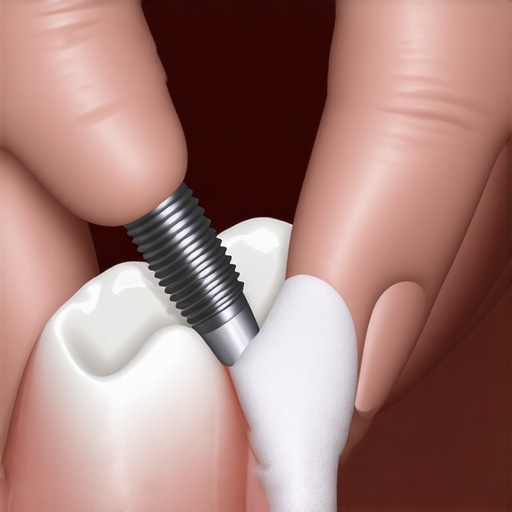
Execute the Rescue Clean to Calm Inflammation
If you notice redness or a slight “squish” when you press on the gums, you are likely dealing with peri-implantitis—the implant version of gum disease. You have to act immediately to stop the bacteria from eating the bone support. Start by using the salt water rinse secret for healing swollen gums at home. This isn’t just an old wives’ tale; the osmotic pressure literally pulls the fluid and the bacteria out of the inflamed pockets.
Floss Without Sabotaging the Delicate Biological Seal
Standard flossing won’t cut it here. You need a dedicated tool, like a proxy brush or a specialized threader, because food traps are the silent killers of titanium posts. I learned this the hard way when a tiny piece of popcorn husk nearly cost me a five-thousand-dollar procedure. You have to find the easiest way to floss under a dental bridge or implant without shredding the thread. If you are too aggressive, you’ll break the “biological seal”—the thin layer of tissue that acts as a protective gasket around the post.
The Long-Term Strategy to Protect Your Investment
Once you’ve calmed the initial flare-up, the focus shifts to preservation. You shouldn’t treat an implant exactly like a natural tooth because it doesn’t have the same shock-absorbing ligaments. This is the secret to making your dental implants last for the rest of your life: reduce the lateral force. If you are a tooth grinder, that morning headache isn’t just stress; it’s a mechanical assault on your dental work. Using a night guard can prevent the micro-fractures that lead to failure. If you already see changes in your bite, it might be time to ask about why your new zirconia crown feels taller than your other teeth, as an uneven bite is the fastest way to rattle a post loose.Let’s dig deeper into the nuances of long-term success. Most people believe that if they just brush harder and longer, their dental work will last forever. I used to be one of those people. I thought my new implant was indestructible, so I scrubbed it like I was cleaning a car tire. But here is the contrarian truth: aggressive mechanical cleaning is often the very thing that triggers a failure. You aren’t just cleaning a tooth; you are managing a delicate biological interface between titanium and living tissue. Being too heavy-handed is a fast track to learning how to tell if your gums are receding from brushing too hard. When that tissue pulls back, it exposes the implant threads, creating a playground for bacteria that you can’t reach with a brush. 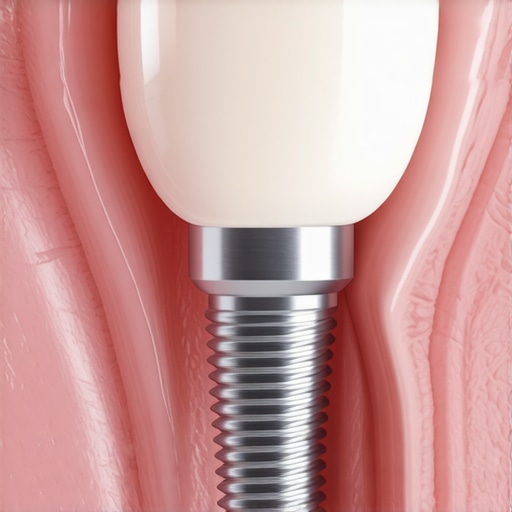
Stop Scrubbing Your Gums Into Oblivion
The ‘oops’ factor I see most often involves the transition from natural teeth to restorations. We are conditioned to seek that ‘squeaky clean’ feeling, but with implants and crowns, that sensation can be a warning sign of enamel or tissue abrasion. If you notice your smile looks longer or you see tiny dark spaces forming, you might be looking for how to fix the black triangle gaps that appear after braces or crowns. These gaps are often caused by over-aggressive flossing or using the wrong tools. Mastering family dentistry secrets for maintaining oral health with modern techniques means understanding that ‘gentle and consistent’ beats ‘rough and occasional’ every single time. Have you ever fallen into this trap of thinking harder is better? Let me know in the comments.
Does My Bite Alignment Matter More Than My Hygiene Routine?
The short answer is: absolutely. You can have the cleanest mouth in the world, but if your bite is off, your implant is doomed. According to a study published in the International Journal of Dentistry, mechanical stress from malocclusion—an uneven bite—is often just as destructive to dental implants as poor hygiene. This is why many patients are now discovering the hidden benefits of invisalign for family dental care in 2025 as a tool for restorative protection, not just straight teeth. Aligning the jaw ensures that when you bite down, the force is distributed vertically through the implant post rather than sideways, which can rattle the bone-to-metal bond.
Avoid the Whitening Toothpaste Trap
Here is an advanced mistake: using abrasive whitening toothpastes on your new porcelain or zirconia. I’ve seen patients spend thousands on beautiful work only to dull the finish within months. You must check the truth about charcoal toothpaste and its effect on your enamel and restorations before you try to brighten your smile. These ‘natural’ abrasives act like sandpaper on your crowns. Once the factory glaze is scratched, the restoration becomes a magnet for stains and plaque. If you feel like your new zirconia crown feels taller than your other teeth or looks duller than the rest, it’s usually a sign that the surface has been compromised or the alignment is shifting. Stick to non-abrasive, fluoride-rich gels that protect the seal without scratching the surface. Your investment deserves more than a ‘one size fits all’ approach to hygiene.
Upgrade Your Arsenal Beyond the Standard Brush
I’ve spent a small fortune on my mouth, so I stopped relying on a $5 manual toothbrush. For my crowns and implants, I switched to a high-end sonic brush and a water flosser. But here’s the trick: don’t crank it to level ten immediately. I’ve heard from so many people asking why your gums throb after you use a water flosser for the first time. It’s because the tissue around a titanium post doesn’t have the same blood supply as a natural root. Use the ‘low’ setting and aim at a 90-degree angle to the gum line. This flushed out the debris that was causing my ‘tink’ sound without blasting away the delicate biological seal.
Keep Your Aligners Crystal Clear Without the Pricey Tablets
If you’re doing the Invisalign route, you’ve probably noticed the “yellowing” phase. It’s gross, and it makes your actual teeth look dingy. I found that the vinegar soak that safely sanitizes your retainers and guards works better than any store-bought effervescent tablet I’ve ever tried. It breaks down the calcium and biofilm that causes that “fuzzy” feeling. Also, if your trays aren’t snapping in perfectly, you aren’t getting the movement you paid for. I personally use “Munchies”—silicone devices designed with specific anatomically correct hardnesses—to ensure the tray is fully seated. Learning how to seat stubborn invisalign trays using the munchie technique changed my treatment time because it ensured the aligner was constantly engaged with the attachment. According to a study in the Journal of Clinical Orthodontics, proper tray seating is the single most significant factor in predictable tooth movement with clear aligners.
How do I maintain my dental work over the next decade?
Maintenance isn’t a “once a day” chore; it’s a lifestyle of mechanical awareness. For those with crowns, you need to master the simple way to stop your crown from catching on your floss—which is basically sliding the floss out sideways rather than snapping it back up. This prevents the margin of the crown from being tugged or loosened over time. For my kids, we’ve integrated family dentistry trends improving oral health for all ages, such as using remineralizing pastes containing hydroxyapatite instead of just standard fluoride. This builds back the surface of the teeth on a molecular level.
The Next Decade of At-Home Dental Monitoring
I predict that by 2030, we won’t just be guessing if our implants are failing or if our crowns are loose. We are already seeing the rise of smart-implants with embedded sensors and AI-driven apps that scan your Invisalign progress from your smartphone. We are moving toward a world where your bathroom mirror will alert you to gum recession or a micro-crack before you even see blood or feel a chill. This is the ultimate evolution of invisalign innovations and the future of family dentistry. We are shifting from “fixing problems” to “predictive prevention.” If you’ve been struggling with cloudy aligners or “high” spots on your crowns, try the vinegar soak I mentioned tonight—it’s a game-changer for both clarity and keeping your breath fresh.
What My Dentist Didn’t Mention About Long-Term Success
Looking back on my journey, there are a few lightbulb moments that would have saved me a lot of anxiety if I had known them sooner. First, I realized that my body isn’t a machine; it reacts to stress. If I was grinding my teeth at night, no amount of titanium could withstand that pressure without help. Second, I learned that a tiny ping sound isn’t just an annoyance; it is a signal to check how to tell if your dental crown has a micro-crack you cant see before it becomes a crisis. Finally, I stopped comparing my results to perfect social media smiles. Real oral health is about stability and function, which is why I now follow top oral health tips for your familys bright smiles to keep everyone on track.
The Gear That Actually Works for Implant Maintenance
You don’t need a suitcase full of gadgets, but you do need the right ones. My personal toolkit includes a water flosser—used on the lowest setting to avoid that throbbing feeling—and a high-quality sonic brush. If you are going through the clear aligner process, don’t skip the basics. I found that how to seat stubborn invisalign trays using the munchie technique made the difference between a tray that merely fit and one that actually moved my teeth. I also keep a stash of hydroxyapatite paste, which is one of the family dentistry secrets maintaining oral health with modern techniques at 254 pm. These tools aren’t just expenses; they are insurance policies for your dental work.
Why Your Best Smile Is Still Ahead of You
It is easy to feel defeated when a crown feels high or an implant feels off, but remember that modern dentistry is incredibly resilient. You have already taken the hardest step by investing in yourself. Whether you are following the ultimate guide to crowns for a healthier smile or just trying to get through the first week of a new implant, stay patient with your body. Every small adjustment and every salt-water rinse is a step toward a lifetime of confidence. Your investment in oral health is one of the few things that truly pays dividends every single time you look in the mirror. Have you ever felt a high spot on a new crown or noticed a strange sound when you bite? Let me know in the comments so we can troubleshoot it together!