
What to do if your dental bridge comes loose during dinner

I was halfway through a bite of crusty sourdough bread at my favorite Italian spot when it happened. That sickening click. Not the sound of a fork against a plate, but the unmistakable sensation of my three-unit bridge shifting under my tongue. My heart hit the floor. I spent the next twenty minutes pretending to wipe my mouth with a napkin while desperately trying to figure out if I was about to swallow a few thousand dollars worth of dental work. It’s a special kind of terror, isn’t it? One minute you’re enjoying a glass of wine, and the next, you’re wondering if you’ll have a visible gap in your smile by dessert. If you are sitting at a table right now feeling that same panic, breathe. I have been in those exact shoes, and I promise we can get through this without you losing your cool or your bridge. Today, I’m sharing the immediate steps to take to stabilize your bridge and avoid making the same embarrassing mistakes I did.
When Your Dinner Date Includes an Unexpected Dental Crisis
You’re sitting there, trying to look cool, but all you can think about is the gap in your smile or the weird metallic taste. My biggest mistake when this first happened to me? I kept wiggling it with my tongue to ‘test’ how loose it was. All I did was irritate my gums and risk swallowing the hardware. If you’re in this spot, your first job is to stop touching it. You need to assess if you can safely remove it or if it’s better left in place. If it’s hanging by a thread, it is often safer to take it out so you don’t accidentally inhale it. This isn’t much different from knowing how to manage a chipped front tooth until your appointment; it’s all about damage control. According to the American College of Prosthodontists, roughly 178 million people in the U.S. are missing at least one tooth, so while you feel like the only person on earth with a failing bridge right now, you are actually part of a very large club. Have you ever had that ‘stomach-drop’ moment where your dental work decided to go rogue in the middle of a restaurant?
Is This Bridge Ever Going to Feel Secure Again?
It’s easy to feel like the whole restoration is a total failure the moment it moves. You might even worry that the teeth underneath have suddenly rotted away. Most of the time, however, it’s just the dental cement giving up the ghost after years of hard work. I used to think a loose bridge meant a massive, expensive replacement, but often a simple recementing at the office is all you need. It’s a common concern, much like why your dental crown feels like it’s shifting; usually, it’s a mechanical issue rather than a biological one. Whatever you do, do not reach for the hardware store supplies. I once knew someone who considered a ‘quick fix’ with household adhesives, but the danger of using superglue to fix a broken denture at home—or a bridge—is that it can cause chemical burns and ruin the bridge’s fit forever. Let’s look at how to handle the rest of your meal safely.
Get That Bridge Under Control Before You Swallow It
The very first thing you must do—and I cannot stress this enough—is stop chewing. If you are in the middle of a meal, your dinner is officially over. When my bridge first rattled against my molar, I tried to finish my salad by chewing on the other side. That was a mistake. The simple act of swallowing or moving your jaw can create enough suction to dislodge a loose bridge entirely. If the bridge comes out, do not panic. Spit it into a napkin, not the sink where it could vanish down the drain. Rinse it gently with lukewarm water to remove any food debris. Handling a bridge is like handling a piece of fragile porcelain; you want to avoid any abrasive scrubbing that might mar the surface or affect how it sits against your gums. If you need to keep things clean while it’s still partially attached, you should look into how to clean a dental bridge without those annoying threaders to avoid tugging on the loose hardware. 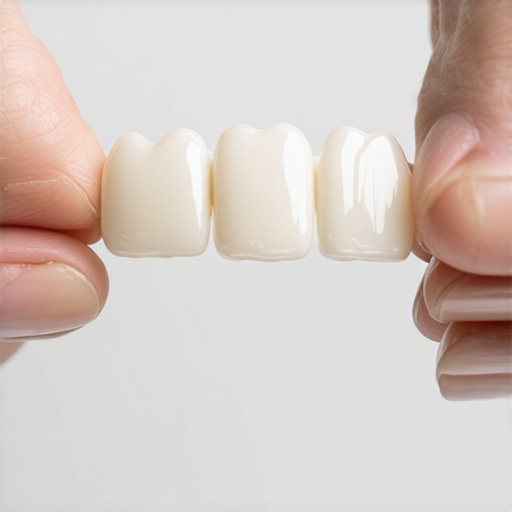
Avoid the Temptation of DIY Repairs
I know the urge to fix it yourself is strong, especially if you have a big presentation or a date the next day. I once sat in my bathroom with a pack of sugar-free gum, genuinely convinced I could use it as a temporary ‘glue’ to hold my bridge in place. It was a disaster. The gum was too thick, making the bridge sit too high, which meant every time I closed my mouth, I was slamming my bottom teeth into the bridge. This is exactly why your new zirconia crown feels taller than your other teeth when the alignment is off—it creates a ‘high spot’ that can actually crack the porcelain or bruise the ligament under the tooth. If the bridge is out and you feel exposed, head to a drugstore and buy a temporary dental adhesive. These are designed to be weak enough for a dentist to remove later but strong enough to keep you from whistling when you talk. Never, under any circumstances, use household superglue. Not only is it toxic, but it creates a permanent bond that might force your dentist to break your bridge—and possibly your underlying teeth—to get it off.
Stick to a Liquid or Soft Food Diet
Until you can get into the chair, your diet needs to change. Think of your bridge like a loose tile on a floor; if you keep stepping on it, the subfloor gets damaged. Switch to smoothies, yogurt, or lukewarm soup. Avoid anything sticky like caramel or anything hard like crusty bread. I learned this the hard way when I thought a ‘soft’ sandwich would be fine, only to have the crust snag the edge of my loose bridge and pull it sideways. If you are worried about what’s safe to eat, many of the rules for what to eat after getting a new dental crown apply here as well. You want to minimize the force on the area entirely. While you wait for your appointment, keep the area clean by rinsing with salt water. This helps keep the gum tissue healthy and reduces the risk of inflammation around the abutment teeth. It is also a good time to review the specific way to floss under a fixed dental bridge so you can keep the area pristine without dislodging the hardware further. Ensuring the underlying teeth stay healthy is your top priority right now.
The Hidden Reason Your Restoration Is Playing Hide and Seek
Everyone tells you that a bridge fails because the cement got old. While cement does degrade over a decade or two, that is rarely the whole story in a sudden crisis. We often assume that if a piece of dental work comes loose, the solution is just more glue. In my years of obsessing over oral health, I have found the opposite: the bond is usually the messenger, not the criminal. In many cases, the bridge actually failed because your bite shifted or the underlying support teeth were under too much mechanical stress. If you are choosing the right crown expert advice for long-lasting results, you will learn that the alignment of your jaw matters more than the adhesive used. If your teeth are even a fraction of a millimeter out of sync, every chew acts like a tiny sledgehammer against that bridge.
Could Your Bite Be the Secret Reason Your Bridge Failed?
A study published in the Journal of Prosthodontic Research suggests that nearly 60% of mechanical failures in fixed partial dentures are linked to parafunctional habits, such as nocturnal grinding, rather than simple cement degradation. This is the nuance most people miss. When you feel that why your dental crown feels like it’s shifting sensation, your body might be reacting to a ‘high spot’ that has finally fatigued the metal or porcelain. It is a common mistake to ignore a slight feeling of tightness, but the reason your crown feels tight after flossing might actually be your teeth shifting to compensate for an uneven bite. 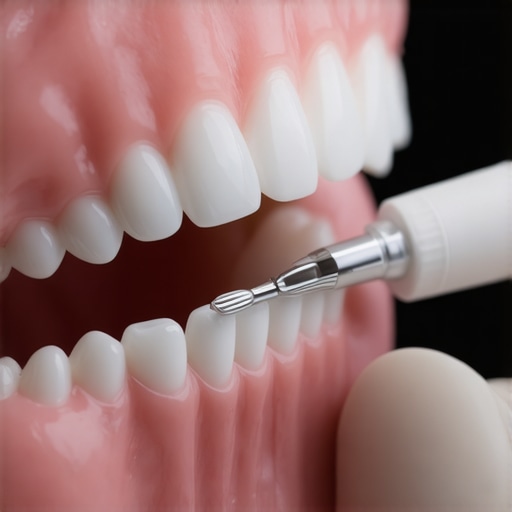
Watch Out for the DIY Cement Trap
The biggest ‘oops’ factor I see is the over-reliance on drugstore temporary cement kits. People treat them like a permanent fix because the bridge feels ‘solid enough’ for a few weeks. This is a dangerous trap. These temporary cements are porous; they allow microscopic bacteria to seep underneath the bridge and sit directly on the vulnerable abutment teeth. You might be ‘saving’ the bridge while inadvertently rotting the very teeth that hold it in place. I have seen countless cases where a patient used a DIY kit for a month, only to find out the tooth underneath had decayed so much it required an extraction. This is why Invisalign myths debunked what you need to know today often focus on the importance of professional oversight—even minor adjustments to how teeth meet can prevent these catastrophic failures. If you have been tempted to just ‘glue it and forget it,’ you are gambling with the foundation of your smile.
The Role of Modern Materials in Longevity
We used to think that traditional porcelain-fused-to-metal was the gold standard, but modern zirconia has changed the game. However, the ‘trap’ here is assuming all zirconia is created equal. Some cheaper versions lack the translucency or the specific bonding properties needed for a bridge. If you have ever wondered why your new zirconia crown feels taller than your other teeth, it is often because the material was not milled or adjusted to account for the way your jaw moves laterally. Professional family dentistry secrets maintaining oral health with modern techniques at 254 pm involve looking at the 3D geometry of your mouth, not just the gap. Have you ever fallen into this trap of thinking a quick fix was good enough? Let me know in the comments.
I have spent a small fortune on my mouth over the years, and if I have learned anything, it is that the work does not stop once the dentist hands you the mirror to admire your new smile. To keep that bridge from rattling or those Invisalign results from slipping, you need a maintenance system that actually works. I personally swear by the ‘Point-and-Pause’ method with a high-quality water flosser. Instead of just spraying wildly, I align the tip directly with the gap under my bridge and let it sit for three seconds. It is the only way I have found to truly clear the biofilm that traditional floss misses. If you are struggling with the spray, checking out the trick to using a water flosser without making a total mess was a game-changer for my morning routine.
The Gear That Keeps My Dental Work From Moving
Authority in oral health comes down to the details of your toolkit. I do not just use any brush; I use an extra-soft interdental brush dipped in a tiny drop of non-abrasive gel. Why? Because according to a report in the International Journal of Oral Science, the surface roughness of restorative materials like zirconia or porcelain directly influences the rate of subgingival plaque accumulation. If you use a stiff brush, you are creating microscopic scratches that act as ‘parking spots’ for bacteria. This is why top oral health tips for your familys bright smiles always emphasize material-specific care. I also keep a dedicated ultrasonic cleaner on my counter for my retainers. If you are still scrubbing your hardware with a toothbrush, you are likely leaving behind 40% of the calcium deposits that eventually cause smells. Instead, I use the vinegar soak that safely sanitizes your retainers and guards once a week to keep everything hospital-grade clean.
How do I keep my restorations working for the next decade?
Consistency is the boring answer, but the specific method is the interesting one. Long-term success with bridges and crowns involves ‘bio-mechanical monitoring.’ Every Sunday, I do a self-check of my bite. I gently tap my teeth together to see if any one tooth feels like it is hitting ‘first’ or ‘harder.’ This is one of those family dentistry secrets maintaining oral health with modern techniques at 254 pm that prevents the mechanical fatigue we talked about earlier. If I feel a high spot, I do not wait; I call my doc. Dealing with a bridge is a marathon, and the equipment you use today determines whether you will be back in the chair five years from now. 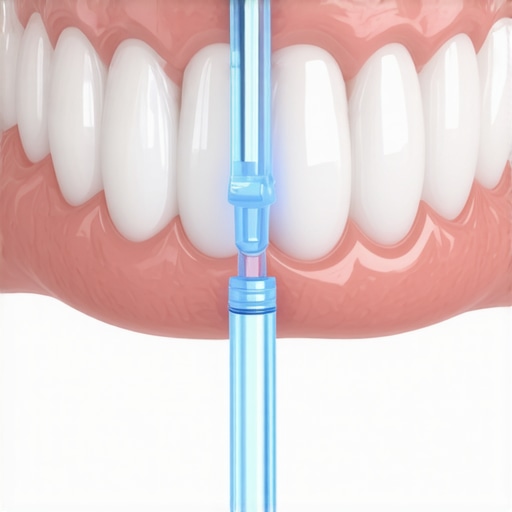
Your Smile is Getting a Tech Upgrade
I predict that in the next few years, we are going to see ‘smart’ restorations. We are already seeing Invisalign innovations the future of family dentistry revealed at 1137 am that use AI to track tooth movement in real-time. Soon, your bridge might have a tiny embedded sensor that alerts your phone if the cement bond is weakening or if the acidity levels under the crown are rising. This tech will move us from ‘reactive’ dentistry—waiting for the click in the restaurant—to ‘proactive’ maintenance. Until those sensors are standard, you have to be the sensor. My challenge for you today is to stop being a passive owner of your dental work. Grab a mirror, do the bite test, and if you have any doubts about your current setup, start by choosing the right crown expert advice for long-lasting results to ensure your foundation is solid.
What I Wish I Knew Before My Bridge Started Rattling
Looking back at my own dental saga, the biggest revelation was that a loose bridge isn’t just an inconvenience; it’s a loud alarm bell for your oral health. First, I realized that discomfort is a data point. If something feels slightly “off” for weeks, your body is telling you the cement bond or the underlying tooth is struggling. Second, I learned that the cost of an emergency recementing is a fraction of the cost of replacing the whole unit because I waited too long. Finally, I discovered that the way we sleep—specifically grinding—is often the hidden culprit. If you’re feeling that familiar tightness, it’s worth investigating the reason your crown feels tight after flossing before it turns into a full-blown fracture.
My Personal Arsenal for a Rock-Solid Smile
I don’t leave my dental health to chance anymore. My daily routine now includes three specific tools that have kept my new restorations in perfect shape. I swear by a high-end water flosser; it’s the only way to reach the nooks and crannies without the physical trauma of traditional floss. I also keep a supply of interdental brushes for mid-day cleanups, which is essential for how to clean a dental bridge without those annoying threaders effectively. For the long haul, I rely on the ultimate guide to crowns for a healthier smile to keep myself educated on what’s next in restorative tech. These aren’t just gadgets; they are the insurance policy for my smile.
#IMAGE_PLACEHOLDER_E#
Building a Foundation That Actually Lasts
A loose bridge can feel like the end of the world when you’re staring at it in a restaurant napkin, but it’s actually an opportunity to level up your care. Whether you are transitioning to a more permanent solution or just need a professional tune-up, remember that your dental team is your best ally. Don’t let fear of the chair keep you from maintaining your confidence. By choosing the right crown expert advice for long-lasting results, you ensure that your next bridge or crown is built to withstand the tests of time and crusty bread. You deserve a smile that stays put, no matter what’s on the menu. Have you ever had a piece of dental work fail at the absolute worst possible moment? Let me know your story in the comments below!