
The secret to eating popcorn with a permanent retainer

I sat there in the dark theater, my hand hovering over the tub of buttery goodness, feeling like a high-stakes gambler. It had been three months since my orthodontist bonded that thin metal wire behind my teeth, and I was terrified. One wrong crunch, and I knew I’d be dealing with a loose bracket or a sharp wire poking my tongue. I took the risk anyway.
Why You Don’t Have to Suffer Through a Popcorn-Free Life
I’ve always been a snack enthusiast, so when I got my permanent retainer after years of Invisalign, I refused to accept a life of boring snacks. I’ve made every mistake possible—from trying to ‘carefully’ chew unpopped kernels to using a wooden toothpick that almost snapped the resin bond. That mistake was painful. Not only did I irritate my gums, but I almost earned myself an unscheduled trip for a restorative dental visit. But through those failures, I found a system that actually works. We aren’t just talking about keeping your teeth straight; we’re talking about maintaining your quality of life while protecting your oral health. Today, I’m going to show you exactly how to navigate the ‘popcorn minefield’ so you can enjoy your movie without a dental emergency.
Is it actually possible to eat popcorn without breaking the wire?
You might be skeptical. I certainly was after I spent forty-five minutes in front of a mirror trying to get food out from under my hardware. You’ve probably heard horror stories or felt the panic of a hull stuck in your gums. However, the secret isn’t in avoiding the food entirely, but in the technique and the ‘aftercare’ prep. A study published in the Journal of Clinical Orthodontics notes that the failure rate of fixed retainers is significantly higher in the first six months due to masticatory forces—basically, the mechanical pressure from how we chew. I learned that the hard way when I ignored advice and ended up with gums that feel tender for a week. My journey wasn’t just about straight teeth; it was about reclaiming the simple joys. I remember sitting at home, frustrated, picking at a piece of hull that felt like a jagged mountain range. I thought about asking my dentist to just take the thing off. But then I realized I just needed a better strategy that fits modern family dentistry trends. Have you ever had that heart-stopping moment where you felt something ‘give’ while snacking? Tell me I’m not the only one who has panicked over a single kernel! I’m about to break down the specific way I sort my snacks and the cleaning ritual that keeps me out of the dentist’s chair.
Sort Your Kernels Like a Pro
Most dental disasters happen because we reach blindly into the bucket. I used to do this at the movies until I bit into a ‘half-pop’—one of those partially opened kernels that feels like a rock. The impact sent a shockwave through my front teeth, making me worry I’d need to know how to handle a chipped front tooth until your appointment. Now, I treat popcorn like a gold miner. I shake the bowl so the unpopped ‘landmines’ sink to the bottom. I only pick the fluffiest pieces from the top. If you’re helping your little ones, knowing the best snacks for kids with new braces that won’t cause damage can save you a lot of stress during movie night. Think of your retainer as a fragile suspension bridge; you wouldn’t drive a heavy truck over it, so don’t force a hard kernel against that wire.
Chew with Your Molars Only
Your permanent retainer is usually bonded to the back of your front six teeth. This is the ‘danger zone.’ When I eat popcorn, I never use my front teeth to break the shell. I bypass them entirely, placing the popcorn directly onto my back molars. It’s a bit like loading a catapult; you want the action to happen far away from the delicate hardware. This protects the resin bonds from the lateral pressure that causes them to fail. I remember a wedding where I forgot this rule while snacking on gourmet caramel corn. I felt a tiny ‘click’—the sound of a bond weakening. If that happens to you, don’t panic, but you’ll definitely want to check if your wire has actually come loose or see why your dental crown feels like it’s shifting for similar sensations of instability.
The Post-Movie Cleanup Routine
Even if you chew perfectly, those thin hulls love to slide into the gap between the wire and your gums. This is where the real trouble starts because trapped debris leads to inflammation. #IMAGE_PLACE_HOLDER_B# I once left a hull in for two days, and by Monday, my gums were so swollen I could barely speak. Now, I use a high-pressure approach. I’ve mastered the trick to using a water flosser without making a total mess, which is the absolute best way to blast out stuck particles without poking around with a sharp toothpick.
Don’t Use Improvised Tools
If you feel something stuck, resist the urge to use a paperclip or a fingernail. You are more likely to bend the wire or scratch your enamel than you are to actually clear the debris. Instead, look for the easiest way to get food out from under your bridge or retainer, which usually involves a proxy brush or a dedicated threader. I keep a small kit in my car now because I’ve learned that a ‘quick snack’ can turn into a weekend of discomfort if you aren’t prepared to clean up the aftermath immediately. Taking these steps doesn’t just save your wire; it maintains your oral health and prevents those emergency visits.Wait, I know what you’re thinking: “If I just avoid the hard stuff, I’m safe.” That’s the most common myth in the world of orthodontic maintenance. In my experience, it isn’t always the ‘big crunch’ that ruins your smile; it’s the slow, invisible degradation of the bonding material itself. Most people assume that if the wire hasn’t snapped, everything is fine. But there’s a nuance here that even some dental veterans miss. We need to talk about ‘micro-fatigue.’ This happens when you consume highly acidic drinks or use the wrong cleaning agents, which slowly softens the resin holding that wire to your teeth. According to a study in the American Journal of Orthodontics and Dentofacial Orthopedics, the shear bond strength of orthodontic resins can be significantly compromised by certain mouthwashes and dietary habits over time. It’s not just a mechanical failure; it’s a chemical one.
Why does my bite feel ‘off’ even when the wire isn’t broken?
Have you ever felt a strange sensation, almost like a phantom movement in your front teeth? You might even think why your dental crown feels like it is vibrating or shifting, but for a retainer, it’s often due to micro-leakage. This is the ‘trap’ I fell into. I was so focused on avoiding hard kernels that I ignored the fact that my daily habit of using a harsh, alcohol-based rinse was actually eating away at the seal. If you’ve ever noticed the truth about alcohol-based mouthwashes and chronic dry mouth, you know they can be aggressive. This chemical erosion creates a tiny gap between the resin and the enamel. Bacteria move in, and suddenly, you aren’t just worried about a loose wire; you’re looking at potential decay under the hardware. This is one of those family dentistry secrets that keeps your teeth healthy for decades rather than just months. #IMAGE_PLACE_HOLDER_C# Another mistake? Using ‘shortcuts’ to clean. I once thought soaking my removable night guard in boiling water was a great way to ‘deep clean’ it. Big mistake. High heat warps the material. For fixed hardware, the ‘oops’ factor is often using a metal tool to scrape away plaque. You’re essentially creating micro-scratches on the wire which then become magnets for more tartar. Instead, I’ve found that the vinegar soak that safely sanitizes your retainers and guards is a much gentler, more effective way to handle removable parts, while a soft-touch approach is vital for the fixed ones. It’s easy to get caught up in the ‘dos and don’ts’ list, but the real expertise comes from listening to the subtle signals your mouth is sending. If something feels different—even if it doesn’t look broken—don’t ignore it. You might be seeing invisalign myths debunked in real-time as you realize that maintenance is a 24/7 job. Have you ever fallen into this trap of thinking a ‘safe’ food or habit was fine, only to have it backfire? Let me know in the comments! If you’re really worried about a shift, it’s always worth it to contact us and get a professional eyes-on look before a small gap becomes a big problem.
The Pro-Level Tool Kit That Saved My Smile
Over the last decade, I’ve gone from being a casual brusher to a full-blown dental gear enthusiast. If you’re serious about keeping that wire in place or ensuring your guide to crowns for a healthier smile stays relevant, you need more than just a standard toothbrush. I personally swear by the ‘interproximal duo’: a high-quality water flosser and those tiny, pine-tree-looking proxy brushes. Why? Because while the water flosser handles the bulk of the debris, the physical bristles of a proxy brush are needed to break up the ‘biofilm’—that sticky layer of bacteria that water alone won’t touch. I use a setting of ‘6’ on my flosser; anything higher feels like a power washer on my gums, and anything lower doesn’t get the job done. If you have any restorations, you already know why crowns are a game changer in restorative dentistry, but they require that same meticulous edge-cleaning to prevent the dreaded ‘dark line’ at the gum which signifies bacterial buildup. 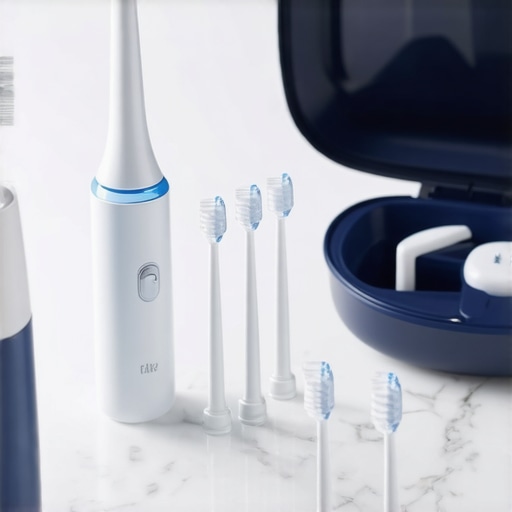
How do I maintain my dental alignment over time?
The hard truth is that teeth have a natural memory and want to move; it’s a process called physiological drift. To fight it, I don’t just rely on the fixed wire; I wear a removable clear retainer three nights a week as a backup. This ‘double-insurance’ policy ensures that if a bond on my permanent wire fails without me noticing, the removable tray will catch the movement. For those currently in treatment, I can’t recommend how to seat stubborn invisalign trays using the munchie technique enough. It sounds simple, but using those silicone ‘munchies’ for five minutes a day ensures the aligner is actually moving the root of the tooth, not just tipping the crown. A report in the British Dental Journal highlights that patient compliance with interproximal cleaning tools and consistent tray seating is the single greatest predictor of long-term restoration success. If you aren’t using a seating tool or checking your bonds, you’re essentially leaving your lifelong results to chance.
Look Into the Future of Your Dental Checkups
We are entering an era where you won’t have to guess if your teeth are shifting or if a kernel did damage. I’m already seeing invisalign innovations and the future of family dentistry moving toward AI-integrated home scans. Soon, you’ll likely take a weekly selfie with a specialized cheek retractor, and an AI-driven app will tell you if your top oral health tips are working or if you need to schedule a tweak. This data-driven approach will eventually eliminate the ‘popcorn panic’ because your phone will literally alert you if a bracket is loose or a bond has micro-fractured before you even feel it. My best advice? Don’t wait for the technology to catch up to your habits. Start using a seating tool tonight and feel the difference in how your hardware fits by tomorrow morning. Your future self will thank you for being this proactive with your investment.
Lessons from the Popcorn Minefield That Actually Stuck
Reflecting on my decade with a fixed wire, the biggest lightbulb moment wasn’t about the food itself, but the environment in my mouth. I learned that consistency beats intensity every single time. It’s not the one-time popcorn bowl that ruins a smile; it’s the 48 hours you leave a hull trapped because you were too tired to floss. I also discovered that invisalign myths debunked my original fear that hardware meant I could never enjoy a movie theater again. The real secret? Your teeth are surprisingly resilient if you don’t let bacteria weaken the bond through poor habits. If you ever feel like your hardware is failing, don’t wait; learn family dentistry secrets for maintaining your smile before a tiny issue becomes an emergency.
The Gear That Keeps My Smile Locked in Place
I’ve refined my dental toolkit down to three absolute essentials that I trust with my life and my alignment. First, a high-quality water flosser is non-negotiable for anyone with a fixed bridge or retainer. Second, I always keep a pack of interproximal brushes in my travel bag for those stubborn hulls. Finally, for those who have moved past traditional braces, reading the ultimate guide to crowns for a healthier smile helped me understand how different restorations interact with my natural teeth. I trust these tools because they provide the mechanical cleaning that a standard brush simply can’t reach. If you’re managing more complex dental work, you might find that crowns are a game changer in restorative dentistry when it comes to long-term stability and aesthetics.
A Future Where You Don’t Fear the Bucket
You’ve invested a lot of time and money into that beautiful smile, and you shouldn’t have to live in fear of a snack. By adopting a proactive mindset and using the right techniques, you can maintain your oral health without sacrificing the simple joys of movie night. Remember, your dental hardware is there to support you, not restrict you. If you ever feel like something is shifting or just isn’t quite right, don’t hesitate to contact us for a quick check-up. Have you ever had a heart-stopping moment where a piece of food felt like it broke your wire? Share your close call stories in the comments below!