
Why your dental crown feels like it is vibrating
I was sitting in a silent living room, sipping on a cup of tea, when I felt it. A tiny, rhythmic buzzing coming from the back of my mouth. I actually checked my pocket for my phone before I realized the vibration was coming from my molar. It is a bizarre, almost electric sensation that makes you wonder if your tooth has suddenly joined a garage band. If you are experiencing this, you are likely feeling a mix of confusion and a little bit of ‘dental anxiety’—the kind that makes you keep clicking your teeth together to see if you can trigger it again. When I first decided to transform my smile with restorative work, I expected total comfort, not a buzzing sensation that felt like a hidden motor. Today, we are going to dive into why this happens, why it is usually a simple fix, and how you can finally get back to a quiet mouth.
Your Jaw Is Not a Smartphone So Why Is It Buzzing?
I made a massive mistake early on in my dental journey: I assumed that if something felt ‘weird’ but didn’t hurt, it wasn’t a problem. I ignored that subtle humming for nearly three months, figuring my mouth just needed to ‘get used’ to the new porcelain. Spoiler alert: dental work does not just decide to stop vibrating on its own. In fact, if you feel like your dental crown is shifting or vibrating when you talk or chew, it is usually your body’s way of sounding a very specific alarm. The most common culprit is a ‘high spot.’ This is when the crown is even a microscopic fraction of a millimeter too tall, causing it to hit your opposing teeth before everything else. According to the American Dental Association, traumatic occlusion can lead to ligament inflammation, which often manifests as a strange, vibrating feedback loop.
Is this a sign that my expensive crown is failing already?
The short answer is: probably not. Most people fear that a vibration means the cement has failed or the tooth underneath is rotting away. In reality, it is often just a matter of physics and nerve feedback. However, getting expert advice for long-lasting results is the only way to silence the hum and prevent the ligament from becoming permanently inflamed. When that ligament—the cushion between your tooth and bone—gets irritated, it sends weird signals to your brain that feel like buzzing or ‘ringing’ in the tooth. Have you ever felt a weird hum or an electric-like tap in your tooth after a dental visit? Tell me about it in the comments; I’d love to know how you described it to your dentist! It is one of those sensations that is hard to put into words until you have lived through it. Now that we know the ‘why,’ let’s look at the mechanical reasons your bite might be playing tricks on you.
Pinpoint the High Spot Before It Pinches the Nerve
Think of your bite like a perfectly timed orchestra. Every tooth should hit at exactly the same time. When one tooth—usually that new crown—hits early, it’s like a cymbal crashing three beats too soon. That vibration is actually the periodontal ligament being compressed too hard and too fast. This is why your crown feels like it has a high spot only when you grind or chew. When this happens, your tooth isn’t just sitting in the socket; it is bouncing off the opposing tooth, creating that rhythmic buzz you feel.
The Blue Paper Test
When you go back to the office, don’t just say ‘it feels weird.’ Show them. I remember my own ‘Aha!’ moment during a follow-up visit. I sat in that chair, and my dentist used articulating paper—that thin, ink-coated strip. After biting down and grinding side-to-side, he pointed out a tiny, concentrated blue dot on the porcelain. That was the culprit. He used a fine diamond bur to smooth it down, which is a key part of maintaining oral health with modern techniques. The relief was instantaneous. If you feel that buzz, you aren’t crazy; you just have a microscopic mountain on your tooth that needs to become a molehill.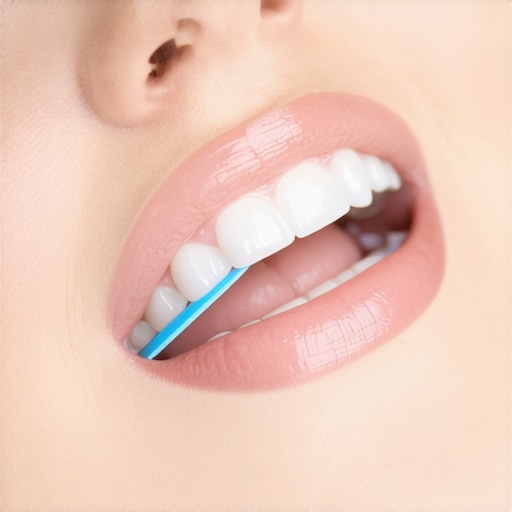
Address the Invisible Clenching
Sometimes the vibration isn’t just about the crown’s height; it’s about how much force you’re putting on it while you sleep. If you wake up with a dull throb or a renewed sense of buzzing, you need to look at the connection between grinding your teeth and those constant morning headaches. Bruxism—the fancy word for grinding—supercharges that vibrating sensation because it keeps the ligament in a state of constant trauma. Since porcelain is harder than natural enamel, your jaw muscles might be overcompensating, leading to that ‘electric’ nerve feedback.
Check Your Alignment with Invisalign
If the vibration persists across multiple teeth or feels like it is shifting, the issue might be your overall dental map. When your teeth aren’t stacked correctly, specific points take the brunt of every impact. This is where the hidden benefits of Invisalign come into play for restorative cases. By shifting the teeth into a more balanced arch, you distribute the biting force evenly, which stops any single tooth from ‘ringing’ like a bell every time you close your mouth.
Stop the Damage Without the Debt
You don’t always need a thousand-dollar solution right away. You can actually learn how to stop grinding your teeth without an expensive night guard by practicing simple biofeedback techniques during the day. Use the ‘lips together, teeth apart’ rule. I started doing this during my morning commute, consciously checking if my teeth were touching while I drove. Within a week, the ‘buzzing’ sensation in my molar had faded significantly because I was finally giving that sensitive ligament a chance to breathe. Reducing that daily friction is the fastest way to see if the vibration is a mechanical error or just a muscle habit.
Your Crown Might Look Perfect While Your Bite Is Still Wrong
Most people treat a dental crown like a ‘set it and forget it’ piece of hardware. I used to believe that once the porcelain was cemented, the tooth was essentially bulletproof. This is the single biggest trap in restorative dentistry. We focus so much on the aesthetics that we ignore the mechanics. A crown can look beautiful and show no decay on a standard X-ray, yet still be wreaking havoc on your jaw joint. In my experience, if you feel that buzzing sensation, your crown isn’t just a shield—it’s acting like a hammer. This ‘micro-trauma’ happens because porcelain doesn’t have the natural ‘give’ of enamel. While we often hear that crowns are the final step, the reality is that the crown is often just the beginning of managing your functional bite. If the crown is even slightly misaligned, it forces your jaw to shift into a compensative position, which is the reason your face feels sore after a night of heavy dreaming.
Does your crown change how you breathe at night?
This sounds like a reach, doesn’t it? But there is a deep connection between your dental alignment and your airway. If a new crown or a series of fillings changes your ‘vertical dimension’—the distance between your upper and lower jaw—it can actually impact your tongue space. According to a study published in the Journal of Oral Rehabilitation, even minor occlusal interferences can significantly alter the activity of the masticatory muscles, leading to chronic tension and even affecting sleep posture. This is why I always tell people to look at why your childs mouth stays open while they sleep and what it means, because these structural issues often start with how our teeth fit together in childhood. If your bite is ‘off’ because of a crown, you might be unconsciously clenching to find a comfortable resting spot, which narrows the airway and leads to that vibrating nerve feedback.
The Hidden Danger of Standard X-Rays
We’ve been conditioned to think that if an X-ray is clear, we’re fine. But standard 2D bitewing X-rays are notoriously bad at showing the stress on the periodontal ligament or the subtle cracks in a tooth root caused by a high crown. I learned the hard way that you need to ask for more. Understanding what a 3d cbct scan reveals that standard x-rays miss entirely can be the difference between saving a tooth and needing an extraction. These 3D views allow your dentist to see the ‘widening’ of the ligament space, which is the physical proof that your tooth is vibrating under too much pressure.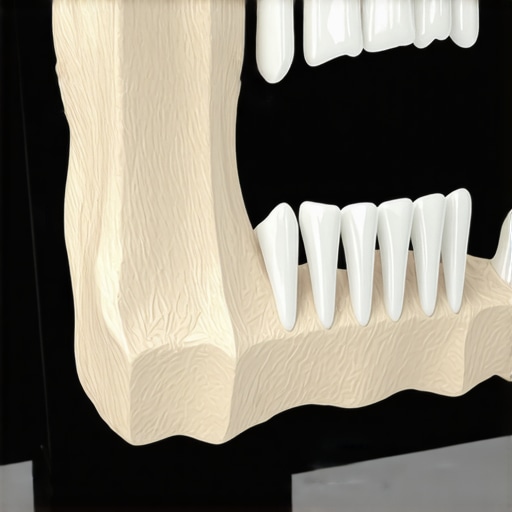
Stop Chasing Symptoms and Fix the Foundation
If you’ve been told ‘everything looks fine’ but you still feel that electric hum, it’s time to stop chasing the symptom and look at the foundation. Many patients are surprised to learn that invisalign myths debunked often include the fact that clear aligners aren’t just for straight teeth—they are a functional tool to balance your bite. By moving the teeth into a position where the crown doesn’t take 90% of the force, the vibration stops instantly. I’ve seen people spend thousands on ‘replacing’ a crown that felt weird, when the real fix was simply moving the tooth half a millimeter to the left. Before you commit to more invasive surgery, check the ultimate guide to crowns for a healthier smile to ensure your provider is looking at your whole mouth, not just one tooth. Have you ever fallen into the trap of thinking a procedure was ‘finished’ only to have it act up months later? Let me know in the comments; I’d love to hear how you handled it! Making sure you are choosing the right crown expert advice for long lasting results is the only way to ensure your smile stays silent and comfortable for years to come.After years of trial and error, I’ve realized that the ‘set it and forget it’ mindset is what leads to those middle-of-the-night tooth vibrations. I’ve refined my daily routine into a high-performance system because, let’s be honest, those porcelain crowns weren’t cheap. My first ‘must-have’ tool is a high-quality water flosser with a specialized tip. If you have any restorative work, you know the struggle of how to stop your dental implant from trapping food every time you eat. A standard string often shreds against the margin of a crown, but a water flosser at a medium setting flushes out the bacteria without tugging on the cement. For those with bridges, I swear by bridge-aid threaders—it’s the specific way to floss under a fixed dental bridge that prevents the underlying gum from getting ‘spongy’ and inflamed.
How do I maintain my dental work over time?
Consistency is more important than intensity. I’ve adopted a two-step sanitation process for anything that sits in my mouth. For my night guards and aligners, I skip the expensive chemical tablets. Instead, I use the vinegar soak that safely sanitizes your retainers and guards without degrading the plastic. If you are currently in treatment, don’t just shove your trays in with your fingers. You need to master how to seat stubborn invisalign trays using the munchie technique. Using these silicone ‘munchies’ ensures the tray is fully engaged with the attachments, which prevents that annoying ‘air pocket’ feel and keeps the tooth movement on track. According to Dr. Gordon Christensen of the Clinicians Report, the longevity of modern ceramic restorations is directly tied to the management of occlusal forces—basically, if you don’t wear your guard to manage the pressure, your crown is on a countdown. 
The Future of Smiling Is Printed in 3D
Looking ahead, I see a world where ‘waiting two weeks for a crown’ is a relic of the past. We are already seeing invisalign innovations the future of family dentistry revealed that allow for real-time adjustments via smartphone scans and AI analysis. I predict that within the next five years, AI-driven ‘bite-tracking’ apps will alert us to high spots before we even feel the vibration. We’re moving toward a proactive, data-driven approach to maintaining oral health with modern techniques. If you want to stay ahead of the curve, I highly recommend trying one thing tonight: practice the ‘N-position.’ Place the tip of your tongue on the roof of your mouth just behind your front teeth (as if saying the letter N) and keep your teeth apart. This simple biofeedback hack is the secret to making your dental implants last for the rest of your life because it retrains your brain to stop the clenching that causes all that vibration in the first place.
What I Finally Realized About the Silent War in My Mouth
Going through the journey of restorative work taught me that your bite is dynamic, not static. One of the most significant shifts in my perspective was realizing that a dental crown isn’t a standalone fix; it is part of a complex system. If you ignore the vibration, you aren’t just dealing with a weird sensation—you are putting your oral health at risk. I learned that “good enough” usually leads to a cracked tooth later on. My “aha” moment was realizing that family dentistry secrets aren’t about expensive procedures, but about the microscopic adjustments that keep your teeth from fighting each other. I also discovered that Invisalign myths debunked often overlook how much a straight bite protects your existing crowns from unnecessary wear.
The High-Performance Tools I Use to Protect My Investment
Since I’ve invested a lot into my smile, I don’t leave my maintenance to chance. First, I stopped using harsh chemicals and switched to the vinegar soak that safely sanitizes your retainers and guards, which keeps my night guard fresh without damaging the material. I also learned how to seat stubborn Invisalign trays using the munchie technique to ensure my alignment stays perfect, reducing those odd vibrations. Finally, I never skip the specific way to floss under a fixed dental bridge or crown margin to keep my gums firm and healthy. #IMAGE_PLACEHOLDER_E#
Stop Fearing the Buzz and Reclaim Your Comfort
You don’t have to live with a mouth that feels like a smartphone on vibrate. By focusing on top oral health tips for your family’s bright smiles, you can address the root cause of the hum—whether it’s a high spot, a grinding habit, or a slight misalignment. Take that first step and talk to your dentist about a 3D scan or a simple bite adjustment. Your future, silent smile will thank you. Have you ever felt a weird electric-like tap or vibration in your teeth after a dental visit? Let me know in the comments below!