
The safest way to remove a popcorn kernel stuck in your gums
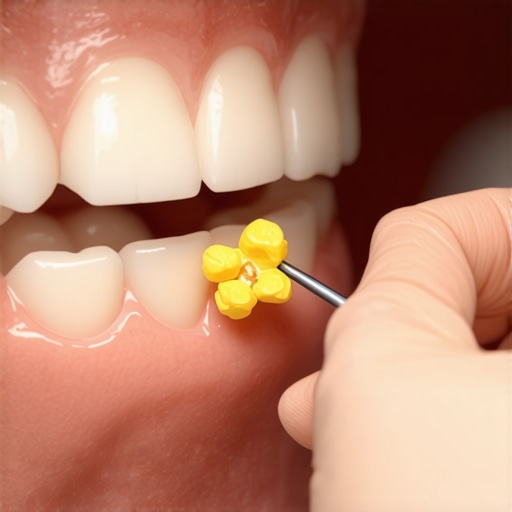
I was halfway through a bowl of buttery stovetop popcorn last Friday night when I felt that unmistakable, sharp jab right between my molars. You know the one. It’s not exactly a toothache, but it’s a nagging, invasive pressure that makes it impossible to focus on anything else. My first instinct, much like yours probably is right now, was to go in there with my fingernail or a wooden toothpick to “fish it out.” I’ve been a dental enthusiast for years, yet in that moment of panic, I reverted to the worst possible habits. I ended up pushing the thin, plastic-like hull deeper into the sulcus—that little pocket between the tooth and the gum—and by Saturday morning, my gums were throbbing. This is a classic case of what we call popcorn hull entrapment. If you handle it with brute force, you’re looking at a localized infection that can turn a fun movie night into a very expensive Monday morning appointment. We’ve all been there, standing in the bathroom, tilting our heads at awkward angles and squinting into a magnifying mirror, but today I want to share the gentle, neighborly advice I wish someone had given me before I caused myself a week of grief.
Stop the Shard from Stabbing Your Gums Further
When a kernel gets stuck, it’s usually because the thin, curved hull has slid perfectly under the gumline, acting like a tiny, organic anchor. Because these hulls are curved, they are remarkably efficient at moving in one direction: deeper. I once made the absolute mistake of using a metal sewing needle because I was so desperate for relief. I can hear you cringing from here, and believe me, I’m cringing too. I ended up with a minor gum tear that took a week to heal, which was far more painful than the kernel itself. If you’ve ever dealt with how to fix a snagged gum from a sharp tortilla chip, you already know that the soft tissues in your mouth are incredibly delicate and prone to swelling at the slightest provocation. The key is to use hydraulic pressure and soft materials, not sharp, rigid tools. Have you ever spent twenty minutes poking at your mouth only to realize you’ve made the area twice as red and inflamed as when you started?
Is it actually dangerous to just leave it there?
You might be tempted to just go to sleep and hope your body “dissolves” the kernel by morning. It’s a common thought, but unfortunately, popcorn hulls are made of cellulose. Humans can’t digest cellulose, and your saliva won’t break it down either. Unlike a wooden splinter that might eventually work its way out of your skin, a hull can stay tucked in that moist pocket indefinitely. According to the American Dental Association, leaving foreign objects trapped under the gingiva can lead to a gingival abscess. This is a painful, localized pocket of infection that can damage the surrounding bone if left untreated. It’s not just a minor nuisance; it’s a genuine threat to your overall oral health. Even if you have mastered the secret to eating popcorn with a permanent retainer, a stray hull can still find its way into the most inconvenient spots, bypassing your best defenses.
Try the Gentle Rinse Before You Reach for the Floss
Before you start aggressively sawing away with dental floss, which can sometimes drive the hull deeper or even slice the gum tissue, try a warm salt water rinse. Mix about half a teaspoon of salt into eight ounces of warm water and swish it vigorously. The goal here isn’t just cleanliness; the salt helps reduce the osmotic pressure in the swollen tissue, and the warmth can sometimes expand the gum pocket just enough for the hull to float out. It’s a similar sensation to the reason your gums feel tender after a routine cleaning; the area is irritated and needs a soft, therapeutic touch rather than more mechanical trauma. If the rinse doesn’t do the trick, don’t worry. We’re going to move on to a specific “loop” flossing technique and the use of a water flosser—tools that are far safer than your fingernails. We’re going to solve this together, keeping your smile intact without an emergency trip to the clinic.
Ditch the Sawing Motion and Try the Loop Technique
When you feel that kernel lodged deep, your instinct is to grab a piece of floss and saw back and forth with all your might. Stop right there. Sawing only serves to lacerate the gingiva or, worse, wedge the hull deeper into the sulcus. Instead, you need to master the “loop” or “C-shape” method. I learned this the hard way during a rainy camping trip in the Smokies. I had a hull stuck for two days, and the area was getting hot and angry. I finally sat down by a lantern, tied a piece of waxed floss into a small loop, and used a gentle, upward scooping motion rather than a downward press. By hooking the edge of the hull and pulling away from the gum, it popped out like a splinter.
How the C-Shape Saves Your Gums from Trauma
The goal is to wrap the floss around the side of the tooth, forming a “C” that hugs the enamel. This technique is one of those family dentistry secrets for maintaining oral health with modern techniques that prevents long-term tissue recession. Slowly guide the floss beneath the gumline until you feel the resistance of the hull. Instead of pulling up immediately, move the floss in a gentle, vibratory motion. This vibrates the hull loose from the sticky suction of the gum tissue. If you are dealing with restorative work, you have to be even more careful; knowing how to floss around a temporary crown without pulling it off is crucial here because the adhesive isn’t meant for heavy vertical tugging.
Why Your Water Flosser is Your Best Friend Right Now
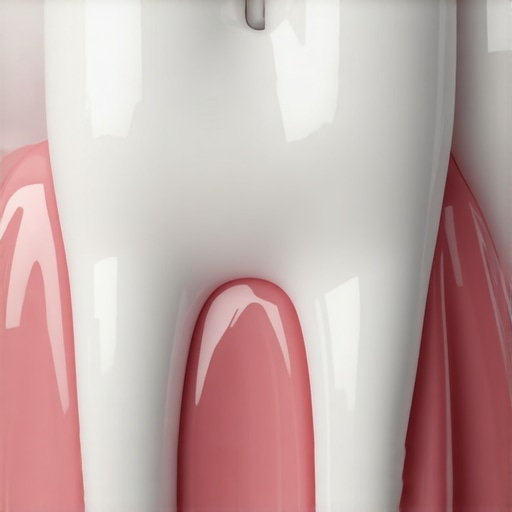
If manual flossing feels too invasive, it’s time to use hydraulic force. A water flosser is essentially a pressure washer for your mouth, but you have to use it correctly to avoid a bloody mess. Start on the lowest pressure setting. If you blast the area on high, you risk forcing the hull—and bacteria—deeper into the pocket. Angle the tip at a 45-degree angle toward the gumline. You want the stream of water to get behind the hull to push it out, not hit it dead-on. If you’ve struggled with this tool before, check out the trick to using a water flosser without making a total mess to keep your bathroom dry while you work.
Handling the Hull Near Dental Work
Things get significantly more complicated if that popcorn shard is stuck near a dental appliance. For example, if you have a permanent wire behind your teeth, you’ve likely searched for the secret to eating popcorn with a permanent retainer and realized that the wire acts as a perfect trap. In these cases, a proxy brush can be more effective than floss. They can slide into the gap between the wire and the gum to nudge the hull sideways. Similarly, if you are mid-treatment and find why your Invisalign aligners keep popping off your back teeth is a concern, ensure the area is completely clear of debris before reseating your trays. A trapped hull under an aligner is like a pebble in a shoe; the constant pressure will cause an ulcer in hours.
While we’re on the subject of ‘hidden’ traps, let’s talk about the biggest misconception in restorative dentistry: the idea that once a tooth is crowned, it’s safe from the world. I see this all the time. People spend weeks researching the ultimate guide to crowns for a healthier smile, get the procedure done, and then treat that tooth like it’s made of titanium. Here is the contrarian truth: a crowned tooth actually requires *more* precision care than a natural one. The porcelain might be immune to cavities, but the tiny seam where the crown meets your gum—the margin—is a bacterial playground. If you aren’t meticulous, you’re just hiding a problem until it becomes a root canal. Have you ever fallen into this trap? Let me know in the comments.
Your Crown Isn’t an Indestructible Shield
Most people believe that a crown is a ‘set it and forget it’ solution. However, a study published in the Journal of Dentistry highlights that nearly 95% of crown failures occur at the marginal interface, not because the porcelain itself broke, but because of micro-leakage leading to recurrent decay under the restoration. When you are choosing the right crown expert advice for long-lasting results, you have to look beyond the aesthetics. You are essentially managing a ‘biological joint’ between man-made material and living tissue. If you skip your interdental cleaning, that margin becomes the perfect spot for a new cavity to start, completely hidden from your toothbrush.
Why does a 3D scan see what your standard X-ray misses?
Sometimes, you can feel something is ‘off’—perhaps a dull pressure or that phantom ‘popcorn hull’ sensation that won’t go away—but a standard bitewing X-ray shows a clean bill of health. This is a common frustration for patients. Understanding what a 3D CBCT scan reveals that standard X-rays miss entirely can be the ultimate game-changer. These scans allow us to rotate the image of your tooth in 3D space, uncovering hidden infections at the root tip or tiny vertical fractures that a flat 2D image simply cannot capture. It’s about moving from ‘guessing’ to ‘knowing’ why your tooth feels different.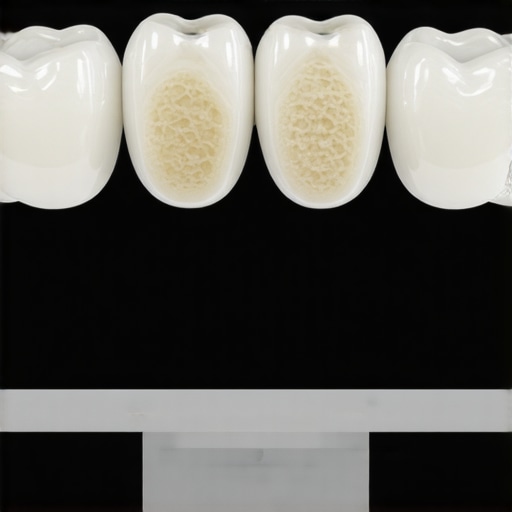
Stop Brushing Like You’re Scrubbing a Grout Line
The ‘Oops’ factor in daily care is often over-enthusiasm. Many patients believe that to protect their investment—be it a crown or navigating Invisalign myths debunked—they need to ‘scrub’ harder. But the reason your gums bleed only when you use a firm toothbrush is that you are causing micro-trauma to the gingival attachment. This leads to recession, which exposes the root surface and the crown margin, making it even easier for food and bacteria to get trapped. In the context of the hidden benefits of Invisalign for family dental care in 2025, the real win is that the trays guide your teeth into a position where a soft brush can actually reach every surface without force. It’s about working smarter, not harder, to keep your smile intact.
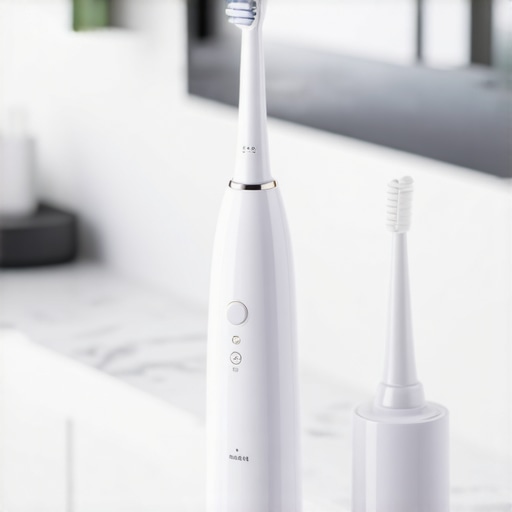
If the goal is to stop scrubbing like you’re cleaning a driveway, the next logical question is what tools actually deserve a spot on your bathroom counter. I personally made the switch to a high-end sonic toothbrush—specifically the Philips Sonicare 9900 Prestige—about two years ago, and it changed the game for my gum health. I use it because it features SenseIQ technology that senses my pressure, motion, and coverage up to 100 times per second. If I start to press too hard (a habit I still struggle with), the handle vibrates and the light at the base turns purple. This kind of immediate feedback is essential because the truth about soft vs hard toothbrushes for receding gums is that even a soft brush can cause damage if your technique is too aggressive.
Why I Swapped My Manual Brush for High-End Sonic Tech
The authority on this isn’t just my personal experience; it is backed by clinical research. Dr. Gordon Christensen, a world-renowned clinical educator, has noted through the Clinicians Report (CRA) that sonic brushes can reduce gingival inflammation by significantly higher margins than manual brushing alone. This is particularly important if you are managing the ultimate guide to crowns for a healthier smile, as the vibration helps disrupt the biofilm at that critical marginal interface I mentioned earlier. I also pair this with a high-quality water flosser, but I only use the ‘orthodontic tip’ when I’m dealing with tight spaces or appliances. It’s one of those family dentistry secrets for maintaining oral health with modern techniques that prevents the buildup of plaque that standard floss sometimes skips.
How do I maintain my dental work over a decade?
Long-term success with crowns or Invisalign isn’t about one big event; it’s about a series of tiny, daily wins. For example, if you are an avid caffeine drinker, you need to know how to keep your smile white while drinking daily coffee without relying on abrasive charcoal pastes that can scratch your porcelain. I recommend the ‘sip and swish’ method—follow every sip of coffee with a sip of water. This prevents the tannins from sitting on the crown margins where they can cause unsightly dark lines over time. Furthermore, don’t underestimate the power of a professional check-up. The trend in the industry is moving toward remote monitoring and AI-driven diagnostics. I predict that by 2030, we will all be using smartphone attachments to send weekly scans of our teeth to our dentists, catching issues like crown micro-leakage before they even show up on a traditional X-ray. You can already see the beginnings of this in Invisalign innovations and the future of family dentistry.
My advanced tip for you this week: Purchase a pack of dental disclosing tablets. Chew one after you think you’ve finished brushing and flossing. The dye will stick to any remaining plaque, showing you exactly where your technique is failing. It’s a humbling but incredibly effective way to scale your oral hygiene to a professional level.
The Hardest Lessons My Gums Had to Teach Me
Over the years of managing my own dental mishaps, I have realized that a ‘phantom’ hull sensation isn’t always what it seems. Sometimes, what feels like a stuck kernel is actually a micro-fracture in the enamel or a failing restoration. If you ever hear the specific sound your tooth makes when it is actually cracked, you must put down the floss and call your dentist immediately. Another lightbulb moment for me was realizing that how crowns boost oral health confidence only remains true if you are vigilant about the gum line; the crown is strong, but the biological connection is fragile. Lastly, I have learned that patience is far more effective than pressure. If a kernel doesn’t budge after three gentle attempts, it is better to wait for the initial inflammation to subside than to risk creating a permanent pocket in your gingiva.
My Personalized Kit for a Resilient Smile
I have curated a specific ’emergency kit’ that I keep in my bathroom to handle food entrapment without the drama. First, a high-quality water flosser is my primary tool for flushing out debris using hydraulic force. If you find them messy, I highly recommend learning the trick to using a water flosser without making a total mess so you actually use it consistently. Second, I keep a dedicated container of high-grade sea salt specifically for the salt water rinse trick for a sore mouth, which is my go-to for reducing swelling after a hull has been removed. Finally, I trust interdental brushes over traditional toothpicks for our family dentistry needs because they are flexible and far less likely to cause a puncture wound.
#IMAGE_PLACEHOLDER_E#
Take Charge of Your Smile Today
Maintaining a healthy smile doesn’t have to be a source of constant anxiety. Whether you are navigating the nuances of a stuck popcorn hull or looking into Invisalign myths debunked, the secret always lies in proactive, gentle care. You deserve to enjoy your favorite treats without fearing an expensive trip to the clinic. Your long-term oral health is built on these small, informed decisions you make in front of your bathroom mirror every day. Have you ever tried a weird DIY method to get a kernel out that actually worked—or backfired? Let me know in the comments below!