
The reason your child’s teeth are coming in behind their baby teeth
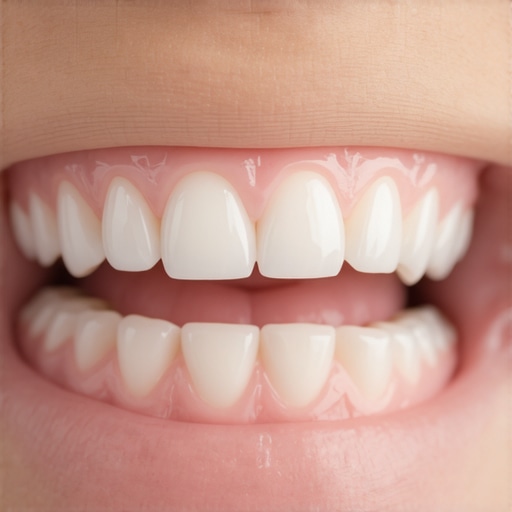
I remember the exact Tuesday morning my daughter skipped into the kitchen, flashed me a wide grin, and nearly made me drop my coffee. Behind her perfectly normal lower baby teeth was a jagged, white row of permanent teeth pushing through like a little shark. My first thought? ‘Oh no, I didn’t get her to the dentist enough.’ I felt like I’d failed a basic parenting test. But as it turns out, I was just witnessing a classic case of what some call ‘shark teeth,’ and while it looks terrifying, it’s usually just a temporary detour in their dental journey. Today, we’re going to demystify this double-row drama and give you a clear plan for what to do next.
The Real Reason Those Permanent Teeth Are Taking the Scenic Route
It’s called ectopic eruption, and it happens more often than you’d think. Usually, the permanent tooth dissolves the root of the baby tooth, making it fall out so the new one can take its place. Sometimes, the permanent tooth just decides to take the path of least resistance—popping up right behind the baby tooth because the root didn’t dissolve quite fast enough. Early on, I made the mistake of trying to ‘wiggle’ my daughter’s baby teeth out with way too much force, thinking I had to clear the way immediately. Looking back, I realize that patience—and understanding family dentistry secrets—was the better move. If you’re seeing this, you might be worried about why your child’s permanent teeth look serrated at the top or if they’ll need Invisalign vs braces down the road. According to the American Academy of Pediatric Dentistry (AAPD), this ‘shark tooth’ phenomenon occurs in many children and often resolves without any surgical intervention as the tongue naturally pushes the new teeth forward once the primary teeth are gone.
Will My Child’s Smile Be Crooked Forever?
You might be skeptical. You see those teeth and think there’s no way they’ll ever move into the right spot. It looks messy, and you’re likely worrying about future orthodontic bills or needing family dentistry trends to fix a lifelong problem. But most of the time, once the baby tooth finally makes its exit, the tongue acts as a natural aligner. We’re going to look at why this happens and when you actually need to step in to keep their family’s bright smiles on track. Have you ever peeked into your kid’s mouth and felt that instant jolt of ‘Wait, that’s not right’? Drop a comment below or reach out; I’d love to hear your ‘shark’ stories.
Test the Movement Yourself
Start by assessing the movement of the baby tooth with a gentle ‘wiggle test.’ I remember sitting my daughter down with a clean washcloth, determined to get that ‘shark tooth’ situation under control. I was sweating, she was giggling, and after five minutes of gentle tugging, we realized the tooth was nowhere near ready. I had to swallow my pride and realize that nature works on its own clock. Instead of forcing it, encourage your child to use their tongue like a little bulldozer. This natural, constant pressure is often the most effective tool for guiding a permanent tooth into the correct slot. If you are unsure about the state of their oral development, reviewing how to tell if your child is ready for their first dental cleaning can provide a great baseline for what a healthy mouth should look like at this stage.
Watch Out for the Six-Week Rule
If that permanent tooth has emerged more than halfway and the baby tooth hasn’t even started to wobble, you’ve hit a stalemate. A good rule of thumb is to monitor the situation for about six weeks. If there is zero progress in the baby tooth’s looseness during that time, it is unlikely to resolve on its own. This is when the risk of crowding increases, potentially leading you to research Invisalign vs braces earlier than you expected. Consistency in checkups is key; knowing the best age to bring your child for their first dental visit ensures you have a professional ally before these ‘shark’ moments even begin.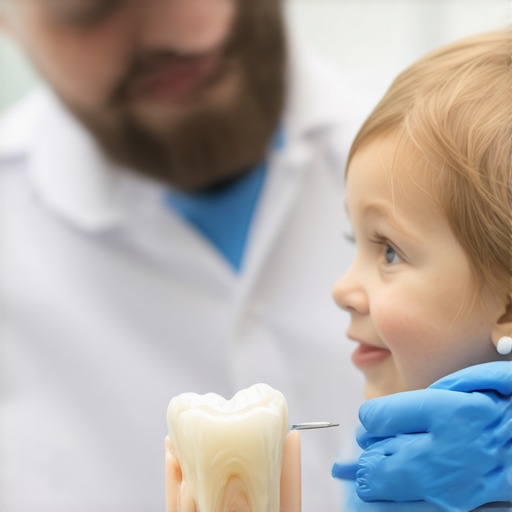
Make Extractions Less Scary for Your Little One
When a baby tooth refuses to budge, a dentist might recommend a simple extraction. This sounds far more dramatic than it actually is. To keep your child calm, focus on the ‘tooth fairy’ aspect rather than the clinical details. Using stopping the sugar bug talk is a fantastic way to explain dental health without using fear-based language. Most pediatric extractions are incredibly fast because there isn’t much root left to hold the tooth in place. It is also a good time to learn how to handle a knocked-out baby tooth without panicking, as accidents can happen during these transition years.
Why Alignment Might Still Be in Your Future
Even if you manage the shark teeth perfectly, sometimes the jaw just doesn’t have enough room. This is where family dentistry secrets regarding space maintainers or early orthodontics come into play. Once the baby tooth is gone, the tongue usually does the heavy lifting of pushing the permanent tooth forward into the gap. However, if things remain cramped, you might need to look into how Invisalign transforms family dentistry by providing discreet ways to align those new, larger teeth. Keeping an eye on family dentistry trends will help you stay ahead of any structural issues before they require more invasive restorative work like crowns or bridges.Most parents assume that seeing two rows of teeth is a surefire sign their kid will need a decade of orthodontics. I certainly did. But here is the contrarian truth: a temporary ‘shark tooth’ phase can actually be a sign of a healthy, vigorous eruption process. The real mistake isn’t the double row itself; it’s focusing entirely on the alignment of the teeth while ignoring the development of the jaw. Everyone says you need to pull those baby teeth immediately, but in my experience, rushing to the oral surgeon often ignores the natural ‘scaffolding’ the mouth provides. The ‘oops’ factor here is assuming that straight teeth equal a healthy mouth. You can have perfectly straight ‘shark teeth’ that eventually move into place but still suffer from a misaligned bite because the jaw didn’t widen sufficiently during the growth spurt.
Why You Should Stop Panicking About Immediate Braces
While it is tempting to start looking at Invisalign vs braces the moment you see a second row, the American Association of Orthodontists (AAO) suggests that while an evaluation should happen by age seven, active treatment often isn’t necessary right away. The trap many fall into is over-treating the ‘aesthetic’ problem of crowding before the permanent molars have even anchored the bite. If you jump the gun, you might find yourself correcting the same issues twice. Instead, focus on family dentistry secrets like monitoring the ‘leeway space’—the extra room gained when the larger primary molars are replaced by smaller permanent premolars. 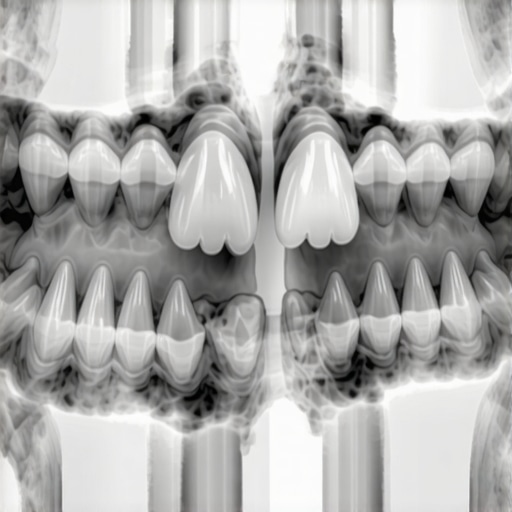
Is the Narrow Palate to Blame for Your Child’s Shark Teeth?
This is the sophisticated question most parents miss. If the permanent teeth are coming in behind the baby teeth, it is often because the upper jaw (maxilla) is too narrow to accommodate the larger adult teeth. A study published in the Journal of Clinical and Diagnostic Research highlights that transverse maxillary deficiency is a leading cause of early crowding. If the jaw doesn’t have the width, the teeth have nowhere to go but ‘inland.’ This is why some kids benefit more from a palate expander than simple extractions. Have you ever fallen into this trap of thinking double teeth meant instant braces? Let me know in the comments.
The Hidden Cost of Waiting Too Long for a Professional Opinion
While patience is a virtue, ignoring the ‘shark teeth’ for more than a few months without a professional look can lead to enamel wear. When teeth overlap, they create ‘trap zones’ for plaque that even the best brushers miss. If a permanent tooth stays stuck behind a baby tooth for too long, it can actually start to wear down the backside of the permanent tooth’s neighbors. In severe cases of neglect, this lead to needing restorative work later, which is why crowns are a game-changer in restorative dentistry for protecting compromised structures. When you are choosing the right crown expert advice, you learn that prevention during the ‘shark tooth’ phase is much cheaper than fixing worn enamel at age twenty. Stay proactive by checking the Invisalign myths debunked to see how modern aligners can now handle these complex eruption patterns more efficiently than ever before.Once the initial shock of seeing those double rows wears off, you realize that managing your family’s smiles is a marathon, not a sprint. I used to think a standard toothbrush was enough, but when you’re dealing with overlapping ‘shark teeth’ or the tight gaps common before Invisalign transforms family dentistry in your household, you need better gear. The absolute game-changer for us was the water flosser. I personally use the cordless version because, let’s be honest, trying to tether a wiggly seven-year-old to a bathroom countertop with a coiled hose is a recipe for a flooded floor. The trick to using a water flosser without making a total mess is all about the lean-and-aim technique, which I had to master myself before I could teach my kids. This tool is essential because it reaches the ‘trap zones’ behind the ectopic teeth where traditional floss just shreds.
How do I maintain my child’s alignment over time?
The secret lies in the ‘passive monitoring’ phase. While it is tempting to demand immediate action, family dentistry secrets often involve simply keeping the path clear. This means ensuring those erupting permanent teeth have the best environment possible. For example, the right way to clean your tongue without triggering your gag reflex is actually a vital habit for kids too; a clean mouth reduces the overall bacterial load that can lead to inflammation around erupting teeth. According to Dr. Chris Chang, a world-renowned orthodontist and pioneer in bone-driven orthodontics, the focus should often be on the ‘orthodontic ecosystem’ rather than just individual teeth. He emphasizes that early intervention with 3D imaging can predict exactly where those shark teeth will end up long before they even break the surface.  Looking forward, I predict we are moving toward a ‘digital first’ approach where why finding the best dentistry in Culpeper VA usually starts with a 3D CBCT scan becomes the standard for every child. We are seeing a massive shift toward Invisalign innovations that allow for ‘Mandibular Advancement,’ which helps grow the jaw while straightening the teeth—something that wasn’t possible with just a simple set of wires back in my day. If you’re currently staring at a set of double teeth, my best advice is to start a ‘dental diary’ on your phone. Snap a photo once a week. This simple, free method allows you to see the tiny, incremental movements of the teeth that you’d otherwise miss. If you see the permanent tooth moving forward and the baby tooth getting wiggler, you’re winning the battle. If you’re still feeling stuck, take a look at our top oral health tips for your family’s bright smiles to ensure you’re covering all the bases beyond just the alignment drama.
Hard Lessons from My Child’s Double-Row Dental Drama
Reflecting on that initial “shark tooth” panic, I’ve realized a few things that no textbook could have taught me. First, the tongue is nature’s most effective aligner. It exerts constant, gentle pressure that helps guide teeth into place far better than any finger-wiggling ever could. Second, I learned that timing is everything; jumping the gun on extractions can sometimes disrupt the natural jaw widening that occurs during these growth spurts. Third, don’t let aesthetic anxiety drive your medical decisions. A messy transition often leads to a sturdy, well-spaced adult smile if you give it room to breathe.
Tools That Saved My Sanity During the Transition #IMAGE_PLACE_HOLDER_E#
To help manage the “shark tooth” phase at home, I relied on a few key resources that made the process less stressful for both me and my daughter. The trick to using a water flosser without making a total mess was the first thing I mastered, as it’s the only way to reach the food traps created by overlapping teeth. I also found that stopping the sugar bug talk and replacing it with positive reinforcement about their “brave permanent teeth” helped reduce dental anxiety. Lastly, keep a weekly photo log on your phone—it’s the best way to objectively see if a tooth is actually moving or if it’s time to call the office for professional oral health advice.
Embrace the Evolution of Their Growing Grin
Watching your child’s mouth change so rapidly can be overwhelming, but remember that this is a sign of a healthy, growing body. By staying proactive and keeping up with family dentistry secrets, you’re setting them up for a lifetime of confidence. Whether the journey involves simple monitoring or investigating future Invisalign innovations, you’ve already taken the most important step: being an informed and attentive parent. Their dental journey is a marathon, and you’re doing a great job leading the way.
Has your child ever surprised you with a “shark tooth” appearing overnight, and how did you react? Let me know in the comments below!