
How to soothe a burn on your gums from hot pizza or coffee

I was staring at that pepperoni slice like it was the Holy Grail. It was a rainy Friday night, the kids were finally asleep, and the local spot had delivered the pizza while it was still steaming in the box. One over-eager, starving chomp later, and I was dancing a frantic jig around the kitchen island, huffing air like a bellows. That pizza burn isn’t just a minor annoyance; it is a legitimate injury to your delicate gum tissue. If you have just scorched your mouth on a double-shot espresso or a piece of molten mozzarella, take a deep breath. I have spent years learning [top oral health tips for your family’s bright smiles](https://familydentistpro.com/top-oral-health-tips-for-your-familys-bright-smiles), and honestly, the ‘pizza palate’ or gum sear is the most common ‘oops’ moment I encounter. I have been there, and I know that stinging, sandpaper feeling all too well.
That First Bite Always Bites Back
We are going to get that stinging sensation under control before it ruins your entire week of meals. It is not just about the immediate pain; it is about preventing that weird, flaking skin sensation that makes you want to poke the wound with your tongue every five seconds. I am going to show you the exact steps I use to calm the inflammation and protect the area so you can get back to enjoying your food. Whether you are dealing with a burn on your gums or need to find [the fastest way to soothe a pizza burn on the roof of your mouth](https://familydentistpro.com/the-fastest-way-to-soothe-a-pizza-burn-on-the-roof-of-your-mouth), the goal is to keep the area clean and hydrated.
Do these home remedies actually work or am I just wasting time?
It is a fair question. When you are in pain, you do not want fluff; you want relief. The truth is, your mouth is one of the fastest-healing parts of your body, but it is also the most frequently used. Every time you eat, talk, or brush, you risk irritating the injury. According to the Mayo Clinic, while most minor mouth burns heal within a week to ten days, using the wrong ‘cure’ can lead to localized inflammation or even a secondary infection. Early in my journey as a self-taught dental enthusiast, I made the classic mistake of trying to scrape the damaged tissue away with a stiff toothbrush because I thought it would ‘clean’ the wound. Spoiler alert: it just made it bleed and hurt ten times worse. Don’t do that. Trust the process and let the tissue regenerate naturally.
Get Instant Relief Without Making Things Worse
The very first thing you need to do is cool the tissue down, but for heaven’s sake, do not use ice cubes directly on the gum. You want cool, room-temperature water, not freezing temperatures which can cause a secondary cold burn. Once the initial heat has dissipated, you should try [the salt water rinse trick for a sore mouth](https://familydentistpro.com/the-salt-water-rinse-trick-for-a-sore-mouth) to keep the area sterile without using harsh, alcohol-based mouthwashes that sting like crazy. Have you ever had a burn so bad you couldn’t taste anything for a week? I’d love to hear your ‘molten lava’ stories in the comments below! Setting the stage for recovery starts with knowing what to avoid, so let’s dive into the specifics of gum care.Think of a burn like an ember sitting on your carpet; the longer it sits, the deeper the damage goes. You need to drop the temperature of that tissue immediately. I once made the mistake of grabbing a frozen popsicle and pressing it right against the burn. It felt like I was gluing the popsicle to my raw skin, which only caused more trauma. Instead, take a mouthful of cool—not freezing—water and let it rest over the area for a full minute. Repeat this three or four times to stop the ‘cooking’ process of the deeper gum layers. This is the simplest way to prevent a minor singe from turning into a full-blown ulcer.
Keep the Area Clean Without the Sting
Maintaining a sterile environment is non-negotiable if you want to avoid a week of misery. If you let bacteria swarm the injury, you are looking at a much longer recovery time. While it is tempting to use a harsh antiseptic, stick to [the salt water rinse trick for a sore mouth](https://familydentistpro.com/the-salt-water-rinse-trick-for-a-sore-mouth). It balances the pH in your mouth and keeps the area clean without the chemical burn of alcohol-based liquids. If you use an electric toothbrush, you will need to be extra careful during your morning routine. This is exactly when knowing [the safest way to use an electric toothbrush on sensitive teeth](https://familydentistpro.com/the-safest-way-to-use-an-electric-toothbrush-on-sensitive-teeth) becomes a lifesaver. Switch to the ‘sensitive’ setting or go back to a soft-bristled manual brush for a few days to avoid vibrating that raw spot into oblivion.
Eat Carefully to Avoid Re-Opening the Wound
Protecting the area while you eat is arguably the hardest part of the process. The skin over your gums is like a thin silk sheet right now, and anything sharp or acidic will tear it. I remember trying to power through a bag of kettle chips just two days after a bad pizza burn. Every chip felt like a tiny razor blade. I actually ended up having to look up [how to fix a snagged gum from a sharp tortilla chip](https://familydentistpro.com/how-to-fix-a-snagged-gum-from-a-sharp-tortilla-chip) because I reopened the wound and started the healing clock all over again. Stick to soft foods like yogurt, mashed potatoes, or lukewarm soups. Avoid anything with a ‘crunch’ or ‘snap’ for at least 48 hours to give the new tissue a chance to form.
Treating Burns Near Existing Dental Work
Sometimes, the burn happens right near a tooth that already has restorative work. If you have a recent restoration, you might notice that the sensation of [why your gums feel sore after getting a new dental crown](https://familydentistpro.com/why-your-gums-feel-sore-after-getting-a-new-dental-crown) feels remarkably similar to a heat burn. The recovery protocol remains the same: hydration, gentle cleaning, and extreme patience. Resist the urge to poke the area with your tongue. It is like your brain is obsessed with checking the status of the wound, but every lick introduces friction and bacteria that slows down the regeneration of the mucosal lining. If the pain persists or you notice a white, fuzzy patch forming, it might be time to check in with a professional to ensure no secondary infection is taking root.While we are on the subject of recovery and mouth sensitivity, we need to pull back the curtain on the ‘invincibility’ myth of restorative work. In my years of obsessing over dental care, I have seen one mistake repeated more than any other: treating a crown like a suit of armor. Most patients assume that once a tooth is covered in porcelain, it is immune to the world. However, the reality is that the margin—where the crown meets your natural gum line—is one of the most vulnerable spots in your mouth. If you are following [the ultimate guide to crowns for a healthier smile](https://familydentistpro.com/the-ultimate-guide-to-crowns-for-a-healthier-smile), you know that the longevity of that restoration depends entirely on the health of the underlying tooth. If you let plaque accumulate at that seam, you can develop recurrent decay that is incredibly difficult to detect until it reaches the nerve.
Why does your bite feel heavy or tall first thing in the morning?
This is a sophisticated nuance that often puzzles people who just had work done. You might wake up and feel like your new tooth grew a few millimeters overnight, but then by lunchtime, it feels perfectly normal again. This is almost never a problem with the porcelain itself. According to a landmark study in the Journal of Oral Rehabilitation, nighttime bruxism or clenching can cause micro-inflammation in the periodontal ligament—the tiny shock absorbers that hold your tooth in place. This inflammation physically pushes the tooth slightly higher in the socket. If you find [the specific reason your crown feels tall when you wake up](https://familydentistpro.com/the-specific-reason-your-crown-feels-tall-when-you-wake-up) is clenching, you need to address the jaw tension rather than asking the dentist to grind down the crown.#IMAGE_PLACE_HOLDER_C#The ‘Oops’ factor here is ignoring these subtle signals. Many people wait until they have a throbbing ache before they act. If you are noticing [why your crown feels sensitive to cold months after it was placed](https://familydentistpro.com/why-your-crown-feels-sensitive-to-cold-months-after-it-was-placed), your body is telling you that the seal might be compromised or the nerve is under too much pressure. This is where advanced tools like 3D scans come into play. It is also why I always tell people that [the hidden benefits of Invisalign for family dental care in 2025](https://familydentistpro.com/the-hidden-benefits-of-invisalign-for-family-dental-care-in-2025-at-903-am) aren’t just about aesthetics; they are about creating a bite that doesn’t put destructive force on your existing crowns. Another trap to avoid is the ‘whitening strip’ gamble. People often try to brighten their smile without realizing that [the danger of using whitening strips on a tooth with a filling](https://familydentistpro.com/the-danger-of-using-whitening-strips-on-a-tooth-with-a-filling) or crown is that the restoration won’t change color, but your natural tooth will, leading to a mismatched look. Have you ever fallen into the trap of thinking your dental work was indestructible? Let me know in the comments! These [family dentistry secrets for maintaining oral health](https://familydentistpro.com/family-dentistry-secrets-maintaining-oral-health-with-modern-techniques-at-254-pm) really come down to one thing: treating your restorations with even more respect than your natural teeth.
The One Tool That Actually Saves Your Crown Margins
If you are still relying solely on traditional string floss to protect your dental work, you are fighting a losing battle. The margin—the microscopic seam where your crown meets your natural tooth—is a magnet for biofilm. I personally made the switch to a high-pressure water flosser three years ago, and the difference in my gum health was immediate. A 2023 study published in the International Journal of Computerized Dentistry highlighted that marginal discrepancies as small as 50 micrometers can be the staging ground for significant bacterial colonization. That is thinner than a human hair! Using a water flosser allows you to flush out the debris that your toothbrush simply cannot reach. This is a critical part of [the ultimate guide to crowns for a healthier smile](https://familydentistpro.com/the-ultimate-guide-to-crowns-for-a-healthier-smile) because it prevents the ‘leaking’ that leads to root canals under a perfectly good crown.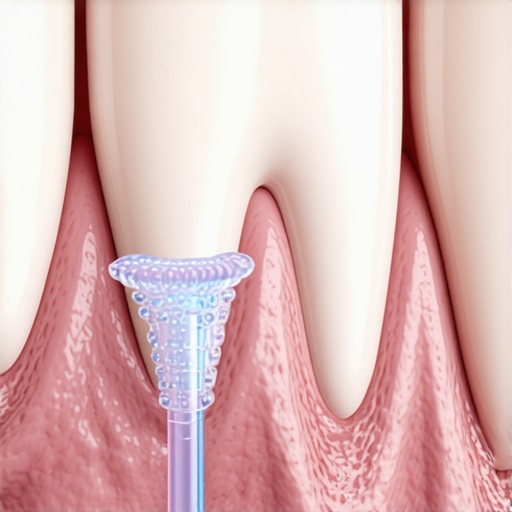
Why You Should Demand a 3D Scan Before Things Go South
We are moving past the era of ‘wait and see’ dentistry. If you feel even a tiny bit of discomfort, do not let it linger. In my experience, [why finding the best dentistry in Culpeper, VA usually starts with a 3D CBCT scan](https://familydentistpro.com/why-finding-the-best-dentistry-in-culpeper-va-usually-starts-with-a-3d-cbct-scan) is because these scans reveal bone density and hidden infections that standard 2D X-rays miss. I remember a friend who thought they just had a sinus headache, but a 3D scan revealed a hairline fracture in an old molar. Catching these things early is the difference between a simple adjustment and a full extraction. If you have recently had work done, you must be proactive about [how to stop your new crown from feeling too high when you chew](https://familydentistpro.com/how-to-stop-your-new-crown-from-feeling-too-high-when-you-chew) because an uneven bite can shatter porcelain over time.
How do I keep my dental work looking brand new for a decade?
The secret is in the chemistry of your cleaning routine. For those using clear aligners or night guards, the buildup of calcium is your biggest enemy. I have seen people ruin their expensive appliances by using boiling water or harsh bleaches. If you are struggling with [how to clean a night guard that has started to smell like vinegar](https://familydentistpro.com/how-to-clean-a-night-guard-that-has-started-to-smell-like-vinegar), you should switch to professional-grade ultrasonic cleaners. These small pods use high-frequency sound waves to blast away tartar without scratching the surface. This is one of [the hidden benefits of Invisalign for family dental care in 2025](https://familydentistpro.com/the-hidden-benefits-of-invisalign-for-family-dental-care-in-2025-at-903-am); the technology is making it easier than ever to maintain a pristine environment in your mouth. I predict that within the next few years, we will see smart-aligners equipped with real-time pH sensors that alert your phone when your mouth becomes too acidic. For now, my top advice is to try the ‘interproximal sweep’ with a water flosser on a medium setting right at the gumline of your crown tonight—it is a game-changer for long-term stability.
The Hardest Lesson I Learned About Protecting My Porcelain Investment
After years of navigating the world of restorative dentistry, I realized that a crown isn’t a ‘set it and forget it’ solution. One major lightbulb moment was discovering that gum health is the foundation for every expensive piece of porcelain in your mouth. If the tissue is inflamed from a burn or poor cleaning, the crown itself is at risk. I also learned that the truth about charcoal toothpaste and your tooth enamel is that it’s often too abrasive for both natural teeth and crowns, potentially scratching the surfaces we work so hard to protect.
- The Margin is Everything: The tiny gap where the crown meets the gum is where 90% of problems start.
- Gentle is Better: Aggressive brushing often causes more harm than good, especially during recovery.
- Scan, Don’t Guess: Visual exams only see the surface; true depth requires advanced imaging.
My Essential Kit for a Bulletproof Smile
If you want to maintain a healthy mouth without the guesswork, there are a few tools I never go without. First, a high-quality water flosser is non-negotiable for the best way to clean around a dental implant bridge to avoid inflammation. It reaches the pockets that string floss simply ignores. For those of us with removable appliances, an ultrasonic cleaner is the best way to clean your retainers without using harsh chemicals that can degrade the plastic over time. Lastly, I always advocate for finding a provider who uses advanced imaging, as why finding the best dentistry in Culpeper, VA usually starts with a 3D CBCT scan is rooted in the need for total precision before any procedure starts.
Your Smile Deserves a Proactive Guardian
Whether you are currently nursing a sore spot from a Friday night pizza or you are planning your next round of how Invisalign transforms family dentistry in 2025, the key is consistency. Your mouth is incredibly resilient, but it needs you to be its biggest advocate. By following top oral health tips for your family’s bright smiles, you can ensure that minor burns remain minor and your dental work lasts for decades. Don’t wait for a toothache to start your journey toward better hygiene. Have you ever had a dental crown that felt ‘off’ after a minor injury or burn? Let me know your experience in the comments below!