
How to keep your breath fresh while wearing Invisalign trays all day
I still remember the exact moment I realized my breath smelled like a damp basement. I was mid-sentence in a budget meeting, leaning in to explain a spreadsheet, when my colleague subtly—but clearly—crinkled her nose and took a half-step back. It was humiliating. I had spent thousands on these clear aligners to improve my smile, only to become the person everyone avoided talking to at close range. I thought I was doing everything right by just wearing them, but I quickly learned that how to prevent bad breath when you are wearing a retainer or aligner is a completely different ballgame than just keeping your teeth straight. It is a common struggle, and if you have ever caught a whiff of your trays after a few hours and wondered if the whole room can smell it, you are definitely not alone. Today, I am going to share exactly how I fixed my ‘Invisalign breath’ without losing my mind. [image_placeholder_1]
Ditch the Aligner Funk for Good
Look, the reality of clear aligner therapy is that you are essentially putting a plastic lid on your teeth and gums for 22 hours a day. This creates a warm, moist environment where bacteria absolutely thrive. Early on, I made the classic mistake of thinking a quick splash of lukewarm water was enough to clean my trays after a meal. I was wrong. That trapped saliva and microscopic food particles just sit there, fermenting against your enamel. Beyond the smell, some people even find that why your invisalign trays are suddenly making you lisp can be linked to the buildup of gunk that changes the fit of the tray slightly. We are going to solve this today by focusing on a routine that actually works for a busy person on the go.
Is it actually possible to keep things minty while wearing plastic all day?
You might be skeptical—I certainly was. It feels like a losing battle when you can’t just chew a piece of gum or pop a breath mint whenever you feel like it. However, the secret isn’t just about masking the smell; it’s about managing the biome of your mouth. Many people fall for common invisalign myths debunked articles that suggest you only need to brush twice a day. In reality, according to a study published in the Journal of Orofacial Orthopedics, the surface of clear aligners can host a significant amount of biofilm if they aren’t chemically cleaned or scrubbed regularly. I had to learn the hard way that my old habits weren’t going to cut it. Have you ever felt like no matter how much you brush, that funky taste just stays stuck to your aligners? If so, stick with me, because I’ve found the shortcuts that actually work.
Stop Trapping Bacteria Under the Plastic
The most important habit is the 100% compliance rule: never put an aligner back on a dirty tooth. Think of it like putting on a crisp, clean white shirt right after a three-mile run without showering—it is going to get gross fast. When you trap food particles under the tray, they do not just sit there; they break down and produce sulfur compounds. This is the primary source of that ‘basement’ smell. I remember being at my cousin’s outdoor wedding last summer; I had just finished a plate of sliders and realized I did not have my full cleaning kit. I tried to just ‘rinse’ with water, but within an hour, I could feel that film developing and the odor was unmistakable. Now, I never leave home without a travel kit. It is the only way to avoid that feeling where why your teeth feel fuzzy even after you just brushed them thoroughly because you missed a tiny spot before the tray went on. If you are on the move, the best way to travel with aligner cleaners in your carry-on or pocket is to keep a pre-packed pouch with a folding brush and a tiny bottle of alcohol-free rinse.
Soak Your Trays While You Eat
Instead of just tossing your trays in a plastic case while you have lunch, let them soak. Use this time to kill the bacteria that has been multiplying for the last four hours. I personally found that the best way to clean your retainers without using harsh chemicals is to use specialized cleaning tablets or a gentle, clear antibacterial soap. One time, I tried using a ‘natural’ DIY vinegar soak I read about online, and not only did it taste like a salad for the rest of the day, but it also did not actually kill the odor. Stick to products designed for the material that can lift the biofilm without scratching the plastic. 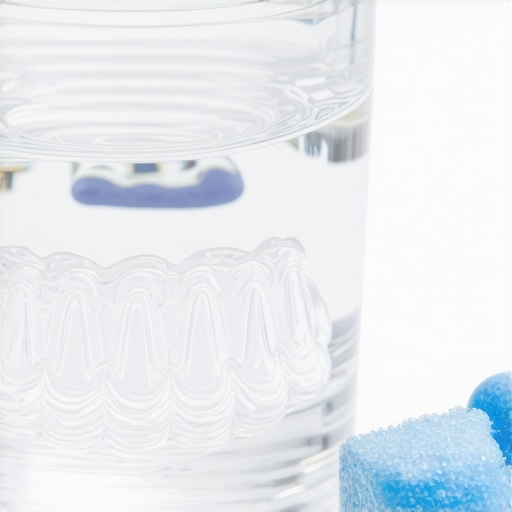
Clean Your Tongue to Remove the Hidden Source
Your tongue is like a shag carpet—it holds onto more bacteria than any other part of your mouth. When you wear aligners, your saliva flow changes, often leading to a drier mouth which makes the tongue ‘coating’ even worse. I used to skip this because of my sensitive throat, but learning how to clean your tongue without triggering your gag reflex changed the game. Use a dedicated metal or plastic tongue scraper instead of your toothbrush bristles. It is faster and significantly more effective at removing the white film that causes chronic halitosis.
Stay Hydrated to Flush the System
Dry mouth is the enemy of fresh breath. Without enough saliva to naturally wash away debris, the bacteria in your trays become more concentrated and pungent. If you find your breath is still a bit off despite constant cleaning, check your water intake. In the world of family dentistry secrets maintaining oral health with modern techniques at 254 pm, hydration is often the ‘missing link’ for orthodontic patients. I carry a water bottle with a straw now—it makes it easy to sip all day without having to constantly take my aligners out, which keeps the mouth moist and the breath much fresher throughout the afternoon.
Let’s dig deeper into why those odors persist even when you think you’re doing everything right. A common belief is that the more aggressively you scrub your trays, the cleaner they will be. In my experience, this is the first ‘oops’ factor that most people fall for. When you use a stiff-bristled brush or abrasive toothpaste on the plastic, you create microscopic scratches. These tiny grooves are the perfect hiding spots for the very bacteria you’re trying to eliminate. Once bacteria take up residence in these scratches, no amount of rinsing will get them out. This is why you might notice your why your invisalign trays feel tighter on some days than others—it’s often not the teeth moving, but a thick layer of biofilm and calcified plaque making the tray less flexible.
Why your favorite mouthwash might be making the smell worse
Everyone says to use mouthwash for fresh breath, but if you are soaking your trays in a standard alcohol-based rinse, you are likely sabotaging yourself. Alcohol is a desiccant, meaning it dries out the material of the aligner and, more importantly, dries out your oral tissues. A dry mouth lacks the protective enzymes of saliva, leading to a spike in sulfur-producing bacteria. I learned this the hard way when I realized my habit of ‘freshening up’ with a quick minty rinse was actually causing my how to stop your gums from hurting when you wear a mask struggle to intensify. The lack of moisture under the mask, combined with the alcohol’s drying effect, created a perfect storm for bad breath. Switch to an alcohol-free, pH-neutral rinse to maintain a healthy balance.
Why do my trays still smell even after a deep soak?
The answer often lies in the complexity of the oral microbiome. A study published in the American Journal of Orthodontics and Dentofacial Orthopedics (AJODO) found that clear aligners can develop a resilient ‘biofilm’ within just a few hours of wear. This biofilm isn’t just a layer of dirt; it’s a structured community of bacteria that protects itself with a slimy matrix. If you aren’t using an enzymatic cleaner that specifically breaks down these proteins, the bacteria stay alive even if the tray looks clear to the naked eye. This is one of the many invisalign myths debunked: the idea that a visual inspection is enough to confirm cleanliness.
Stop scrubbing your trays with whitening toothpaste
Another sophisticated mistake is using whitening toothpaste to clean your aligners. While it works wonders for your enamel, the silica and abrasive agents in these pastes are too harsh for medical-grade plastic. It’s similar to the danger of using whitening strips on a tooth with a filling; you’re applying a solution meant for one material to something it wasn’t designed for. These abrasives turn your clear trays cloudy and ‘sticky,’ allowing more food particles to cling to them. Instead, stick with the best way to clean your retainers without using harsh chemicals, which usually involves a gentle, non-abrasive liquid soap or specialized crystals. Using family dentistry secrets maintaining oral health with modern techniques at 254 pm taught me that preservation is just as important as cleaning. Have you ever fallen into this trap of over-cleaning only to make things worse? Let me know in the comments!
I finally stopped scrubbing my trays by hand when I discovered ultrasonic cleaners. These small devices use high-frequency sound waves, usually around 42,000 Hz, to create cavitation bubbles that implode and knock debris off the plastic without causing a single scratch. It is the same technology used in high-end jewelry cleaning, and for someone with a busy schedule, it is a complete lifesaver. While your trays are humming away in the bathroom, you can focus on the rest of your mouth without rushing. If you have also invested in restorative work, you know that the ultimate guide to crowns for a healthier smile always emphasizes the importance of the margin where the porcelain meets the gum line. That is a prime spot for bacteria to hide and flourish. I have found that a water flosser on a medium setting is the only way to truly flush those gaps, especially if you are dealing with how to manage a crown that feels sensitive to air or cold liquids because of slight gum recession.
The ultrasonic cleaner changed my morning routine forever
Beyond cleaning hardware, we are seeing family dentistry trends improving oral health for all ages where local clinics can now 3D print a replacement retainer in under an hour if you happen to lose yours while on vacation. This kind of technology scaling makes how invisalign transforms family dentistry in 2025 an exciting reality for families who need durable, quick solutions. I personally use a specialized app to track my wear time, which gamifies the process and ensures I never hit that ‘stiff’ feeling of a tray that doesn’t quite fit anymore.
How do I maintain my results over the long haul?
The biggest threat to a perfect smile isn’t a single missed brush; it is the slow creep of old habits. Once your active Invisalign treatment is finished, the game shifts entirely to retention. I used to think I was finished once the last tray was out, but invisalign myths debunked often forget to mention that teeth have a physiological memory and will naturally want to shift back to their original positions. This is where family dentistry secrets maintaining oral health with modern techniques at 254 pm become vital. I now treat my nighttime retainer with the same level of obsession as my active aligners. If you notice the easiest way to clean a night guard that has turned yellow or cloudy is the same ultrasonic method, you realize one tool covers your entire future dental health. Looking ahead, the landscape of invisalign innovations the future of family dentistry revealed at 1137 am suggests we are moving toward AI-monitored health. Experts like Dr. David Rice from IgniteDDS suggest that the integration of at-home monitoring apps will significantly reduce unnecessary office visits while increasing patient compliance. For now, staying ahead means using the best current tech to prevent issues before they start. If you are ever worried about why your invisalign trays feel tighter on some days than others, it is usually a clear sign to double-down on your wear-time and hydration immediately. I challenge you to try one thing this week: switch to an alcohol-free mouthwash and see if that fuzzy feeling in the afternoon finally disappears. It is a small change with a massive impact on your oral biome. Whether you are managing why crowns are a game changer in restorative dentistry or just trying to keep your natural teeth sparkling, consistency is your best friend. For more personalized advice, feel free to contact us or check our top oral health tips for your familys bright smiles.
The Hard Truth About My Year Wearing Plastic
Reflecting on my journey, the biggest lesson I learned is that dental hygiene isn’t a static goal but a shifting target. For instance, I used to believe that as long as my trays looked clear, they were clean. This is one of the most persistent invisalign myths debunked by actual experience; the smell is often microscopic. Another lightbulb moment was realizing that choosing between invisalign vs braces which solution fits your lifestyle depends entirely on your willingness to carry a toothbrush everywhere. If you aren’t ready for the ‘travel kit life,’ the convenience of aligners quickly turns into a hygiene hurdle. Finally, the shift to a nighttime retainer is where most people let their guard down, but that is exactly when you need to know the easiest way to clean a night guard that has turned yellow or cloudy to prevent morning breath from becoming a permanent fixture.
My Go-To Gear for a Fresh Smile
I have narrowed my routine down to a few non-negotiable tools that make maintenance feel like less of a chore. First, a high-quality ultrasonic cleaner is the only way to get into those invisible pores in the plastic. Second, I swear by a stainless steel tongue scraper; it is far more effective than a brush and easier to keep sanitary. Third, for those of us who can’t live without our morning brew, learning how to keep your aligners clear while drinking tea or coffee is a game changer for preventing stains that trap odors. Lastly, staying updated on invisalign innovations the future of family dentistry revealed at 1137 am helps me find new pH-balanced products that protect my enamel while I sleep.
Your Journey to a Breath-Safe Smile Starts Today
You don’t have to choose between a straight smile and fresh breath. By implementing these small shifts—using the right cleaners, staying hydrated, and timing your brushing sessions for the best time of day to brush for maximum enamel protection—you can wear your aligners with total confidence. Knowing how to prevent bad breath when you are wearing a retainer is the ultimate secret to finishing your treatment with a smile that looks as good as it feels. Have you ever felt that awkward ‘fuzzy’ feeling on your teeth mid-way through a long day of wearing your trays? Let me know in the comments below!