
Why your child’s breath smells even after they brush
I used to think I was the undisputed champion of the bedtime routine. Two minutes on the timer, a precise pea-sized dollop of paste, and the circular motion lecture. But there I was, leaning in to kiss my daughter goodnight, and one sleepy “I love you, Dad” later, I was nearly knocked over. It wasn’t just a hint of onion—it was that thick, sour scent that shouldn’t belong to a kindergartner. I felt like I was failing at basic family dentistry in my own home.
When Minty Fresh Lasts for All of Five Minutes
The struggle with why your child’s breath smells even after a thorough brushing is a special kind of parenting guilt. You’ve scrubbed, they’ve spat, and yet the air still smells like they’ve been snacking on old gym socks. In my early days as a dental-obsessed parent, I made a classic mistake: I assumed the brush wasn’t hard enough. I almost fell for the hype of abrasive deep cleans before I learned the truth about charcoal toothpaste and how it can actually harm little smiles. The reality is, the problem usually isn’t the effort; it’s the target. We’re going to solve this mystery today by looking at the biology behind the odor, from sinus issues to the hidden sugars in healthy snacks that turn a child’s mouth into a bacteria buffet.
Is it possible we’re missing something beyond the brush?
Many parents worry that a smelly mouth means their child is destined for a lifetime of cavities or needs Invisalign to fix crowded teeth that trap food. But often, the smell is just a signal of something systemic. Research from the American Academy of Pediatric Dentistry suggests that chronic halitosis in kids is frequently linked to mouth breathing or enlarged tonsils rather than just poor hygiene. Sometimes, why your child’s new molars have deep grooves plays a part, but if you’re smelling something funky, we need to look deeper into the throat and habits. Have you noticed your little one’s breath getting worse even when you’re the one doing the brushing? Let’s break down exactly what else might be going on in there.
Check the nose for mouth-breathing habits
If you’ve noticed that your child’s breath is particularly pungent first thing in the morning or right after a long nap, take a look at how they are actually breathing. Saliva is essentially the mouth’s own pressure washer; it is designed to constantly rinse away dead cells and neutralize acids. When a child breathes through their mouth, that vital ‘detergent’ evaporates. This dry environment is often why your child’s mouth stays open while they sleep and what it means for their oral microbiome. Without saliva, the bacteria throw a party, and the byproduct of that party is the sulfur smell you’re catching. If you notice your little one is a chronic mouth-breather, it’s worth checking for allergies or enlarged tonsils, as no amount of brushing can compensate for a mouth that’s as dry as a desert.
The tongue is a carpet for bacteria
Next, we have to talk about the tongue. Think of the tongue like a high-pile shag carpet. It isn’t a flat, smooth surface; it is covered in tiny bumps called papillae that are perfect for trapping microscopic food particles and bacteria. Even if the teeth are sparkling, a coated tongue will keep the odor alive. This is frequently the reason your tongue stays white even if you brush it every day. I’ll never forget the first time I introduced a tongue scraper to my six-year-old daughter. She was convinced I was trying to ‘peel’ her tongue like an orange. I had to make it a game—we called it the ‘Gunk Ghost Hunt.’ When we finally got a clean sweep, and she saw the yellowish film on the scraper, her eyes went wide. ‘That was hiding in my mouth?’ she asked. That one simple tool changed the ‘stink factor’ in our house by about 80% overnight. 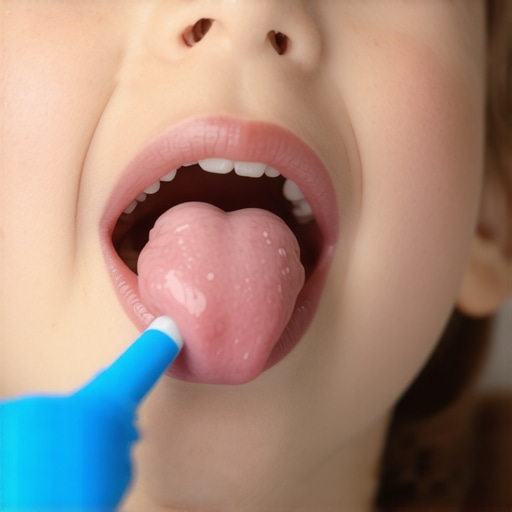
Deep grooves and the fruit snack trap
We also have to look at the physical geometry of their teeth. Younger kids getting their adult molars often deal with why your child’s new molars have deep grooves that trap food. These grooves are like microscopic canyons where bits of granola or ‘healthy’ fruit leather sit and rot. Speaking of which, you should know the truth about fruit snacks and their impact on childhood dental health. They are essentially gummy bears in a trench coat, sticking into those grooves and fueling the odor-causing bacteria for hours. To combat this, many parents find that why your child needs a dental sealant on their molars becomes a vital conversation during their next checkup. Sealants act like a plastic ‘tarp’ over those canyons, preventing food from getting stuck in the first place. Following top oral health tips for your family’s bright smiles means looking beyond the front teeth and making sure the hidden nooks and crannies in the back are just as clean.I’ve seen it time and again: a parent comes in, frustrated because they’ve been ‘scrubbing for five minutes straight,’ yet the odor persists. Here is the contrarian truth: more force is rarely the solution. In fact, if you’re noticing a lingering smell despite aggressive cleaning, you might be dealing with the ‘over-sanitization’ trap. When we use abrasive tools or the truth about charcoal toothpaste comes to light, we realize that thinning the enamel or irritating the soft tissue only provides more places for bacteria to hide. If you aren’t careful, you might need to learn how to tell if your gums are receding from brushing too hard before the damage is permanent.
The hidden trap of the alcohol-based rinse
One of the most common mistakes is reaching for the strongest mouthwash on the shelf. We think the ‘burn’ means it’s working, but that’s a dangerous myth. High-alcohol content actually dehydrates the oral mucosa. This is the truth about alcohol-based mouthwashes and chronic dry mouth—they kill some bacteria initially, but the resulting dry environment is a breeding ground for the anaerobic species that produce sulfur. According to the American Academy of Periodontology, these anaerobic bacteria thrive when saliva flow is restricted, which is also why your mouth feels dry even when you drink plenty of water.
Why do perfectly straight teeth still struggle with hidden odors?
You might think that alignment is purely about aesthetics, but even kids with great smiles can have ‘micro-traps.’ If you’ve been looking into Invisalign myths debunked, you’ll find that alignment actually aids in the natural ‘self-cleansing’ process of the mouth. When teeth are crowded, even slightly, they create pockets where oxygen can’t reach, allowing those smelly anaerobic bacteria to flourish. Utilizing family dentistry secrets for maintaining oral health means understanding that the chemistry of the mouth is just as important as the physical cleaning. Have you ever fallen into the trap of thinking a stronger scrub was the answer? Let me know in the comments! I’m curious to hear how you’ve tackled the ‘stink factor’ at home.
I’ve realized that the ‘set it and forget it’ mentality just doesn’t work for dental health. Once you’ve conquered the immediate odor issues, you have to look at the long game. For my own family, that meant upgrading from manual tools to tech that does the thinking for us. I personally swear by a pressure-sensing electric toothbrush. Why? Because I was the guy who ended up needing to know how to tell if your gums are receding from brushing too hard. The sensor flashes red when I’m being a caveman with my gums, which is a life-saver for long-term enamel preservation.
If you’re dealing with older kids or even your own smile, scaling up your care might involve structural changes. We often discuss how Invisalign transforms family dentistry in 2025 because properly aligned teeth are simply easier to keep clean. It’s not just about a straight smile; it’s about removing those ‘stink pockets’ I mentioned earlier. If you’re already past the point of preventative care and have restorations, you need to be even more diligent. I’ve seen too many people ignore choosing the right crown expert advice for long-lasting results and end up with a restoration that fails in three years because of poor home maintenance.
How do I keep my family’s smiles healthy over the long haul?
The secret isn’t just brushing more; it’s brushing smarter and using the right supplemental tools. I’ve become a huge advocate for the water flosser, but only if you know the trick to using a water flosser without making a total mess. Clinical research, such as that published in the Journal of Clinical Dentistry, indicates that water flossing can be significantly more effective than traditional string floss for reducing gingivitis when used correctly.  I predict that in the next few years, we’ll see smart-sync dental tools that send data directly to your family dentistry practice, allowing your doctor to see where you’re missing spots in real-time.
Of course, even with the best tools, life happens. You might notice why your porcelain crown has a tiny chip on the edge after a particularly crunchy taco night. Or perhaps you feel a twinge and need to run the sip test to determine if your tooth sensitivity is nerve-related. The key is to address these small changes before they become expensive emergencies. Don’t wait for the pain to start—use these advanced tools and listen to what your mouth is telling you today. My best advice? Try the ‘closed-mouth’ water flossing technique tonight; it’s a total game-changer for keeping those deep molar grooves clean without soaking your bathroom mirror!
What I finally realized about the ‘stink’ factor
After years of obsessing over timers and toothpaste brands, I had a few lightbulb moments that changed everything. First, I learned that more pressure doesn’t equal more clean; it usually just leads to the parent needing to know how to tell if your gums are receding from brushing too hard. Second, the ‘healthy’ labels on snacks are often masks for tooth-rotting sugar. I stopped buying the gummy fruit snacks once I saw the truth about fruit snacks and their impact on childhood dental health firsthand. Finally, fresh breath is a chemistry game, not just a scrubbing game. When I started using family dentistry secrets for maintaining oral health, like focusing on the tongue and hydration, the morning ‘dragon breath’ finally vanished.
My non-negotiable toolkit for a fresh-smelling home
I don’t believe in cluttering the bathroom counter, but these items are essential. A stainless steel tongue scraper is my number one recommendation because it’s much more effective than a brush alone for clearing the biofilm that causes odor. I also swear by a water flosser for those hard-to-reach molars—just make sure you’ve mastered the trick to using a water flosser without making a total mess first. Lastly, keep a stash of Xylitol-based mints for after-school snacks; they help neutralize acids when a brush isn’t handy. These simple top oral health tips for your family’s bright smiles are the foundation of our routine.
#IMAGE_PLACE_HOLDER_E#
Confidence starts with a clean slate
Navigating the world of family dentistry can feel like a full-time job, but remember that every small habit you build now saves your child from discomfort later. Whether it’s opting for sealants to protect deep grooves or simply teaching them to breathe through their nose, you are setting them up for a lifetime of confident smiles. Don’t let a little morning odor discourage you; it’s just your child’s mouth telling you what it needs. Have you found a ‘hidden’ odor trap in your child’s routine that I missed? Let me know in the comments below!