
The easiest way to get food out from under your bridge
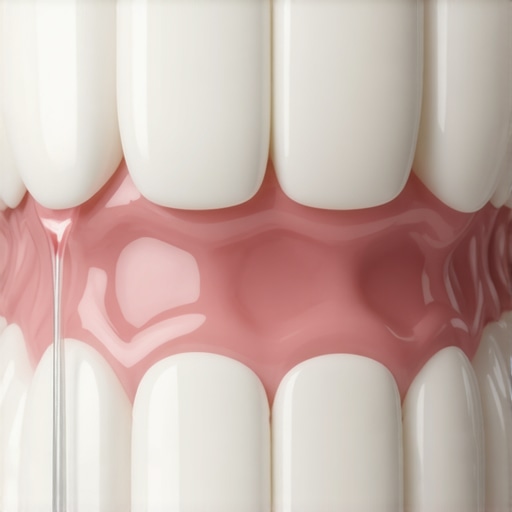
I remember sitting at a fancy anniversary dinner, desperately trying to look elegant while a piece of sourdough bread was wedged firmly under my dental bridge. I was poking at my gums with my tongue so hard I thought I’d sprain it. It’s the “bridge owner’s curse”—that sudden, nagging pressure that tells you dinner is going to stay with you for the next three days. I used to think a regular toothbrush was enough, but I learned the hard way that missing those spots leads to some pretty unpleasant surprises at the dentist. If you have been struggling with that constant feeling of something being stuck, I am here to tell you that you do not have to live with it, and you certainly do not have to resort to using a folded business card in a restaurant bathroom.
Why Ignoring That Food Trap Is a Recipe for Disaster
It is not just about the localized annoyance of a stray peppercorn. When food sits under your bridge, it starts a tiny party for bacteria that you definitely were not invited to. Early on in my journey with restorative dentistry, I made the mistake of thinking if I just rinsed aggressively with water, I was in the clear. I was wrong. I eventually developed a mild infection because I was not using the specific way to floss under a fixed dental bridge. When food debris decomposes, it irritates the gum tissue, often leading to a situation where your gums feel spongy or look inflamed. According to the American Dental Association, failing to clean around dental restorations can lead to localized periodontal disease and even decay on the natural anchor teeth that hold your bridge in place. Have you ever found yourself in a public place trying to discreetly “fish” something out from under your bridge with your tongue?
Is a Water Flosser Actually Worth the Counter Space?
You might be wondering if you really need another gadget on your bathroom vanity. I was a total skeptic myself until I saw the debris that my water flosser knocked loose after I thought I was already done brushing. It is a absolute game changer, especially if you learn the trick to using a water flosser without making a total mess of your mirror. Today, we are going to walk through the most effective tools and techniques I have found to keep your bridge clean, your breath fresh, and your anchor teeth healthy for the long haul.
Thread Your Way to a Healthier Smile
Cleaning a bridge isn’t like flossing regular teeth where you just go up and down. You have to think like a master seamstress. You need to get under the pontic—that is the fake tooth in the middle that replaces the missing one. I remember my first time using a floss threader; I felt like I was trying to perform microsurgery on myself in a dimly lit mirror. I poked my gums, missed the gap three times, and almost gave up in frustration. But once I mastered the specific way to floss under a fixed dental bridge, the relief from that nagging pressure was instant. Use a bridge-specific floss, often called superfloss, which has a stiffened end. You slide that stiff part through the gap between your gum and the bridge, pull it through until the fuzzy middle section is under the bridge, and gently move it back and forth to clear out the plaque. This simple habit prevents the localized decay that often threatens the natural teeth supporting the entire restoration. 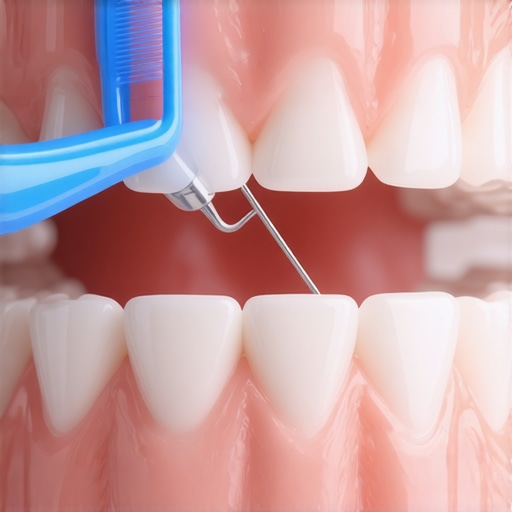
Aim Your Water Flosser with Precision
If threading floss feels like too much of a chore after a long day, a water flosser is your absolute best friend. However, do not just spray it blindly at your teeth. You want to aim the tip at a 90-degree angle toward the gum line where the bridge meets your natural tooth. This is where modern family dentistry techniques really shine, allowing for a deep clean without the physical struggle of manual flossing. I used to just blast the front of the bridge, but that does not reach the back side where bacteria love to hide. You need to trace the entire perimeter of the bridge, including the underside. If you notice why your dental crown feels like it is shifting or trapping more food than usual, it might be because of plaque buildup or slight bone changes around the anchor teeth. Knowing the trick to using a water flosser without making a total mess of your bathroom mirror will make you much more likely to stick to this routine every night.
Tiny Brushes for Big Results
For those really tight spots where a water flosser might not feel quite powerful enough, interdental brushes are lifesavers. They look like tiny pipe cleaners and can reach the nooks and crannies that standard floss sometimes glides right over. I once tried to force a regular piece of floss through a particularly tight gap and ended up snapping it, leaving a tiny shred behind that caused a weekend of misery and inflammation. That tiny shred felt like a boulder lodged under my bridge. Now, I use a tiny brush dipped in an antimicrobial rinse. This technique is incredibly similar to how to stop your dental implant from trapping food, as the mechanics of space management in the mouth are very similar. If you find the reason your crown feels tight after flossing is due to debris, these small brushes will safely clear the path without damaging the porcelain or the cement.
Manage Irritation with Immediate Action
Even with great cleaning, things occasionally get irritated if you miss a day. If you feel like your gums feel spongy or look slightly darker, it is a clear sign that bacteria are starting to cause trouble. Do not back off because of the sensitivity; instead, double down on very gentle cleaning. Use the saltwater rinse hack for immediate gum relief to reduce swelling and kill surface bacteria. When you are deciding between different restorative paths, such as crowns vs veneers or a bridge, the maintenance requirements should always be your top priority. While Invisalign aligners offer a removable option for easy cleaning, your fixed bridge is a permanent commitment to these daily hygiene rituals that protect your investment and your health.Even after you have mastered the art of the floss threader, there is a dangerous trap most people fall into: assuming that because porcelain cannot decay, the tooth underneath is bulletproof. I used to think of my bridge like a suit of armor for my gums. However, the reality is that the most vulnerable part of any restoration is not the surface, but the ‘margin’—that microscopic line where the porcelain meets your natural tooth. If you are not careful, this area becomes a magnet for plaque that is much harder to detect than a cavity on a natural tooth. When you are choosing the right crown expert advice for long-lasting results, you learn that the ‘seal’ of that margin is the only thing standing between a healthy smile and a failed restoration. According to a landmark study in the Journal of Oral Rehabilitation, secondary caries at the margin is the leading cause of bridge failure, often occurring because patients assume the synthetic material requires less care than enamel. 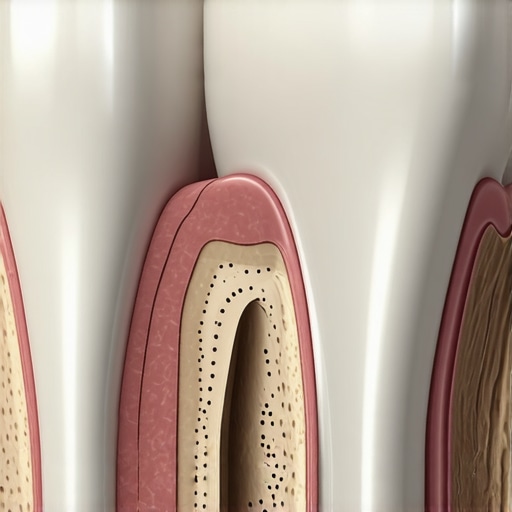
Does Your New Zirconia Crown Feel a Bit Too Tall?
It is incredibly common to leave the dentist’s chair feeling like your bite is ‘off.’ I remember being convinced my dentist had accidentally given me a tooth meant for a giant because it felt like it was hitting before everything else. This is often just your brain’s proprioception—the way your mouth senses position—adjusting to a new material. If you notice why your new zirconia crown feels taller than your other teeth, it is usually because zirconia is much denser and less ‘springy’ than natural enamel. Furthermore, you might find why your dental implant feels different than a natural tooth when you bite because it lacks the periodontal ligament that acts as a shock absorber for natural teeth. This lack of ‘give’ can make any slight misalignment feel like a mountain in your mouth.
Stop Scrubbing Your Gums Into Submission
Here is the ‘oops’ factor I see most often: the ‘cleaner is better’ obsession that leads to over-brushing. When we are worried about food traps, our instinct is to scrub harder. I did this for months until my gums started to pull back, exposing the dark metal line of my old bridge. I was literally brushing my gums away. It is vital to understand the truth about soft vs hard toothbrushes for receding gums; a hard brush is basically sandpaper for your delicate tissue. If you are transitioning from braces and noticing how to fix the black triangle gaps that appear after braces, aggressive scrubbing will only make those gaps larger and more prone to trapping food. This is also a common pitfall when people believe certain Invisalign myths debunked that suggest aligners do all the work; your hygiene technique remains the most critical factor. Have you ever fallen into the trap of thinking your bridge was bulletproof, or have you struggled with a bite that felt just a little bit ‘off’? Let me know in the comments below.
Use Vinegar to Save Your Retainers
I once spent sixty dollars on a ‘specialized’ cleaning kit for my night guard, only to realize that the most effective solution was already sitting in my pantry. If you are dealing with a funky smell or cloudy buildup on your appliances, you need to try the vinegar soak that safely sanitizes your retainers and guards. I use this method specifically because white vinegar is a natural acetic acid that breaks down calcium deposits without the harsh chemicals found in some effervescent tablets. It is a gentle yet powerful way to ensure you aren’t putting bacteria back into your mouth every night after you’ve spent all that time cleaning your teeth.
Keep Your Invisalign Trays Crystal Clear
Maintaining transparency in your aligners is about more than just aesthetics; it is about keeping the material porous enough to breathe but sealed enough to move your teeth. If you’ve noticed why your Invisalign trays are turning yellow even with regular cleaning, it is likely due to microscopic scratches trapping pigments from your morning coffee or even certain mouthwashes. I learned the hard way that using a standard toothpaste on aligners is too abrasive. Instead, I follow the protocol for how to keep your Invisalign trays clear without buying expensive cleaners, which involves using a mild, clear liquid soap and a very soft brush. This prevents those tiny scratches from forming, keeping your ‘invisible’ braces truly invisible.
How do I maintain my dental restorations for a lifetime?
The secret to longevity isn’t just what you do at home, but how you and your dentist monitor the work. Dr. Gordon J. Christensen, a world-renowned educator in restorative dentistry and founder of Practical Clinical Courses, notes that while the industry standard for bridge life is a decade, patients who master ‘interproximal discipline’—the specific tools like superfloss and water flossers—can see their dental work last thirty years or more. This is where what a 3d cbct scan reveals that standard x-rays miss entirely becomes critical. These 3D images allow your dentist to see the bone health around your bridge anchors in ways a flat X-ray never could. Understanding the secret to making your dental implants last for the rest of your life often comes down to this early detection of bone changes.
The Future Involves Smart Teeth
I predict that within the next decade, we won’t just be cleaning our bridges; our bridges will be telling us when they need a deep clean. We are already seeing Invisalign innovations and the future of family dentistry moving toward integrated sensors. Imagine a crown that can detect a drop in pH levels—indicating a bacterial surge—and send a notification to your smartphone before a cavity even starts. Until that high-tech future arrives, we have to rely on our own diligence. My challenge to you tonight: stop just ‘wearing’ your dental work and start actively managing it. If your aligners feel even slightly loose, use how to seat stubborn invisalign trays using the munchie technique to ensure the roots are actually being engaged. You have invested a lot in your smile; let’s make sure it stays exactly where it belongs.
What the Instruction Manual Forgot to Mention About Your Smile
After years of managing dental restorations, I have realized that the mental shift is just as important as the physical tools. First, never ignore a persistent metallic or sweet taste; it is often the first sign that the seal of your bridge is compromised. Second, the mirror is your best teacher—use a high-powered magnification mirror to see exactly where that threader is going. Third, your natural saliva is a powerful defense, so if you struggle with dry mouth, you are at a higher risk for bridge failure. I found that learning why your mouth feels dry when you take certain medications was a major factor in my own plaque buildup. #IMAGE_PLACEHOLDER_E#
The Gear That Actually Saved My Sanity
You do not need a suitcase full of gadgets, but these four are non-negotiable for me. I swear by Oral-B Superfloss because the stiff end is like a needle that threads perfectly under the pontic. For a deep flush, a cordless water flosser is my go-to; it allows me to use the trick to using a water flosser without making a total mess while in the shower. I also keep a stash of interdental brushes in my car for post-lunch emergencies. Finally, for my night guard, nothing beats a simple White Vinegar soak—it is more effective than expensive tablets, as detailed in the vinegar soak that safely sanitizes your retainers and guards.
Own Your Smile Instead of Just Wearing It
Your bridge or crown is not just a piece of porcelain; it is a vital part of your daily health. By committing to these small habits, you are not just cleaning a tooth—you are protecting your investment and ensuring your long-term oral health. Whether you are navigating the choice between Invisalign vs braces or simply maintaining a decades-old bridge, the goal is the same: a smile that feels as good as it looks. Modern family dentistry has given us the tools to keep our natural teeth for life, even when they need a little extra support. Have you ever had a specific food that always seems to find its way under your dental work? Let me know in the comments below!