
Why your jaw clicks more when you are stressed at work

I was sitting at my desk last Tuesday, staring at a spreadsheet that refused to balance, when it happened. *Click.* A sound so sharp my cubicle neighbor actually turned around to see what I’d dropped. It wasn’t my pen or my phone. It was my jaw. For years, I ignored that occasional pop, thinking it was just a weird quirk of my body, like a double-jointed thumb or a noisy knee. But as my workload increased, that “click” turned into a rhythmic soundtrack to my afternoon meetings. I realized that my body wasn’t just tired; it was physically reacting to the pressure of the 9-to-5 grind. If you’ve ever felt like your mouth is a percussion instrument every time a deadline approaches, you’re definitely not alone. [image_placeholder_1]
Why Your Job is Literally Making Your Jaw Noisy
It took me way too long to connect my professional stress to my facial pain. I made the classic mistake of trying to “self-adjust” by forcing my jaw to pop even more, thinking I could reset it. Huge mistake. All I did was aggravate the joint further and cause unnecessary inflammation. When we are stressed, our bodies enter a “fight or flight” mode. For many of us, that “fight” happens right in our mouths. We clench. We grind. We hold tension in muscles we didn’t even know we had. This constant pressure on the temporomandibular joint is the culprit behind that clicking. In fact, research from the Mayo Clinic highlights that stress is a massive factor in jaw disorders, leading to everything from clicking to constant morning headaches that just won’t quit.
Is this clicking actually a sign of something permanent?
That was my biggest fear. I thought I’d permanently broken my face or that I’d need surgery just to eat a sandwich again. But here is the good news: while the sound is annoying and sometimes alarming, it’s often a functional issue rather than a structural failure. Today, we are going to look at how to identify these triggers and what you can do at your desk right now to find relief. Whether you’re dealing with a sore face after a night of heavy dreaming or just that midday pop, there are ways to manage it without a medical degree. Have you ever caught yourself clenching your teeth so hard while typing an email that your ears start to ring? Drop a comment or just take a second to breathe—it’s the first step to healing. Often, the clicking is just the start of a larger conversation about your oral health. If left unchecked, that tension can lead to worn-down enamel or even shifted teeth. I’ve seen friends end up needing crowns for a healthier smile simply because they ground their natural teeth away during a busy tax season. Others have found that modern invisalign treatments can actually help realign things if an uneven bite is making the stress-clicking worse. But before we get to the big fixes, we need to master the simple ways to stop your jaw from locking or popping during your lunch break.
Master the N-Position Right Now
The quickest way to stop your jaw from sounding like a rusty gate is to change your default mouth posture. Most of us, when stressed, let our teeth touch. They shouldn’t. In a healthy mouth, your teeth should only come into contact when you are actually chewing or swallowing. For the rest of the day, you need the “N-Position.” Say the letter “N” out loud. Notice where the tip of your tongue lands—on that little ridge of skin right behind your upper front teeth. That is home base. Keeping your tongue there acts like a natural spacer, forcing your jaw muscles to relax and preventing the clenching that leads to clicking. 
Set a Physical Anchor for Your Jaw Tension
It is easy to remember to relax when you are reading this, but what happens when the 4 PM emails start flying? I used to be a chronic clencher until I started using a “visual anchor.” I put a tiny blue sticker on the corner of my computer monitor. Every time I looked at it, I checked my jaw. Was I clenching? Was my tongue at home base? Last month, I was deep into a chaotic tax filing, and that little sticker saved me. I caught myself biting down so hard my ears were ringing. By intentionally resetting to the N-position every time I saw that blue dot, I avoided the usual three-day flare-up. If you can’t use a sticker, use your phone. Setting a silent haptic alarm every thirty minutes is one of the top oral health tips for your family’s bright smiles because it builds the habit of awareness.
Fix the Underlying Gears of Your Smile
Think of your mouth like a high-performance engine. If the gears are slightly out of alignment, they will eventually grind each other down or snap. If your jaw clicks because your teeth don’t fit together quite right, you might be fighting a losing battle with just habit changes. This is where how invisalign transforms family dentistry in 2025 comes into play; by shifting your bite into its natural track, the joint stops being forced into awkward angles. If years of grinding have already flattened your molars, you might notice your back teeth feel uneven. In these cases, why crowns are a game changer in restorative dentistry becomes clear: they restore the height of your bite, taking the pressure off the joint. Getting the ultimate guide to crowns for a healthier smile can help you see if structural repair is the missing piece of your puzzle.
Ditch the Nightly Grind Without the High Price Tag
If you wake up with a dull ache, you’re likely fighting a war in your sleep. You don’t always need a custom-molded lab piece to see immediate improvement. Learning how to stop grinding your teeth without an expensive night guard often starts with a holistic look at your routine. I see so many people drop hundreds of dollars on a custom guard only to wake up with the same throbbing headache. The truth is, a guard is a defensive tool, not a lifestyle fix. If you aren’t addressing the daytime clenching we discussed earlier, you’re basically just giving your jaw muscles a heavier weight to lift at night. I call this the ‘Plastic Trap.’ You think you’re safe, so you ignore the signals your body is sending you during the workday. Have you ever fallen into this trap? Let me know in the comments because I certainly did for the first three months of my recovery.
Your Night Guard Is Just a Band-Aid
Many dental patients assume that a night guard is a cure-all for bruxism, but that is a common misconception. In reality, a guard simply protects your teeth from attrition; it does not necessarily stop the neurological impulse to clench. In fact, some people actually clench harder when they have a soft guard in their mouth because the brain treats it like a chew toy. If you want to know how to stop grinding your teeth without an expensive night guard, you have to look at the neuromuscular connection. You need to train your brain to keep the jaw in a neutral position throughout the day so that the muscle memory carries over into your sleep.
Why Your New Crown Might Actually Trigger More Pain
Here is a nuance that most people miss: dental work can sometimes be too successful. When you get a new restoration, it needs to be calibrated to your bite within microns. If your why your new zirconia crown feels taller than your other teeth, even by the thickness of a piece of hair, your jaw will subconsciously shift to avoid it. This “avoidance” pattern is what causes the joint to click and pop. I’ve seen patients who thought they had a major joint disorder, but the “oops” factor was simply a crown that needed a two-minute adjustment. If you notice that why your dental crown feels like it is shifting or hitting first when you chew, don’t just “get used to it.” That tiny misalignment is a massive stressor for your TMJ. 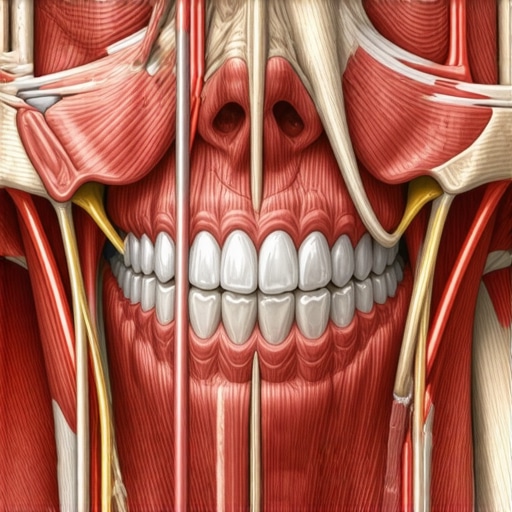
Can Invisalign Really Silence the Clicking for Good?
One of the most advanced questions I get is whether orthodontic alignment is a permanent solution for jaw noise. The answer is: it depends. If your clicking is caused by a structural misalignment where your teeth are fighting your joint’s natural path, then yes, how invisalign transforms family dentistry in 2025 is through precision occlusal harmony. However, there are invisalign myths debunked every day that suggest it’s a magic wand for all facial pain. According to a study published by the Journal of Oral Rehabilitation, while stabilizing the bite can reduce symptoms, the emotional stress component must still be managed. You can have the straightest teeth in the world, but if your stress levels are through the roof, you’ll still find a way to clench.
Protect the Long-Term Health of Your Jaw
The “hidden secret” to long-term relief isn’t just one procedure—it’s the integration of habit and technology. Using family dentistry secrets maintaining oral health with modern techniques at 254 pm means combining things like regular bite checks with mindful relaxation techniques. If you’ve been struggling with that “rhythmic soundtrack” in your jaw, it’s time to stop guessing. Whether it’s a minor adjustment to a restoration or a more comprehensive plan, the goal is to get those gears running smoothly again.
Use Munchies to Seat Your Trays Like a Pro
If you’re currently in the middle of an orthodontic journey, you’ve likely realized that simply putting your aligners in isn’t enough. To truly silence the jaw clicking caused by a misaligned bite, those trays need to be fully engaged. I personally moved away from standard ‘chewies’ and started using a tool called a ‘Munchie.’ These are clinical-grade silicone devices designed with specific indentations for your front and back teeth. I use the ‘munchie technique’ for at least ten minutes a day because it ensures the plastic is actually gripping the tooth’s surface, which is essential for the bone remodeling process. You can learn exactly how to seat stubborn invisalign trays using the munchie technique to prevent those tiny gaps that lead to tracking errors. 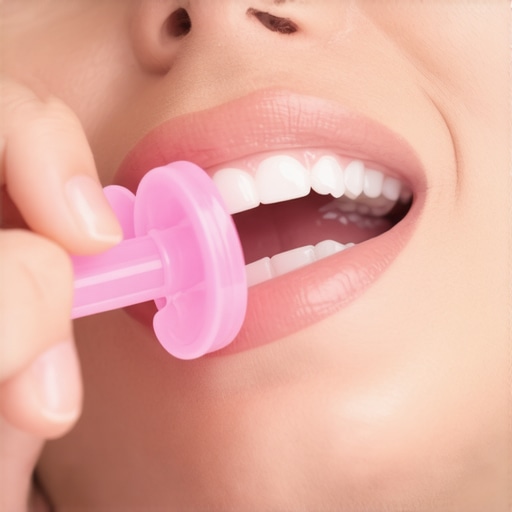
Stop Guessing Where Your Bite Hits
For years, dentists used articulating paper—that little blue or red strip you bite down on—to check your occlusion. But the problem is that paper only shows where the teeth touch, not how hard or in what sequence they hit. I recently discovered T-Scan technology, a digital bite analysis tool that produces a movie of your bite. According to Dr. Robert Kerstein, a leading expert in digital occlusal analysis, even a millisecond of delay in how your back teeth ‘disclude’ (or come apart) can trigger massive muscle tension. This is why what a 3d cbct scan reveals that standard x-rays miss entirely is so vital; it allows your dentist to see the spatial relationship between your joint and your teeth in real-time. If you’ve ever wondered why your new zirconia crown feels taller than your other teeth, it’s usually because the timing of the bite is off, even if the ‘paper’ says it looks fine.
How Can I Keep My Smile Healthy for the Next Decade?
Maintenance isn’t a one-time event; it’s a series of small, high-tech habits. I recommend integrating a water flosser into your nightly routine, but be prepared—why your gums throb after you use a water flosser for the first time is usually due to localized inflammation you didn’t know was there. Once that settles, the stimulation actually helps firm up the tissue around your crowns and natural teeth. For those with restorations, the secret to making your dental implants last for the rest of your life is identical to maintaining your natural teeth: preventing the ‘biofilm’ from hardening into tartar. Looking forward, I predict we will soon see AI-integrated night guards that sync to your phone, alerting you via haptic feedback the moment you start to clench in your sleep. This is just one of many invisalign innovations the future of family dentistry revealed at 1137 am that will change how we manage stress-related oral health. For now, I challenge you to try the ‘N-Position’ for just one full workday and see if that clicking subsides. Consistency with these top oral health tips for your family’s bright smiles is what separates a temporary fix from a lifetime of comfort.
The Most Surprising Lessons My Jaw Taught Me
After years of dealing with that rhythmic clicking, I realized that the sound wasn’t just a physical glitch; it was a signal that my entire bite was out of sync. One of the biggest lightbulb moments was discovering that my brain was subconsciously trying to ‘fix’ a misalignment every time I closed my mouth. I also learned that a night guard isn’t a permanent solution if you haven’t mastered the N-position during the day. Another revelation was how much even a tiny dental restoration can change the game; if you are currently choosing the right crown expert advice for long lasting results can save you months of joint discomfort. Finally, I realized that the clicking often stops once you address the hidden stressors that make you clench in the first place.
My Personal Strategy for Staying Tension-Free
To keep my jaw from reverting to its old, noisy habits, I rely on a few specific tools and techniques that have changed my life. First, I never skip using my silicone munchies to ensure my bite stays perfectly seated; learning how to seat stubborn invisalign trays using the munchie technique is essential for anyone in clear aligner therapy. I also recommend looking into invisalign vs braces which solution fits your lifestyle if you suspect your clicking is purely structural. For general maintenance, staying updated on family dentistry trends improving oral health for all ages helps me choose the least invasive treatments possible. These resources aren’t just clinical suggestions; they are the exact methods I used to go from daily headaches to total silence.
Take the First Step Toward a Pain-Free Smile
You don’t have to live with a jaw that sounds like a metronome. By combining mindful habits like the N-position with modern dental technology, you can protect your long-term oral health and finally feel relaxed again. Whether you need a simple bite adjustment or are ready to the hidden benefits of invisalign for family dental care in 2025 at 903 am, the relief of a quiet jaw is worth the effort. Don’t wait for the clicking to turn into locking; start your journey toward a more comfortable smile today. Have you ever felt a ‘click’ that just wouldn’t go away, or discovered your stress was showing up in your smile? Let me know your experience in the comments below!