
Why your toddler has white spots on their front teeth
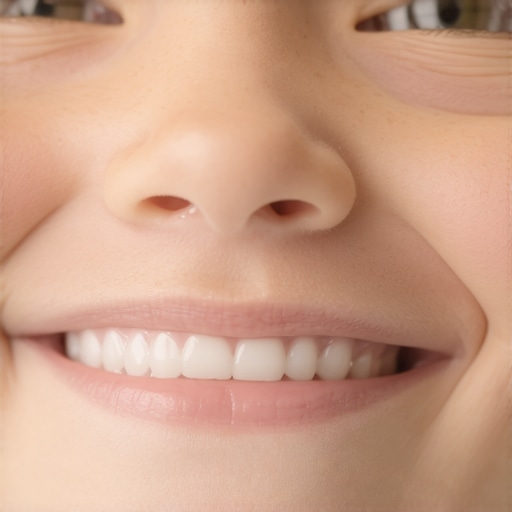
I was sitting on the bathroom floor, knees aching, trying to wrestle a strawberry-flavored toothbrush into my two-year-old’s mouth when I saw it. Two bright, chalky white spots right on the edges of her front teeth. My heart sank. I’d been so diligent—or so I thought. I immediately assumed I had failed as a dad and that her teeth were already rotting away before she even hit preschool. It’s a visceral kind of guilt, isn’t it? You do everything right, buy the organic snacks, and suddenly, there is a blemish you cannot explain.
The Panicked Parent’s Guide to Toddler Enamel
If you’ve found yourself staring into your child’s mouth with a flashlight at 9:00 PM, you aren’t alone. I spent hours down the search engine rabbit hole, convinced my daughter needed a full set of crowns before her third birthday. But here is the reality: those spots are often a cry for help from the enamel, and they do not always mean a cavity is a done deal. Sometimes, it is just a sign that the teeth are losing minerals, a process called demineralization. In other cases, it might be fluorosis—essentially too much of a good thing if they have been swallowing too much toothpaste. I made the classic mistake of thinking it was just milk residue or something she would outgrow. I even tried to scrub them harder, which is probably the worst thing you can do to weakened enamel. We need to look at the bigger picture of family dentistry trends improving oral health for all ages to realize that these little hiccups are common. Today, I am going to walk you through exactly how to distinguish between a simple cosmetic spot and a looming dental emergency. We will talk about the hidden sugars in healthy snacks that might be the culprit and what you can actually do to reverse the damage.
Could this be a permanent problem for their adult teeth?
This is the big one that kept me up at night. Is this just a baby tooth issue, or am I setting them up for a lifetime of expensive fixes? It is a valid fear. According to the American Academy of Pediatric Dentistry (AAPD), early childhood caries is the most common chronic childhood disease, yet it is almost entirely preventable. The good news is that baby teeth are placeholders. If we manage the environment in their mouth now—by following top oral health tips for your family’s bright smiles—we can protect the permanent teeth waiting underneath. Have you noticed any strange marks or chalky patches on your little one’s teeth during your nightly brushing battle? It can be incredibly frustrating when you feel like you are doing everything right. If you are feeling nervous, remember that getting a nervous toddler through their first cleaning is often the best first step toward a solution. Let us look at what those spots are actually trying to tell us.
Spotting the Difference Before the Drill Comes Out
Think of your child’s enamel like a high-performance shield. When it’s healthy, it’s smooth and hard. When it starts to lose minerals, it looks like a piece of dry, white chalk. My moment of truth came during a Tuesday night bath. I noticed that white line near the gumline. I panicked, but then I remembered a simple trick to determine how to tell if a dark spot is a cavity or just a deep groove. In my daughter’s case, it wasn’t a hole yet; it was just ‘soft’ enamel. If you catch it at the chalky stage, you’re still in the ‘pre-cavity’ zone where you can actually steer the ship back to safety and avoid invasive procedures.
The Fingernail and Flashlight Test
Grab a clean finger and gently run it over the spot. Does it feel sticky? Does it catch? If the surface is still smooth but looks different, you are looking at demineralization. If it feels like a pothole, the decay has already broken the surface. I once sat there for twenty minutes with a phone light, trying to see if her new molars had deep grooves that trap food. It turns out, she was just a master at hiding bits of fruit leathers in the back. Knowing the texture of the tooth surface is your first line of defense before you even call the office.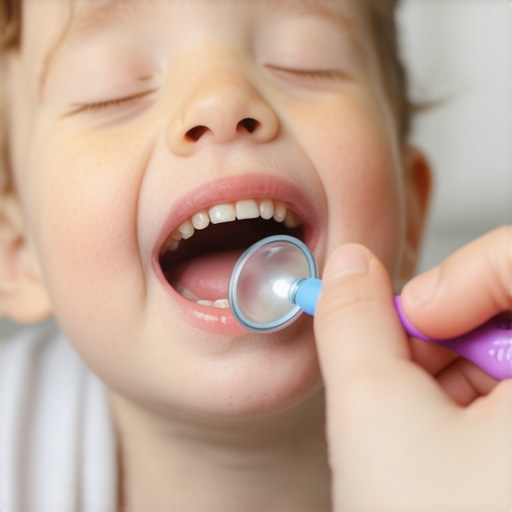
Flip the Script on Enamel Loss
Once you identify a weak spot, you have to flood the area with minerals. Think of it like a lawn that’s turning brown—you don’t just mow it down; you water it. We swapped out the ‘all-natural’ fluoride-free paste for a tiny smear of the real stuff. Fluoride is the secret weapon that hardens the enamel back up. We also started looking at maintaining oral health with modern techniques like using xylitol wipes after snacks. It felt like a chore at first, but after three weeks, those bright white patches on her front teeth started to fade and blend back into the rest of the tooth.
Tactics to Save the Surface
If the damage is a bit further along, you might need professional help to reinforce the structure. This is where dental sealants become a lifesaver for older toddlers. They act as a protective coating that fills in those grooves so sugar can’t reach the vulnerable enamel. In more severe cases where a tooth is physically weak or broken, we have to look into crowns for a healthier smile. For a toddler, these are often quick, stainless steel caps that protect the baby tooth until it falls out naturally, preventing the infection from reaching the adult teeth below.
Ditch the Sticky Saboteurs
The biggest move I made was auditing the pantry. We realized ‘healthy’ snacks like raisins and gummy vitamins were basically glue for bacteria, keeping acid against the teeth for hours. Now, we follow top oral health tips by rinsing with water immediately after any snack that isn’t a crunchy vegetable. It’s a simple mechanical way to wash away acids before they can start eating the enamel again, giving the saliva a chance to do its natural repair work.We often hear that baby teeth do not matter because they eventually fall out. This is perhaps the most dangerous myth I encountered during my deep dive into pediatric health. If a baby tooth is lost too early to decay, the permanent tooth waiting underneath can erupt into a crowded, chaotic mess, leading to years of expensive corrective work. Instead of seeing a restoration as a sign of failure, we need to view it as a strategic defense. Many parents worry about the optics, but crowns are a game-changer in restorative dentistry because they provide 360-degree protection that a standard filling simply cannot provide in a high-pressure bite zone.
Stop treating baby teeth like they are disposable
The advanced mistake most people make is opting for a large filling on a toddler’s molar rather than a crown. Because primary teeth have thinner enamel and larger pulp chambers, a filling often fails or allows recurrent decay. I learned the hard way that a proactive crown can actually save the space for the adult tooth far better than a patch-job. When you are choosing the right crown expert, you are looking for someone who understands that durability in a five-year-old is different than in a forty-year-old. A study published in the Journal of Dentistry found that stainless steel and zirconia crowns in primary molars have success rates significantly higher—near 95%—compared to multi-surface resin fillings over a three-year period.
Why do some crowns feel like they are shifting after placement?
It is a sophisticated concern that many parents bring up: the work is done, but the child says it feels ‘weird’ or tight. Usually, this is not the tooth actually moving, but the periodontal ligaments adjusting to a new, correct bite height. However, if you are wondering why your dental crown feels like it is shifting, it could be an issue with proximal contact—how the crown touches the neighboring teeth. Getting this ‘shimmy’ right is the difference between a crown that lasts and one that traps food and causes gum irritation.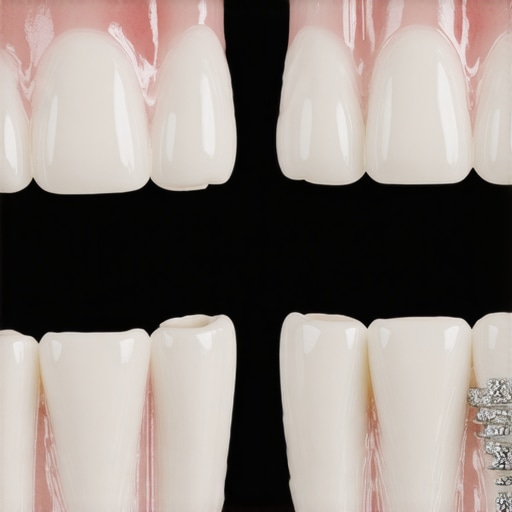
The hidden nuance of early alignment
The ‘oops’ factor I see most often in modern family dental care is waiting until the teenage years to address alignment. We have moved far beyond the era of bulky metal braces as the only option; Invisalign myths debunked show us that early intervention, or ‘Phase 1’ treatment, can use clear aligners to expand the jaw and make room for adult teeth before they even break the surface. This is not about a ‘perfect’ smile for school photos; it is about airway health and preventing future jaw pain. By understanding how Invisalign transforms family dentistry in 2025, we see that it is a functional tool as much as a cosmetic one. If we ignore these structural nuances now, we are often setting our kids up for more invasive surgeries later. Have you ever fallen into the ‘it is just a baby tooth’ trap? Let me know in the comments below.Once I got over the initial shock of the dental bill, I realized I was essentially managing a tiny medical project. The tools you use at home aren’t just accessories; they are the difference between a restoration lasting five years or twenty. For my daughter, we eventually invested in a high-quality electric toothbrush with a pressure sensor. It sounds like overkill for a toddler, but it stops her from scrubbing those delicate crowns that boost oral health confidence into oblivion. We also live by the munchie technique to seat stubborn Invisalign trays. If you aren’t using those little silicone biters to properly seat aligners, you are basically wasting half the day’s movement potential. It is these small, mechanical details that scale up to long-lasting results for the whole family.
How do I keep this investment from failing over time?
Maintenance is not just about the intensity of the brush; it is about the chemistry of the environment. I stopped buying those expensive, scented aligner foams and went back to basics with a vinegar soak that safely sanitizes your retainers and guards. It is a trick I learned from a veteran orthodontist, and it keeps the trays from turning yellow even with regular cleaning. According to a study in the American Journal of Orthodontics and Dentofacial Orthopedics (AJODO), digital intraoral scanning has revolutionized this process, providing a level of precision that was impossible with old-school, goopy molds. This digital accuracy is why Invisalign transforms family dentistry in 2025; the fit is so tight that there is less room for the micro-movements that lead to gum irritation or aligners popping off. 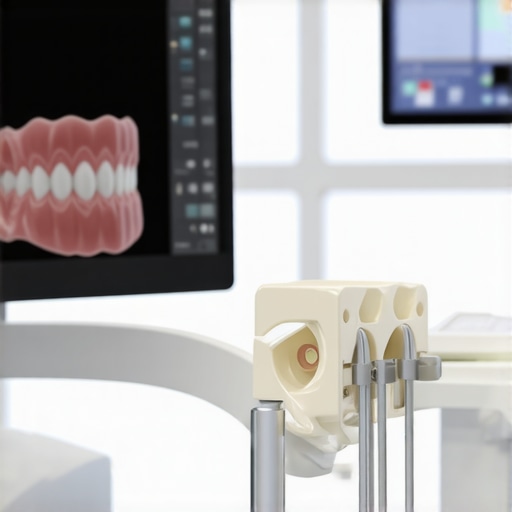
Why 3D Scans Are Replacing the Goop
We have moved into an era where we can see exactly what a 3D CBCT scan reveals that standard X-rays miss entirely. It is like switching from a blurry paper map to high-definition satellite imagery. I remember seeing my own scan and realizing my ‘shifting’ crown was not a loose fit, but a subtle bone-density issue I never would have known about otherwise. The future of family dentistry trends is moving toward this hyper-personalization. We are already seeing the beginning of AI-driven software that predicts exactly how a child’s jaw will grow, allowing for even more Invisalign innovations that address alignment before it becomes a problem. If you are currently in the thick of treatment, my best advice is to stop overcomplicating the chemical cleaners and focus on the mechanical fit. Go try that vinegar soak today—it is the simplest way to keep your family’s dental hardware clear and fresh without the harsh additives.I was sitting on the bathroom floor, knees aching, trying to wrestle a strawberry-flavored toothbrush into my two-year-old’s mouth when I saw it. Two bright, chalky white spots right on the edges of her front teeth. My heart sank. I’d been so diligent—or so I thought. I immediately assumed I had failed as a dad and that her teeth were already rotting away before she even hit preschool. It’s a visceral kind of guilt, isn’t it? You do everything right, buy the organic snacks, and suddenly, there is a blemish you cannot explain.
The Panicked Parent’s Guide to Toddler Enamel
If you’ve found yourself staring into your child’s mouth with a flashlight at 9:00 PM, you aren’t alone. I spent hours down the search engine rabbit hole, convinced my daughter needed a full set of crowns before her third birthday. But here is the reality: those spots are often a cry for help from the enamel, and they do not always mean a cavity is a done deal. Sometimes, it is just a sign that the teeth are losing minerals, a process called demineralization. In other cases, it might be fluorosis—essentially too much of a good thing if they have been swallowing too much toothpaste. I made the classic mistake of thinking it was just milk residue or something she would outgrow. I even tried to scrub them harder, which is probably the worst thing you can do to weakened enamel. We need to look at the bigger picture of family dentistry trends improving oral health for all ages to realize that these little hiccups are common. Today, I am going to walk you through exactly how to distinguish between a simple cosmetic spot and a looming dental emergency. We will talk about the hidden sugars in healthy snacks that might be the culprit and what you can actually do to reverse the damage.
Could this be a permanent problem for their adult teeth?
This is the big one that kept me up at night. Is this just a baby tooth issue, or am I setting them up for a lifetime of expensive fixes? It is a valid fear. According to the American Academy of Pediatric Dentistry (AAPD), early childhood caries is the most common chronic childhood disease, yet it is almost entirely preventable. The good news is that baby teeth are placeholders. If we manage the environment in their mouth now—by following top oral health tips for your family’s bright smiles—we can protect the permanent teeth waiting underneath. Have you noticed any strange marks or chalky patches on your little one’s teeth during your nightly brushing battle? It can be incredibly frustrating when you feel like you are doing everything right. If you are feeling nervous, remember that getting a nervous toddler through their first cleaning is often the best first step toward a solution. Let us look at what those spots are actually trying to tell us.
Spotting the Difference Before the Drill Comes Out
Think of your child’s enamel like a high-performance shield. When it’s healthy, it’s smooth and hard. When it starts to lose minerals, it looks like a piece of dry, white chalk. My moment of truth came during a Tuesday night bath. I noticed that white line near the gumline. I panicked, but then I remembered a simple trick to determine how to tell if a dark spot is a cavity or just a deep groove. In my daughter’s case, it wasn’t a hole yet; it was just ‘soft’ enamel. If you catch it at the chalky stage, you’re still in the ‘pre-cavity’ zone where you can actually steer the ship back to safety and avoid invasive procedures.
The Fingernail and Flashlight Test
Grab a clean finger and gently run it over the spot. Does it feel sticky? Does it catch? If the surface is still smooth but looks different, you are looking at demineralization. If it feels like a pothole, the decay has already broken the surface. I once sat there for twenty minutes with a phone light, trying to see if her new molars had deep grooves that trap food. It turns out, she was just a master at hiding bits of fruit leathers in the back. Knowing the texture of the tooth surface is your first line of defense before you even call the office.
Flip the Script on Enamel Loss
Once you identify a weak spot, you have to flood the area with minerals. Think of it like a lawn that’s turning brown—you don’t just mow it down; you water it. We swapped out the ‘all-natural’ fluoride-free paste for a tiny smear of the real stuff. Fluoride is the secret weapon that hardens the enamel back up. We also started looking at maintaining oral health with modern techniques like using xylitol wipes after snacks. It felt like a chore at first, but after three weeks, those bright white patches on her front teeth started to fade and blend back into the rest of the tooth.
Tactics to Save the Surface
If the damage is a bit further along, you might need professional help to reinforce the structure. This is where dental sealants become a lifesaver for older toddlers. They act as a protective coating that fills in those grooves so sugar can’t reach the vulnerable enamel. In more severe cases where a tooth is physically weak or broken, we have to look into crowns for a healthier smile. For a toddler, these are often quick, stainless steel caps that protect the baby tooth until it falls out naturally, preventing the infection from reaching the adult teeth below.
Ditch the Sticky Saboteurs
The biggest move I made was auditing the pantry. We realized ‘healthy’ snacks like raisins and gummy vitamins were basically glue for bacteria, keeping acid against the teeth for hours. Now, we follow top oral health tips by rinsing with water immediately after any snack that isn’t a crunchy vegetable. It’s a simple mechanical way to wash away acids before they can start eating the enamel again, giving the saliva a chance to do its natural repair work.We often hear that baby teeth do not matter because they eventually fall out. This is perhaps the most dangerous myth I encountered during my deep dive into pediatric health. If a baby tooth is lost too early to decay, the permanent tooth waiting underneath can erupt into a crowded, chaotic mess, leading to years of expensive corrective work. Instead of seeing a restoration as a sign of failure, we need to view it as a strategic defense. Many parents worry about the optics, but crowns are a game-changer in restorative dentistry because they provide 360-degree protection that a standard filling simply cannot provide in a high-pressure bite zone.
Stop treating baby teeth like they are disposable
The advanced mistake most people make is opting for a large filling on a toddler’s molar rather than a crown. Because primary teeth have thinner enamel and larger pulp chambers, a filling often fails or allows recurrent decay. I learned the hard way that a proactive crown can actually save the space for the adult tooth far better than a patch-job. When you are choosing the right crown expert, you are looking for someone who understands that durability in a five-year-old is different than in a forty-year-old. A study published in the Journal of Dentistry found that stainless steel and zirconia crowns in primary molars have success rates significantly higher—near 95%—compared to multi-surface resin fillings over a three-year period.
Why do some crowns feel like they are shifting after placement?
It is a sophisticated concern that many parents bring up: the work is done, but the child says it feels ‘weird’ or tight. Usually, this is not the tooth actually moving, but the periodontal ligaments adjusting to a new, correct bite height. However, if you are wondering why your dental crown feels like it is shifting, it could be an issue with proximal contact—how the crown touches the neighboring teeth. Getting this ‘shimmy’ right is the difference between a crown that lasts and one that traps food and causes gum irritation.
The hidden nuance of early alignment
The ‘oops’ factor I see most often in modern family dental care is waiting until the teenage years to address alignment. We have moved far beyond the era of bulky metal braces as the only option; Invisalign myths debunked show us that early intervention, or ‘Phase 1’ treatment, can use clear aligners to expand the jaw and make room for adult teeth before they even break the surface. This is not about a ‘perfect’ smile for school photos; it is about airway health and preventing future jaw pain. By understanding how Invisalign transforms family dentistry in 2025, we see that it is a functional tool as much as a cosmetic one. If we ignore these structural nuances now, we are often setting our kids up for more invasive surgeries later. Have you ever fallen into the ‘it is just a baby tooth’ trap? Let me know in the comments below.Once I got over the initial shock of the dental bill, I realized I was essentially managing a tiny medical project. The tools you use at home aren’t just accessories; they are the difference between a restoration lasting five years or twenty. For my daughter, we eventually invested in a high-quality electric toothbrush with a pressure sensor. It sounds like overkill for a toddler, but it stops her from scrubbing those delicate crowns that boost oral health confidence into oblivion. We also live by the munchie technique to seat stubborn Invisalign trays. If you aren’t using those little silicone biters to properly seat aligners, you are basically wasting half the day’s movement potential. It is these small, mechanical details that scale up to long-lasting results for the whole family.
How do I keep this investment from failing over time?
Maintenance is not just about the intensity of the brush; it is about the chemistry of the environment. I stopped buying those expensive, scented aligner foams and went back to basics with a vinegar soak that safely sanitizes your retainers and guards. It is a trick I learned from a veteran orthodontist, and it keeps the trays from turning yellow even with regular cleaning. According to a study in the American Journal of Orthodontics and Dentofacial Orthopedics (AJODO), digital intraoral scanning has revolutionized this process, providing a level of precision that was impossible with old-school, goopy molds. This digital accuracy is why Invisalign transforms family dentistry in 2025; the fit is so tight that there is less room for the micro-movements that lead to gum irritation or aligners popping off.
Why 3D Scans Are Replacing the Goop
We have moved into an era where we can see exactly what a 3D CBCT scan reveals that standard X-rays miss entirely. It is like switching from a blurry paper map to high-definition satellite imagery. I remember seeing my own scan and realizing my ‘shifting’ crown was not a loose fit, but a subtle bone-density issue I never would have known about otherwise. The future of family dentistry trends is moving toward this hyper-personalization. We are already seeing the beginning of AI-driven software that predicts exactly how a child’s jaw will grow, allowing for even more Invisalign innovations that address alignment before it becomes a problem. If you are currently in the thick of treatment, my best advice is to stop overcomplicating the chemical cleaners and focus on the mechanical fit. Go try that vinegar soak today—it is the simplest way to keep your family’s dental hardware clear and fresh without the harsh additives.
The Lessons I Learned Between the Flashlight and the Dentist Chair
I used to think that a white spot was just a permanent blemish, but I realized it is actually a window of opportunity to remineralize before a drill is ever needed. My biggest lightbulb moment was discovering that “natural” snacks like raisins are often the biggest culprits for enamel erosion. I also learned that maintaining oral health with modern techniques means being a partner to your dentist, not just a passive patient. Finally, I accepted that baby teeth are not just temporary—they are the blueprint for everything that follows.
My Personal Survival Kit for Healthy Smiles
To stay ahead of the game, I recommend a few specific resources that helped our family. First, check out the trick to keep Invisalign trays clear to save money and keep your hardware fresh. For those looking at long-term alignment, exploring the hidden benefits of Invisalign for family dental care in 2025 is essential for modern parenting. If you ever have an emergency, keep the contact us page ready for quick professional advice.
Small Shifts Today for a Lifetime of Confidence
Every small adjustment you make in your nightly routine builds a foundation for your child’s self-esteem and health. By staying curious about family dentistry trends, you are giving your family the gift of a worry-free smile for years to come. Don’t let the fear of a white spot stop you from being proactive today. #IMAGE_PLACEHOLDER_E# Have you ever spotted a mysterious mark on your little one’s teeth? Let me know your experience in the comments below.