
How to handle a chipped front tooth before your appointment

The sound was tiny, almost like a piece of glass hitting a tile floor, but it happened inside my mouth. I was three bites into a crusty sourdough roll when my tongue found the jagged, sharp edge where my smooth front tooth used to be. Instant cold sweat. If you’ve ever run your tongue over a sudden crater in your smile, you know that exact moment of pure dread. I spent the next hour frantically Googling whether my tooth was going to die while trying to stay calm in front of my kids. We have all been there. Maybe it wasn’t bread for you; maybe it was a rogue popcorn kernel or a slip on a rainy sidewalk. Whatever the case, your front tooth is chipped, and your dentist can’t see you until tomorrow morning. I have made some clumsy mistakes in this situation before—like the time I actually tried to use a metal nail file to smooth the edge myself (please, for the love of your enamel, do not do that)—so I am here to help you navigate the next 24 hours with your dignity and your smile intact.
Stop the Panic and Secure the Fragment
First things first: find the piece of your tooth if you can. If it is a clean break, sometimes a dentist can bond that original fragment right back into place. I once lost a chip in a bowl of cereal and spent ten minutes sifting through soggy flakes like a treasure hunter. It felt ridiculous, but it saved me a lot of time and money in the chair later. If you find it, put it in a small container of milk to keep it hydrated. If you cannot find it, do not lose sleep over it; modern restorative techniques like crowns or high-tech bonding can work miracles. Once you have searched the area, go rinse your mouth out. Use warm salt water to keep the area clean and reduce bacteria. According to the American Dental Association, keeping the area clean is vital because even a small chip can expose the sensitive inner layers of the tooth to bacteria almost immediately.
Is a Tiny Chip Really Worth an Emergency Visit?
I get it. You are looking at your calendar and your bank account, wondering if you can just live with the snag for a few weeks. Here is the hard truth: if it is sharp enough to cut your tongue or if you feel a persistent throb, it is an emergency. I ignored a minor crack once, thinking I was being ‘tough,’ but it eventually let in enough bacteria to cause an infection that required a root canal. You need to know how to fix a sharp edge on a tooth at home safely using dental wax without making the damage worse. Have you ever tried to tough out a dental injury only to have it turn into a much larger project? It is a mistake you only make once.
Protect Your Tongue and Your Sanity
If that jagged edge is currently shredding the inside of your lip, grab some sugarless chewing gum or a piece of orthodontic wax from the drugstore. This is not a permanent fix, but it will stop that horrible ‘zing’ of cold air hitting the nerve and keep you from needing stitches on your tongue. If the area is starting to feel a bit tender or inflamed, you might want to try a simple saltwater rinse to soothe the surrounding tissue. If the whole tooth is actually loose or was knocked out entirely, the stakes are much higher and you need to know the best way to store a tooth to keep it viable for replantation. For now, take a deep breath. We are going to get through this. If you are in real pain or the chip is large, please reach out to a professional immediately.
Assess the Damage Without Making Things Worse
Before you reach for the phone, you need to know exactly what you are dealing with. A minor chip in the enamel is like a small scratch on a car’s clear coat—annoying, but not a total engine failure. However, if the chip goes deeper into the dentin or exposes the pulp, you are dealing with a structural vulnerability. I once tried to ‘test’ a chip by poking it with a toothpick, which was a massive mistake. All I did was irritate the nerve and turn a dull ache into a sharp, radiating pain. Instead of poking, you should perform the sip test to determine if your tooth sensitivity is nerve-related. Take a sip of room-temperature water; if you feel a sharp ‘zing,’ the internal structure is likely compromised. If you can see a pink or red dot in the center of the fracture, that is the living tissue of your tooth, and you need to see a dentist within hours, not days.
The Right Way to Smooth a Sharp Edge
If the sensitivity is manageable but the edge is sharp enough to be a nuisance, don’t try to be your own dental technician. I have seen people try to use sandpaper or metal files, and the result is always more lost enamel and a much higher bill later on. The only safe way to handle this at home is to use how to fix a sharp edge on a tooth at home by applying a small bead of dental wax or sugarless gum over the area. Think of this as putting a rubber bumper on a sharp corner; it protects your soft tissues while you wait for a professional solution.
Will You Need a Quick Bond or a Full Crown?
When you finally get into the chair, the dentist will usually offer two paths based on how much ‘real estate’ you lost. For small chips, dental bonding is the go-to. They apply a tooth-colored resin, shape it, and harden it with a blue light. It’s like using wood filler on a chair leg. But if you’ve lost a significant chunk, you’ll be looking at choosing the right crown to restore the tooth’s strength. 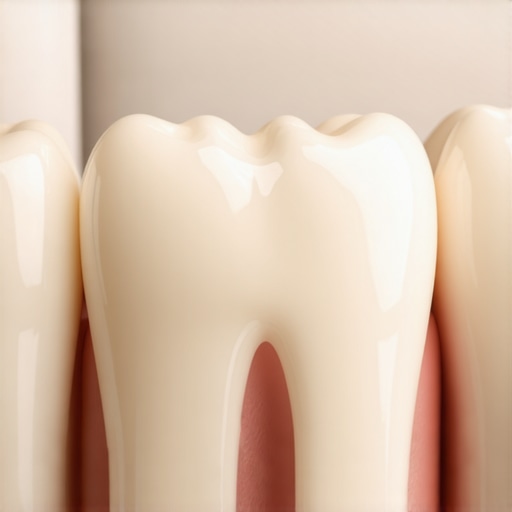 I remember when I got my first crown on a molar after a similar sourdough incident. For the first few days, I was convinced my bite was ruined because why your new zirconia crown feels taller than your other teeth is a common sensation while your jaw adjusts. You might even notice that why your dental crown feels cold for weeks after it was placed is a real phenomenon as the material conducts temperature differently than natural bone.
Fix the Underlying Alignment to Save Your Enamel
Sometimes a chip isn’t just bad luck; it is a symptom of a ‘heavy’ bite. If your teeth don’t line up perfectly, one tooth often takes more force than the others during chewing, making it prone to snapping. This is where how Invisalign transforms family dentistry in 2025 comes into play. By straightening your smile, you ensure that chewing forces are distributed evenly, which acts as a permanent insurance policy against future chips. If you have been grinding your teeth at night, that constant friction is like sanding down your smile while you sleep. Addressing this now with alignment or a guard is much cheaper than replacing crowns every five years.Most patients walk into a clinic thinking a restorative crown is a ‘forever’ fix, but that is the first mistake that leads to expensive replacements. I have seen people treat their new zirconia restoration like a suit of armor, yet the biological reality is that your gum tissue is constantly changing. One nuance people miss is the ‘biological width’—the specific amount of space required between the base of the crown and the underlying bone. If a crown is placed too deep, your body will literally try to ‘push’ it away, causing chronic inflammation. This is why why your gums are turning dark around the edge of a dental crown isn’t always about the metal; it is often about your immune response to a poorly fitted margin or an invaded biological width. I once saw a patient who spent thousands on veneers only to have them fail because they ignored their ‘heavy bite’—they were essentially hammer-drilling their new porcelain every time they chewed. If you don’t address the foundation with the hidden benefits of Invisalign for family dental care, you are just building a mansion on a swamp.
Stop Viewing Your Crown as Invincible Armor
Expert research, such as studies published in the Journal of Prosthetic Dentistry, highlights that the longevity of these restorations depends heavily on the ‘ferrule effect’—how much natural tooth structure is left to hug the crown. If your dentist has to remove too much natural enamel, no amount of high-tech ceramic will save the tooth from eventually snapping. If you notice why your new crown tastes like burnt sugar, it is often a sign of residual cement or a bacteria-trapping margin, not just a weird quirk of the material. These small sensory details are your body’s way of telling you the seal is compromised.
Will My Teeth Actually Stay Rooted During Invisalign?
There is a huge misconception that clear aligners are strictly for ‘vanity.’ In reality, how Invisalign transforms family dentistry in 2025 is by treating the mechanical cause of premature wear. When your teeth are crowded, you cannot clean the interproximal spaces effectively. This leads to the reason your teeth feel fuzzy even after brushing—plaque is hiding in the overlaps, calcifying into tartar. Have you ever noticed why your teeth feel loose during the middle of Invisalign treatment? It feels terrifying, like your teeth might just fall out, but it is actually a controlled biological process called osteoclastic activity. Your bone is literally melting and reforming to let the tooth move. 
The Expensive Mistake of Ignoring Your Biological Width
The biggest ‘oops’ I see in family dentistry secrets is ignoring the ‘black triangles’ that can form after teeth are straightened. People freak out thinking their gums are receding, but often, the gum tissue just hasn’t filled the new, correct space yet. According to a study in the Journal of Clinical Periodontology, malocclusion (a bad bite) is a significant risk factor for periodontal disease because of how it complicates hygiene. If you’re worried about the stability of your smile or a recent chip, it’s always better to reach out to a professional immediately rather than guessing. Have you ever fallen into the trap of thinking a straight smile is automatically a healthy one? Let me know in the comments below.Maintenance isn’t about working harder; it’s about working smarter with the right hardware. I used to be a ‘scrubber’—I thought more force meant cleaner teeth. It didn’t. It just meant I was heading for gum grafts. Now, I swear by a sonic toothbrush with a visible pressure sensor. If that little red light flashes, I back off immediately. This is essential for anyone trying to figure out how to tell if your gums are receding from brushing too hard. Research from the International Journal of Oral Science suggests that while power brushes are superior for plaque removal, user error remains the biggest risk to the gingival margin when people apply more than 150 grams of pressure. I also keep a high-quality water flosser on my counter, but I use the ‘low and slow’ method. Instead of blasting your gums on the highest setting, which can actually cause trauma, use a medium setting to flush the sulcus and keep your family dentistry secrets working for you by removing the biofilm that manual flossing misses. 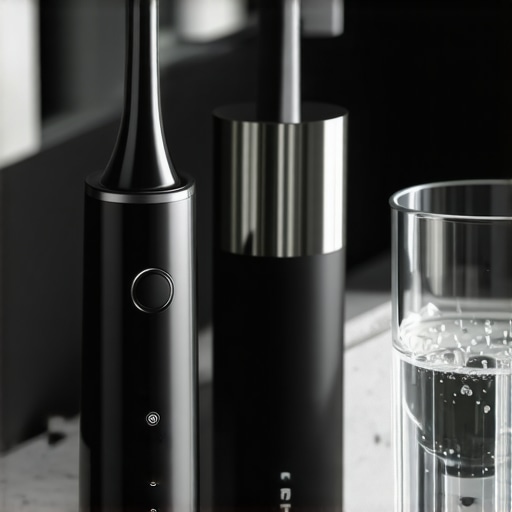
How do I maintain my dental work over years of use?
It is all about chemistry and physics. For my Invisalign trays or my night guard, I skip the expensive effervescent tablets. I use the vinegar soak that safely sanitizes your retainers and guards because it breaks down calcium deposits without degrading the medical-grade plastic. If you have crowns, you need to be careful with temperature and force. Even though zirconia is incredibly tough, the cement holding it in place can be sensitive to extreme fluctuations. Looking ahead, I see a future where Invisalign innovations will likely include AI-powered smartphone attachments that scan your teeth weekly. These apps will compare your current tooth position and crown margins against a baseline 3D model, alerting you to microscopic failures before they become painful emergencies. This kind of ‘teledentistry’ home monitoring is going to revolutionize how we handle preventative care. For those currently in treatment, don’t forget the manual basics like the ‘munchie’ technique to ensure your trays are fully seated against the tooth for maximum movement efficiency. For now, the best tool you have is consistency and a professional eye. If you are unsure if your current setup is working or if a crown feels ‘off,’ you should reach out to a professional immediately to get a baseline scan. Go check your toothbrush right now—if the bristles are splayed out like a dead spider, you are pressing too hard and doing more harm than good. Swap it out for a soft-bristled head today and let the vibration do the work.
The Hardest Dental Lessons I Learned the Hard Way
If there is one thing I have learned after years of navigating chips and crowns, it is that your mouth is a living ecosystem, not a set of porcelain statues. I used to think that once a crown was bonded, the job was finished and my tooth was invincible. But the truth is, the ‘seal’ between your restoration and your gum is where the real battle for long-term oral health happens. I also realized that feeling your teeth is a vital biofeedback loop; that strange ‘fuzzy’ sensation you get isn’t always about what you ate—it is often the reason your teeth feel fuzzy even after brushing, which points to microscopic biofilm buildup in hard-to-reach margins. My biggest lightbulb moment was accepting that a ‘perfect’ smile is a functional one, not just a straight one. If your bite is heavy, even the most expensive dental work will eventually succumb to the laws of physics.
Tools That Actually Protect Your Enamel
Maintaining high-end dental work doesn’t require a cabinet full of expensive chemicals, just a few smart, consistent choices. First, I suggest moving away from harsh cleaners for your dental appliances. I personally trust the vinegar soak that safely sanitizes your retainers and guards because it is incredibly effective at breaking down calcium deposits without compromising the integrity of the medical-grade plastic. Second, a pressure-sensing electric toothbrush is non-negotiable for anyone with dental work. It is the most reliable way to ensure you aren’t accidentally receding from brushing too hard, which is the leading cause of crown failure. Finally, I recommend incorporating family dentistry secrets like a high-quality water flosser on a low setting to keep the sulcus around your restorations debris-free. #IMAGE_PLACE_HOLDER_E#
Your Smile is Worth the Investment
Whether you are currently dealing with the dread of a fresh chip or you are considering how how Invisalign transforms family dentistry in 2025, remember that you are investing in your confidence and your systematic health. A chipped tooth is often just the catalyst for a journey toward a more resilient, better-aligned smile that will last decades rather than months. Don’t let the initial panic of a dental accident stop you from seeking the care you deserve. Your future self will thank you for the day you decided to stop ‘making do’ with a damaged smile and started prioritizing your oral health. If you are still feeling that sharp edge or if your bite feels off, reach out to a professional immediately to get a plan in place. Have you ever had a dental emergency that completely changed the way you view your morning routine? Let me know your story in the comments below!