
The trick to using a water flosser without making a total mess
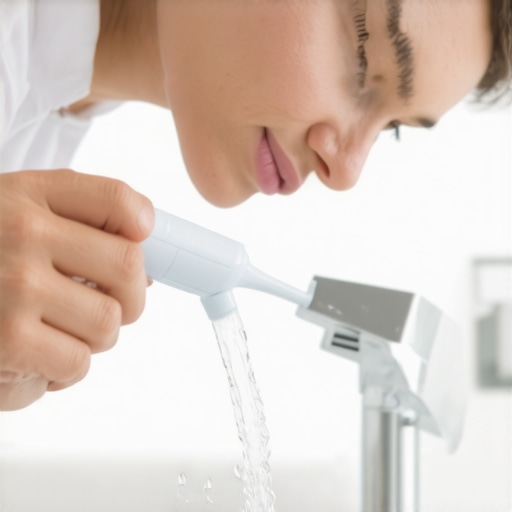
The first time I unboxed my shiny new water flosser, I felt like a dental hygiene superhero. I stood tall, looked myself in the eye in the vanity mirror, and pressed the ‘on’ button with total confidence. Big mistake. Within three seconds, a high-pressure stream of water had ricocheted off my front incisors, bypassed my lips entirely, and painted a perfect horizontal line across my favorite bathroom wallpaper. I looked like I’d just lost a fight with a garden hose. My gums were tingling, my shirt was soaked, and I was genuinely wondering if why your gums throb after you use a water flosser for the first time was a normal part of the process or if I was just doing it all wrong. [IMAGE_PLACEHOLDER]
How I finally stopped spraying my ceiling
If you’ve ever tried one of these things, you know the struggle is real. We buy them because we want to follow the latest family dentistry trends for our households, but we end up dreading the cleanup. I spent weeks trying to ‘eye-ball’ the nozzle in the mirror, which is the number one error every beginner makes. You can’t watch the magic happen. If you do, you’re basically inviting a flood. After a lot of trial and error (and a lot of laundry), I discovered that the secret isn’t in the machine’s settings; it’s in your posture and your willingness to let things get a little low-tech.
Is this high-tech gadgetry actually worth the soggy mess?
I get the skepticism. When you are already dealing with how to keep your invisalign trays clear or managing complex oral health tips for your family, adding a messy power tool to your routine feels like a chore. But the data doesn’t lie. According to the American Academy of Periodontology, water flossing can be significantly more effective than traditional string floss at reducing gingival bleeding and removing plaque. The trick is making it convenient enough that you actually use it every night without needing a raincoat.
The lean-and-close method that changed my morning routine
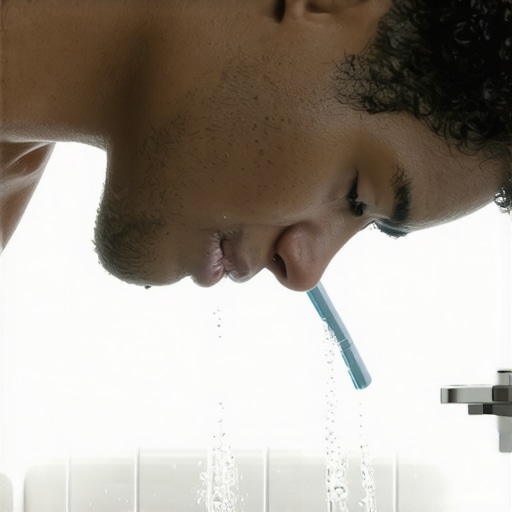
I used to think that because I had crowns for a healthier smile, I needed to blast them with the highest pressure possible while watching closely to ensure every nook and cranny was reached. I was wrong. My early mistake was trying to maintain my dignity by standing upright. Now, I lean my head so far over the sink that my nose is practically touching the porcelain. I keep my lips slightly parted—just enough for the water to drain out passively—but closed enough that nothing splashes back out. This gravity-assisted approach is the only way to keep the bathroom dry. Have you ever felt like you needed a scuba suit just to clean your teeth, or have you found a way to keep the water in the sink?
Master the 90-degree angle for total coverage
Once you’ve got your head in the sink like you’re searching for a lost contact lens, the real work begins. You have to treat the nozzle like a tiny power washer for a delicate porch—angle is everything. Hold the tip at a 90-degree angle to your gum line. If you aim it too high or too low, you aren’t actually cleaning the pocket; you’re just giving your teeth a high-speed rinse. I remember trying to rush through this on a Tuesday night when I was exhausted. I didn’t pay attention to the angle around my back molar, where I have one of those crowns for a healthier smile, and I accidentally blasted the sensitive tissue instead of the gap. It felt like a tiny electric shock. That was the night I learned that why your dental crown feels like it is vibrating during use is often just a sign of improper technique rather than a loose restoration.
Pause for a beat at every gap
Don’t just drag the stream across your teeth like a windshield wiper. You need to let the water dwell in the interdental spaces. Think of it like washing mud off a car tire; you have to hit the grooves to see any real results. This is especially vital if you are following family dentistry trends that prioritize preventative care. I found that if I count ‘one-one-thousand’ at every junction, my gums feel significantly cleaner. If you have complex hardware, you might need the specific way to floss under a fixed dental bridge to ensure no food particles are left hiding in the shadows.
Why low pressure is your best friend early on
Start on the lowest setting possible. Most people crank the dial to ’10’ thinking more power equals more clean. That’s a recipe for a bloody sink. It’s better to build up your tolerance over two weeks. I once tried to ‘deep clean’ my mouth before a big date by using the highest pulse setting. I ended up with gums so inflamed I looked like I’d been in a boxing match. If you’re currently using aligners, you might even find that your teeth are more sensitive than usual. Managing how to seat stubborn invisalign trays using the munchie technique is enough of a task without adding high-pressure water trauma to the mix. Lower pressure allows you to focus on your top oral health tips for your family without the pain.
Work from the back to the front
It sounds simple, but starting with the hard-to-reach molars ensures you don’t get lazy by the time you reach the difficult areas. I used to start at the front because it was easy, but I’d always miss the very back where my wisdom teeth used to be. By the time I reached the molars, the reservoir was empty and I’d just call it a day. Now, I start at the top-right back, move to the top-left back, then drop down and repeat for the bottom. This systematic approach ensures every surface gets the attention it deserves. It’s the same logic we use for teaching kids—consistency beats intensity every single time.
But here is where the ‘pro’ level of oral care actually begins. Everyone assumes that modern gadgets like water flossers or clear aligners are ‘set it and forget it’ tools, but that is a dangerous myth. In my experience, the biggest mistake people make with family dentistry trends is treating them as shortcuts rather than precision instruments. For instance, most people think straightening their teeth is purely about vanity. In reality, addressing why your smile looks crooked in photos is a functional necessity; misaligned teeth create ‘plaque traps’ that even the most powerful water flosser can’t fully clear. Let’s dig deeper into the nuances that separate a clean mouth from a healthy one.
Straighter teeth are actually about gum health
I used to believe that as long as I was flossing, it didn’t matter if my teeth were a bit crowded. I was wrong. A study published in the American Journal of Orthodontics and Dentofacial Orthopedics highlights that malocclusion (misaligned teeth) is a significant risk factor for periodontal disease because it makes mechanical cleaning nearly impossible. This is why the hidden benefits of Invisalign extend far beyond a better selfie; they literally save your gums by making them accessible to your cleaning tools. If you’ve been ignoring Invisalign myths debunked, you might be missing out on the best preventative care available today.
Why does it feel like my teeth are wobbling during treatment?
This is the ‘oops’ factor that sends most people into a spiral of anxiety. You’re three months into your journey, and suddenly, a canine tooth feels slightly loose. Before you call an emergency line, remember that why your teeth feel loose during Invisalign is a physiological necessity. For a tooth to move, the bone must soften and remodel. It’s a controlled ‘loosening’ that is perfectly safe, provided you aren’t skipping your checkups. However, a common trap is trying to force a tray that doesn’t fit. If you find yourself struggling, knowing how to seat stubborn invisalign trays correctly can prevent permanent damage to the root. Have you ever felt that terrifying ‘wiggle’ and wondered if you were doing something wrong? Let me know in the comments.
The ‘high spot’ trap on your new crown
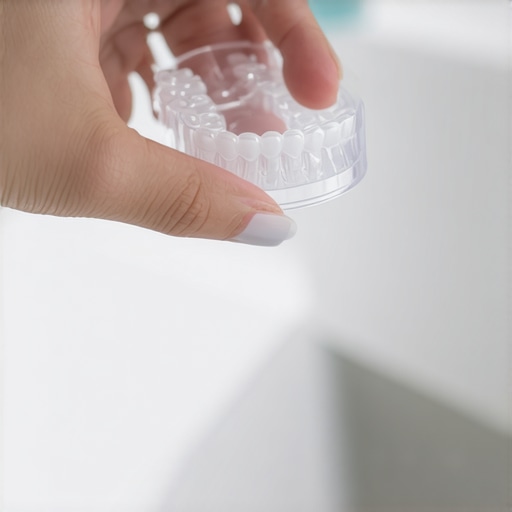
Another nuance most people get wrong involves restorative work. When you get a new restoration, like one of those crowns for restorative dentistry, it should feel like it was always there. If it feels even a hair too ‘tall’ when you bite down, do not assume you will ‘grind it down’ over time. A ‘high spot’ acts like a tiny hammer hitting your jaw joint every time you chew. This can lead to why your new zirconia crown feels taller than others, causing inflammation that mimics a toothache. I once ignored a slight clicking in my jaw, only to realize later it was because my bite was off by less than a millimeter. If you notice why your dental crown feels like its shifting, it’s not the crown moving—it’s your entire bite reacting to the pressure.
Stop the DIY dental fixes before they start
We’ve all been there: a sharp edge on a molar is driving you crazy on a Saturday night. The temptation to grab a nail file is real, but please, resist. Learning how to fix a sharp edge on a tooth at home safely usually involves orthodontic wax, not power tools. Your enamel is the hardest substance in your body, but once you scratch it with a non-medical abrasive, you’ve created a permanent home for bacteria. This often leads to why your teeth feel fuzzy just hours after cleaning. Real expertise in family dentistry secrets is knowing when to use a home remedy and when to pick up the phone to contact your dentist for a professional adjustment.
If you are still scrubbing your trays with a manual toothbrush and a bit of hope, you are living in the dental dark ages. I realized quickly that manual cleaning alone doesn’t cut it for the long haul. To keep my mouth from feeling like a science experiment, I invested in a small ultrasonic cleaner. These devices use high-frequency sound waves to create cavitation bubbles that literally blast biofilm off surfaces you can’t reach. It is a game-changer for anyone trying to figure out how to keep your invisalign trays clear without spending a fortune on branded tablets. I personally use a 42,000Hz model every morning while I shower, and the difference in clarity is night and day.
Why your crown margins deserve a specialized tool
Maintenance isn’t just for aligners; it is even more critical when you have restorative work. Dr. Gordon Christensen, a world-renowned expert in restorative dentistry and founder of the Clinicians Report, has frequently emphasized that the success of a restoration like a zirconia crown is heavily dependent on the patient’s ability to clean the ‘margin’—where the tooth meets the ceramic. I found that a standard brush often skips over these microscopic junctions. Now, I use a single-tuft brush specifically for the edges of my crowns for a healthier smile. This prevents that dreaded dark line from forming and ensures I am choosing the right crown expert advice by protecting my investment at home.
How do I keep my dental hardware in top shape for decades?
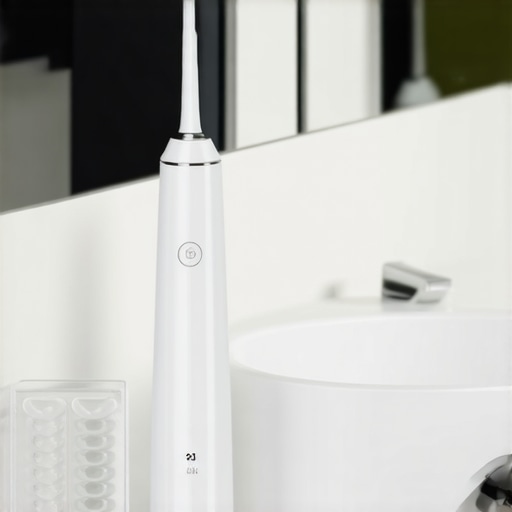
Consistency is the boring answer, but the ‘how’ is what matters. Beyond the ultrasonic cleaner, I swear by a simple the vinegar soak that safely sanitizes your retainers and guards once a week to prevent mineral buildup. For those with more permanent hardware, like bridges, you cannot skip the specific way to floss under a fixed dental bridge. I use ‘super floss’ with a stiffened end because it allows me to thread through the gap without fumbling. If you treat these tools like a precision maintenance kit for a high-end car, they will last a lifetime. This is the secret to making your dental implants last and keeping your natural teeth from needing more work down the road.
The next decade of family dentistry looks digital
Looking ahead, I predict that the ‘guesswork’ of dental care is about to vanish. We are already seeing Invisalign innovations that use AI to track tooth movement in real-time via smartphone apps. In the next five years, I expect home-based 3D scanners to become as common as electric toothbrushes, allowing your dentist to monitor family dentistry trends and catch a cavity before it even requires a drill. This shift toward ‘teledentistry’ means fewer hours in the waiting room and more proactive care. If you want to get ahead of the curve, I highly recommend asking your provider about 3D CBCT scans during your next visit; what a 3D CBCT scan reveals can change your entire treatment plan for the better.
My best advice? Pick one advanced tool—whether it is a water flosser or an ultrasonic cleaner—and commit to using it for thirty days straight. You’ll be shocked at how much ‘grit’ you were leaving behind before. If you have questions about which tech fits your specific setup, don’t hesitate to contact us for a recommendation tailored to your smile.
The Hardest Lessons I Learned While Chasing the Perfect Smile
After years of experimenting with every gadget under the sun, I’ve realized that the ‘magic’ isn’t in the tool, but in the habit. One lightbulb moment for me was realizing that gum health is a marathon, not a sprint. If you try to power-wash your mouth into health in one night, you’ll just end up with irritation. Another realization? Your hardware is only as good as your maintenance. I’ve seen friends ignore the top oral health tips for your family and end up back in the chair for avoidable repairs. Finally, don’t ignore the subtle signals. If you notice why your gums are turning dark around the edge of a dental crown, it’s your body’s way of asking for a better cleaning technique at the margin.
A Few Tools That Actually Earned Their Spot in My Cabinet
I don’t believe in cluttering the vanity, but these three items changed my routine forever. First, a high-quality water flosser with a variable pressure dial is non-negotiable. Second, I swear by the vinegar soak that safely sanitizes your retainers and guards because it’s cheap, effective, and keeps everything tasting fresh. Lastly, if you are wearing aligners, an ultrasonic cleaner is the only way to reach professional-level clarity. It’s part of the family dentistry trends that prioritize hygiene over just ‘looking’ clean. Investing in these small habits ensures you are choosing the right crown expert advice by protecting the dental work you’ve already paid for.
[IMAGE_PLACEHOLDER_E]
The Future of Your Family’s Dental Health Starts Tonight
Taking control of your oral hygiene doesn’t have to be a chore. Whether you are navigating the hidden benefits of Invisalign or simply trying to keep your natural teeth for a lifetime, the effort you put in today pays off in decades of confidence. You’ve got the tips, the techniques, and the tools—now you just need the consistency. Remember, modern family dentistry is about a partnership between you and your provider. Don’t be afraid to take the first step toward a healthier, more vibrant smile. Have you ever struggled with getting the water pressure just right on your flosser, or are you still a string-floss loyalist? Let me know below.