
Why your dental implant area feels cold when you drink water
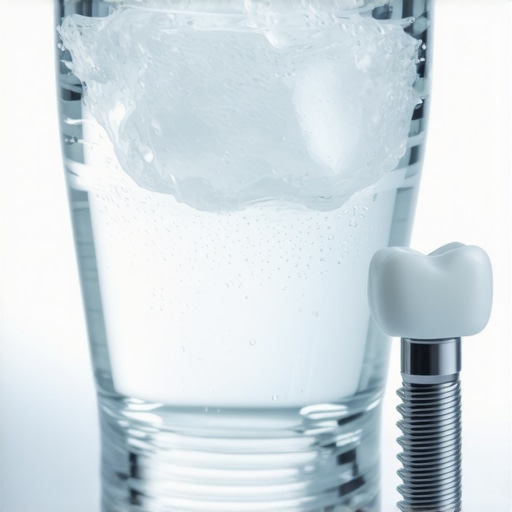
I will never forget the first time it happened. I was sitting on my porch, enjoying a glass of iced tea on a sweltering July afternoon, when I took a deep, satisfying swallow. Suddenly, a sharp, localized chill shot through my jaw, right where I had my implant placed a year prior. It was not a brain freeze, but it was certainly a jaw freeze. I nearly dropped my glass. My first thought? Something is horribly wrong. I had spent months perfecting my oral health and investing in crowns for a healthier smile, and here I was, feeling like I had a piece of dry ice tucked under my gum line. If you have ever felt that weird, isolated coldness while drinking water, you are not crazy, and your implant probably is not falling out. Today, I am going to explain exactly why this happens and how we can manage it together.
The Surprising Physics Behind Your Cold Implant
It took me a frantic call to my dentist and a bit of late-night research to realize I had made a classic rookie mistake: I assumed my new tooth would behave exactly like the old one. It does not. While our natural teeth are protected by layers of enamel and dentin—which act as pretty decent insulators—dental implants are typically made of titanium or zirconia. According to the Journal of Oral Rehabilitation, metal alloys used in dentistry have a much higher thermal diffusivity than natural tooth structures. This means they transfer temperature changes to the surrounding tissue much faster than a real root would. That dental implant feels colder than your natural teeth simply because it is a better conductor of the cold. When you drink ice water, the metal post absorbs that temperature instantly and whispers it directly to the sensitive nerves in your jawbone.
Does this mean the implant is failing me?
This is the big fear, right? When something feels off in your mouth, your brain immediately goes to the worst-case scenario. I spent three nights googling implant rejection before my dentist calmed me down. In reality, the specific sign your dental implant is rejecting looks a lot more like swelling, redness, and persistent throbbing rather than just a temporary cold sensation. Most of the time, that chill is just a sign of your jaw getting used to a new material. Today, I want to walk you through how you can stop that painful zing without giving up your favorite iced beverages. Have you ever felt that weird metallic chill during a meal and wondered if you should call your doctor? You are definitely not alone in this.
Why You Feel the Chill More Than Your Friends Do
Not everyone with an implant experiences this, which can make it even more frustrating when you do. For me, the sensation was tied to how much bone density I had around the post. We are going to look at why dental implants feel different than your natural teeth and why your specific anatomy might be making you a super-taster for cold temperatures. It is all about the interface between the metal and your nerves, and understanding this is the first step to finally getting some relief. [image_placeholder_1]
Stop the Thermal Shock with Temperature Buffering
When I first started dealing with that piercing chill, I realized I was treating my mouth like it was still made of 100% biological material. It isn’t. Think of your titanium implant as a high-speed highway for temperature; the cold doesn’t just sit on the surface, it races down to your jawbone. To combat this, you need to introduce a buffer. I found that switching to room-temperature water for a few weeks allowed my surrounding tissues to desensitize. If you absolutely cannot live without your caffeine fix, learning how to stop the painful zing when you drink iced coffee starts with using a reusable silicone straw. This bypasses the metal post entirely, preventing the ‘lightning rod’ effect from ever reaching the nerves in your bone.
Change Your Drinking Angle to Avoid the Post
I remember one specific Tuesday where I forgot my straw and tried to chug a smoothie. The pain was so sharp I had to pull my car over. That was the day I learned the importance of ‘drinking around’ the implant. By tilting your head slightly or using your tongue as a temporary shield for the specific site, you can enjoy cold treats without the mechanical shock. It sounds tedious, but within a few days, it becomes muscle memory. Keeping up with family dentistry secrets maintaining oral health with modern techniques at 254 pm means acknowledging that our dental hardware requires slight behavioral adjustments.
Strengthen the Gum Barrier Around the Metal
The tighter your gum seal is around the implant, the less surface area of the metal is exposed to the elements. If your gums are slightly receded, that cold water has a direct path to the most sensitive part of the restoration. This is often why your new crown feels sensitive to cold drinks even months after the procedure. I started using a specialized, non-abrasive sensitivity toothpaste and applied a small amount directly to the gum line around my implant before bed. This isn’t just for the ‘teeth’; it creates a soothing layer for the tissue interface. Use a soft-bristled brush to ensure you aren’t scrubbing away the delicate attachment fibers that keep the implant protected.
Clean Deep Without Damaging the Seal
Plaque is the enemy of a warm, comfortable implant. When bacteria build up at the base, it causes micro-inflammation, making the nerves in your jaw significantly more reactive to temperature changes. You have to be diligent about reaching the hidden spots. I personally use a water flosser on a low setting to flush out debris without irritating the site. If you have multiple restorations, you should master the specific way to floss under a fixed dental bridge or implant-supported structure to keep the environment healthy. 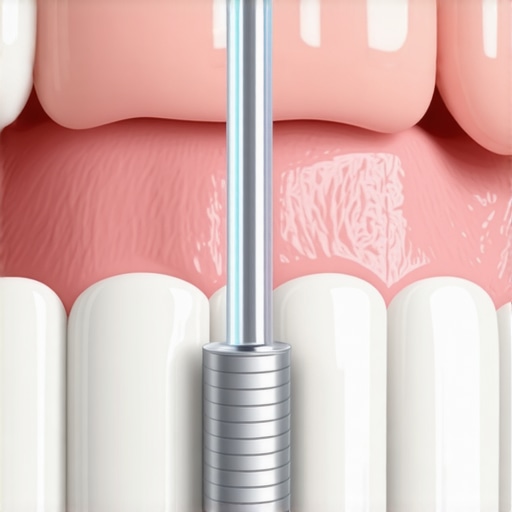
Address the Hidden Stress of Grinding
One thing my dentist pointed out during a check-up was that my sensitivity spiked because I was clenching my teeth at night. Pressure on the implant ‘pre-sensitizes’ the nerves, making them fire more aggressively when they hit cold. Learning how to stop grinding your teeth without an expensive night guard through jaw relaxation exercises and stress management was the missing piece for me. When your jaw is relaxed, the thermal transfer is much easier to handle. Proper care ensures you won’t have to worry about the truth about how long dental implants actually last, as you are protecting both the hardware and the bone it sits in.Many patients walk into the clinic demanding the hardest, most durable porcelain available, thinking it is the ultimate fix. However, in my experience, the ‘strongest’ material often leads to a hidden ‘Oops’ factor: it can wear down your natural opposing teeth much faster than a slightly softer, more biocompatible material would. When choosing the right crown expert advice for long-lasting results usually suggests that a mechanical balance is more important than sheer material strength. A study in the International Journal of Computerized Dentistry highlights that the precision of the fit—often achieved when finding the best dentistry in Culpeper VA usually starts with a 3D CBCT scan—is what truly prevents future decay, not the hardness of the cap alone. 
How Can I Tell if My Invisalign is Actually Moving My Teeth Correctly?
One advanced nuance that most beginners miss is ‘tracking.’ You might think your aligners fit simply because they are in your mouth, but if there is even a tiny gap between the edge of your tooth and the plastic, the root likely is not moving. This is where Invisalign myths debunked what you need to know today come into play; it is not a ‘set it and forget it’ process. If you notice the reason your crown feels tight after flossing or your aligners feel slightly ‘springy’ on the molars, your treatment might be stalling despite the trays being in. Another common mistake is ignoring the micro-movements of your bite. If your jaw feels misaligned even when the teeth look straight, you are looking at a cosmetic fix rather than a functional one. Maintaining top oral health tips for your familys bright smiles means prioritizing how your teeth meet during a chew, not just how they look in a selfie. Have you ever fallen into this trap of assuming a tight fit always meant progress? Let me know in the comments.
The Specific Tools That Saved My Smile
After years of trial and error, I found that maintaining expensive dental work isn’t about working harder; it’s about working smarter with the right gear. For me, the game-changer was moving away from standard string floss and investing in a high-quality water flosser. I realized that family dentistry secrets maintaining oral health with modern techniques at 254 pm often come down to the tools you use between professional cleanings. If you have an implant or a bridge, a standard toothbrush simply cannot reach the gingival sulcus where bacteria love to hide. A technical report by the International Journal of Oral & Maxillofacial Implants notes that ‘peri-implantitis’—the primary cause of long-term failure—is almost entirely preventable through specialized mechanical debridement. Personally, I found that using a water flosser on the lowest pressure setting significantly reduced the thermal sensitivity I was feeling because it kept the gum seal tight and inflammation-free. Additionally, if you are also managing alignment, knowing the best way to clean a mouthguard so it stays fresh is critical, as those same cleaning principles apply to your Invisalign trays to prevent bacterial transfer back to your crowns.
How do I keep these results for the next decade?
Longevity is the ultimate goal when you have invested in crowns for a healthier smile. The secret is consistency in your check-up schedule. Most people think they only need a dentist when something hurts, but for crowns and implants, you need a professional to check the ‘margins’ with high-magnification loupes. This ensures that why crowns are a game-changer in restorative dentistry remains true for you—they can only protect the tooth structure if the seal remains intact. I have my dentist check my bite every six months because even a microscopic shift in how your teeth meet can put undue pressure on an implant, leading to that ‘vibrating’ or ‘colder’ sensation I mentioned earlier. If you’re also doing Invisalign, you must be vigilant about your retainer wear; the moment those teeth shift even a fraction of a millimeter, the way your crowns interact with your natural teeth changes entirely.
The Future of Your Teeth is Smarter Than You Think
I believe we are entering a new era of ‘bio-active’ dentistry. We are already seeing Invisalign innovations the future of family dentistry revealed at 1137 am moving toward materials that don’t just move teeth but might eventually release minerals to strengthen enamel. In the next decade, I predict your dental crowns won’t just be passive caps but smart sensors that can alert your phone to changes in your oral pH or bacterial levels. Until then, the best thing you can do is stick to the fundamentals with a modern twist. Try this tonight: swap your standard floss for a high-quality water flosser on the lowest setting around your crown or implant, and see if that localized sensitivity doesn’t drop by half within three days. It’s a simple mechanical shift that makes a world of difference for your comfort.
3 Realities of Life with a Dental Implant You Should Know
Reflecting on my own journey, I have realized that the physical metal post is only half the story when it comes to long-term comfort. First, I learned that my body is not a static machine; minor inflammation from a poor night’s sleep or seasonal stress can actually make my nerves more reactive to the temperature of my morning drink. Second, I discovered that family dentistry trends improving oral health for all ages now focus heavily on the ‘soft tissue’ connection, meaning my gum health is just as important as the titanium post itself. Finally, I had to accept that a little sensitivity doesn’t mean failure—it is often just a signal from your body that it is still adapting to its new hardware.
My Daily Toolkit for a Pain-Free Smile
I no longer leave my oral comfort to chance. Here are the specific items I trust to keep my restorations feeling natural and pain-free. I swear by a high-quality water flosser used on a low-pressure setting because it removes bacteria without the mechanical friction that can irritate a sensitive gum line. I also recommend keeping a pack of reusable silicone straws in your bag; they are the most effective way to enjoy a cold drink while bypassing the ‘lightning rod’ effect on your implant. Lastly, applying a non-abrasive sensitivity toothpaste as a targeted ‘ointment’ around the implant site before bed can work wonders for thermal defense. These small shifts are what transform your smile how crowns boost oral health confidence at 815 am by removing the daily fear of a sharp zing.
[image_placeholder_final]
Your Smile Is an Investment Worth Protecting
It is easy to get frustrated when a new dental procedure does not feel 100% perfect immediately, but remember that you are playing the long game with your health. By staying proactive and following top oral health tips for your familys bright smiles, you ensure that your dental implants remain a functional, invisible part of your life rather than a source of stress. Whether you are currently exploring how invisalign transforms family dentistry in 2025 or simply trying to enjoy an iced coffee without pain, your comfort is the ultimate priority. Don’t be afraid to adjust your habits as you heal and grow into your new smile. Have you ever felt that strange metallic chill, or are you still worried about taking that first sip of ice water? Let me know in the comments below!