
The easiest way to whiten teeth when you have sensitive gums
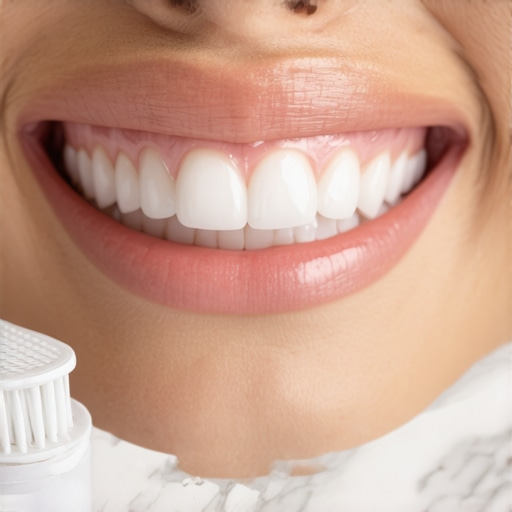
I’ll never forget the time I decided to prep for a friend’s wedding by slapping on the strongest whitening strips I could find at the drugstore. I thought I was being proactive. Instead, I spent the entire reception sipping lukewarm water through a straw because my teeth felt like they were being struck by lightning every time the air touched them. It was a classic case of ego over-enamel, and honestly, my gums looked like I’d been chewing on habaneros. If you’ve ever felt that sharp, “zinging” sensation after trying to brighten your smile, you know exactly why I’m so cautious now.
Stop Blasting Your Enamel and Start Being Strategic
We’ve been told for years that a Hollywood smile requires high-intensity bleaches, but for those of us with sensitive gums, that’s a recipe for a week of misery. I made the mistake of thinking my sensitivity was something I just had to “power through.” It isn’t. Today, I’m going to show you how to navigate the world of brightening your smile without making your mouth feel like a construction zone. We are focusing on methods that respect your gum line while still lifting those stubborn coffee stains.
Does whitening always have to hurt?
That is the big question everyone asks me, and the short answer is no. But you have to change your approach. According to the American Dental Association, tooth sensitivity often occurs because the peroxide in the whitening agent penetrates the enamel and irritates the nerve of the tooth. When you add gum recession into the mix, that bleach hits the sensitive root surfaces, and that is where the real trouble starts. Understanding the difference between professional whitening and store-bought strips is the first step in avoiding that localized torture.
Why Your Gums React So Violently to Standard Strips
The problem with most over-the-counter options is that they are “one size fits all.” Your mouth isn’t a standard size. When those strips overlap onto your soft tissue, they cause chemical burns. It’s why I’ve moved toward custom-fitted trays or specific “paint-on” gels that stay where you put them. If you’re already dealing with teeth sensitive to cold drinks, you need a barrier, not a direct hit of 10% hydrogen peroxide. Have you ever had to stop a whitening treatment halfway through because the pain was just too much? You aren’t alone, and it’s usually because of the delivery method, not just the chemical itself. By shifting our focus to top oral health tips for your family, we can prioritize comfort alongside aesthetics.
Prepare Your Enamel Like a Pro
Before you even think about applying a whitening agent, you need to treat your teeth like a marathon runner treats their muscles: you need a warm-up. For at least two weeks before your treatment, switch to a desensitizing toothpaste containing potassium nitrate. This isn’t just about comfort; it’s about physically blocking the pathways to the nerves. Think of it like putting on a thick pair of socks before hiking in boots that might chafe. If you skip this, those microscopic tubules in your teeth are wide open, just waiting for the peroxide to trigger a lightning strike. During this prep phase, you should also focus on the specific way to brush when you have gum recession to ensure you aren’t further irritating the sensitive root surfaces.
Build a Protective Shield for Your Soft Tissue
The biggest mistake I ever made was assuming the ‘protective’ strip would stay perfectly in place. It never does. Instead, you need a physical barrier. Take a small amount of petroleum jelly or a vitamin E oil on a cotton swab and carefully trace your gum line. This acts like a raincoat for your soft tissue. If the whitening gel slips, it hits the oil instead of your flesh. 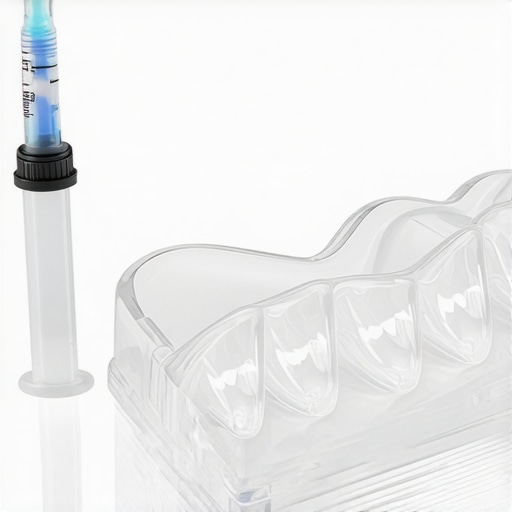 I remember one Tuesday night I decided to ‘paint’ on my gel while half-asleep watching a documentary. I got sloppy and the gel dripped right onto a small patch of gum I’d missed with the barrier. Within three minutes, it felt like a tiny hot needle was being pressed into my jaw. I had to scramble to the sink to flush it out. That’s why precision is non-negotiable. If you have existing work, you must be doubly careful, as there is a significant danger of using whitening strips on a tooth with a filling, where the chemicals can sometimes cause unexpected localized sensitivity or uneven results.
Why Precision Gels Outperform Generic Strips
If strips are the blunt instruments of the whitening world, custom trays and paint-on gels are the scalpels. Strips are rectangular, but your smile is curved. This mismatch is why gums get burnt. By using a brush-on applicator, you can avoid the ‘pink’ entirely. This is especially vital if why your new crown feels sensitive to cold drinks is already a concern for you; you don’t want to add chemical irritation to an area that is already reactive.
Keep the Brightness Without the Bite
Once you’ve achieved your desired shade, the goal is maintenance without re-bleaching. Many people turn to abrasive ‘natural’ options, but you should know the truth about charcoal toothpaste and your tooth enamel before you start scrubbing away your protection. Instead of harsh daily chemicals, focus on lifestyle tweaks. Knowing how to keep your smile white while drinking daily coffee by using a straw or rinsing with water immediately after your mug is empty will do more for your comfort than a dozen whitening sessions ever could. Less is always more when your gums are the limiting factor.Everyone thinks Invisalign is the vanity option for adults who missed out on braces as teenagers, but let’s challenge that common belief. In my experience, proper alignment is a secret weapon for gum health rather than just a cosmetic fix. When teeth are crowded or overlapping, they create inaccessible ‘food traps’ and uneven pressure points that lead to localized gingivitis and staining. I’ve seen people spend a fortune on whitening products while ignoring the fact that their misaligned bite is the root cause of their persistent sensitivity and uneven color. By looking at Invisalign myths debunked, you’ll see that straightening your teeth is often the first step to a healthier, naturally brighter smile. 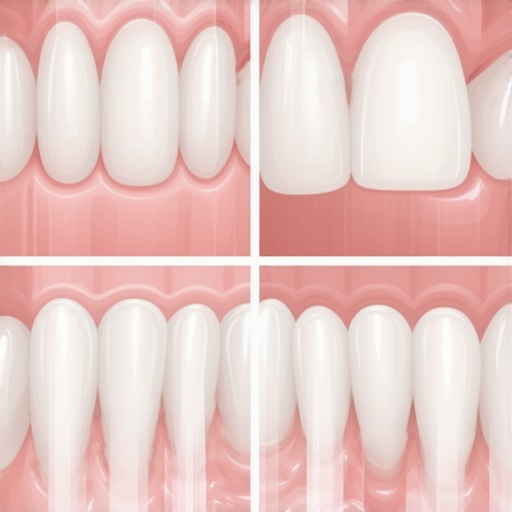
The Hidden Trap of the Whitening-First Mentality
One massive trap to avoid is the ‘whitening-first’ mentality. If you have crowded teeth, you are likely dealing with microscopic chips or thinned enamel at the specific contact points where your teeth rub together. When you apply a high-concentration peroxide gel, it seeps into those micro-fissures like water into a cracked windshield during a winter freeze. You aren’t just lifting stains; you’re inducing deep-tissue trauma because the enamel isn’t thick enough to buffer the chemical. A study published in the Journal of Orofacial Orthopedics highlights that correcting tooth positioning can significantly reduce these abnormal wear patterns. This is where how Invisalign transforms family dentistry in 2025 becomes relevant; it’s about establishing structural integrity before you ever worry about the shade of your smile.
Why does my crown feel like it is hitting first every morning?
This is a sophisticated nuance that many patients overlook when they are focused on aesthetics. If you’ve recently had restorative work, you might notice the specific reason your crown feels tall when you wake up. It isn’t always that the crown is physically too large; often, it’s about how your jaw settles and slightly shifts during sleep. If a crown is even a fraction of a millimeter off, it can trigger ligament inflammation that mimics the sharp ‘zing’ of whitening sensitivity. If you’re trying to whiten a mouth that has older restorative work, you have to be tactical. Ensuring you are choosing the right crown expert ensures that your bite is balanced, which actually makes your teeth less reactive to temperature and whitening agents.
Modern Tech Changes the Sensitivity Game
In the past, family dentistry was a bit of a guessing game, but today we can be much more precise. For example, why finding the best dentistry in Culpeper VA usually starts with a 3D CBCT scan is because we can see exactly where the enamel is thinnest. This data allows for a customized approach to oral health that avoids the generic ‘power through it’ advice of the past. By utilizing family dentistry secrets for maintaining oral health, you can protect your family from the ‘oops’ factor of over-whitening and focus on long-term stability. Have you ever fallen into the trap of trying to whiten a tooth that actually needed a structural fix? Let me know in the comments!Once you have put in the hard work of whitening, aligners, or restorative crowns, you cannot simply go back to a manual toothbrush and a prayer. I personally treat my dental routine like a high-performance engine maintenance schedule. The moment I finished my Invisalign treatment, I realized that standard flossing was no longer cutting it around my permanent lower retainer. I switched to a high-powered water flosser, but there is a steep learning curve if you do not want to soak your bathroom mirror. Mastering the trick to using a water flosser without making a total mess was the first step in ensuring my gum health stayed as sharp as my new smile.
Stop Scrubbing Your Aligners With a Toothbrush
Most people make the mistake of using their regular toothbrush to clean their aligners or night guards. This creates microscopic scratches in the plastic that act like a five-star hotel for bacteria. I transitioned to using a 42kHz ultrasonic cleaner with a dedicated tablet once a day. This is the same technology used in professional labs, and it is a total game-changer for how to clean a night guard that has started to smell like vinegar. It keeps the plastic crystal clear and prevents that dreaded ‘cloudy’ look that makes Invisalign noticeable. 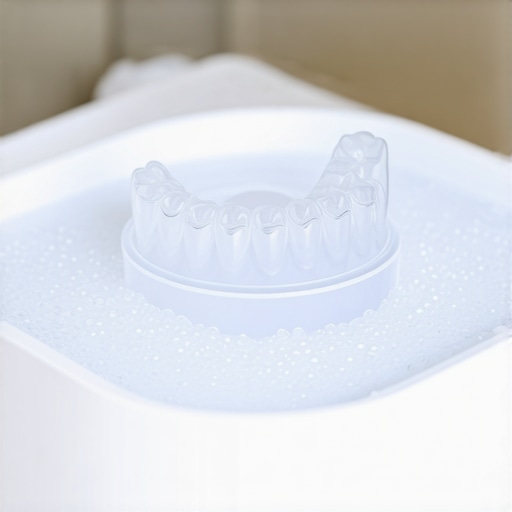
How can I keep my results from fading over the next five years?
This is the question that keeps most patients up at night. The answer lies in the structural integrity of your dental work. When we look at the ultimate guide to crowns for a healthier smile, we see that longevity is built on the foundation of the prep. Niche dental expert Dr. Gordon Christensen, in his research for the Clinicians Report, has often emphasized that the durability of zirconia restorations depends heavily on the decontamination of the internal surface before bonding. If your dentist isn’t obsessive about these details, the crown might fail prematurely. This is why why crowns are a game changer in restorative dentistry only when they are applied with precision.
Future Proof Your Smile With Smart Tech
I predict that in the next few years, we will see the rise of ‘smart retainers’ equipped with bio-sensors that track your wear-time and even monitor your oral pH levels in real-time. We are already seeing Invisalign innovations and the future of family dentistry moving toward AI-driven tracking. For now, your best defense is a pH-balanced mouth rinse. Acid is the enemy of both enamel and the resins used in attachments. If you want to keep your smile bright, you have to stop the acid erosion before it starts.
Commit to the Professional Deep Clean
Even with the best home tools, you still need professional eyes on your work twice a year. Using family dentistry secrets for maintaining oral health means catching a tiny margin leak on a crown before it becomes a full-blown root canal. Try this one advanced tip today: swap your generic mouthwash for one that contains xylitol and a neutral pH. It’s a small change that drastically reduces the ‘stickiness’ of plaque on your expensive dental work.
Hard Truths About Maintaining a Multi-Thousand Dollar Smile
After years of navigating the ups and downs of restorative work, I’ve realized that consistency beats intensity every single time. One lightbulb moment for me was discovering that even the best work fails if the foundation isn’t solid. Many people fall for Invisalign myths debunked and assume it’s just about straight teeth, but it’s actually about creating a mouth environment where bacteria have nowhere to hide. Another realization: why crowns are a game changer in restorative dentistry isn’t just about the porcelain; it’s about the microscopic seal that protects your natural tooth from further decay. #IMAGE_PLACEHOLDER_E#
The Daily Kit That Keeps My Gums Happy
I don’t leave my oral health to chance anymore. My toolkit is specific and science-backed. I swear by a high-quality water flosser, though you have to master the trick to using a water flosser without making a total mess before it becomes a pleasant part of your morning. If you wear any type of appliance, you absolutely must know how to clean a night guard that has started to smell like vinegar because that odor is a sign of biofilm buildup that can irritate your gums. Finally, I always recommend a pH-neutral mouthwash to buffer the acids from my morning brew and keep my smile white while drinking daily coffee.
Start Your Journey to Fearless Dental Care
Taking control of your dental health shouldn’t be a source of anxiety. Whether you are dealing with sensitivity or looking into complex restorative work, the key is to stay informed and proactive. By applying family dentistry secrets for maintaining oral health, you shift from being a reactive patient to a confident owner of a beautiful smile. You deserve to feel good about your teeth every time you look in the mirror. Have you ever experienced a sudden ‘zing’ of sensitivity that changed how you brush? Let me know in the comments!