
The difference between professional whitening and store-bought strips
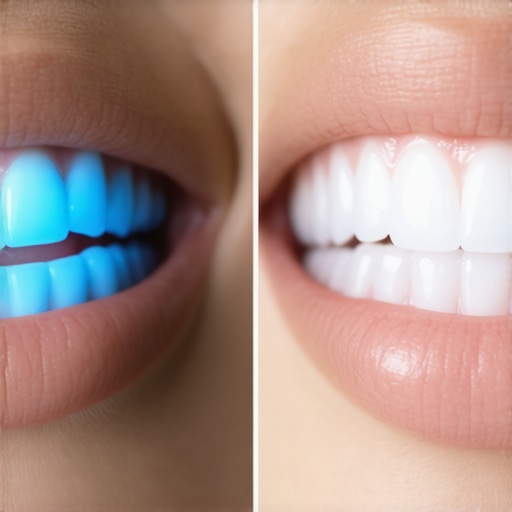
I remember sitting in my bathroom at 11 PM, squinting into the mirror while trying to fold a slippery, chemical-scented piece of plastic over my bottom teeth. I thought I was being savvy, saving a few hundred bucks by opting for the DIY route. Instead, five minutes later, I felt that sharp, electrical jolt through my canine—the dreaded ‘zinger.’ If you have ever wondered why your gums look white after using whitening strips, you know the exact moment of panic I experienced. My gums were literally blanched, and my teeth looked more translucent than white. I was making the classic mistake of choosing convenience over chemistry. Today, I am going to peel back the curtain on the real difference between professional treatments and the boxes you find in the toothpaste aisle. We are going to solve the mystery of why your results look splotchy and how you can finally achieve a bright smile without the side effects that make you want to swear off ice cream forever. Have you ever spent a month using strips only to realize your teeth still look exactly the same in photos?
Stop Settling for a Blotchy DIY Smile
I used to think the ‘pro’ stuff was just the same gel in a fancy bottle with a higher price tag. Boy, was I wrong. The biggest hurdle with store-bought options is the ‘one-size-fits-none’ approach. These strips are flat, while your teeth are three-dimensional landscapes with curves and crevices. When the strip doesn’t sit flush, the whitening agent misses the spots near the gum line, leading to that awkward two-tone look. I actually made the mistake of doubling up on strips to ‘fix’ it, which only led to more sensitivity. If you are struggling with that sharp pain already, you should check out my tips on how to stop the painful zing when you drink iced coffee. Professional systems use custom-fitted trays that ensure every millimeter of enamel is covered, which is a total game-changer for consistency. According to the American Academy of Cosmetic Dentistry, professional-grade whitening can brighten teeth up to eight shades in a single visit, a feat that over-the-counter products rarely achieve even after weeks of consistent use.
Is the professional price tag actually worth the hype?
It is the question everyone asks, and for a long time, I was a skeptic too. But when you factor in the time spent and the fact that you might be damaging your enamel with acidic DIY kits, the math starts to favor the dentist. Plus, if you are a heavy caffeine drinker, you need a strategy that actually works against deep stains. I’ve learned the hard way that keeping your smile white while drinking daily coffee requires more than just a flimsy piece of plastic. In a clinical setting, we can use higher concentrations of hydrogen peroxide because the soft tissues are protected by a specialized barrier—something you just can’t do safely at your kitchen sink. This isn’t just about vanity; it’s about making sure your top oral health tips include methods that don’t leave your nerves exposed and screaming. If your teeth currently look gray instead of white, it might not even be a surface stain issue, and no amount of drugstore strips will fix a structural problem.If your teeth have that stubborn gray undertone, you aren’t just dealing with coffee stains—you’re likely seeing the dentin underneath, and the reason your teeth look gray instead of white is often structural rather than surface-level. In a professional setting, the first step isn’t even the whitening; it’s the mapping. I remember my first chairside session where the hygienist didn’t just slap on a gel; she meticulously painted a liquid dam along my gum line. It looked like bright blue cake frosting, but it hardened into a rubbery shield. This is the difference. At home, you’re playing a dangerous game of ‘how close can I get this chemical to my soft tissue?’ Professional systems use higher concentrations of hydrogen peroxide—sometimes up to 40%—which would be an absolute disaster if it touched your gums.
Ditch the Guesswork with Precise Chemical Control
Think of whitening like detailing a car. You can go through the automatic car wash and get the basic grime off, or you can have a professional hand-polish the finish to remove the deep swirls. Professional whitening uses a pH-balanced gel that opens the pores of your enamel more efficiently. When I tried to do this myself with a cheap kit from a social media ad, I ended up with ‘white spots’ that looked like chalk. This happened because the gel was too acidic and dehydrated the tooth instead of actually bleaching the internal pigments.
Your Gums Need a Physical Barrier
The number one reason people quit whitening is the pain. When you use store-bought strips, that gel migrates. It’s like trying to keep water on a flat plate; it’s going to spill over the edges. Professional application uses a gingival barrier, which is essentially a ‘no-fly zone’ for the bleach. This allows us to use the strong stuff without you ending up with blanched, painful tissue. If you’ve already had a bad experience, you might need to look into family dentistry secrets that focus on reparative care before trying again. 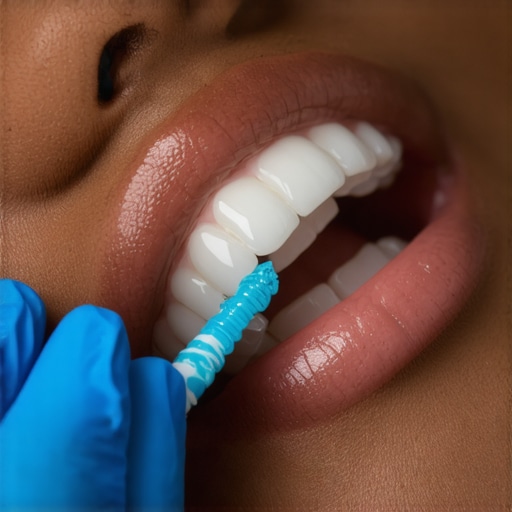
The Custom Tray Advantage Over Flat Strips
A strip is two-dimensional, but your smile is 3D. When I finally switched to custom-molded trays, the difference was night and day. These trays are created from a digital scan or a physical impression of your mouth, ensuring that every nook and cranny—even that one slightly rotated lateral incisor—gets equal contact with the gel. This prevents the ‘tiger stripe’ effect where the middle of the tooth is white but the edges remain yellow. It’s the same logic used in Invisalign vs. braces discussions; custom-fit technology always yields more predictable results.
When Whitening Hits a Wall
Sometimes, no amount of peroxide will work. If you have deep tetracycline staining or internal trauma, your teeth are essentially ‘stained from the inside out.’ In these cases, we pivot to restorative solutions. I’ve seen patients spend hundreds on whitening only to find that how crowns boost oral health and confidence is the actual answer they were looking for. A porcelain crown or a veneer provides a total color reset that whitening just can’t touch.
Maintaining Your Glow While Keeping Your Caffeine Habit
Once you achieve that shade, the battle shifts to maintenance. You don’t have to give up your morning brew, but you do need a protocol. I started using the ‘sip and swish’ method—a quick water rinse after coffee—and it changed everything. Learning how to keep your smile white while drinking daily coffee is about managing the contact time between the chromogens in the coffee and your porous enamel. If you are already dealing with sensitivity from previous DIY attempts, remember that the truth about soft vs. hard toothbrushes plays a massive role in whether your enamel can handle future whitening sessions without a painful meltdown.
Many people assume that shifting teeth into place is purely a pursuit of vanity, but I have seen firsthand how misaligned teeth create ‘dirt traps’ that no toothbrush can reach. This is where the common myth—that Invisalign is just for a ‘Hollywood smile’—falls apart. In reality, straightening your teeth is a preventative health measure. When teeth overlap, you are at a significantly higher risk for localized gum disease and decay. It is better to address these issues early with family dentistry trends that prioritize long-term function over just aesthetics. According to a study published in the Journal of Periodontology, patients with properly aligned teeth show significantly lower levels of plaque retention and gingival inflammation compared to those with significant crowding.
Stop Viewing Alignment as Purely Cosmetic
It is easy to get caught up in the visual results, but the hidden nuance of modern orthodontics is the improvement in bite force distribution. If your teeth are hitting unevenly, you might eventually find that your front teeth look shorter than they used to due to excessive wear. This is a structural red flag that often gets ignored until it is too late. By utilizing invisalign innovations, we can correct these mechanical failures before they lead to cracked enamel or TMJ issues.
Why do some teeth refuse to shift even with consistent wear?
It is the most frustrating ‘oops’ in the world of clear aligners. You wear them 22 hours a day, yet your progress stalls. Often, the culprit is a lack of ‘tracking.’ If the plastic isn’t perfectly snug against the incisal edge of the tooth, the movement simply won’t happen. I always recommend patients learn how to seat stubborn invisalign trays using the munchie technique to ensure that orthodontic force is actually being applied. If you skip this, you are just wearing a glorified mouthguard that isn’t doing any real work. 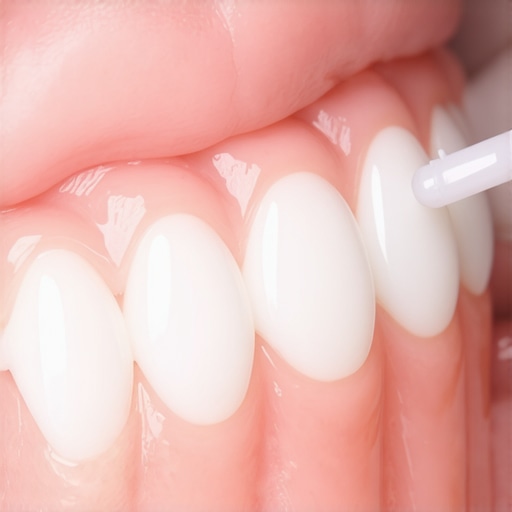 Another nuance people miss is what happens after the movement is done. Sometimes, as teeth straighten, small gaps appear at the gum line. If you have noticed these, you aren’t alone; many patients need to know how to fix the black triangle gaps that appear after braces or aligners. This isn’t a failure of the treatment, but rather a reflection of your natural gum anatomy being revealed.
Protect Your Smile Foundation with Smart Restorations
When whitening or alignment isn’t enough, we look at the structural integrity of the tooth. A common trap is waiting until a tooth actually breaks to consider a crown. I used to think a crown was the ‘last resort,’ but it is actually a proactive shield. If you have large, aging fillings, the ultimate guide to crowns will show you that reinforcing that tooth now prevents a catastrophic fracture later. If you are debating between different aesthetic fixes, you might find that crowns vs. veneers is the most important decision you will make for the longevity of your bite. Have you ever fallen into this trap of waiting until it hurts to fix a known issue? Let me know in the comments.
Once you’ve put in the time and money for a total smile reset, the fear of it ‘reverting’ is very real. I’ve spent thousands on my smile, and I’m not about to let a few lazy habits ruin it. I swear by the vinegar soak that safely sanitizes your retainers and guards because any buildup on an aligner or night guard is essentially an acid bath for your enamel. If you are currently in the middle of your journey, don’t let your progress stall simply because you aren’t being precise with your tools. I’ve seen so many people fail their tracking goals because they didn’t know how to seat stubborn invisalign trays using the munchie technique. It’s that extra 5% of effort that separates a good result from a perfect one.
Stop guessing if your brushing is actually working
I switched to a smart electric toothbrush with pressure sensors not because I love gadgets, but because I was a chronic ‘scrubber.’ If you are like I was, you are probably causing more harm than good. I’ve realized that the hidden spots most people miss while brushing their teeth are usually right at the junction where a crown meets the gum line. According to a systematic review in the Journal of Clinical Periodontology, interdental brushes and high-frequency sonic vibrations are significantly more effective at removing biofilm in patients with complex restorative work than traditional manual flossing alone. This isn’t just about freshness; it is about protecting the margin of your crown from secondary decay.
How do I keep my dental work looking brand new for decades?
Maintenance is a marathon, not a sprint. If you have a restoration that feels slightly off, address it immediately. I remember ignoring a slight ‘high spot’ on a molar for weeks until I developed a massive headache. If you feel like your new zirconia crown feels taller than your other teeth, do not wait for it to ‘settle’—that uneven pressure can actually crack the porcelain or cause inflammation in the ligament. 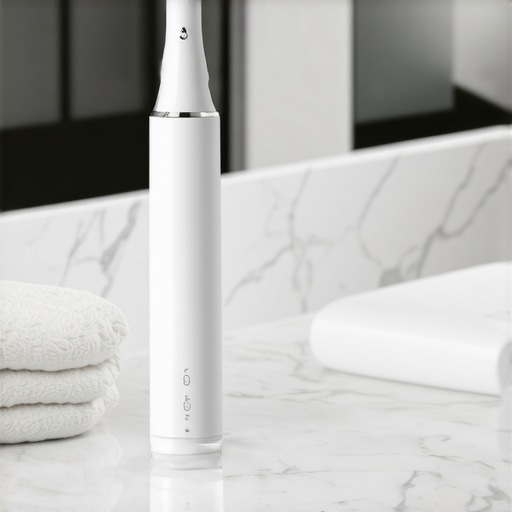 When you understand why crowns are a game-changer in restorative dentistry, you realize they are a shield for your natural tooth, but they still require a clean foundation to survive. For my family, we follow family dentistry secrets like alternating between a water flosser and traditional tape to ensure we hit the areas under the contact points.
The future of dental care is moving inside your phone
I predict that in the next five years, we will see a massive shift toward AI-driven home monitoring. We are already seeing invisalign innovations that allow you to scan your teeth with a smartphone and send the data directly to your doctor. This real-time feedback loop is going to eliminate the ‘oops, I forgot to wear my trays’ moments that derail so many adult cases. We are moving toward a world where family dentistry trends prioritize remote diagnostics, making high-end care accessible without the monthly office commute. My advice? Embrace the tech now. Start by using a tracking app for your whitening or aligner wear time today—you will be amazed at how much more consistent you become when you have data staring back at you.
After years of experimenting on my own teeth and seeing the results of modern clinical care, I have realized that a beautiful smile is about 20% genetics and 80% strategy. It is not just about finding the whitest shade on the plastic chart; it is about the structural health that supports that brightness. Choosing professional guidance ensures you aren’t just masking problems but building a foundation that lasts for decades.
What the Toothpaste Commercials Never Tell You About Real Results
One of the biggest lightbulb moments for me was realizing that sensitivity isn’t a badge of honor—it is a sign of a compromised barrier. If you are constantly looking for how to stop the painful zing when you drink iced coffee, your DIY routine is likely doing more damage than good. Another insight? Your bite changes as you age, and if you ignore those shifts, even the most detailed ultimate guide to crowns won’t save a tooth that is being hit with too much mechanical force. Finally, remember that the most effective family dentistry secrets aren’t just about twice-yearly cleanings; they are about catching microscopic enamel issues before they become five-thousand-dollar emergencies.
My Personal Favorites for Keeping Enamel Strong
I don’t trust my smile to just any product found in a bargain bin. I highly recommend investing in a high-quality water flosser; it is the only way to effectively manage the hidden spots most people miss while brushing their teeth. For those currently using clear aligners, I swear by the munchie technique to ensure your teeth are actually tracking as planned. And for the maintenance of any removable appliance, utilizing the vinegar soak that safely sanitizes your retainers and guards is a total game-changer for keeping things hygienic without using abrasive chemicals that can scratch the surface.
The Best Time to Protect Your Smile is Today
Your smile is a lifelong investment, and while the DIY route seems tempting for the immediate budget, the longevity provided by professional family dentistry and invisalign treatments is unmatched. Whether you are looking into crowns for restorative strength or just want to level up your daily oral health, remember that you deserve a smile that feels as good as it looks in photos. Don’t let fear or past bad experiences with whitening keep you from the confidence you deserve. Have you ever felt like a DIY dental hack did more harm than good to your gums? Let me know your experience in the comments below!