
Why your dental implant area feels cold when you drink ice water
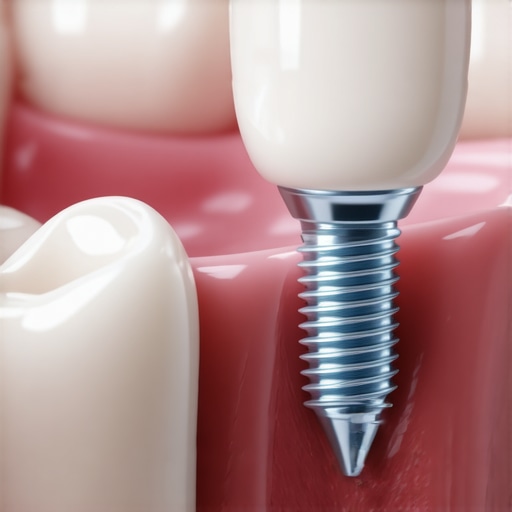
I was sitting on my back porch last July, nursing a glass of ice-cold lemonade, when it happened. I took a deep gulp, and suddenly, my lower jaw felt like it had been struck by a bolt of lightning—only it wasn’t hot, it was freezing. It was a bizarre, deep-seated chill right where my molar used to be. I honestly panicked. I thought the metal post was somehow failing or that I’d developed some weird infection that only responded to citrus. It’s a visceral, unsettling feeling when your body feels like it’s conducting the temperature of a glacier. If you have been through this, you know exactly what I am talking about. It isn’t the same as a cavity ache; it’s a metallic, structural cold that seems to vibrate in your bone. Today, I want to pull back the curtain on why this happens and why you probably don’t need to rush to the emergency dentist at 2:00 AM.
The Moment My Jaw Turned into an Ice Cube
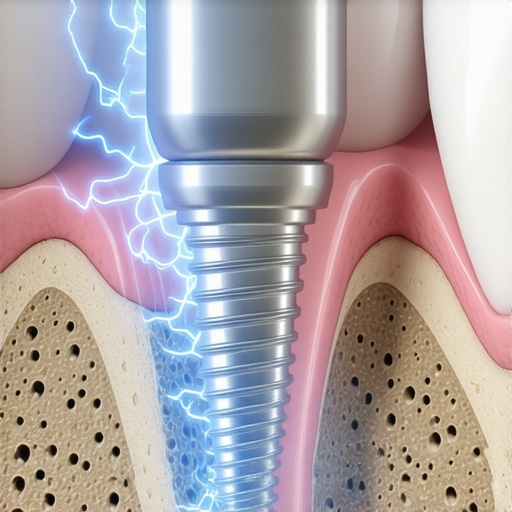
I’ve spent a lot of time learning about oral health through trial and error, and let me tell you, I made the classic mistake of thinking my implant was a lost cause the second I felt that chill. I spent hours obsessively searching for the truth about how long dental implants actually last because I was convinced mine was defective. The reality is much simpler, but no one really warns you about it during the consultation. We talk about the surgery and the healing, but we rarely talk about the thermal physics of titanium. When you have a natural tooth, you have a complex system of pulp and nerves that acts as an insulator. With an implant, you have a highly conductive metal post anchored directly into your jawbone. According to the American Academy of Implant Dentistry (AAID), titanium is an excellent conductor of thermal energy, meaning it transfers cold much more efficiently than your natural teeth ever could. This is why why your dental implant area feels cold when you drink water—it’s literally just the metal doing its job as a conductor. Have you ever noticed this sensation specifically when drinking through a straw, or does it happen with every sip?
Does a Cold Sensation Mean the Implant Is Failing?
This is the big fear, isn’t it? We assume that any
Think of Your Implant Like a Cast-Iron Skillet
To understand why that chill feels so intense, you have to look at the physics of the materials in your mouth. Your natural teeth are essentially living organisms with layers of enamel, dentin, and a soft pulp center that acts as a natural buffer. Titanium, however, is a different beast entirely. It is a dense metal designed for strength and biocompatibility, but it is also an incredible thermal conductor. Think of it like a cast-iron skillet on a stove; it takes a moment to heat up, but once it does, it holds that temperature and transfers it deep into whatever it is touching. In this case, it is touching your jawbone. When you take a sip of ice water, the titanium post absorbs that thermal energy almost instantly. Unlike a natural tooth that has a ‘delay’ due to the pulp, the implant transfers that ‘freezing’ sensation directly to the surrounding tissue and bone. This is specifically why your dental implant area feels cold when you drink water, and it is a physical reality of having a metal restoration.
How to Handle the Chill Without Losing Your Mind
If you find the sensation distracting or uncomfortable, you do not have to just ‘live with it’ in misery. I remember one specific Tuesday—I call it ‘The Slushie Incident.’ I was celebrating my daughter’s soccer win and took a massive pull of a blue raspberry slushie. The sensation wasn’t just cold; it felt like a tuning fork had been struck inside my gums. I dropped the cup. It was messy, embarrassing, and honestly, a little scary. But that was the moment I realized I had to change how I consumed cold items. First, try to bypass the area. If your implant is on the left, learn to sip or chew on the right. Second, ditch the straws. Straws often jet-stream cold liquid directly onto the gums and the implant crown, which creates a concentrated thermal shock. By drinking normally from a glass, the liquid disperses more evenly, giving your mouth time to normalize the temperature. If you find the sensation persists, it might actually be a neighboring tooth causing the issue. You might find that why your new crown feels sensitive to cold drinks is the real culprit, as crowns on natural teeth can also transmit temperature if they are not perfectly seated or if the underlying tooth is sensitive.
Is It Just the Cold or Is Something Moving?
The biggest question people ask me is how to tell the difference between ‘normal’ thermal conduction and actual failure. A healthy implant should never wiggle. If you feel the cold but the area is stable, you are likely fine. However, if that cold sensation is accompanied by a dull ache or a change in your bite, it is time to look at the truth about how long dental implants actually last to see if your timeline matches up with potential wear and tear. You should also be aware of any strange noises; if you ever wonder why your new dental implant makes a clicking sound when you talk, that is a sign that the abutment or the crown might be loose, which can exacerbate sensitivity by allowing liquid to seep into gaps.
Protect Your Other Investments Too
Maintaining a healthy implant environment means keeping the surrounding teeth in peak condition. If your natural teeth are shifting or if your gums are receding, the implant post becomes more exposed to thermal changes. I’ve learned that staying ahead of the game with family dentistry secrets maintaining oral health with modern techniques is the only way to keep the whole system working. This includes checking the integrity of your other restorations. For instance, if you have a bridge nearby, you need to know the easiest way to get food out from under your bridge to prevent inflammation that makes the whole area more sensitive to cold. Keeping the gums healthy and the bone dense ensures the titanium remains insulated by your own tissue, which naturally dampens that ‘ice cube’ feeling over time.
While that icy sensation in your implant is a matter of basic physics, there is a much deeper layer to restorative dentistry that most patients—and even some general practitioners—tend to overlook. We often treat dental work like a car repair: you swap a part, and you are good to go. But your mouth is a dynamic, ever-changing ecosystem. The real nuance that separates a ‘standard’ procedure from long-term success is occlusion, or how your teeth actually meet when you chew, speak, or rest. When we talk about why your dental implant feels different than your natural teeth, it is not just the temperature; it is the lack of a periodontal ligament, which acts as a shock absorber. This means any tiny misalignment in your bite is magnified ten-fold.
Why straight teeth are actually a medical necessity
There is a massive misconception that procedures like Invisalign are purely about vanity or looking good in graduation photos. I used to think that way too, until I saw the data. In reality, how invisalign transforms family dentistry in 2025 is less about the ‘perfect smile’ and more about preventing bone loss. When teeth are crowded or tilted, they create ‘hygiene traps’ that no toothbrush can reach. More importantly, an uneven bite puts ‘lateral force’ on your teeth, literally rocking them out of the bone over decades. A study published in the Journal of Prosthetic Dentistry highlights that even a 30-micron discrepancy in how your teeth touch can lead to chronic muscle fatigue and ligament inflammation. By addressing these invisalign myths debunked, we realize that alignment is the foundation of all other dental work, including your implants and crowns.
The trap of trying to ‘break in’ a new crown
One of the most dangerous ‘traps’ you can fall into is the ‘I’ll just get used to it’ mentality regarding a new crown. If you feel like your new tooth is hitting first when you close your mouth, that is a major red flag. I have seen patients wait weeks, thinking they just need to ‘break it in’ like a new pair of shoes. This is a mistake. A ‘high’ crown causes the underlying bone to undergo ‘disuse atrophy’ or, conversely, causes the ligament to become severely inflamed. If you notice the specific reason your crown feels tall when you wake up, it is likely because your jaw muscles have been clenching all night to try and grind down the obstruction. You should never ‘feel’ a crown after the first 48 hours. If you do, you need to know what to do when your crown feels taller than your other teeth immediately to prevent permanent damage to the root.
How can I tell if my bite is actually damaging my bone?
Advanced oral health is about spotting the subtle signs before they become emergencies. If you notice your front teeth look like they are thinning, or if you see small notches at the gum line (called abfractions), your bite is likely ‘heavy’ in those areas. This is where family dentistry secrets maintaining oral health with modern techniques come into play, such as using digital bite-mapping to see exactly where the pressure is. It is not just about filling cavities; it is about engineering a mouth that does not destroy itself. Have you ever fallen into this trap where you ignored a ‘slight’ discomfort only for it to turn into a major headache? Let me know in the comments; I would love to hear your experiences with getting your bite ‘just right’!
Once you have sorted out the mechanics of your bite, the focus shifts from ‘repairing’ to ‘preserving.’ I’ve spent thousands of dollars on my mouth over the last decade, and I realized early on that if I didn’t treat my crowns and implants with the same respect I’d give a classic car, I’d be back in the chair within five years. The most critical tool in my kit isn’t actually a toothbrush; it is a high-quality water flosser. Standard string floss is great for natural teeth, but when you have an implant or a bridge, you need something that can flush out the ‘blind spots’ where the restoration meets the gum line. I personally use a model with a specialized ‘orthodontic’ tip because the high-pressure pulse is the only thing that effectively clears the space. If you are struggling with the learning curve, you should check out the trick to using a water flosser without making a total mess—it saved my bathroom mirror from a lot of unnecessary spraying.
How do I keep my dental work looking brand new for twenty years?
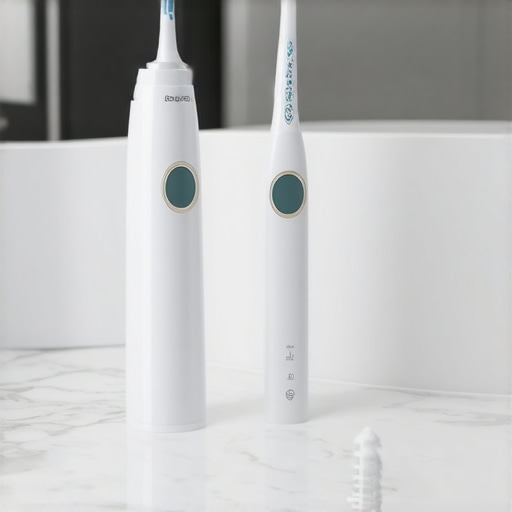
Maintenance isn’t just about cleaning; it’s about monitoring changes before they become catastrophic. I recommend investing in an electric toothbrush with a built-in pressure sensor. I learned the hard way that ‘scrubbing harder’ was actually destroying my enamel and causing my gums to pull away from my expensive new porcelain. A study published in the Journal of Clinical Periodontology found that users of powered toothbrushes experienced 22% less gum recession over an 11-year period compared to manual brushers. This is vital because if your tissue moves, your crown margins become exposed. Understanding why your gums are receding despite brushing twice a day can help you adjust your technique before you need a gum graft.
When it comes to the future of this field, I truly believe we are entering the era of ‘Biometric Monitoring.’ In the next five years, I predict we will see smart-aligners and night guards equipped with micro-sensors that track your clenching patterns and pH levels in real-time. We are already seeing glimpses of this with invisalign innovations the future of family dentistry revealed at 1137 am, where AI-driven software predicts tooth movement with terrifying accuracy. This technology takes the guesswork out of maintenance. For those of us currently in treatment, it’s about staying disciplined with the tools we have. If you are currently wearing aligners, you might notice that why your invisalign trays feel tighter on some days than others is often a result of how well you are managing your inflammatory response through diet and hydration.
My final ‘insider’ tip for long-term success is to stop treating your dental visits as ‘cleanings’ and start treating them as ‘preventative engineering sessions.’ Ask your hygienist to show you the specific spots you are missing. Often, it is the back of the lower molars or the distal side of an implant. Once you know your ‘danger zones,’ you can use family dentistry secrets maintaining oral health with modern techniques to target them specifically. My challenge to you: tonight, use a plaque-disclosing tablet after you brush. It’s a humbling experience, but it’s the only way to see the ‘invisible’ threats to your crowns and implants. You might be surprised at what you find lingering behind that ‘clean’ feeling.
The Hardest Realities I Faced While Rebuilding My Smile
After years of navigating the world of restorative dentistry, I have realized that the ‘cold’ sensation I once feared was actually just a messenger. The real victory is in the silence—those months where you completely forget you even have dental work. One major lesson I learned is that your mouth is always changing. If you ever feel a shift, or if why your dental implant feels loose when you wake up becomes a recurring concern, it is usually a sign that your bite needs a minor adjustment rather than a surgical fix. I also discovered that the placement of the implant matters immensely for thermal comfort. This is why finding the best dentistry in culpeper va usually starts with a 3d cbct scan; seeing the bone in three dimensions allows your dentist to place the post where it is naturally insulated by your own anatomy, significantly dampening that metallic chill.
#IMAGE_PLACEHOLDER_E#
The Specific Tools That Keep My Implants and Crowns Happy
Maintaining high-end dental work requires more than just a standard manual toothbrush. I have curated a specific toolkit that has extended the life of my restorations by years. First, a high-quality water flosser is non-negotiable, but you have to master the trick to using a water flosser without making a total mess or you will likely give up before it does any good. Second, I use plaque-disclosing tablets once a month; they reveal the ‘invisible’ film on porcelain crowns that often leads to the gum recession I worked so hard to avoid. Finally, I stay updated on family dentistry trends improving oral health for all ages to ensure my maintenance routine evolves alongside the latest medical research.
Your Mouth Deserves a Proactive Plan
Do not wait for a ‘lightning bolt’ of cold sensitivity to start caring for your investment. Your journey toward optimal oral health is a lifelong commitment, and the technology available today makes it easier than ever to succeed. By staying informed and implementing top oral health tips for your familys bright smiles, you can ensure your implants remain as strong and comfortable as your natural teeth. Have you ever felt a strange sensation in your dental work that turned out to be just a simple fix? Let me know in the comments below!