
Why your child has two rows of teeth at the bottom
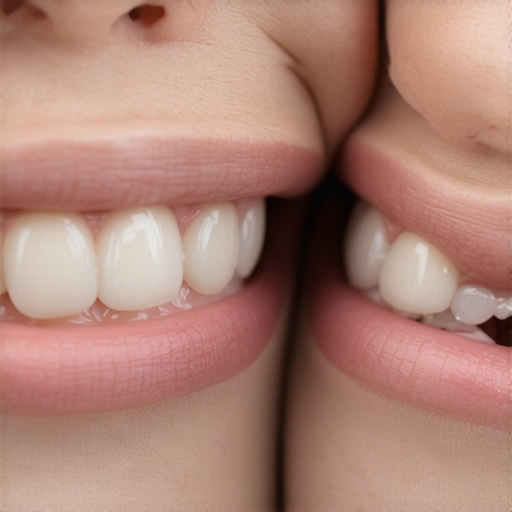
I remember the absolute dread I felt when my six-year-old opened his mouth to show me a loose tooth, only for me to spot a second, jagged row of white poking up right behind it. I froze. My first thought wasn’t about the Tooth Fairy; it was, “Is my kid turning into a shark?” It looked alien. It looked wrong. And honestly, it looked expensive. I spent the next three hours scouring the internet, convinced I’d missed some crucial developmental milestone or, worse, that his permanent teeth were ruined before they even fully arrived.
The Panic of Seeing Double Rows
If you’re here, you’re probably staring at your child’s lower jaw with that same knot in your stomach. This phenomenon—often called “shark teeth”—is actually incredibly common in family dentistry. I made the classic rookie mistake of trying to manually “encourage” the baby tooth to leave before it was ready, thinking I was helping. It just led to a very grumpy kid and some unnecessary bleeding. I learned the hard way that the reason your child’s teeth are coming in behind their baby teeth is usually just a matter of timing and anatomy, not a dental emergency. Today, we are going to solve the mystery of these double rows, identify when you actually need to call the office, and how to keep your cool while your child’s smile transitions. Have you ever felt that sudden surge of panic after a quick look inside your kid’s mouth? [image placeholder]
Should I Really Just Sit Back and Do Nothing?
It feels counterintuitive to wait. We’re parents; we want to fix things. But according to the American Association of Orthodontists, this occurs when the permanent tooth doesn’t dissolve the root of the baby tooth as it should, and in most cases, the tongue eventually pushes the adult teeth forward naturally into the correct position. Whether you are wondering why your child’s permanent teeth look serrated or just trying to maintain oral health with modern techniques, knowing the ‘why’ makes the waiting game much easier. If the baby tooth isn’t even a little wiggly, that is when we start looking at different options, but for most of us, nature just needs a minute to catch up.
Kickstart the Natural Departure of Baby Teeth
Dealing with those second rows of teeth is mostly a game of patience, but there are active ways to help the process along without causing trauma. Think of the baby tooth like a fence post that’s been wiggled loose; the more it moves, the easier it is for the ground—or in this case, the gums—to let go. I tried to stay hands-off with my son until I realized that a little bit of ‘homework’ could speed things up. I gave him a whole, crisp apple and told him to go to town on it. Watching him gnaw on that fruit felt like watching a slow-motion construction project, but that evening, the baby tooth was significantly looser. Incorporating top oral health tips for your familys bright smiles often starts with these simple, mechanical actions.
Master the Gentle Wiggle Technique
Encourage your child to use their tongue or a clean finger to wiggle the baby tooth back and forth throughout the day. It shouldn’t be a forceful shove; think of it more like a rhythmic nudge. This movement signals to the body that the root needs to finish dissolving. If the tooth is already quite loose, you can have them try to rotate it slightly. This is much safer than the old ‘string and a doorknob’ trick, which can actually damage the gum tissue. Unlike knowing how to handle a knocked-out baby tooth without panicking, which is about reacting to an accident, this is about controlled, gradual progress. 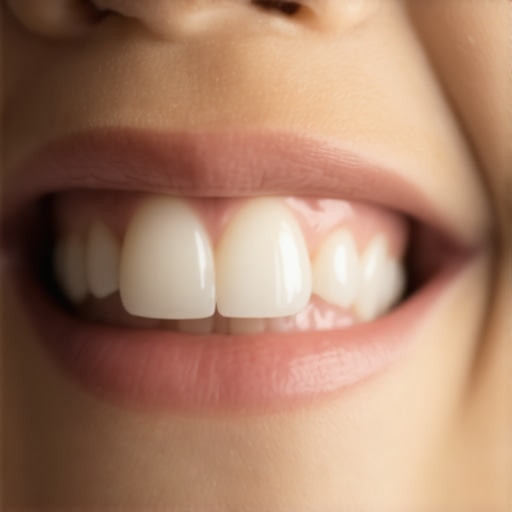
Let the Tongue Do the Heavy Lifting
Many parents worry that the permanent tooth is ‘stuck’ in the back forever. However, the tongue is one of the strongest muscles in the body and acts as a natural, soft bulldozer. Every time your child swallows or speaks, the tongue pushes against those back-set teeth. This constant pressure is usually enough to guide them into the correct position once the baby tooth is out of the way. It’s a fascinating bit of biology that often negates the need for early intervention. If you’ve noticed why your child’s permanent teeth look serrated at the top, don’t worry—those ridges, called mamelons, will eventually wear down as they move into their proper place and begin to participate in chewing.
Spotting the Signs That Nature Is Stuck
While patience is a virtue, there are specific scenarios where the ‘shark teeth’ won’t resolve themselves. If the baby tooth isn’t wiggling at all despite the permanent tooth being halfway in, the root might be fused to the bone or simply not dissolving. This is when the DIY approach ends.
Recognize When the Baby Tooth Refuses to Budge
If your child experiences significant pain, or if the baby tooth remains rock-solid for more than two months after the permanent tooth appears, it’s time for a professional to step in. A dentist might perform a simple ‘wiggle-out’ (extraction) to clear the path. This prevents the adult tooth from being forced so far out of alignment that it requires more intensive correction later. This is part of why maintaining oral health with modern techniques involves regular check-ups during these transition years.
Plan Ahead for a Perfectly Aligned Smile
Once the baby tooth is gone, the focus shifts to how the adult teeth are settling. If the mouth is crowded, the tongue might not have enough room to push the teeth forward. In these cases, we start looking at how how invisalign transforms family dentistry in 2025 for older kids and teens. Early monitoring allows you to see if the jaw is expanding enough to accommodate the new, larger teeth. While your child is in this ‘ugly duckling’ phase, keep the snacks safe; the best snacks for kids with new braces that wont cause damage are often the same ones that are gentle on loose baby teeth, like yogurt or sliced peaches, ensuring they don’t accidentally bite down too hard on a stubborn tooth.Moving past the ‘shark teeth’ phase of childhood, we enter the world of adult maintenance, where the stakes get a lot higher and the myths get more pervasive. Many patients assume that once they get a dental restoration, the job is done. But I’ve seen a recurring trap: the belief that a crown makes a tooth invincible. In reality, why crowns are a game-changer in restorative dentistry isn’t because they are ‘set and forget’ shields, but because they provide a structural reset. The nuance most people miss is at the margin—the tiny line where the porcelain meets your natural gum. If you aren’t meticulous there, you can still get a cavity underneath the most expensive crown in the world.
Don’t Ignore the Tall Tooth Trap
One of the biggest ‘oops’ factors I see with new dental work is the ‘wait and see’ approach to discomfort. If your bite feels even a fraction of a millimeter off, you need to speak up. I’ve had patients try to ‘tough it out’ only to end up with a bruised periodontal ligament. Understanding what to do when your crown feels taller than your other teeth is vital because a ‘high’ crown acts like a tiny hammer, hitting your jaw with every chew. This isn’t just an annoyance; it can lead to a fractured root or chronic jaw pain. A study published in the Journal of Oral Rehabilitation confirms that even minor occlusal interference can trigger significant muscle activity changes in the jaw, leading to tension headaches you’d never link to your teeth. [image placeholder]
Could Aligners Be the Solution to Your Receding Gums?
Here is a contrarian view: Invisalign isn’t just a cosmetic luxury. While most think it’s about the ‘perfect selfie,’ many invisalign myths debunked reveal its true value as a periodontal tool. When your teeth are crowded, they are nearly impossible to clean, and the ‘picket fence’ effect can actually cause your bone to thin. You might be wondering why your gums are receding despite brushing twice a day, and the answer might be your alignment, not your technique. By moving teeth into the proper ‘arch,’ you’re actually protecting the bone and gum tissue from uneven pressure.
The Hidden Danger of Abrasive Trends
We all want a brighter smile, but I have to warn you about the DIY whitening craze. Specifically, the truth about charcoal toothpaste and your enamel health is that it acts like sandpaper. It might scrub away a coffee stain today, but it’s also scrubbing away your enamel, which never grows back. Once that enamel is gone, your teeth actually look yellower because the dark dentin underneath shows through. It is an expensive mistake to fix. Whether you are looking at family dentistry trends or high-end restorative work, the best results come from respecting the biological limits of your mouth. Have you ever fallen into the trap of trying a ‘viral’ dental hack or ignoring a slightly uncomfortable bite? Let me know in the comments below.
I used to think that once my dental work was finished, I could just go back to my standard thirty-second brush and call it a day. I was wrong. Investing in the ultimate guide to crowns for a healthier smile only works if you actually show up for the maintenance phase. If you treat your new smile like a ‘set it and forget it’ appliance, you are going to be back in the chair sooner than you’d like. I’ve personally found that the gear you choose matters just as much as the dentist you pick.
The Gear That Actually Keeps My Crowns Functional
Standard flossing is great for natural teeth, but when you have a bridge or multiple crowns, you need a more surgical approach. I swear by interproximal brushes—those tiny, Christmas-tree-shaped sticks—because they get into the gaps that traditional string ignores. If you have a bridge, you know the struggle of threading floss, but learning how to clean a dental bridge without those annoying threaders changed my morning routine entirely. I also upgraded to a high-end water flosser. To avoid a soaked bathroom, I recommend the ‘closed-mouth’ technique: lean over the sink, keep your lips loosely closed, and let the water drain naturally. Mastering the trick to using a water flosser without making a total mess makes it much more likely that you’ll actually use it every night.
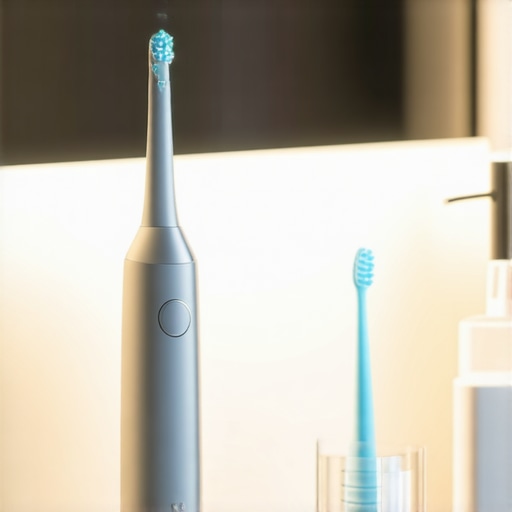
According to clinical research published in the Journal of Prosthetic Dentistry, the longevity of ceramic crowns increases by up to 40% when patients maintain strict hygiene at the gingival margin using non-abrasive tools. This isn’t just about ‘clean’ teeth; it’s about preventing the microscopic bone loss that causes crowns to fail. I even use an ultrasonic cleaner for my night guard. If you’ve ever noticed how to clean a night guard that has started to smell like vinegar, you know that manual scrubbing isn’t enough to kill the deep-seated bacteria in the porous plastic.
How do I make my dental work last for a decade or more?
Consistency beats intensity every single time. It is better to do a quick water floss every day than a deep, painful cleaning once a week. For those with aligners, the maintenance is even more specific. You have to watch for the small stuff, like the hidden cause of white spots on your teeth after braces, which is often just poor rinsing after meals. I make it a rule to never put my trays back in until I’ve done a full salt water rinse if I’m on the go. This salt water rinse trick for a sore mouth also keeps the gum tissue firm around the teeth that are being moved. If you’re ever in a pinch, choosing the right crown expert advice means knowing that professional cleanings are non-negotiable insurance for your investment.
The Future of Oral Health Is Hiding in Your Smartphone
We are moving toward a world where your phone will be your primary dental diagnostic tool. I’m already seeing trends where AI-powered apps scan photos of your teeth to track Invisalign progress in real-time, flagging issues before they become painful. We are seeing invisalign innovations the future of family dentistry revealed through 3D monitoring that ensures your teeth are moving exactly as planned. This technology, combined with 3D CBCT scans, means we can see the roots and bone structure with terrifyingly beautiful precision. In five years, your toothbrush will likely tell your dentist exactly which molar you’re neglecting. For now, my best advice is to stop using that charcoal paste and switch to an ultrasonic cleaner for your aligners or retainers tonight—your enamel will thank you.
My Hard-Won Lessons from the Dental Chair
I’ve learned that a tooth isn’t just a tool for chewing; it’s a living part of your body that reacts to how you treat it. For my kids, the biggest lesson was realizing that ‘shark teeth’ aren’t a failure of parenting; they are just a quirky biological detour. For myself, the lightbulb moment was discovering that the margin of a crown is its weakest point. If I could go back, I’d stop stressing about the color of my teeth and start obsessing over the health of the bone holding them in place. This shift in perspective is what truly transforms oral health from a chore into a lifestyle.
- Patience is a medical strategy: Most pediatric dental issues resolve with a little bit of time and a lot of crisp apples.
- Technology is your friend: Seeking out maintaining oral health with modern techniques isn’t just about being fancy; it’s about precision.
- Margins matter most: No matter how good the restoration looks, your hygiene at the gum line determines if it lasts five years or twenty.
[image placeholder]
The Gear That Saved My Sanity and My Smile
If you’re ready to take this seriously, you need better tools than a manual brush and some generic floss. Here is what I personally vouch for based on years of trial and error:
- The Interproximal Tree Brush: For anyone with crowns or bridges, these are non-negotiable. They reach the ‘danger zone’ where cavities love to hide around dental work.
- A Professional-Grade Water Flosser: Forget the mess; once you master the trick to using a water flosser without making a total mess, you’ll never go back. It’s the most effective way to keep your gums firm.
- The 3D CBCT Scan: When looking for a provider, I always check if they offer 3D CBCT scans. This level of imaging removes the guesswork from complex family dentistry.
Your Next Step Toward a Lifetime of Confidence
Oral health isn’t a destination you reach and then stop; it’s a continuous rhythm of care and observation. Whether you are currently wiggling a stubborn baby tooth or maintaining a mouthful of high-end restorations, the goal is the same: a functional, pain-free smile that you’re proud to show off. By staying informed with top oral health tips for your familys bright smiles, you are already ahead of the curve. Don’t let the ‘shark teeth’ or the fear of a tall crown keep you from enjoying your favorite meals. Take it one wiggle, one brush, and one check-up at a time. Have you ever noticed your child developing ‘shark teeth,’ or did they lose their baby teeth the traditional way? Let me know in the comments below!