
The best way to whiten teeth if you have very thin enamel
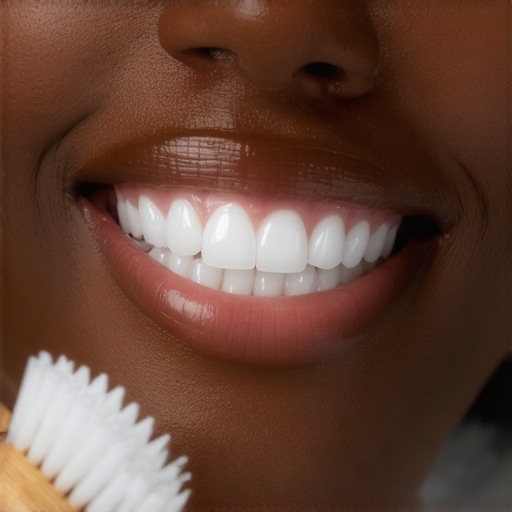
I remember sitting at brunch with friends, catching a glimpse of my smile in a nearby mirror and feeling that familiar sink in my stomach. My teeth didn’t just look off-white; they looked almost gray-blue at the edges, a classic sign of thinning enamel that I’d been trying to ignore for years. It’s a frustrating paradox: the more I tried to scrub away the stains, the more I realized why your teeth look yellow even though you brush twice a day—the yellow you’re seeing isn’t a stain at all, but the dentin peeking through your dwindling enamel. I spent a small fortune on drugstore whitening strips that felt like I was wrapping my teeth in battery acid. The zing of sensitivity was so sharp I’d have to stop mid-treatment, left with splotchy results and a mouth that throbbed every time I breathed in cold air.
Stop Hurting Your Smile in the Name of Brightness
Today, I want to share exactly how I turned things around. We’re going to talk about the gentle, restorative approach to brightening a smile that feels fragile. We’ll look at why traditional methods fail us folks with thin enamel and what actually works to give you that glow without the lightning-bolt zings of pain. If you’ve ever wondered how to safely whiten teeth if you have naturally thin enamel, you are in the right place. My biggest blunder early on was thinking I could just power through the pain. I even tried the truth about using baking soda to whiten your teeth the hard way, thinking a natural abrasive would be safer. Spoilers: it wasn’t. It just sanded down what little protection I had left.
Can You Actually Whiten Teeth Without Constant Pain?
It sounds like a pipe dream, right? Most people think whitening and sensitivity are two sides of the same coin. But here is a surprising fact: the American Dental Association notes that tooth sensitivity from whitening is often transient, but if your enamel is compromised, you risk permanent pulp irritation if you use high-concentration peroxides. We have to be smarter than the average shopper. Have you ever had to quit a whitening treatment halfway through because the zingers were just too much to handle? You aren’t alone, and you aren’t weak—your teeth are literally sending you a distress signal. In the world of family dentistry trends, the focus has shifted toward building up the tooth structure while lifting stains, rather than just stripping everything away. This matters right now because we are living in a world of high-acid diets—hello, iced coffee and kombucha—that are wrecking our enamel faster than ever. If you’ve noticed why your teeth hurt every time you drink iced coffee, that’s your first clue that we need a strategy change. Let’s dive into the practical, neighborly advice on how to get that glow without sacrificing your oral health.
Start Building the Shield Two Weeks Early
If your enamel is thin, you are essentially trying to paint a wall that is full of tiny, microscopic holes. If you do not patch those holes first, the whitening gel just seeps into the internal structure of the tooth and causes biological chaos. The very first step I took during my transformation was switching to a high-potency potassium nitrate toothpaste for fourteen days before I even touched a whitening kit. You need to ‘clog’ the tiny tubules in your teeth that lead straight to the dental nerve. I also discovered that the best time of day to brush for maximum enamel protection is actually about thirty minutes before you consume acidic foods, which helps keep your natural barrier resilient. During this prep phase, I learned the safest way to use an electric toothbrush on sensitive teeth is to let the bristles do the work without applying any manual pressure, which prevents further mechanical wear on an already thin surface.
Low and Slow is the Secret to Success
When it comes to the actual whitening agent, more is definitely not better. Most drugstore kits brag about ‘professional strength’ hydrogen peroxide, which is often around 10% to 15%. For those of us with thin enamel, that is basically liquid fire. I switched to a 10% carbamide peroxide gel, which breaks down much more slowly than hydrogen peroxide. It is the difference between a controlled campfire and a flash fire. My micro-story about this involves a 35% hydrogen peroxide gel a friend recommended. Within ten minutes, it felt like a tiny taser was hitting my front teeth every five seconds. I had to rip the tray out and dunk my face in a bowl of lukewarm water just to stop the ‘zingers.’ That was the moment I realized my ‘toughness’ didn’t apply to my dentin. If you follow the path of how to safely whiten teeth if you have naturally thin enamel, you’ll find that shorter sessions—sometimes just 15 to 30 minutes—are far more effective for long-term results than trying to power through an hour of agony.
What to Do When the Damage Goes Too Deep
Sometimes, the thinning is so advanced that no amount of gentle whitening will help because there simply isn’t enough enamel left to hold a bright white color. In these cases, the yellow dentin is the star of the show, and you can’t whiten dentin with over-the-counter strips. This is where family dentistry secrets maintaining oral health with modern techniques come into play. If you find that your teeth are translucent or grayish at the tips, it might be time to look into restorative options. I’ve seen firsthand why crowns are a game-changer in restorative dentistry; they don’t just fix the color, they provide a literal suit of armor for a tooth that has lost its shield. Using top oral health tips for your family’s bright smiles, you can decide if you need a chemical change or a structural one. Remember, the goal is a healthy mouth first, and a white smile second.
Let’s dig deeper into what’s actually happening under the surface of your smile. One of the biggest lies we’ve been sold is that orthodontics and alignment are purely cosmetic. In my years of obsessing over dental health, I’ve realized that the ‘social six’—those front teeth you see in the mirror—are often the least important part of the health puzzle. The real value of how Invisalign transforms family dentistry in 2025 isn’t about the photos; it’s about preventing the ‘slow grind’ of uneven wear. If your bite is off, you’re essentially driving a car with misaligned tires. Eventually, something is going to blow out, and it’s usually your molars or your jaw joint.
Straight Teeth Are More Than Just A Selfie Strategy
The contrarian view I’ve come to embrace is that ‘crooked’ teeth aren’t just an aesthetic quirk—they are a biological liability. When teeth are crowded, it creates ‘trap zones’ that even the most meticulous flosser can’t reach. This is where invisalign myths debunked come into play. People think it’s just for teenagers or those wanting a ‘perfect’ look, but it’s actually a preventative tool. According to a study published in the Journal of the American Dental Association (JADA), malocclusion (misaligned teeth) significantly increases the risk of periodontal disease because it facilitates plaque accumulation in areas that are physically impossible to clean. By the time you notice how to hide a gap between your teeth without permanent metal braces, you might already be dealing with bone loss you didn’t see coming.
Don’t Treat Your Dental Crown Like a Set-and-Forget Shield
Then there is the ‘Oops’ factor regarding restorative work. Many people assume that once a tooth is capped, it is invincible. This is a dangerous trap. While why crowns are a game-changer in restorative dentistry is well-documented for protecting weak teeth, the ‘margin’—the tiny line where the crown meets your natural gum—is the most vulnerable spot in your mouth. If you don’t clean that margin perfectly, bacteria can seep underneath the crown. This leads to what I call the ‘hidden decay’ that can rot a tooth from the inside out while the porcelain on top still looks perfect. In fact, the reason your crown smells bad when you floss around it is usually the first warning sign that the seal has been compromised. Have you ever fallen into this trap of thinking your dental work was maintenance-free? Let me know in the comments.
Is your jaw pain actually an alignment issue in disguise?
I often hear people complain about stress-related tension, but we need to look at the mechanics. If your teeth don’t fit together like a perfect gear system, your muscles have to work overtime to ‘find’ a comfortable resting position. This leads to a cycle of inflammation. If you’ve wondered why your jaw hurts more during stressful weeks, it’s likely that your brain is trying to ‘grind’ away the high spots of your teeth while you sleep. Utilizing family dentistry secrets maintaining oral health with modern techniques, like digital bite mapping, can reveal these invisible stressors before they turn into a cracked tooth or a lifetime of migraines. The goal isn’t just a pretty smile; it’s a mouth that functions in harmony without you even having to think about it.
I’ve spent thousands of dollars and hundreds of hours in the dentist’s chair over the last decade, and if there is one thing I have learned, it is that the ‘manual’ way is often the hardest way. I used to spend every morning scrubbing my trays with a toothbrush, only to realize I was creating micro-scratches that actually invited more bacteria to the party. Today, I’m much more of a dental-tech minimalist. I rely on tools that do the heavy lifting for me so that my restorative work actually lasts as long as it’s supposed to.
Stop scrubbing your aligners with a manual toothbrush
The single best investment I made for my oral health wasn’t a fancy whitening kit; it was a $40 ultrasonic cleaner. If you are struggling with the best way to clean your retainers without using harsh chemicals, this is your answer. I drop my Invisalign trays into the pod with plain water while I shower, and the high-frequency sound waves blast off the biofilm that brushing misses. This is especially vital if you’re like me and can’t give up your morning brew, as it’s a key part of how to keep your aligners clear while drinking tea. According to research published in the British Dental Journal, ultrasonic cleaning is significantly more effective at disrupting the complex biofilm that forms on intraoral appliances compared to traditional brushing methods. It prevents that ‘cloudy’ look that ruins the whole point of clear aligners.
How do I maintain my dental work over years of use?
Maintenance isn’t about one big deep clean; it’s about the micro-habits that protect your investment. For those with crowns, the maintenance routine looks a bit different. I’ve found that choosing the right crown expert advice for long-lasting results means moving beyond traditional string floss. I now use a water flosser specifically targeted at the gumline. If you find the hidden reason your gums bleed even if you floss daily, it’s usually because you aren’t reaching the ‘sulcus’—that tiny pocket where your crown meets your gum. A water flosser at a low-pressure setting flushes that area out without traumatizing the tissue. This same tool is the easiest way to clean a night guard that has turned yellow or cloudy, as it gets into the deep crevices that a brush simply cannot reach.
Where your smile is headed in the next decade
I’m fascinated by where this field is going. We are moving away from the era of ‘drilling and filling’ and into an era of biological restoration. Looking at invisalign innovations the future of family dentistry revealed at 1137 am, we can see that 3D-printed biocompatible materials and AI-driven movement tracking are making treatments faster and more predictable than ever before. I predict that within five years, we’ll see ‘smart crowns’ embedded with sensors that can alert your phone if decay is starting to form at the margin. For now, my best advice is to embrace the tech we have. My challenge to you: pick up an ultrasonic cleaner this week. It is a total game-changer for anyone wearing aligners, retainers, or night guards, and it will save you from the frustration of a ‘cloudy’ smile.
The Hardest Lesson I Learned About Protecting My Smile
After a decade of trial and error, I’ve realized that your teeth are not just tools for eating; they are a living part of your body that requires a gentle touch. One of the biggest shifts in my mindset came when I stopped viewing sensitivity as a nuisance to be powered through and started seeing it as a vital communication from my nerves. If you’ve ever felt that sharp pain, you know exactly what I mean. I also learned that aesthetics are secondary to function. A white smile that hurts is a failure, but a healthy, functional bite is a lifelong victory. Finally, I discovered that family dentistry secrets maintaining oral health with modern techniques are your best defense against the aging process. It is much easier to preserve what you have than to try and replace it later.
My Personal Arsenal for a Durable Smile
I don’t believe in having a cabinet full of gimmicks, but there are a few items that have fundamentally changed my daily routine. First is the ultrasonic cleaner, which I mentioned earlier; it is the only way to ensure my retainers aren’t harboring bacteria. Second, for anyone with restorative work, choosing the right crown expert advice for long-lasting results often involves using a high-quality water flosser to reach the margins that string floss misses. This simple tool helped me address the hidden reason your gums bleed even if you floss daily. I also keep a supply of pH-neutralizing mouth rinses for those days when I can’t resist an extra cup of coffee. These tools aren’t just about vanity; they are about maintaining the structural integrity of my smile for the long haul.
Your Future Smile Starts With One Small Shift
If you’re feeling overwhelmed by the state of your teeth or the cost of potential work, remember that the most important step is the one you take today. Whether it’s switching to a gentler whitening method or finally looking into invisalign innovations the future of family dentistry revealed at 1137 am to fix a crowded bite, your proactive choices now will pay dividends for years. Improving your oral health isn’t a race; it’s a series of small, sustainable habits that eventually lead to a smile you’re proud to show off. You deserve a mouth that feels as good as it looks. Have you ever experienced a ‘zinger’ while trying to whiten your teeth? Let me know your experiences in the comments below!