
The easiest way to remove a stuck popcorn kernel from your gums
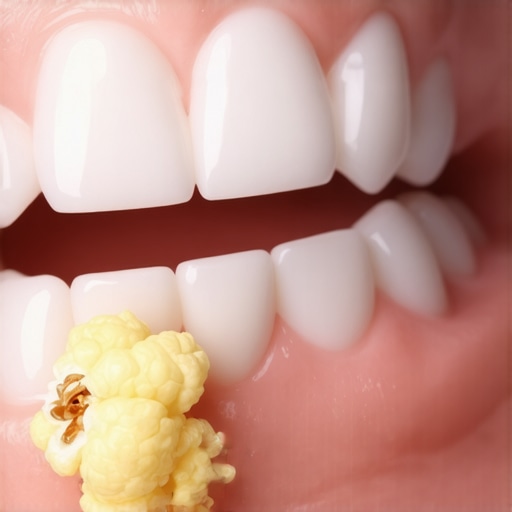
It was a Friday night, the lights were low, and I was halfway through a massive tub of buttery movie theater popcorn. Then it happened. That familiar, sharp ping of pain followed by the sensation of something being wedged deep into my gum line. I spent the next two hours in front of the bathroom mirror, contorting my face like a gargoyle, trying to hook that stubborn little hull with whatever I could find. It’s a miserable, distracting pain that makes your entire jaw feel tight, almost like the tight jaw feeling you get after a long flight. Looking back, I realize I was doing everything wrong in my panic to find relief.
Stop Poking It Before You Make It Worse
I’ll be the first to admit that my early attempts at home dentistry were a total disaster. In my desperation, I once grabbed a metal safety pin—don’t look at me like that, we’ve all been there—and ended up scratching my gum tissue so badly it bled for ten minutes. I thought I was being precise, but I was really just inviting bacteria into a fresh wound. If you’re currently digging around with a sharp object or a dirty fingernail, please, put it down. You’re likely just pushing the kernel deeper into the periodontal pocket. Instead of a quick fix, you could end up needing to know how to handle a toothache that only happens when you lie down because of the localized inflammation you’ve caused. My goal today is to share the gentle, effective methods I’ve learned after years of being a popcorn enthusiast and a frequent flyer at the dentist. We’re going to get that hull out without a drop of blood or a panicked call to the office. Have you ever been so desperate you reached for a toothpick—or something even more dangerous—just to stop that nagging irritation?
Can a Tiny Hull Actually Lead to a Dental Emergency?
It sounds dramatic, right? It’s just corn. But a stuck kernel is essentially a foreign body trapped in a warm, bacteria-rich environment. I used to think it would just dissolve or work itself out, but kernel hulls are made of cellulose, which the human body cannot break down. According to research from the American Association of Endodontists, untreated foreign objects in the gum line can lead to painful abscesses or localized gingivitis in as little as 48 to 72 hours. I learned this the hard way when a minor irritation turned into puffy and red gums that required a professional deep cleaning to resolve. If your gums are already starting to feel tender or throbbing, you might benefit from the salt water rinse trick for a sore mouth to calm the area before you try to extract the culprit. Trust me, a little patience now saves you from the stress of wondering why your teeth feel loose after a professional deep cleaning later on. Let’s look at the safest way to remove a popcorn kernel stuck in your gums using tools you actually have in your cabinet.
Tie a Simple Knot in Your Floss
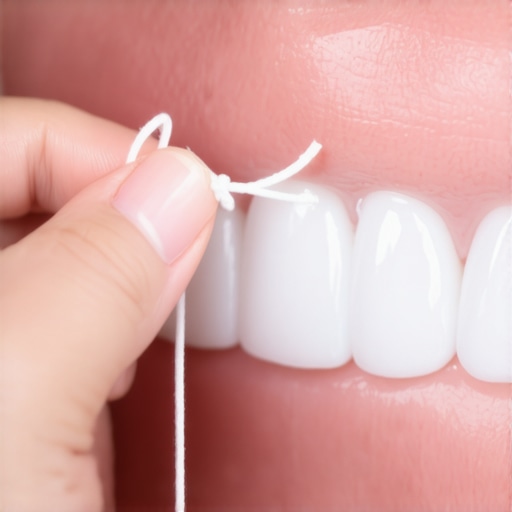
This is the “pro move” that saved me during my cousin’s wedding reception last summer. I was smiling for photos when I felt that sharp edge dig into my molar. Instead of just sliding the floss up and down—which often just pushes the hull further into the pocket—try tying a small, simple knot in the middle of a piece of dental floss. Think of it like a tiny lasso or a specialized speed bump. Gently slide the floss into the gap between your teeth, then pull it through so the knot drags across the gum line. I had to do this three times in the reception hall bathroom before the knot caught the edge of the hull and flicked it right out. It’s a game-changer for family dentistry enthusiasts who don’t want to carry a full kit everywhere. If you have a permanent retainer, you might need to adapt this, much like the secret to eating popcorn with a permanent retainer involves a bit more finesse than a standard cleaning.
Rinse With Warm Salt Water to Create Space
Sometimes the hull isn’t just stuck; the gum tissue has already started to swell around it, locking it in a fleshy vice. This is where you need to reduce the inflammation before you try to dig. Swish with warm salt water for at least 60 seconds. The salt draws out the fluid from the swollen tissue through osmosis, essentially “opening the door” for the kernel to escape. It’s the same logic behind the salt water rinse trick for a sore mouth. I’ve found that after a good rinse, the area feels less tight, making it much easier for a Waterpik or a gentle brush to do its job. If you’re using an oral irrigator, set it to the lowest pressure; you’re trying to flush it out gently, not power-wash your sensitive nerves.
Try an Interdental Brush for the Tough Spots
If floss isn’t reaching the right angle, an interdental brush—those tiny tree-shaped brushes—can be your best friend. These are perfect for getting into the nooks and crannies that standard brushing misses, similar to the hidden spots most people miss while brushing their teeth. I keep a few of these in my car’s glove box now for oral health emergencies. The bristles are soft enough that they won’t shred your gums like a wooden toothpick, but they have enough structure to catch the lip of the kernel hull. It’s like using a tiny chimney sweep to clear a flue. Just remember to move it in a gentle in-and-out motion rather than side-to-side, which can cause more irritation. This technique is often more effective than traditional methods, especially if you are working around crowns or Invisalign attachments where floss might snag or tear.
When Should You Stop and Call a Pro?
There is a fine line between persistence and damage. If you notice the area is turning a deep purple or if you start to feel a throbbing sensation that matches your heartbeat, it’s time to put the tools down. Constant poking can lead to localized infections that mimic the pain of how to handle a toothache that only happens when you lie down. In my early 20s, I ignored the throbbing for three days, thinking I could tough it out. I ended up with a minor abscess that required professional intervention. Modern dentistry uses tools like 3D scans to locate these fragments without the guesswork, which is why finding the best dentistry in Culpeper VA usually starts with a 3D CBCT scan in more complex cases. If the hull is under a bridge, you might even be worried about how to tell if your dental bridge is trapping food permanently, which definitely warrants a professional look.
Why Scrubbing Harder is Making Your Gums Retreat
We’ve been conditioned to believe that ‘elbow grease’ solves everything, but in the world of family dentistry, force is your worst enemy. Most people think a firm toothbrush is like a heavy-duty scourer for their teeth, but I’ve found that the opposite is true. If you are constantly dealing with the reason your gums bleed only when you use a firm toothbrush, you aren’t actually cleaning better; you’re just eroding your natural defenses. This aggressive approach is a major ‘oops’ factor because it leads to recession that no amount of toothpaste can fix. According to a study published in the Journal of Periodontology, traumatic toothbrushing is a primary non-plaque-related cause of gingival recession. I’ve seen patients who are meticulous with their oral health yet wonder why your gums are receding despite brushing twice a day. The nuance is in the vibration, not the pressure. If you’re using an electric brush, let the motor do the work. Pressing down hard only stalls the bristles and hacks away at your gum line, which is particularly dangerous if you have expensive restorative work.
Is Your ‘Deep Cleaning’ Actually Destroying Your Enamel?
When it comes to advanced care, many believe that more frequent cleaning is always better. However, over-cleaning—especially after consuming acidic foods—can actually strip the enamel that protects your crowns and natural teeth. This is a common trap for those who have recently invested in choosing the right crown expert advice for long-lasting results. If you brush immediately after a soda or a cup of coffee, you’re essentially scrubbing the acid into your teeth while the enamel is in a temporarily softened state. Instead, wait 30 minutes for your saliva to neutralize the pH levels. This is the kind of high-level maintenance that separates a healthy mouth from one that is constantly in the chair for repairs. Have you ever fallen into this trap of ‘over-cleaning’ right after a meal? Let me know in the comments, because I definitely used to do this before I knew better.
Don’t Fall for the Aligner ‘Cheat Code’ Myth
Invisalign has changed the game, but it has also birthed a dangerous myth: that you can ‘cheat’ the system by drinking clear liquids other than water while wearing them. I’ve talked to dozens of people who thought vodka-sodas or clear sports drinks were fine because they didn’t stain the plastic. This is a massive mistake. These liquids trap sugar and acid against your teeth for hours, creating a ‘cavity bath.’ To truly understand Invisalign myths debunked, you have to realize that the trays act as a seal. Even if the trays look clean, your teeth are being attacked underneath. This is why the hidden benefits of Invisalign for family dental care in 2025 only work if you respect the chemistry of your mouth. If you’ve noticed why your new crown feels sensitive to cold drinks or your aligners are getting cloudy, it’s likely due to these micro-habits that skip the ‘rinse and wait’ rule. Precision care isn’t about doing more; it’s about doing the right things at the right time.
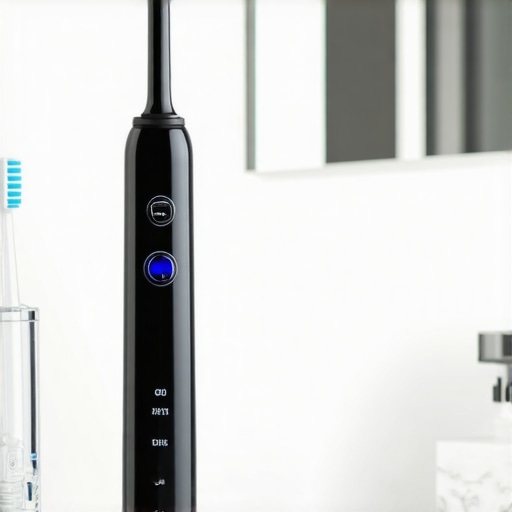
I’ve spent a significant amount of time—and let’s be honest, a decent chunk of change—perfecting my smile, so I’m obsessed with keeping it that way. If you have invested in crowns or Invisalign, you aren’t just maintaining teeth; you’re protecting an investment. I personally swear by the ‘Sonicare and Waterpik’ combo. Specifically, I use a high-frequency sonic toothbrush because it creates micro-bubbles that reach deeper into the periodontal pockets than any manual brush ever could. According to a landmark study in the Journal of Clinical Dentistry, sonic technology was found to remove significantly more plaque in those tricky interproximal areas compared to traditional oscillating-rotating or manual brushes. When you combine this with the best time of day to brush for maximum enamel protection, you’re basically giving yourself a professional-grade cleaning every morning.
Ditch the Manual Brush for a Sonic Upgrade
For those of us with restorative work, the goal is longevity. I noticed that after I got my first bridge, my old cleaning routine just wasn’t cutting it. I felt like I was constantly battling debris. Switching to a water flosser with a specialized ‘orthodontic tip’ changed everything. It’s far more effective at flushing out the area under a bridge or around aligner attachments. This is the level of care needed for choosing the right crown expert advice for long-lasting results. If you’re still using standard string floss and finding it frustrating, you’re more likely to skip it, which is the fastest way to invite decay under your hardware. Using these tools correctly is one of the biggest family dentistry secrets maintaining oral health with modern techniques at 254 pm that I wish I had known ten years ago.
How can I keep my dental work looking brand new for years?
Consistency is the boring but honest answer, but there’s a trick to it. I follow a ‘zero-stain’ protocol. Every time I finish a cup of coffee, I immediately swish with plain water. It sounds simple, but it prevents the pigments from settling into the micro-pores of your enamel or the margins of your crowns. For those worried about aesthetics, learning how to keep your smile white while drinking daily coffee is essential. You also need to look at the big picture of family dentistry. My kids use the same high-quality brushes I do because setting that standard early prevents the need for major restorative work later. We follow the top oral health tips for your familys bright smiles, which includes regular check-ups to catch ‘micro-fractures’ before they become full-blown cracks. This proactive approach is exactly what the ultimate guide to crowns for a healthier smile suggests for anyone wanting to avoid emergency visits.
AI is Coming for Your Morning Routine
Looking ahead, the next big shift in oral health isn’t a new toothpaste; it’s data. We are already seeing the rise of smart brushes that sync to your phone, but I predict that within the next five years, we will have home-based scanners that can detect early-stage demineralization before a cavity even forms. We are already seeing glimpses of this in Invisalign innovations the future of family dentistry revealed at 1137 am, where 3D modeling predicts tooth movement with terrifying precision. Your bathroom mirror might soon be able to tell you exactly where you missed a spot while brushing. Until then, my best advice is to stop over-complicating things and stick to the tools that work. I challenge you to try the ‘rinse and wait’ rule tonight: if you have something acidic like wine or soda, wait exactly 30 minutes before brushing to let your enamel re-harden. It’s a tiny shift that makes a massive difference over a lifetime.
The Real Price of Ignoring That Tiny Ping of Pain
If there is one thing I’ve learned from my midnight bathroom-mirror surgeries, it’s that your mouth never lies. We often think of dental care as a chore, but it’s really a conversation with your body. I spent years thinking a little bleeding or a slight throb was ‘just part of it,’ only to realize that these were early warnings I was completely missing. For instance, knowing why your new crown feels sensitive to cold drinks isn’t just about comfort; it’s about understanding how your restorative work interacts with your nerves. My ‘lightbulb moment’ happened when I realized that being proactive—like using the knotted floss trick—is a thousand times cheaper and less painful than being reactive. I also learned that family dentistry secrets maintaining oral health with modern techniques at 254 pm are only useful if you actually apply them before the emergency happens.
My Personal Oral Health Arsenal
I don’t believe in over-complicating things, but I do believe in having the right tools for the job. Here are the things I trust implicitly to keep my smile in top shape: First, a high-frequency sonic toothbrush to handle the heavy lifting without damaging the gum line. Second, a Waterpik for those deep pockets where floss just can’t reach—especially important if you’re following top oral health tips for your familys bright smiles. Third, a simple bottle of pH-neutralizing mouthwash to use after coffee. These tools have shifted my focus from ‘fixing problems’ to ‘maintaining excellence,’ which is the core of family dentistry trends improving oral health for all ages. I trust these specifically because they provide the precision that manual tools simply lack.
Your Smile Deserves the Best Possible Defense
At the end of the day, your smile is one of your most valuable assets. Whether you are managing the nuances of Invisalign or discovering why crowns are a game-changer in restorative dentistry, the goal is always the same: a functional, pain-free life. Don’t let a tiny popcorn hull or a bit of stubborn plaque derail your confidence. Start small, use the right techniques, and remember that family dentistry is about long-term care for everyone in the house. Have you ever tried the knotted floss trick, or do you have a better way to get those stubborn kernels out? Let me know below.