
How to tell if your dental bridge is trapping food
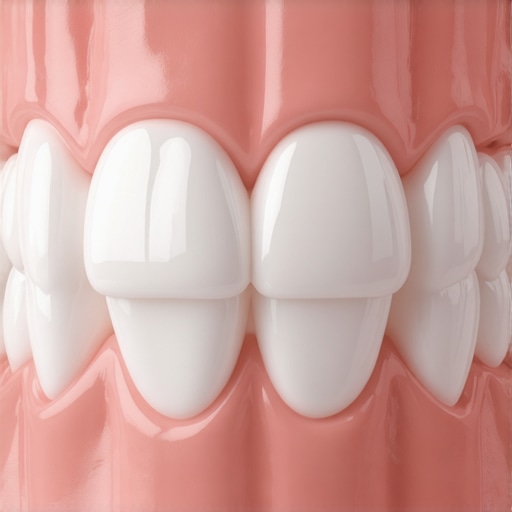
I was midway through a hilarious story at my sister’s wedding when I felt it—a rogue piece of steak had staged a coup under my bridge. I spent the next twenty minutes doing that subtle, desperate tongue-flicking thing that everyone notices but nobody mentions. It was embarrassing and, honestly, a little scary. If you have ever felt that tiny, nagging pressure under your restoration, you know the panic. You start wondering if you are just being paranoid or if there is a genuine dental disaster brewing under there. Today, I am going to share the warning signs I missed early on and show you how to confirm if your bridge has turned into a pantry for bacteria.
One of my biggest early mistakes was thinking a bridge should naturally feel a bit bulky. I ignored a constant ‘full’ sensation for weeks, assuming I just needed to get used to it. In reality, why your new dental bridge feels like it is trapping food is often due to a slight gap that should not be there. If you are feeling a weird pressure or a foul taste that won’t go away, it is time to pay attention.
The Telltale Signs Your Bridge is Hiding Last Night’s Dinner
Many people think a bridge is a ‘set it and forget it’ solution, but it requires more maintenance than a natural tooth. A common red flag is a sudden, localized bad breath that persists even after you brush. If you find yourself wondering why your breath smells even after you brush, the culprit might be decaying food particles stuck in that hard-to-reach space under the pontic. You might also notice that your gums around the bridge look puffy or more red than the rest of your mouth. According to the American Dental Association, plaque and food debris that are not cleared away can lead to gum disease and even the failure of the supporting teeth. Have you ever noticed a sudden ‘zing’ when drinking cold water near your bridge? That could be a sign that debris is irritating the gum line or causing recession. If you have reached the point where you are searching for the easiest way to get food out from under your bridge, you are likely dealing with a fit issue that needs a professional look.
Is this constant cleaning actually worth the trouble?
It can feel like a part-time job just to keep your mouth feeling fresh when you have a bridge that loves to catch snacks. You might be tempted to just let it be, but the stakes are higher than you think. When food stays trapped, it does not just stay there; it rots. This can lead to a metallic taste or, worse, a situation where your dental bridge comes loose during dinner because the underlying tooth has started to decay. I learned the hard way that mastering the specific way to floss under a fixed dental bridge is not optional—it is survival for your smile. It is better to face the minor annoyance of cleaning now than the major bill for a replacement later. Have you ever felt like you were fighting a losing battle against a piece of popcorn under your dental work?Think of your dental bridge as a tiny bridge over a river. In your mouth, the ‘river’ is your gum line, and the ‘water’ is everything you eat. If you do not keep the space under that bridge clear, debris settles into the riverbed and starts causing trouble. This isn’t just about avoiding a social gaffe at dinner; it’s about making sure the ultimate guide to crowns for a healthier smile stays relevant to you rather than needing a total redo because of decay. If you have ever fought a losing battle with a popcorn kernel, you know that standard brushing simply won’t cut it.
Stop the Rot with These Pro Cleaning Moves
Cleaning a bridge is vastly different from brushing your natural teeth. You are dealing with a solid piece of porcelain or ceramic that does not have gaps for standard floss to pass through from the top down. You have to go around it or under it. If you treat your bridge like a normal tooth, you are leaving a massive gap for bacteria to colonize.
Master the Art of the Threader
The first time I tried a floss threader, it was a disaster. I was standing in front of my bathroom mirror, drooling, and trying to poke a stiff plastic loop through a gap I couldn’t even see. It felt like trying to thread a needle while wearing oven mitts. However, once I realized that I needed to guide the threader from the cheek side toward the tongue side, everything changed. You loop your floss through the threader, slide it into the ‘tunnel’ under the pontic (the fake tooth), and pull it through. Once the floss is underneath, you move it in a C-shape against the supporting teeth. Mastering the specific way to floss under a fixed dental bridge is the only way to scrape away the sticky biofilm that regular brushing misses.#IMAGE_PLACE_HOLDER_B#
Skip the String for a High-Pressure Rinse
If you find threaders too fiddly, you aren’t alone. Many people prefer a more high-tech approach. I eventually switched to a water flosser because it felt like a power washer for my gums. The trick is to use lukewarm water—cold water can trigger a nasty ‘zing’ if you have sensitivity. You want to aim the tip directly into the gap where the bridge meets the gum. I learned the trick to using a water flosser without making a total mess is to keep your lips slightly closed and let the water drain out naturally into the sink. It’s significantly faster than threading and often more effective at dislodging stubborn bits of fiber.
Find those Sneaky Hidden Spots
Even if you are diligent, there are always the hidden spots most people miss while brushing their teeth, specifically the backside of the abutment teeth holding the bridge up. Food particles love to hide where the bridge meets the natural tooth structure. Use an interproximal brush—it looks like a tiny mascara wand—to gently scrub those junctions. This ensures you aren’t just cleaning the surface but deep-cleaning the foundation. Using these small brushes feels like using a pipe cleaner to scrub out a narrow drain; it gets into the nooks and crannies that water pressure alone might miss. If you have recently had work done, remember to be careful about what to eat after getting a new dental crown or bridge, as sticky foods can pull at the margins. For those who hate the threading process, you can also explore how to clean a dental bridge without those annoying threaders by using pre-cut super-floss with stiffened ends.
We need to talk about the ‘invincibility complex’ that often comes with high-end dental work. Most people assume that because a bridge is made of high-tech ceramic or porcelain, the tooth underneath is now safely locked inside a bunker. This is perhaps the most dangerous mistake you can make. In reality, the junction where the bridge meets your natural tooth is the most vulnerable point in your entire mouth, requiring even more vigilance than a standard tooth.
Stop treating your bridge like it is bulletproof
The hard truth is that the margin—that tiny line where the porcelain ends and your natural tooth begins—is a magnet for plaque and bacteria. If you are not meticulous with your hygiene, you can develop ‘recurrent decay’ specifically at this seal. This is a significant ‘oops’ factor because you often cannot see or feel a cavity forming under a crown until the bridge literally fails or becomes loose. When choosing the right crown expert advice for long-lasting results, you quickly learn that the precision of this fit at the gumline is far more important for your health than the cosmetic color of the tooth. An expert study published in the International Journal of Prosthodontics highlights that ‘biological width’—the precise distance required between the restoration and the underlying bone—must be perfectly respected. If this balance is off, you will experience chronic gum irritation regardless of how much you floss.
#IMAGE_PLACE_HOLDER_C#
Why does my sinus pressure feel like a bridge failure?
Here is a nuance that sophisticated patients often miss: if your bridge is located on your upper jaw, the roots of those supporting teeth are often mere millimeters away from your sinus cavities. I have seen countless people swear they had a persistent seasonal cold or a sinus infection when, in fact, the connection between your sinus infection and your tooth pain was actually a hidden abscess or infection brewing under an old bridge. This ‘referred pain’ can trick you into visiting a GP for decongestants when you actually need a dental X-ray. If your bridge feels ‘heavy’ or tender specifically when you lean forward, it is a major red flag that something is wrong with the foundation.
Keep the glaze and skip the charcoal trends
A common trap for bridge-wearers is trying to ‘deep clean’ their restoration with abrasive DIY hacks. I know the social media videos make it look tempting, but the truth about charcoal toothpaste and your tooth enamel is even more critical when applied to porcelain. Highly abrasive pastes can micro-scratch the protective glaze on your bridge. Once that smooth factory finish is gone, the porcelain becomes porous, making it significantly easier for stains to bond to the surface. If you want to know how to keep your smile white while drinking daily coffee, the answer is professional cleanings and pH-balanced rinses, not scrubbing with materials that act like sandpaper on your investment. Following family dentistry secrets maintaining oral health with modern techniques means respecting the chemistry of your restorations. Have you ever fallen into the trap of thinking your dental work was invincible? Let me know in the comments.
I used to think my manual toothbrush was enough, but as my dental work became more complex, I realized I was bringing a knife to a gunfight. If you have invested in restorations like bridges or implants, you need to elevate your diagnostic game beyond the basic mirror. This is why I now insist on providers who utilize advanced imaging during my annual checkups. For instance, why finding the best dentistry in Culpeper VA usually starts with a 3d cbct scan is no longer just a marketing point; it is the only way to see the bone density and the exact position of your restorations before a small shadow becomes a catastrophic failure. Standard 2D X-rays can hide decay behind the metal or thick porcelain of a crown, but a 3D scan allows you to peel back the layers digitally.
Upgrade Your Toolkit for Decades of Success
Beyond the office, the tool that changed my life was the intraoral camera. You can actually buy affordable versions of these for home use now. Seeing a high-definition, magnified image of the back of my bridge on my iPad screen removed all the guesswork. I could finally see the exact spots where plaque was starting to calcify. This kind of personal data is essential when you are trying to stay ahead of family dentistry trends improving oral health for all ages. It turns oral hygiene from a chore into a precision mission. If you see a tiny dark line where the gum meets the porcelain, you don’t wait for the next appointment; you double down on your cleaning routine immediately.
How do I maintain my complex dental work over the long haul?
The secret isn’t just in the cleaning; it is in the protection. According to a study published in the Journal of Oral Rehabilitation, the mechanical failure of high-end restorations is frequently tied to ‘bruxism-induced stress,’ which often goes unnoticed by the patient until a crown shears off or a bridge becomes loose. This is why I wear a custom-made night guard every single night without fail. If you have spent the money on transform your smile how crowns boost oral health confidence at 815 am, the last thing you want is to grind that investment into dust while you sleep. A night guard acts as a shock absorber, preserving the integrity of the porcelain margins and the health of the supporting roots.
#IMAGE_PLACE_HOLDER_D#
The Future of Keeping Your Smile Intact
Looking ahead, I predict we are moving toward a world of ‘Digital Twins’ in dentistry. Within the next few years, your dentist will likely maintain a perfect 3D digital model of your mouth that updates every time you visit. This will allow AI-driven software to detect microscopic shifts in your bite or the wear patterns on your crowns before they become visible to the human eye. We are already seeing the groundwork for this precision with invisalign innovations the future of family dentistry revealed at 1137 am, where digital tracking ensures the teeth move exactly as planned. If you notice your teeth shifting, even slightly, it can put uneven pressure on your dental work, making invisalign vs braces which solution fits your lifestyle a conversation worth having even in your 40s or 50s. My advanced tip for you today: buy a high-quality pH-balancing mouthwash. It neutralizes the acids that eat away at the cement holding your bridge in place, providing an extra layer of chemical protection that brushing alone cannot offer.
The Hard Truths About Bridge Survival I Learned the Hard Way
Looking back at my years of managing complex dental work, the ‘aha’ moments didn’t come from a textbook; they came from trial and error. First, I realized that a dental bridge isn’t a passive object; it’s an active part of my anatomy that requires its own unique hygiene protocol. If you ignore it, the bacteria won’t just sit there—they will actively work to undermine the anchor teeth. Secondly, I learned that ‘good enough’ brushing is the enemy of longevity. You have to be surgical in your approach, especially at the gum line.
Thirdly, I finally accepted that professional help is non-negotiable. Using resources like choosing the right crown expert advice for long-lasting results helped me understand that the initial placement is only 50% of the battle. The other 50% is how you treat it every morning and night. Lastly, I discovered that pain is a late-stage symptom. If you wait for it to hurt, you’ve likely waited too long.
Tools That Actually Keep My Smile Intact
I’ve tested dozens of gadgets, but these are the ones that actually made a difference in my daily routine. I personally swear by a high-end water flosser because it reaches the ‘dead zones’ that string simply cannot touch. I had to learn the trick to using a water flosser without making a total mess before I enjoyed using it, but now it’s my favorite step. I also keep a stash of interproximal brushes in my car and office; they are perfect for those rogue moments after a business lunch.
#IMAGE_PLACE_HOLDER_E#
For foundational knowledge, I frequently revisit top oral health tips for your family’s bright smiles to ensure I’m not missing the basics. Finally, a custom night guard is the single best insurance policy you can buy for your mouth. It prevents the micro-fractures that lead to costly replacements.
Start Your Journey Toward a Lifetime Smile
Maintaining a dental bridge might feel like a daunting task at first, but it quickly becomes second nature. By integrating family dentistry secrets maintaining oral health with modern techniques into your lifestyle, you are doing more than just cleaning teeth—you are preserving your confidence and your health for the long haul. Don’t be afraid to ask your dentist for a hands-on demonstration; they would much rather show you how to floss than show you a bill for a new bridge. Have you ever found a piece of food under your bridge that felt like it was stuck forever? Let me know your cleaning struggles below!