
The specific food that most often cracks an older filling
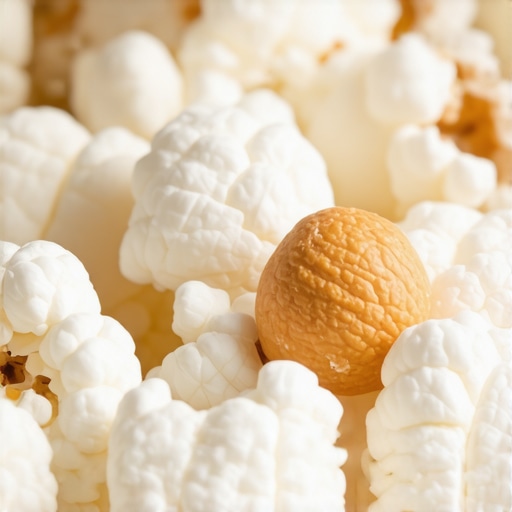
I remember the exact moment my Sunday afternoon movie marathon turned into a dental nightmare. It wasn’t a jawbreaker or a piece of hard ice. It was a single, stray unpopped popcorn kernel hidden at the bottom of the bowl. One sharp, sickening ‘crunch’ later, and I was staring at a shiny piece of silver amalgam in my palm. That filling had been with me since high school, a faithful companion through decades of dinners, until that one kernel decided it was time for retirement. If you’ve ever felt that sudden, jagged gap with your tongue, you know the instant panic that follows.
The One Snack That Ruins Everything for Older Fillings
Most people assume it is something obviously dangerous like peanut brittle that does the deed. In reality, it is usually the foods with ‘hidden’ resistance. I am talking about the crusty sourdough bread that feels soft until you hit a localized hard spot, or the deceptively soft protein bar with a rogue nut fragment. We often take our dental work for granted, but we have to remember that those materials are fighting a losing battle against time. Years ago, I made the mistake of thinking that as long as it didn’t hurt, my dental work was invincible. I ignored the fact that my old silver filling was starting to look black at the edges, which is a classic sign of ‘leakage’ or margin failure. By the time that popcorn kernel hit it, the tooth structure underneath was already compromised. Modern top oral health tips for your family’s bright smiles often suggest that we treat our teeth like the finite resources they are. According to the American Dental Association, the biting force of an adult human can reach up to 200 pounds on the molars, which is why an aging, brittle filling doesn’t stand a chance against a sudden impact. Have you ever experienced that terrifying ‘snap’ while eating something totally ordinary?
Wait, can a tiny seed actually destroy my dental work?
It sounds like an exaggeration, but those small, hard objects—think blackberry seeds or even coarse sea salt—concentrate all that biting pressure onto a tiny surface area. When that pressure hits an old, inflexible filling, something has to give. Usually, it is the tooth. When my filling failed, I had to learn the hard way about why crowns are a game changer in restorative dentistry compared to just patching the hole again. If I had known earlier about family dentistry secrets for maintaining older restorations, I might have opted for a proactive replacement before the emergency happened. Today, we are going to look at which specific foods you need to approach with caution and how to tell if your current fillings are ticking time bombs just waiting for the next bowl of popcorn to go off.
Find the Weak Links in Your Smile
Identifying a failing restoration before it shatters requires more than just a quick look in the mirror. You have to look for the ‘stress fractures’ of dentistry. When I finally sat in the dentist’s chair after my popcorn incident, my dentist pointed out that the silver filling hadn’t just ‘fallen out’—it had been leaking for years. Think of an old filling like a pothole repair on a busy highway; eventually, the edges wear down, and water (or in this case, bacteria and saliva) seeps underneath. This is exactly why your old silver filling is starting to look black or grey. If you see a dark shadow around the edges of a filling, the seal is broken. You are essentially eating on a hollowed-out shell. To prevent an emergency, run your tongue along your molars. If you feel any ‘catch’ or a sharp edge that wasn’t there before, you are likely dealing with the specific food that cracks more teeth than anything else—hard crusts and seeds—which find those microscopic gaps and wedge them open like a log splitter.
The Sandwich Test for Hidden Cracks
If you aren’t sure if a tooth is compromised, try the ‘bite and release’ test. Use a clean, firm object like a cotton roll or even a thick piece of folded paper towel. Bite down firmly and then release quickly. If you feel a sharp zing only when you release the pressure, you likely have a hairline fracture. This happens because the tooth segments are being pulled apart and then snapping back together, irritating the nerve inside. 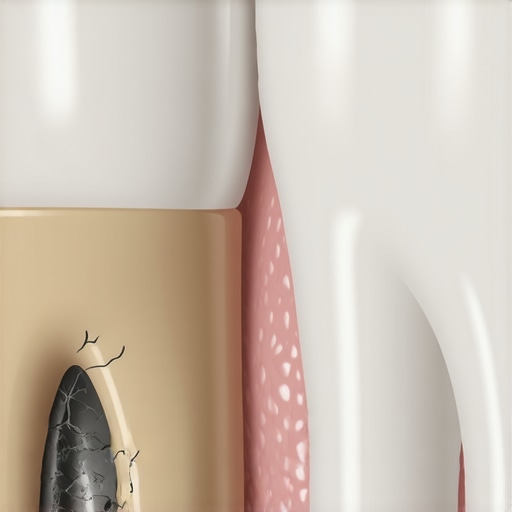
Choose Protection Over Patchwork
When a tooth is significantly compromised, the ‘meat’ of the solution isn’t another filling. It is about structural reinforcement. Think of a dental crown as a protective helmet for your tooth. While a filling sits inside the tooth and can actually act as a wedge that splits it further under pressure, a crown encases the entire visible portion. This is why crowns are a game changer in restorative dentistry; they redistribute the 200 pounds of biting force across the entire tooth base rather than focusing it on a weak center. I once tried to save money by asking for a ‘large filling’ on a molar that really needed a crown. Three months later, I was back in the office because that filling had acted like a chisel, splitting the tooth right down to the root. I learned that choosing the right crown expert advice for long-lasting results is cheaper than a tooth extraction and an implant later.
Fix Your Bite to Save Your Enamel
Sometimes the problem isn’t the filling itself, but how your teeth hit each other. If your bite is misaligned, specific teeth take a ‘beating’ every time you chew. This uneven wear is a primary reason why even new dental work fails prematurely. Exploring the hidden benefits of Invisalign for family dental care in 2025 at 903 am reveals that straighter teeth aren’t just for looks—they ensure that biting forces are distributed equally. When your teeth are aligned, you are less likely to experience those sudden ‘snaps’ during a meal. If you’ve noticed your teeth feel crowded or you’re constantly biting your cheek, how Invisalign transforms family dentistry in 2025 could be the preventive step that saves your existing dental work from a popcorn-induced disaster. Staying proactive with family dentistry secrets like regular 3D scans can catch these alignment issues before they turn into cracked molars.Let’s dig deeper into a common misconception: the idea that once a tooth is crowned or filled, it is ‘fixed’ forever. This is the ultimate trap. I have seen countless patients invest in choosing the right crown expert advice for long-lasting results, only to return years later with decay under the restoration. A crown isn’t a suit of armor; it is a precision-engineered cap that still has a vulnerability point where the porcelain meets your natural tooth. If you aren’t meticulous, that margin becomes a breeding ground for bacteria.
Your crown is not a suit of armor for your tooth
A contrarian truth in modern dentistry is that a crown can actually make a tooth harder to keep clean. While the crown itself cannot decay, the natural tooth structure underneath it absolutely can. This is often the move to stop a crown from trapping food every time you eat steak—you have to treat that margin like a high-traffic zone. Many people assume that if the ‘outside’ of the tooth looks perfect, everything inside is fine. However, a study published in the Journal of Oral Rehabilitation highlights that the longevity of fixed restorations is heavily dependent on the health of the surrounding periodontium, not just the material of the crown itself. If your gums are receding, you are exposing the most vulnerable part of the restoration. This leads to a major ‘oops’ factor: the danger of using whitening strips on a tooth with a filling or crown. Whitening agents can irritate the exposed margins and will not change the color of your dental work, often leaving you with a mismatched, sensitive smile.
Why does my crown feel too tall when I wake up?
Have you ever noticed that your bite feels ‘off’ first thing in the morning? You might worry that the dentist didn’t fit the crown correctly, but the reality is often more nuanced. This is frequently the specific reason your crown feels tall when you wake up: nocturnal bruxism. When you grind your teeth at night, the periodontal ligament—the cushion between your tooth and bone—becomes inflamed. This inflammation slightly ‘lifts’ the tooth in the socket, making that crown feel like it is hitting before everything else. 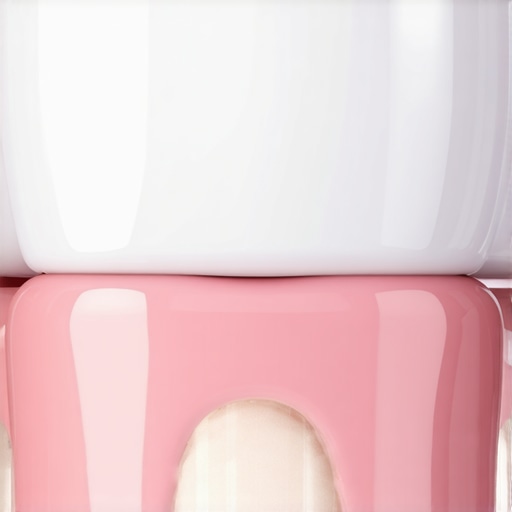
Stop thinking of Invisalign as a cosmetic luxury
We often categorize clear aligners under ‘vanity,’ but that is a dangerous oversimplification. Straighter teeth are fundamentally easier to clean, which is one of the the hidden benefits of Invisalign for family dental care in 2025 at 903 am. When teeth are crowded, even the best electric toothbrush cannot reach the tight overlaps where plaque hardens into tartar. By addressing alignment, you are actually performing preventive maintenance on your existing fillings and crowns. Invisalign myths debunked often ignore the fact that proper alignment reduces the abnormal ‘shearing’ forces that cause fillings to pop out in the first place. Without proper alignment, you are essentially asking your dental work to perform under constant, uneven stress. Whether you are managing an old silver filling or a brand-new porcelain crown, the secret lies in understanding these mechanical nuances. Have you ever fallen into the trap of thinking a tooth was ‘safe’ just because it didn’t hurt? Let me know in the comments.I’ve spent years trying every gadget on the market, but the autopilot mode for my mouth really started with a shift in specialized interdental cleaning. If you have a crown, you know the struggle of the meat trap—that tiny gap where fibers get stuck despite your best efforts. This is essentially the move to stop a crown from trapping food every time you eat steak; you need a tool that uses pulsed water to reach where traditional floss literally cannot go. I personally use a high-end water flosser on the lowest setting because it clears the crown margins without aggravating my sensitive gums. According to a study in the Journal of Clinical Periodontology, water flossing can be significantly more effective than traditional string floss for reducing gingival bleeding and plaque. It is not just about the tool, though; it is about the technique. Learning the safest way to use an electric toothbrush on sensitive teeth transformed my morning routine from a chore into a precision maintenance session that protects my investment. 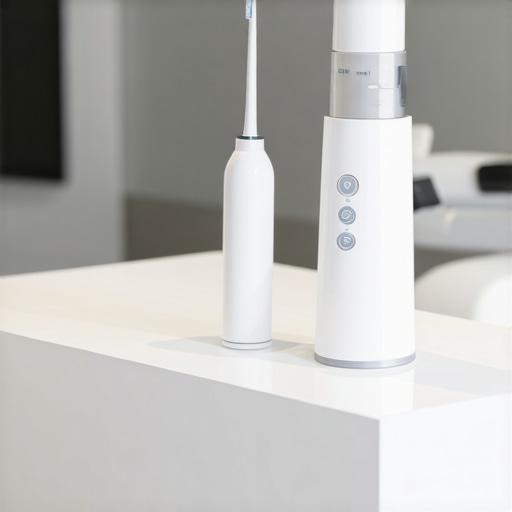 Beyond the bathroom counter, the biggest shift in my dental care was demanding better data from my providers. I no longer settle for the standard bitewing X-rays that only show two-dimensional slices. This is why finding the best dentistry in culpeper va usually starts with a 3d cbct scan. These 3D images let my dentist see the actual density of the bone around my restorations and the exact proximity of my sinus floor. It is the difference between looking at a blurry map and actually standing in the room. If you are serious about longevity, you need to see the roots of the problem before they surface as an emergency.
How do I keep my new smile working for decades?
The answer lies in the intersection of alignment and emerging technology. When your teeth are straight, you eliminate the mechanical shearing forces that crack porcelain crowns and pop out older fillings. I am closely watching invisalign innovations the future of family dentistry revealed at 1137 am because we are moving toward a world of AI-monitored treatment. In the near future, your smartphone will likely scan your aligner fit and tell you exactly when to switch trays based on actual tooth movement, not just a calendar date. This level of precision is the ultimate family dentistry secret for avoiding the emergency chair altogether. My advanced tip for you today: buy a specialized cleaning kit for your restorations and switch to a pH-balanced mouthwash to prevent the acidic erosion that weakens the medical-grade cement holding your crowns in place. Try asking for a 3D scan at your next check-up and see the hidden details of your smile for yourself.
The Hardest Lesson I Learned About Aging Dental Work
One of the most sobering realizations I had was that silence isn’t always golden when it comes to your teeth. Just because a tooth doesn’t ache doesn’t mean it’s healthy. I spent years ignoring the fact that why your old silver filling is starting to look black at the edges, only to find out the decay was much deeper than I feared. Another lightbulb moment was realizing that alignment is the foundation of structural integrity; how Invisalign transforms family dentistry in 2025 is by balancing those biting forces so my crowns don’t crack under pressure. Finally, I learned that a crown is a partnership between your dentist’s skill and your daily habits at home.
My Personal Dental Health Toolkit
To keep my mouth in autopilot mode, I rely on a few specific tools that have genuinely changed the game for me. First, a high-quality water flosser is non-negotiable—it is the move to stop a crown from trapping food every time you eat steak and prevents bacterial buildup at the margin. Second, I switched to a sonic brush and learned the safest way to use an electric toothbrush on sensitive teeth to avoid wearing down my enamel further. Lastly, I always ask for advanced imaging; why finding the best dentistry in culpeper va usually starts with a 3d cbct scan is because it catches failures that traditional X-rays miss.
#IMAGE_PLACEHOLDER_E#
Protect Your Smile for the Decades Ahead
Your teeth are designed to last a lifetime, but only if you give them the reinforcement they need as the years pass. Whether you are replacing an old silver filling or starting a journey with clear aligners, the goal is always longevity and peace of mind. By following top oral health tips for your family’s bright smiles, you can ensure that your next movie night doesn’t end in an emergency dental visit. Take the first step today by looking closely at your older restorations and asking the right questions at your next check-up. Have you ever had a filling fail at the worst possible moment? Let me know your story in the comments below!