
What to do if your Invisalign tray starts to scratch your cheek
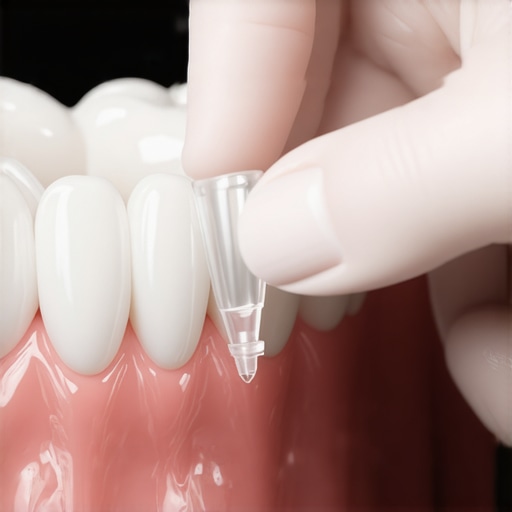
I was three days into my second tray, and every time I spoke, it felt like a tiny, invisible saw was carving a deep groove into the inside of my left cheek. I remember sitting at a dinner party, nodding politely while secretly wondering if I was bleeding into my wine because the plastic edge was just that sharp. It is a miserable feeling. You have invested all this money into a perfect smile, only to find yourself wanting to rip the trays out just to get five minutes of peace.
Stop Letting Your Trays Carve Up Your Mouth
[IMAGE_PLACEHOLDER] When I first started my journey, I thought pain was just part of the price you paid for straight teeth. I actually made the huge mistake of taking a heavy-duty metal nail file from my garage to my aligner. I thought I was being clever, but I ended up making the edge even more jagged, which only made the scratching worse. I quickly realized that while how invisalign transforms family dentistry in 2025 is incredible, the trays are not always perfectly finished for every mouth shape. If you are following top oral health tips for your familys bright smiles, you know that comfort is king. We are going to solve this today by looking at safe ways to smooth those edges without ruining your progress or your warranty.
Is it actually safe to mess with the plastic?
This is the biggest fear people have. They worry that if they touch the tray, it will not move their teeth correctly. But here is a surprising fact: the American Association of Orthodontists notes that minor adjustments to the non-active edges of an aligner are a standard part of patient comfort care. In fact, research published in the Journal of Clinical Orthodontics suggests that over 54% of aligner wearers deal with some soft tissue irritation. You are not doing anything wrong, and you are not alone. Whether you are busy learning how to keep your breath fresh while wearing invisalign trays all day or just trying to survive the first week of a new tray, relief is closer than you think. I even had to use the salt water rinse trick for a sore mouth just to heal the cuts I already had before I fixed the source of the problem. If you are worried about more than just scratches, remember that invisalign myths debunked what you need to know today often overlook the simple physical reality of wearing plastic in your mouth. Have you ever felt like your aligners were more of a torture device than a dental tool? I want to hear your horror stories. Now, let’s get into the actual steps to reclaim your comfort.
Get the Right Tools Before You Touch Your Trays
The first thing you need to do is put away anything made of metal. My mistake with the garage file taught me that metal is too aggressive for the medical-grade thermoplastic used in these trays. Think of it like the ultimate guide to crowns for a healthier smile where precision is the only thing that matters. You need a fine-grit emery board—the kind used for natural fingernails, specifically a 400-grit or higher. Anything coarser will leave tiny burrs on the plastic that act like microscopic teeth, shredding your gums even faster.
Pick Up a Fine-Grit Emery Board
When I finally switched to a gentle buffer on my third tray, the difference was night and day. I held the aligner firmly and used short, one-directional strokes. Do not saw back and forth. You are essentially polishing the edge, not cutting it down. It is a similar sensation to the trick to making a new set of dentures feel natural; you are looking for that seamless transition where the appliance ends and your tissue begins. 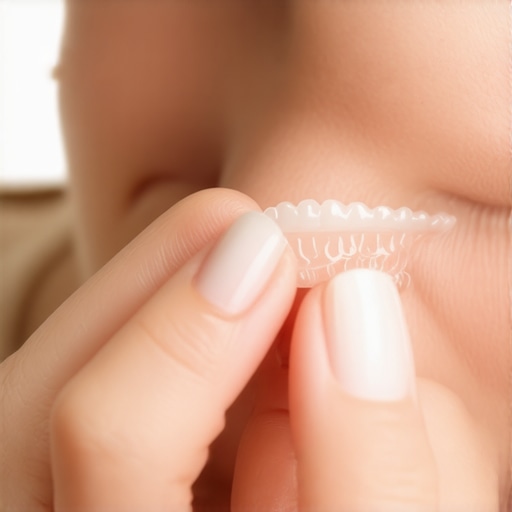
Buff Away the Sharp Spots Gently
If you notice a specific spot that is digging in, look at it under a bright light. Often, there is a tiny ‘flash’ of plastic left over from the manufacturing mold. Gently buff only that specific high point. If you go too far, you risk changing the structural integrity of the tray, which can lead to why your invisalign trays feel tighter on some days than others or even cause them to crack. I once spent twenty minutes over-polishing a molar edge and spent the rest of the week worried the tray wouldn’t grip my tooth correctly. Luckily, it held, but the stress wasn’t worth the extra three seconds of smoothing.
Stop the Bleeding with Orthodontic Wax
Sometimes the tray isn’t actually sharp, but your mouth is simply sensitive. This is where orthodontic wax becomes your best friend. It acts as a physical barrier, much like how to stop a sharp tooth from cutting your tongue until you can get to a professional. Take a pea-sized amount, roll it between your fingers to warm it up, and press it firmly over the offending edge.
Apply Wax So It Actually Stays
The secret to getting wax to stick to plastic is ensuring the area is bone-dry. I used to carry a pack of cotton swabs in my bag just for this. If the tray is wet with saliva, the wax will just slide right off into your drink. If you are already dealing with a cut, you might want to learn how to fix a snagged gum from a sharp tortilla chip because the healing process is the same. You need to keep the area clean and protected so the tissue can knit back together while you continue your treatment. If the irritation persists despite your best smoothing efforts, it’s time to reach out via contact us to see if your provider needs to professionally trim the tray. This is especially true if you see why your teenagers gums are suddenly puffy and red, as that could indicate the tray is pushing too hard against the gum line rather than just scratching the surface.The biggest myth I hear in the dental world is that Invisalign is only for ‘perfect’ candidates—people who have never had a cavity or a major restoration. In reality, how invisalign transforms family dentistry in 2025 is often about using aligners as a tool to prepare the mouth for even better restorative work later. But here is the nuance most people miss: if you have existing crowns or bridges, your experience with tray comfort and ‘sharpness’ is going to be fundamentally different than someone with natural enamel. The plastic interacts with porcelain in a way that can create unexpected friction. If your tray feels weirdly loose or keeps catching near a back molar, it might not be a manufacturing defect. It could be that the tray is snagging on a crown margin that was already slightly ‘tall’ before you even started.
The Danger of Assuming Tight Always Means Working
Many patients fall into the trap of thinking that if a tray is excruciatingly tight or digging into the gums, it must be doing ‘extra’ work to move a stubborn tooth. This is a dangerous ‘Oops’ factor. Extreme discomfort often signals that the tray is not seated correctly over a restoration, which can actually stall your progress rather than speed it up. I have seen cases where what to do when your crown feels taller than your other teeth becomes a critical question because the added thickness of the aligner plastic creates a high spot that messes with your jaw alignment. If you are ignoring that localized pressure, you are not just being ‘tough’; you might be risking your periodontal health. 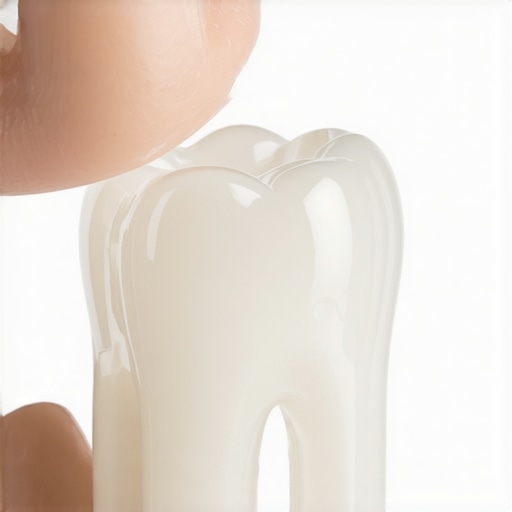
How do aligners play with porcelain crowns?
This is the advanced question every restorative patient should ask. A study published in the Journal of Orofacial Orthopedics highlights that the success of the ‘attachments’—those tiny tooth-colored bumps used to help move teeth—depends heavily on the surface they are bonded to. Bonding an attachment to a porcelain crown requires a specific chemical protocol involving silane primers. If that bond fails, the attachment can partially peel, creating a razor-sharp edge that no amount of filing will fix. This is why why crowns are a game changer in restorative dentistry but also a complication for aligners. You need to ensure your provider is an expert in choosing the right crown expert advice for long lasting results so that your restorations and your aligners work in harmony rather than in conflict.
Don’t Ignore the Structural Warnings
In my experience, the most successful patients are those who look at their oral health as a complete system. You cannot fix the alignment without respecting the existing dental work. If you notice your gums are reacting differently around a crowned tooth while wearing trays, check for family dentistry secrets maintaining oral health with modern techniques at 254 pm to see if you are missing a cleaning step. Sometimes, the ‘sharpness’ you feel is actually localized inflammation caused by the tray trapping bacteria against an old crown margin. Have you ever fallen into this trap where you thought the pain was just ‘part of the process’? Let me know in the comments. If the discomfort is beyond a simple scratch, it is always better to contact us to ensure your treatment is actually on the right track. Remember, transform your smile how crowns boost oral health confidence at 815 am only works if the foundation—your gums and bone—remains healthy throughout the movement process.Once you move past the initial shock of sharp edges, the game changes from survival to optimization. I spent months manually scrubbing my trays with a soft toothbrush, only to realize I was creating microscopic scratches that trapped bacteria and made the plastic look cloudy. If you want to know
Stop Scrubbing and Start Vibrating
I eventually invested in a small ultrasonic cleaner, and it was a total revelation. These devices use high-frequency sound waves to create cavitation bubbles that blast debris off the aligner without any abrasive friction. This is the secret to 100% clarity. According to a study in the Journal of the American Dental Association (JADA), using an ultrasonic cleaner in combination with specialized tablets reduces biofilm on thermoplastic appliances by over 90% compared to brushing alone. It is the same technology used in choosing the right crown expert advice for long lasting results because precision cleaning prevents the decay that often hides under the margins of dental work. 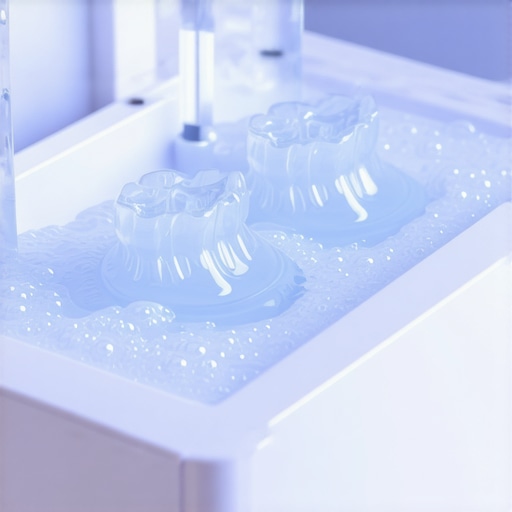 When you are learning how to keep your aligners clear while drinking tea, you quickly find that topical rinsing isn’t enough. I now drop my trays into the ultrasonic bath every single morning while I drink my coffee. It’s a passive habit that ensures my breath stays fresh and my trays remain invisible. For those of us juggling a busy schedule, this kind of automation is the only way to stay consistent. If you are still using a toothbrush, you are likely leaving behind a layer of plaque that will eventually irritate your gums.
How do I maintain my alignment over the long haul?
The biggest mistake people make is thinking the finish line is the day the last tray comes out. In reality, that is just the beginning of the ‘retention’ phase. I learned the hard way that teeth have a ‘memory’ and will desperately try to shift back to their original, crooked positions within weeks. This is why the best way to clean your retainers without using harsh chemicals becomes a lifelong skill. If you have a permanent lingual retainer—that thin wire glued to the back of your teeth—you also need to master the secret to eating popcorn with a permanent retainer so you don’t snap the bond. Maintaining your results is about respect for the biology of your mouth.
AI is Changing How Your Dentist Sees Your Mouth
Looking ahead, the trend is moving toward remote monitoring. I’m already seeing invisalign innovations the future of family dentistry revealed at 1137 am where patients use their smartphones to scan their teeth every week. An AI algorithm checks for ‘tracking’ issues before the patient even notices a problem. This means fewer office visits and much faster adjustments if a tooth isn’t moving as planned. We are entering an era where the hidden benefits of invisalign for family dental care in 2025 at 903 am include total digital oversight of your oral health. I want you to try one thing this week: next time you take your trays out for a meal, don’t just rinse them. Use the ‘dry-before-wax’ method if you have a sore spot, or better yet, get a 400-grit emery board and see how a five-second buff can save your gums. If you have questions about how your specific restorations might affect your progress, please contact us so we can walk you through the technical side of your unique smile.
The Realities of Dental Movement That Nobody Mentions
After navigating the ups and downs of aligner therapy, I’ve realized that the physical tray is only half the battle. Here are a few ‘lightbulb moments’ that changed my perspective on the process:
- The Saliva Factor: When you are stressed, your saliva can become thick and acidic, which makes those sharp edges feel ten times worse. Keeping hydrated isn’t just for health; it keeps your mouth lubricated so the plastic slides rather than scrapes.
- The False Alarm of Tightness: We often think pain means progress, but localized digging near a molar might just be a manufacturing ‘flash’ rather than tooth movement. Learning the hidden benefits of invisalign for family dental care in 2025 at 903 am means knowing when to troubleshoot and when to trust the tray.
- Respect the Restoration: If you have existing work, remember that why crowns are a game changer in restorative dentistry is because they protect your teeth, but they don’t have the same flexibility as natural enamel. Give your mouth an extra day to adjust when a new tray sits over a crown.
The Three Essentials for Your Aligner Survival Bag
I never leave the house without a small kit, and if you want to stay comfortable, you shouldn’t either. First, swap your standard emery board for a high-quality glass nail file; the grit is much finer and won’t leave burrs. Second, look into moisture-resistant orthodontic silicone—it stays put much better than traditional wax. Finally, since your trays are in your mouth 22 hours a day, you need to know the easiest way to clean a night guard that has turned yellow or cloudy because that same buildup can happen to your aligners, making them stiff and more likely to irritate your gums. [IMAGE_PLACEHOLDER]
Your Path to a Perfectly Aligned Future
Smoothing out those early bumps—both literally and figuratively—is what makes the difference between a failed treatment and a lifelong transformation. As how invisalign transforms family dentistry in 2025 continues to evolve, the tools we have to stay comfortable are only getting better. Don’t let a small scratch stop you from the confidence of a healthy smile. If you’re also curious about other cosmetic options, you might want to compare crowns vs veneers which is better for your smile cure at 429 pm to see how they fit into your overall dental plan. You’ve got this! Have you ever had a specific spot on your aligner that felt impossible to smooth out? Tell me about it in the comments below.