
Why your gums feel like they are vibrating when you talk
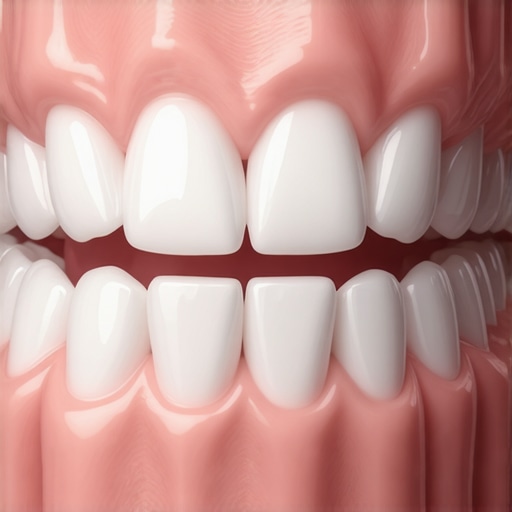
I was halfway through explaining a hilarious story about my daughter’s first soccer game when it happened. A strange, buzzing sensation rippled through my lower jaw. It felt exactly like a silent phone notification, but it was coming from inside my gums. I stopped mid-sentence, touched my cheek, and wondered if I was suddenly developing a superpower or a serious medical emergency. It turns out, I’m not alone, and if you’ve felt that weird hum while chatting, you aren’t either. It is a disconcerting feeling that can make you want to stop talking altogether just to make the ‘ringing’ stop.
That Buzzing Feeling in Your Mouth Isn’t Just Your Imagination
When I first experienced this, I made the classic mistake of panic-googling my symptoms at 2 AM. I convinced myself I had permanent nerve damage from an old procedure or that my jaw was literally falling apart. In reality, the causes are often much more manageable, though they do require a bit of detective work. Whether you are noticing this while wearing aligners or it’s a completely new sensation, we need to look at how your nerves and muscles are reacting to the movement of your mouth. Sometimes, the way we speak puts specific pressure on the trigeminal nerve, leading to that ‘electric’ or vibrating feeling. I’ve found that even family dentistry trends are shifting to focus more on these sensory issues that patients used to be too embarrassed to mention.
Is this buzzing actually worth the panic?
It’s natural to feel skeptical—or even a little terrified—when your body starts doing things it’s not ‘supposed’ to do. You might wonder if your teeth are becoming loose or if a loose wire on your permanent retainer is sending micro-vibrations through your bone. The good news is that most cases of oral paresthesia or muscle fasciculations (those tiny twitches) are benign. According to the American Academy of Oral Medicine, sensory changes in the oral cavity can frequently be traced back to localized inflammation or even simple vitamin deficiencies, such as B12. I remember thinking my Invisalign trays were the culprit, only to realize I was just clenching my jaw so hard from stress that the nerves were practically screaming for a break. Today, I’m going to help you figure out if your vibration is coming from muscle fatigue, a bite misalignment like a filling that feels too high, or perhaps gums that need a little more firming up. Have you ever felt this specific buzzing while you were in the middle of a conversation? If so, you should definitely reach out to a professional to rule out any underlying issues, but for now, let’s dive into the most common triggers I’ve encountered.
Try the Click Test to Check Your Hardware
Before you assume your jaw is possessed, you need to determine if the vibration is coming from a specific restoration. I remember getting a new crown on my upper left molar and every time I made a ‘v’ or ‘f’ sound, it felt like a low-voltage battery was touching my tongue. It wasn’t pain—it was just weird. I learned to perform what dentists call the click test. If you have an implant or a crown, gently tap it with the back of a clean toothbrush. If the vibration mimics the sensation you feel when talking, the restoration might be slightly loose or not seated perfectly. You can also use the sip test to determine if your tooth sensitivity is nerve-related, as sometimes thermal sensitivity mimics that buzzing feeling when air hits the nerve during speech.
Adjust the High Spots Disrupting Your Bite
Imagine a door that is just slightly off its hinges; every time you close it, it rattles the whole frame. Your jaw works the same way. If you recently had work done, like a filling that feels high when you bite down, your teeth aren’t meeting in harmony. This ‘high spot’ causes your jaw muscles to spasm or micro-vibrate as they try to compensate for the uneven contact. I once dealt with this after a routine cavity fill. My jaw felt like it was humming because my muscles were essentially ‘shivering’ from the strain of trying to find a comfortable resting position. If your new filling feels like a piece of popcorn is stuck there, that constant sensory input can overstimulate the nerves. Even a dental crown with a micro-crack can create a strange resonance when you speak. If your new zirconia crown feels taller than your natural teeth, that tiny discrepancy is a prime candidate for causing those weird facial tremors.
Stop Your Aligners from Playing Your Nerves Like a Guitar String
If you are currently in the middle of clear aligner therapy, the vibration is often a byproduct of tooth mobility. It is perfectly normal to feel like your teeth are loose during Invisalign because, well, they are! They are being actively moved through the bone. This process can sometimes irritate the surrounding nerves. If you notice an annoying whistle or a buzz when you speak with aligners in, it is usually because the plastic is vibrating against the soft tissue or the teeth are in a ‘floating’ stage where they aren’t fully supported by the bone yet. I found that using the munchie technique to seat stubborn trays significantly reduced the ‘extra’ vibration because it ensured the trays were as tight as possible, leaving no room for them to rattle against my teeth like a loose window pane in the wind.
Quiet the Trigeminal Nerve by Reducing Muscle Tension
Sometimes the buzzing isn’t about your teeth at all, but about the highway of nerves running through your face. If you are a chronic clencher, your trigeminal nerve—the big one responsible for sensation in your face—can become hypersensitized. Think of it like a guitar string that has been plucked too hard; it keeps vibrating long after the initial touch. When you talk, the movement of your jaw triggers that sensitized nerve to fire off ‘buzzing’ signals. I discovered that simple jaw-release exercises, or even checking if I was grinding my teeth at night, helped lower the overall ‘noise’ in my nervous system. If your jaw muscles are constantly ‘on,’ they will twitch at the slightest movement, turning a normal conversation into a vibrating mess.
We often talk about oral health as if it’s just a matter of mechanics—tightening a bolt here or gluing a cap there. But there is a hidden nuance that even some seasoned patients miss: your brain’s mapping system, or proprioception. Most people believe that once a crown is seated or an aligner is in, the work is done. In my experience, that’s when the real adaptation begins. Your mouth is one of the most nerve-dense areas of your body, and your brain has a very specific ‘map’ of how your teeth should touch. When we introduce why crowns are a game-changer in restorative dentistry, we aren’t just changing your bite; we are asking your nervous system to rewrite its software. If that rewrite has a ‘bug,’ you get that weird buzzing sensation I mentioned earlier.
Stop Thinking of Your Teeth as Just Tools
The biggest contrarian view I hold is that ‘perfect’ dentistry isn’t just about the fit; it’s about the neurological acceptance. Everyone says a crown should feel normal immediately, but I’ve seen it take weeks for the brain to stop treating it like a foreign invader. This is where many Invisalign myths debunked come into play; people expect discomfort from pressure, but they aren’t prepared for the sensory confusion. According to a study published in the Journal of Oral Rehabilitation, the periodontal ligament can detect discrepancies as small as 20 microns. That is thinner than a strand of hair! If your restoration is off by even that tiny margin, your brain might trigger a ‘shiver’ in your jaw muscles as it tries to find the correct alignment. This is why family dentistry secrets often involve fine-tuning a bite multiple times even when it ‘looks’ right on an X-ray.
Why Your Bite Feels Perfect One Minute and ‘Off’ the Next?
This is a question I get from patients who are paying close attention to their recovery. You might feel fine while eating breakfast, but by 4 PM, that buzzing or high spot returns. This isn’t because your tooth moved; it’s because of muscle fatigue. As you go through your day, stress and even the impact of diet soda on your expensive dental restorations can affect your gum inflammation and muscle tension. When your muscles tire, they stop holding your jaw in that ‘compensated’ position, and the ‘high spot’ suddenly becomes apparent again. This is especially true if you are prone to the reason your face feels sore after a night of heavy dreaming. Your jaw muscles have been working overtime all night, making the nerves extra jumpy by morning.
Don’t Fall for the ‘Settling Period’ Trap
Here is the ‘oops’ factor to avoid: don’t confuse a necessary adjustment with a ‘settling period.’ While some adaptation is normal, a common mistake is waiting months for a buzzing sensation to ‘just go away.’ If you are choosing the right crown expert, they will tell you that persistent vibration usually means the tooth is in ‘fremitus’—it is literally vibrating because it’s being hit too hard or too early in the chewing cycle. Ignoring this can lead to the nerve dying or the crown cracking. If you feel like you’re constantly ‘searching’ for a comfortable place to rest your teeth, your map is broken, and you need a professional recalibration. Have you ever fallen into this trap where a ‘small’ dental issue felt like a massive sensory overload? Let me know in the comments, or reach out to a professional if that buzz just won’t quit.
Once you’ve ruled out the major technical glitches, the conversation shifts from ‘repair’ to ‘preservation.’ I’ve spent a significant amount of time and money on my mouth—between my orthodontic adjustments and those zirconia crowns, I basically have a luxury car parked in my jaw. The biggest lesson I learned was that you can’t treat high-end dental work with low-end habits. I used to use a medium-bristled brush because I thought ‘harder’ meant ‘cleaner.’ That was a mistake that almost cost me my gum line. For anyone with restorative work, you need to be surgical in your approach.
Stop Scrubbing Like You’re Scouring a Cast Iron Skillet
I swear by a high-quality sonic toothbrush, but only when used on the ‘sensitive’ setting. Why? Because the ultra-high-frequency vibrations help disrupt biofilm without putting physical stress on the margin of your crown. If you’re looking for top oral health tips for your family’s bright smiles, start by switching to a soft-bristled head immediately. My personal favorite is the Philips Sonicare line because of its pressure sensor—it physically stops if I’m pressing hard enough to irritate my nerves. If you want to follow the ultimate guide to crowns for a healthier smile, you must understand that the tooth underneath is still vulnerable to decay at the seam. I also use a water flosser daily; it’s much gentler on my sensitive gums than traditional string.
How do I maintain my dental restorations without causing more sensitivity?
It comes down to chemistry. If you’re wearing aligners, please stop using standard toothpaste to clean them. It contains abrasives like silica that create micro-scratches, making your trays look cloudy and trapping odor-causing bacteria. I’ve found that the vinegar soak that safely sanitizes your retainers and guards is far more effective at keeping them pristine. To keep your Invisalign trays from turning yellow over time, you have to be diligent about rinsing them every single time they leave your mouth. For my bridge work, I use specialized threaders because the easiest way to floss under a dental bridge is to avoid the ‘stuck’ feeling that triggers that familiar jaw tension.
The Day Your Phone Predicts Your Next Cavity
We are moving toward an era of ‘biometric dentistry.’ I predict that within the next decade, our aligners won’t just move teeth; they will contain micro-sensors that monitor pH levels and bacterial load in real-time, syncing with our phones to tell us exactly when to brush. According to the International Journal of Prosthodontics, digital occlusal analysis—specifically the T-Scan system—is already proving that our subjective ‘feeling’ of a bite is often less accurate than digital mapping. This technology allows dentists to see exactly which tooth is hitting first with millisecond precision, eliminating the guesswork of ‘bite paper.’ As we look at Invisalign innovations and the future of family dentistry, the goal is to stop problems before they cause that ‘buzzing’ sensation. If you want the secret to making your dental implants last for the rest of your life, you have to embrace these new diagnostic tools.
My best advice for you today? Don’t wait for your next six-month cleaning if something feels ‘off.’ I strongly suggest you master the munchie technique to seat stubborn trays tonight; it is the most effective advanced tip I can offer to stop that ‘loose tooth’ vibration immediately. Your smile is a precision-engineered piece of architecture—treat it like one!
What No One Tells You About the 30-Day Oral Adaptation Phase
Through my own journey with restorative work, I’ve realized that the ‘buzzing’ isn’t just a physical glitch; it’s a communication error between your nerves and your brain. Here is the wisdom I wish I had on day one:
- The ‘Invisible’ High Spot: You might think your bite is fine, but family dentistry secrets suggest that even a microscopic discrepancy can cause major nerve feedback. If it feels off for more than two weeks, it likely is.
- Myths About Speed: We often buy into Invisalign myths debunked that say discomfort only lasts 48 hours. Sensory adaptation can actually take much longer as your brain rewires its map of your mouth.
- Stress as a Multiplier: Your nerves are far more likely to ‘hum’ when your system is in a state of high cortisol. Relaxation isn’t just for your mind; it’s for your jaw muscles too.
#IMAGE_PLACE_HOLDER_E#
The Daily Rituals That Finally Silenced the Static
I found that the ‘wait and see’ approach was much easier when I had a toolkit to manage the sensory input. These are the resources that changed my recovery:
- Precision Seating Tools: I can’t stress enough how much a simple device can help. Using the munchie technique to seat stubborn trays ensures there is no ‘gap’ for vibrations to start.
- Expert Consultations: If the buzz persists, choosing the right crown expert for a second opinion on your bite alignment is the best investment you can make.
- Gentle Hygiene: Following top oral health tips for your family’s bright smiles by switching to ultra-soft brush heads prevents the gingival irritation that often mimics nerve vibration.
Reclaiming the Joy of a Vibration-Free Conversation
Dealing with a buzzing sensation while you talk is more than just a nuisance; it can make you feel disconnected from your own body. But remember, your mouth is incredibly resilient and highly adaptable. By understanding how Invisalign transforms family dentistry and restorative care, we can see that these technological leaps are designed to work with your biology, not against it. If you’re feeling that weird hum today, take a deep breath, check your bite, and don’t hesitate to reach out to a professional for that final adjustment. Your comfort is just as important as your aesthetic results. Have you ever experienced a strange vibration or ‘hum’ after a dental procedure that your dentist couldn’t immediately explain? Let me know your story in the comments below!