
Why your teeth feel sharp after a professional cleaning
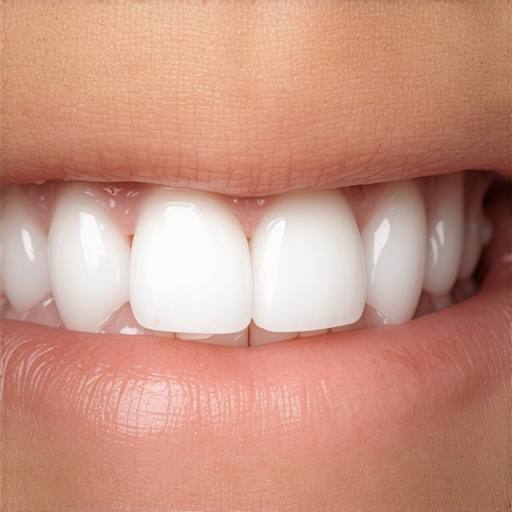
I’ll never forget the panic of my first “real” dental cleaning after a few years of, let’s say, less-than-perfect attendance. I was sitting in the parking lot, idling my car, and running my tongue along the back of my lower front teeth. My heart sank. They felt like tiny, jagged, serrated knives. I was convinced the hygienist had been too aggressive and chipped my enamel. I actually went back inside to complain! Looking back, I realize I made the classic mistake of confusing a “wall of tartar” with my actual teeth. I had let plaque build up for so long that I forgot what the natural gaps and ridges of my own mouth felt like.
That jagged feeling is actually your real teeth saying hello
If you are currently poking at your mouth and wondering where those new edges came from, don’t worry. You aren’t falling apart. In fact, that sharpness is usually the first sign that your family’s bright smiles are finally free of the “biofilm sweater” they’ve been wearing. Today, we’re going to dig into why your mouth feels like a construction zone post-appointment and how to tell the difference between a thorough cleaning and actual damage. It is a weird sensation, I know. You might even find that your gums feel tender after a routine cleaning, which only adds to the “something is wrong” vibe. The spaces between your teeth, which were once filled with hardened calculus, are now open to the air, making everything feel thinner and more defined.
Did the hygienist actually scrape away my enamel?
This is the big fear, right? We’ve all seen those sharp metal tools and felt the pressure. However, the American Dental Association confirms that professional scaling is specifically designed to remove calculus without harming the tooth structure itself. Your enamel is the hardest substance in your body; it takes a lot more than a hand scaler to shave it down. If you’ve been worried about how to tell if your gums are receding or if your teeth are thinning, the “sharpness” you feel is often just the natural anatomy of your teeth that was previously hidden. You might even notice your gums feel itchy after a deep cleaning as the inflammation subsides and blood flow returns to those neglected areas. It’s a process of healing, not destruction. Have you ever left the dentist feeling like your teeth were suddenly someone else’s? Tell me I’m not the only one who had a mini-meltdown in the parking lot!
Your mouth is undergoing a hard reset
When that thick layer of tartar—what we call calculus—is finally scraped away, your tongue is suddenly introduced to the actual landscape of your teeth for the first time in months. It’s like taking a heavy winter coat off on a windy day; everything feels exposed and overly sensitive. I remember after one particularly long hiatus from the dentist, I spent three days obsessively checking my bottom teeth in the mirror because I was certain a chunk of my tooth had been snapped off. In reality, I was just feeling the natural ‘V’ shape where the teeth meet the gum line. If you’ve had a more intense session, you might need to learn how to manage sensitivity after a deep root planing session because the roots are now ‘naked’ to temperature changes. This transition period is normal, but you have to treat your mouth gently while the inflammation dies down.
Stop the painful zing with a specific routine
The first 48 hours after a cleaning are the most critical for comfort. If your hygienist had to do some heavy lifting, your gums feel tender after a routine cleaning because they are essentially healing from a minor ‘workout.’ I used to dive straight back into my morning iced coffee, only to nearly jump out of my chair from the cold shock. Now, I stick to room-temperature water and use the saltwater rinse hack for immediate gum relief twice a day. It’s a simple trick: half a teaspoon of salt in a cup of warm water. It calms the tissues and helps pull out any lingering bacteria without the burn of an alcohol-based wash.
Those new gaps are a sign of health
You might notice ‘black triangles’ or small spaces between your teeth that weren’t there before. Don’t worry, you aren’t developing a gap-toothed smile. That space was always there; it was just clogged with hardened plaque. It’s similar to how to fix the black triangle gaps that appear after braces—sometimes the gum tissue needs time to ‘fluff’ back up and fill the space once the irritant is gone. When I first saw these gaps in my own mouth, I panicked and thought my teeth were shifting. My dentist laughed and told me those gaps are actually ’embrasures,’ and they are vital for keeping your gums healthy because they allow for proper cleaning. If you find food getting stuck there now, it is time to master the trick to using a water flosser without making a total mess. It’s much more effective than traditional floss for those newly opened spaces.
Handle the ache like a pro
If the pressure from the scaling tools left your jaw or teeth aching, treat it the same way you would a new orthodontic adjustment. For instance, knowing why your teeth ache for the first two days of a new aligner tray helps you realize that the discomfort is just a byproduct of movement and pressure. Use a soft-bristled brush and avoid any ‘whitening’ toothpastes for a few days, as those can be abrasive on newly exposed areas. Focus on keeping the area clean but move with the deliberate softness of someone cleaning fine china. The goal is to maintain that ‘glass-smooth’ feeling without irritating the healing tissue.I’ve noticed a common trap: people assume that once a tooth is crowned, it’s ‘safe’ from decay forever. That is a dangerous myth. In reality, the margin—the tiny seam where the crown meets your natural tooth—is a literal magnet for bacteria. This is why the ultimate guide to crowns for a healthier smile emphasizes hygiene more than ever. If you aren’t meticulous with your cleaning routine, you can easily end up with ‘recurrent decay’ hidden right under that expensive porcelain, which is a nightmare to fix once it takes hold.
Stop treating your dental crown like a bulletproof vest
Most people think a crown is a ‘set it and forget it’ solution, but in my experience, it actually requires more attention than your original tooth. You have to be careful with how you maintain the surrounding tissue. For example, if you’ve noticed that your crown feels tight after flossing, it might be a sign of minor gum inflammation or debris caught at the margin. Don’t ignore it. According to the American College of Prosthodontists, the longevity of restorative work is directly tied to the health of the marginal seal. One ‘oops’ factor I see constantly is patients ignoring a ‘high spot’ on a new restoration. If you feel like your new zirconia crown feels taller than your other teeth, do not wait for it to ‘settle’ into place. Teeth aren’t like new leather shoes that need breaking in; a high crown can cause significant ligament trauma or even a tooth fracture if left unadjusted.
Why does your new restoration feel like it’s vibrating?
If you’ve ever wondered why your dental crown feels like it is vibrating when you speak or chew, you’re likely dealing with a subtle occlusion issue where the teeth aren’t meeting perfectly. This is a sophisticated nuance that even experienced dental patients often miss. Precision in bite alignment is the single most important factor for comfort. Even a hair’s breadth of misalignment can lead to chronic muscle fatigue or unwanted jaw clicking.
Don’t let the invisible biofilm ruin your aligners
When it comes to clear aligners, there are so many invisalign myths debunked that it’s hard to keep track of the truth. The biggest ‘advanced’ mistake is thinking that ‘clean’ aligners are actually clean just because they look transparent. I’ve seen many patients wonder why your invisalign trays are turning yellow even with regular cleaning, and the answer is usually a microscopic biofilm buildup that standard brushing simply misses. You need a dedicated chemical soak to break down those proteins. Have you ever fallen into the ‘it’s a crown, it can’t get a cavity’ trap? Let me know in the comments below!If you want to keep that restorative work pristine, you have to look beyond the standard toothbrush. I eventually realized that my ‘good enough’ routine was actually leaving my investment at risk. Scaling your home care is the only way to ensure those results last a decade instead of a few years. When you are choosing the right crown expert advice for long-lasting results, the conversation always turns back to the tools you use daily. I’ve personally swapped my standard plastic case for an ultrasonic cleaner. It sounds like overkill, but the physics makes sense.
Stop scrubbing your aligners with a toothbrush
Most people don’t realize that standard toothpaste is abrasive enough to create micro-scratches in the plastic of your trays or the margins of your porcelain. According to material specifications from the International Journal of Dentistry, these micro-fissures become breeding grounds for the very bacteria that lead to decay under a crown. If you can’t get an ultrasonic bath yet, at least use the vinegar soak that safely sanitizes your retainers and guards without scratching the surface. It’s a simple, low-tech way to keep everything clear and odor-free.
How do I keep my smile looking this good for the long haul?
Maintenance isn’t just about cleaning; it’s about ‘seating.’ If you’re in the middle of a transition, you need to master how to seat stubborn invisalign trays using the munchie technique. If those trays aren’t fully engaged against your teeth, the movement won’t be precise, and you’ll end up with ‘tracking’ issues that add months to your treatment. I wish someone had told me that earlier! For those with fixed work, don’t rely on standard floss alone. You have to learn the specific way to floss under a fixed dental bridge or crown margin using interdental brushes. These tiny ‘pipe cleaner’ brushes are far more effective at disrupting biofilm than a single string of floss.
The future of your dental health is digital
I’m predicting that within the next few years, we won’t even need to guess if our teeth are shifting. We’re already seeing invisalign innovations the future of family dentistry revealed at 1137 am that include AI-powered scanning from your smartphone. Your dentist can see what a 3d cbct scan reveals that standard x-rays miss entirely, such as microscopic bone loss or early signs of crown failure, long before you feel a single ‘zing’ of pain. This proactive approach is the core of family dentistry secrets maintaining oral health with modern techniques at 254 pm. My advanced tip for you today? Stop using whitening toothpaste on your crowns—it’s too abrasive for the glaze. Switch to a high-fluoride, low-abrasion paste tonight and see if that post-cleaning sensitivity finally disappears!
Wait, My Teeth Aren’t Actually Falling Apart?
After years of avoiding the chair, I had to unlearn the idea that a ‘smooth’ mouth meant health. In reality, that smooth feeling often comes from a ‘biofilm sweater’ of tartar that blunts the natural edges of your anatomy. One major lightbulb moment for me was realizing that post-cleaning sensitivity isn’t a sign of damage; it’s a sign of freedom. Your teeth are finally breathing again. I also learned the hard way that the ultimate guide to crowns for a healthier smile isn’t just about the porcelain—it’s about the marginal seal. If you treat a crown like a bulletproof shield that never needs cleaning, you’re setting yourself up for a very expensive surprise. Sharpness is simply the feeling of health returning to your mouth.
#IMAGE_PLACEHOLDER_E#
My Non-Negotiable Kit for a Professional-Level Smile
I no longer rely on a basic toothbrush alone; I use a system designed to protect my restorative work. First, for anyone with fixed dental work, you must master the specific way to floss under a fixed dental bridge or crown margin using interdental brushes, as standard floss often misses the critical bacteria traps. Second, I always keep supplies for the saltwater rinse hack for immediate gum relief ready for those 48 hours after a deep cleaning. It is significantly gentler than alcohol-based washes. Lastly, if you are currently using aligners, don’t guess if they are working; knowing how to seat stubborn invisalign trays using the munchie technique is the difference between a perfect result and a treatment that drags on for months.
Your Journey Toward a Lifetime of Healthy Smiles
It is easy to feel overwhelmed by technical terms like calculus or malocclusion, but the heart of family dentistry trends improving oral health for all ages is simply intentional consistency. You aren’t just scrubbing white surfaces; you are preserving your ability to eat, speak, and smile with confidence for decades. By implementing just a few top oral health tips for your family’s bright smiles, you move from reactive panic to proactive wellness. Don’t let the temporary ‘sharp’ sensation of a clean mouth scare you away from your best oral health. Did your mouth ever feel like a complete stranger’s after a deep cleaning? Let me know your experience in the comments!