
How to handle a loose bracket if you can’t reach your orthodontist
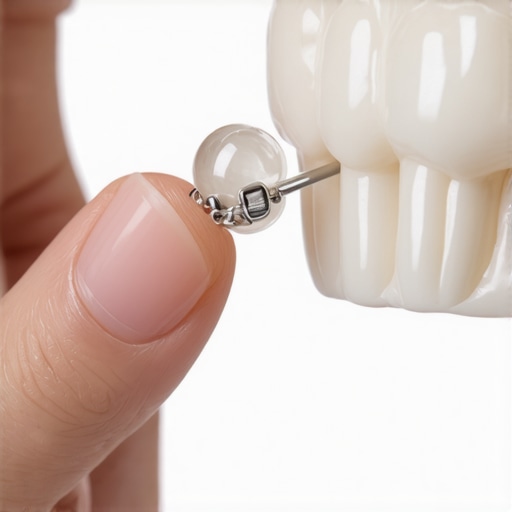
It was a Friday night, halfway through a bowl of what I thought were “braces-friendly” soft pretzels, when I heard that dreaded, high-pitched tink. You know the one. It’s the sound of a bracket surrendering its post on your tooth and deciding to go for a freestyle slide along the archwire. My heart sank instantly because I knew my orthodontist’s office had turned off the lights three hours prior, and they wouldn’t be back until Monday morning. I spent the next hour frantically poking at my cheek with my tongue, convinced I was ruining my entire two-year treatment plan in a single evening. I even briefly considered reaching for a tube of Krazy Glue—thankfully, I regained my senses, but that level of panic is incredibly real when you feel your hardware failing. If you are sitting there right now, feeling that sharp bit of metal sliding around, please take a deep breath. Your teeth aren’t going to migrate across your face by sunrise, and you don’t need a medical degree to stop the poking. Today, I’m going to show you exactly how to stabilize that loose bracket and keep your sanity intact until you can get back in the chair.
Stop the Metal from Tearing Up Your Mouth
In my early days of navigating family dentistry, I made the classic “helpful neighbor” mistake of trying to be my own doctor. I once grabbed a pair of needle-nose pliers from the garage, thinking I could just “nudge” a loose bracket back into place. Spoiler alert: I ended up bending the archwire, which turned a minor annoyance into a week of legitimate pain. It was a huge mistake that taught me a valuable lesson about patience. Whether you are dealing with the best snacks for kids with new braces that won’t cause damage or you’ve finally made the jump and are comparing invisalign vs braces, hardware issues are essentially a rite of passage. The trick is to focus on comfort rather than a permanent fix. If you try to glue it back yourself, you’re looking at the danger of using superglue to fix a broken denture at home, which applies just as much to your enamel and gums. Have you ever had a bracket pop off right before a big event or a long weekend? It’s like the universe knows exactly when the office is closed! According to the American Association of Orthodontists, true emergencies involve trauma or infection, while most loose brackets are simply “urgent” and can be safely managed with orthodontic wax and a little bit of manual repositioning.
Will My Teeth Shift Back to Their Old Positions Overnight?
This is the skepticism I hear most often from fellow “brace-faces.” We put so much effort into top oral health tips for your family’s bright smiles that we assume the second a bracket is loose, the tooth starts drifting back to its crooked origins. I used to think of it like a rubber band under tension—the moment you let go, it snaps back. But your mouth is a lot more resilient than that. Your bone and ligaments require constant, sustained pressure over weeks to move a tooth, so a few days of a loose bracket won’t undo months of progress. What does matter is keeping the area clean. While you’re waiting for the repair, I’ve found that using a soft toothbrush is essential to avoid further agitation. It’s also a great time to learn the best way to clean a mouthguard so it stays fresh if you wear one for sports, as any loose hardware can trap extra bacteria and food particles. Don’t let the anxiety of a minor break ruin your weekend; we are going to get this under control.
Identify Exactly What Is Moving
Before you start poking around with your fingers, you need to assess the damage like a detective. Think of your braces as a high-tech suspension system for your teeth; when one part fails, the rest of the system carries the load, but it creates friction. Use a clean finger or a cotton swab to gently nudge the bracket. If it’s sliding freely along the archwire, it’s a ‘floater.’ If it’s still attached to the wire but hanging at an angle, it’s a ‘tipper.’ This distinction matters because a floater is much more likely to irritate your gums. Much like learning the simple fix for a sharp invisalign edge cutting your tongue, the goal here is immediate relief through mechanical adjustment rather than a permanent cure.
Slide the Metal Bead Back to Safety
A loose bracket is essentially a metal bead on a wire necklace. If the bracket has shifted toward the space between your teeth, it’s going to catch on your cheek every time you speak. I remember a wedding I attended where my bottom molar bracket decided to go rogue. I spent the first hour of the reception ducking into the bathroom to nudge it back to the center of the tooth with a sterilized pair of tweezers. It felt like I was defusing a bomb, but once I got it centered, the irritation stopped instantly. You can do the same: use a clean Q-tip to gently slide the bracket back to the middle of the tooth where it belongs. Be as delicate as you would be when learning how to floss around a temporary crown without pulling it off. If the bracket won’t budge, don’t force it; you don’t want to kink the wire.
Smother Everything in Orthodontic Wax
Once the bracket is centered, you need to lock it down. This is where your orthodontic wax becomes your best friend. The secret is to make sure the area is bone-dry. I once tried to apply wax during a camping trip while my mouth was still watering from a snack, and the wax just rolled around like a marble. I finally used a paper towel to dry the bracket and the tooth completely, and only then did the wax stick. Pinch off a piece of wax the size of a pea, roll it into a ball to soften it with your body heat, and flatten it firmly over the loose bracket and the wire. This creates a smooth ‘buffer’ that prevents the metal from acting like a cheese grater on your inner lip.
Handle the Wire Without Causing More Damage
Sometimes the bracket isn’t just loose; it’s actually causing the wire to poke into the back of your mouth. If the wire is long and sharp, you can try to gently tuck it back toward the teeth using the eraser end of a pencil. This is much safer than using pliers. Treat the wire with the same caution you’d use when discovering the trick to using a water flosser without making a total mess—slow, steady movements are better than sudden force. If the wire is absolutely unbearable and you can’t reach the office, you can use a pair of sterilized nail clippers to snip the very end of the wire, but this is a last-resort ’emergency room’ move.
Stick to a Bracket-Friendly Menu
While that bracket is loose, your diet needs to shift immediately. Any hard or crunchy food will act like a lever, potentially popping off more hardware or bending the archwire further. Switch to a soft-food protocol until you get to the orthodontist. I’ve found that focusing on the best foods to eat when your new braces feel tight—think mashed potatoes, yogurt, and smoothies—is the safest way to ensure you don’t turn one loose bracket into three. The less work your teeth have to do, the less the loose hardware will move and irritate your mouth.Once you’ve successfully stabilized that loose bracket, it’s easy to think you’ve mastered the art of dental maintenance. But there is a massive difference between surviving a weekend emergency and actually ensuring your dental work lasts a decade. Most people believe that once a crown is seated or an aligner is in, the hard part is over. In reality, the ‘hidden nuance’ of family dentistry isn’t just about showing up for cleanings; it’s about how your bite interacts with your hardware. If you’ve ever wondered why your dental crown feels like it is vibrating or why your jaw feels tight after a new tray, you’re touching on the advanced science of occlusion—or how your teeth meet.
Can a Single Millimeter Ruin Your Entire Smile?
The biggest trap I see patients fall into is the ‘wait and see’ approach with a high spot. You might think, ‘Oh, I’ll just get used to this new crown,’ but if your new zirconia crown feels taller than your other teeth, you are actually tempting fate. A study published in the Journal of Dentistry highlights that even minor occlusal discrepancies can lead to localized bone loss or porcelain fractures over time. When your bite is off by even a hair, your jaw muscles overcompensate, leading to the kind of fatigue that makes you wonder why your jaw clicks more when you are stressed. Don’t just ‘live with it’; if it feels tall, it needs a professional tweak.
Why Traditional Braces Still Beat Invisalign for Certain Nuances
The common myth today is that Invisalign is always the superior, modern choice. While I love the technology, there is a contrarian truth: traditional brackets offer a level of ‘three-dimensional control’ that plastic trays sometimes struggle to match, especially for complex rotations. If you are currently in the middle of clear aligner therapy, you might notice why your invisalign aligners keep popping off your back teeth; this is often a sign that the ‘tracking’ is off. Instead of just pushing harder, savvy patients use the munchie technique to seat stubborn trays. This ensures the plastic is actually gripping the tooth to deliver the programmed force. When debunking invisalign myths, the biggest one is that the trays do all the work—you are the one who has to ensure they are seated perfectly every single hour.
Avoid the Over-Cleaning Trap
In an effort to be ‘perfect’ patients, many people start brushing their restorations with aggressive force. This is a major mistake. Whether you are following family dentistry secrets for maintaining oral health or just trying to keep a new bridge clean, remember that porcelain and composite are not as self-healing as your natural enamel. Brushing too hard can lead to gum recession, which is why your gums might be receding despite brushing twice a day. Switch to a soft-bristle brush and focus on the ‘roll’ technique rather than a back-and-forth saw motion. Choosing the right crown is only half the battle; the other half is treating it like the precision instrument it is. Have you ever fallen into the trap of thinking ‘harder is better’ when it comes to cleaning? Let me know in the comments. We’ve all been there, but your gums will thank you for the lighter touch.
The Gear That Actually Saved My Enamel
I spent years thinking a manual toothbrush and a piece of string were enough. Then I got my first crown and realized that the space under the bridge or around a bracket is a magnet for disaster. I swear by my water flosser now, but only because I finally learned the trick to using a water flosser without making a total mess—hint: look at the sink, not the mirror. This isn’t just about vanity; it’s about structural integrity. If you’ve invested in your smile, you’re essentially the curator of a very expensive art gallery. Dr. Gordon Christensen, a titan in restorative dentistry, often points out that ‘patient home care is the single greatest variable in restoration longevity.’ If you are lazy with your margins, even the most expensive zirconia will fail. I use specific interdental brushes for the tight spots between my crowns because traditional floss sometimes doesn’t have the ‘scrubbing’ power needed for the wider gaps at the gumline.
How do I keep my dental work looking new for a decade?
Maintenance is a daily commitment, not a twice-a-year event. When I’m at home, I treat my crowns like the precision instruments they are. I’ve learned how to keep your smile white while drinking daily coffee without using abrasive charcoals that could scratch the glaze on my porcelain. It’s also vital to monitor for small changes; if you notice why your porcelain crown has a tiny chip on the edge, it’s usually a sign that your night-grinding has returned. I personally use a high-fluoride toothpaste at night to remineralize the natural tooth structure that sits right under the margin of the crown, which is the most vulnerable spot for ‘recurrent’ decay. It’s about creating a chemical shield around your investment.
Why AI is About to Change Your Checkups Forever
Looking ahead, I see the world of invisalign innovations and the future of family dentistry moving toward total remote monitoring. We are already seeing apps that allow you to scan your teeth with your smartphone, sending high-res images to your doctor to ensure your trays are tracking perfectly without you having to drive to the office every four weeks. This is a game-changer for busy families. My prediction? Within five years, we won’t just be correcting smiles; we will be using AI to predict exactly where a crown might fail based on micro-wear patterns caught on your phone’s camera. This shift from ‘reactive’ to ‘predictive’ care is the biggest trend in the industry. If you’re feeling any weirdness today, I want you to try one thing: use the sip test to determine if your tooth sensitivity is nerve-related. It’s the fastest way to know if you need to call the office or if you just need a better toothpaste.
The Hard Truths About Living with Orthodontic Hardware
Reflecting on my own journey through the world of family dentistry, I’ve realized that a loose bracket isn’t a failure—it’s just a maintenance check. One lightbulb moment for me was realizing that my jaw wasn’t just sore from the braces; it was often why my jaw clicks more when you are stressed at work, which exacerbated the feeling of my hardware being ‘tight.’ Another lesson? Never underestimate the power of a quick phone call to the office just to log the issue, even if they can’t see you until Monday. Lastly, I learned that my oral health is a collaborative effort; if I don’t speak up about a poking wire, the orthodontist can’t fix what they don’t know is hurting.
My Go-To Kit for a Crisis-Free Mouth
I’ve curated a small ’emergency’ kit that stays in my bag, and it has saved me more than once. First, I never travel without orthodontic wax and the munchie technique to seat stubborn trays if I’m wearing aligners. Second, I’ve switched entirely to a water flosser because I finally mastered the trick to using a water flosser without making a total mess, which is vital for getting debris out from behind loose wires. Third, I always keep a list of top oral health tips for your family’s bright smiles handy to remind myself that the goal is long-term health, not just short-term aesthetics. Finally, I recommend the truth about soft vs hard toothbrushes for receding gums to everyone I know, as it’s the best way to protect your enamel while wearing braces.
The Future of Your Smile Starts with Today’s Fix
Whether you are dealing with a rogue bracket or just starting to look into invisalign vs braces, remember that you are in the driver’s seat of your dental health. These small hiccups are part of a much larger transformation that will result in a healthier, more confident you. By staying proactive and using these family dentistry secrets for maintaining oral health, you aren’t just fixing a piece of metal—you are protecting an investment in yourself. Don’t let a minor setback discourage you; your future smile is worth the weekend of soft foods and extra wax. Have you ever had a bracket pop off at the absolute worst possible moment? Let me know your ’emergency’ stories in the comments below!