
The best way to travel with aligner cleaners in your carry-on
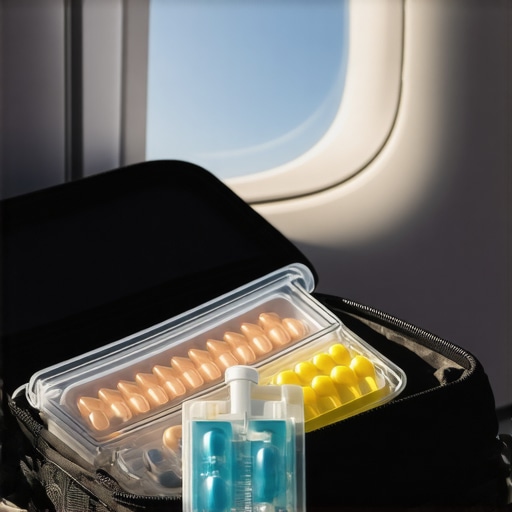
I’m standing in the security line at O’Hare, sweating. Not because I’m afraid of flying, but because the TSA agent is currently brandishing my favorite bottle of aligner cleaning foam like it’s a dangerous artifact. I’d spent months perfecting my routine, making sure my trays were crystal clear. But in my excitement for the vacation, I’d forgotten the 3.4-ounce rule. Into the trash it went. For the next six hours, I could feel every bit of plaque building up, and by the time we landed, my mouth felt like I’d been chewing on wool. It was a classic rookie mistake that I’ve vowed never to repeat. If you’ve ever wondered why your Invisalign aligners keep popping off or feeling fuzzy while on the move, it usually starts with a hygiene hiccup in transit. Today, I’m going to show you how to pack your cleaners like a pro so you never have to deal with security headaches or that grimy feeling in seat 14B.
Stop Letting Airport Security Ruing Your Smile Routine
Travel is stressful enough without having to worry about your oral health falling apart at 30,000 feet. We spend so much time focusing on Invisalign myths that we often ignore the practical, day-to-day logistics of living with them. I learned the hard way that a clean smile isn’t just about brushing; it’s about having the right tools accessible when you’re stuck in a tiny airplane bathroom. According to the Transportation Security Administration, medically necessary liquids are allowed in larger quantities, but explaining that your specific brand of aligner foam is a medical necessity to a grumpy agent is a battle you probably don’t want to fight. My failure taught me that solids are your best friend. Instead of liquids, I now swear by cleaning crystals and tablets. Have you ever had that panicked moment where you realized you forgot your cleaning supplies in your checked bag? If so, you know the dread of a long-haul flight with dirty trays.
Is Aligner Foam Actually Better Than Just Using Water?
I get it. You might think, “Can’t I just rinse them in the sink and call it a day?” I used to think the same thing until my trays started looking yellow under the harsh cabin lights. Water alone doesn’t kill the bacteria that cause that signature aligner breath. It’s similar to how the best way to clean a mouthguard involves more than just a quick splash. When you’re traveling, you need efficiency. Maintaining your routine is the only way to avoid the discomfort often associated with why your teeth ache for the first two days of a new tray, because a clean tray is a flexible, effective tray. We’re about to dive into the specific packing hacks that will keep your breath fresh and your luggage dry.
Build a TSA-Proof Dental Toolkit That Actually Works
To keep your smile on track while navigating layovers, you need a two-tier system: the Essentials and the Deep Cleaners. Think of your aligner case like a tiny, portable safe; if you leave it open or exposed to the air in a hotel bathroom, things get messy fast. For the Essentials, you need a travel-sized soft brush and a high-quality floss. When you are looking at family dentistry secrets for maintaining hygiene, the most important tool is actually a small mirror. You would be surprised how many people try to snap their trays back in by feel, only to realize later they’ve trapped a piece of spinach against their incisors for four hours.
Ditch the Liquids for Solid Cleaning Tablets
Since my O’Hare disaster, I have completely swapped out foams for effervescent cleaning tablets. They take up zero space and won’t get flagged by security. These tablets are essentially the same high-grade sanitizers used when learning the best way to clean a mouthguard or a retainer. You just drop one into a cup of lukewarm water, let your trays soak for 15 minutes, and they come out looking brand new. If you are debating Invisalign vs braces, remember that this portability is a massive perk, but it requires the discipline to keep your gear organized. 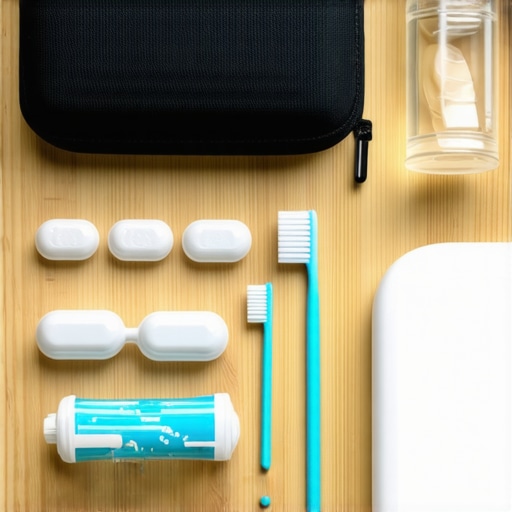
Master the Stealth Clean When You Are Stuck in Your Seat
There will be times when the Seatbelt sign stays on for three hours, and you’ve just finished a mid-flight snack. You can’t get to the bathroom, but your trays are sitting in their case, mocking you. This is where the stealth clean comes in. I keep a pack of disposable dental wipes in my personal item. These are textured cloths that you can wrap around your finger to scrub away surface plaque and food particles without needing a sink.
Survival Tactics for Long Haul Flights
I remember a particularly grueling flight to London where I was wedged in a window seat with two sleeping neighbors. I had just finished my meal and felt that familiar, sticky film starting to form. I couldn’t wake them up, so I used a single paper cup of bottled water and my dental wipes to clean my teeth and trays right there at my tray table. It wasn’t glamorous, and I accidentally dropped a chewie under the seat in front of me, but I landed with a fresh mouth instead of a fuzzy one. If you have ever dealt with how to clean a retainer that has sat out for too long, you know that dried-on saliva is a nightmare to scrub off later. Prevention is much easier than a deep scrub in a hotel sink.
Managing New Tray Discomfort While Navigating Terminals
If your travel schedule aligns with a tray change, don’t panic. You can still enjoy your trip even if you are experiencing why your teeth ache for the first two days of a new tray. The trick is to time your switch for the longest stretch of your travel—usually the overnight flight. This allows the initial pressure to happen while you are hopefully asleep, or at least distracted by a movie. Keep a small bag of orthodontic wax in your kit as well; cabin air is incredibly drying, and a dry mouth can lead to the edges of a new tray feeling sharper than usual against your cheeks.While packing the right tools is half the battle, the real secret to maintaining a perfect smile lies in the timing of your hygiene, not just the frequency. Most people believe that the “gold standard” of oral care is brushing immediately after every meal. I used to be that person—running to the tiny airplane lavatory the second the meal tray was cleared. However, this is one of the most common mistakes I see. When you eat, especially acidic foods or snacks that help you how to keep your smile white while drinking daily coffee, your enamel temporarily softens. If you scrub immediately, you are essentially sandpapering your teeth while they are at their most vulnerable. Many travel kits use stiff, cheap bristles that can cause micro-tears in your gums, adding another layer of risk to your vacation routine.
Why Your Post-Meal Brushing Habit Might Be Hurting Your Enamel
The nuance that many beginners miss is the “pH recovery period.” According to the American Dental Association (ADA), it takes roughly 30 to 60 minutes for your saliva to neutralize the acids in your mouth. If you are wearing Invisalign, this creates a unique problem. If you snap your trays back in immediately after an acidic drink, you are trapping that acid against your teeth for hours. This is how people end up with “mystery” cavities despite brushing three times a day. It’s a similar logic to the truth about charcoal toothpaste and your enamel health; sometimes, being “too aggressive” with cleaning actually does more damage than good. Instead, rinse thoroughly with water, wait 20 minutes, then brush and seat your aligners. #IMAGE_PLACE_HOLDER_C#
Can your dental crown actually hide a cavity from your dentist?
This is a question I get often from friends who think their restorative work is a “one and done” solution. One of the biggest traps in family dentistry is the “invincibility myth” regarding crowns. People assume that because the porcelain can’t decay, the tooth underneath is safe. In reality, a crown is only as good as the seal at its margin. If you don’t use the right techniques from the ultimate guide to crowns for a healthier smile, bacteria can seep under the edge. This type of decay is notoriously difficult to spot on standard X-rays and can lead to a root canal before you even feel a twinge of pain. If you’ve noticed that why your porcelain crown has a tiny chip on the edge, it’s not just a cosmetic issue—it’s a potential breach in your tooth’s armor.
The Hidden Danger of the Aligner Incubator Effect
When we look at Invisalign innovations, we see incredible advances in plastic technology, but the biology of your mouth remains the same. Your trays are essentially petri dishes if they aren’t bone-dry when you store them or perfectly clean when you wear them. The “Oops” factor here is failing to realize that a tray doesn’t just move teeth; it seals the environment. If that environment is sugary or acidic, you are accelerating tooth damage because you’ve removed the natural washing action of your saliva. Have you ever fallen into this trap of being “too fast” to put your trays back in? Let me know in the comments. Expertise in oral health isn’t about how hard you brush—it’s about understanding the chemistry of your saliva and the mechanics of your hardware.
Upgrade Your Countertop With the Right High-Tech Hardware
When I first started my Invisalign journey, I thought a manual brush and some basic floss would be enough. I was wrong. The sheer amount of plaque that accumulates behind those tiny resin attachments is staggering, and manual scrubbing just couldn’t keep up. I eventually invested in a high-end water flosser to reach the tight spaces between my molars. It is an absolute game-changer, but only if you learn the trick to using a water flosser without making a total mess. Personally, I found that aiming the tip at a 90-degree angle to the gum line while keeping my lips loosely closed over the nozzle is the only way to avoid soaking the bathroom mirror. This level of precision is exactly what your gums need to stay pink and firm rather than inflamed.
Why the Sonicare 9900 Prestige Changed My Mornings
Precision really matters when you are dealing with expensive dental work like porcelain veneers or orthodontic hardware. I switched to an electric brush because I needed the guesswork removed. According to the official Philips Sonicare technical specifications, their SenseIQ technology adapts in real-time by sensing pressure and motion up to 100 times per second to prevent gum recession. This is vital because why your gums are receding despite brushing twice a day often comes down to aggressive manual scrubbing. The brush actually slows down its vibrations if I press too hard, protecting my enamel and my the ultimate guide to crowns for a healthier smile margins simultaneously. This automated feedback loop has essentially ‘re-trained’ my hand to be more gentle, ensuring my gum line doesn’t retreat over time. 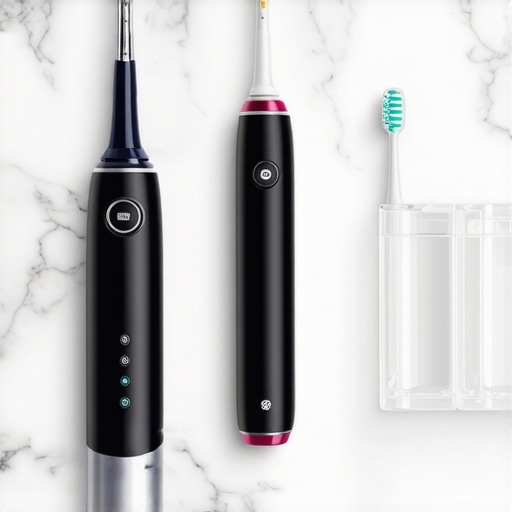
How do I maintain my smile’s alignment long after the trays are gone?
The ‘forever’ part of your smile actually starts on the day you finish your last active tray. Many people relax their routine once the teeth are straight, but that is exactly when relapse happens. Whether you choose a permanent lingual wire or a removable night-time tray, you have to stay vigilant. I use a specific cleaning routine for my Vivera retainers that mirrors how to clean a retainer that has sat out for too long, ensuring they never get that cloudy, calcified look that ruins the aesthetic. If you have a fixed wire, you will need to master the secret to eating popcorn with a permanent retainer so you don’t snap the composite bond on a Friday night. Looking ahead, I suspect we will soon see AI-integrated apps that scan your teeth via smartphone and alert your dentist to microscopic changes in real-time. This is already beginning with Invisalign innovations that track tooth movement with extreme precision via tele-health platforms. For a quick win tonight, try the ‘double-rinse’ method: use an alcohol-free mouthwash first to loosen debris, then floss, then brush. It’s a simple sequence that maximizes the efficacy of your fluoride toothpaste and keeps your hardware pristine.
The Tiny Habits That Saved My Smile When Everything Went Wrong
Reflecting on my own dental journey, the most important lesson wasn’t about the brand of plastic trays I wore, but about understanding the unique chemistry of my own mouth. I realized that maintaining high-level oral health is a proactive game, not a reactive one. First, I learned that consistency always beats intensity; scrubbing your teeth hard once a day is useless compared to the gentle, frequent care required to keep plaque at bay. Second, I finally understood that restorative work like dental crowns requires more attention, not less, as I discovered while researching the ultimate guide to crowns for a healthier smile. Lastly, I learned to trust my instincts—if an aligner feels slightly off or your gum line looks inflamed, it is a signal to slow down and reassess your technique before a small issue becomes a vacation-ruining emergency.
The Daily Gear That Keeps My Dentist Happy
If you are looking to upgrade your home or travel routine, I cannot recommend a few specific tools enough. First, a high-quality electric toothbrush with built-in pressure sensors is non-negotiable to prevent why your gums are receding despite brushing twice a day. Second, I always keep a set of “emergency” solid cleaning tablets in my car and my carry-on; they are life-savers when you are far from a bathroom sink. Third, I highly recommend checking out top oral health tips for your family’s bright smiles for a comprehensive look at how to balance hygiene for every age group in your household. These small investments in the right tech and evidence-based knowledge pay dividends in fewer trips to the dental chair for unexpected repairs.
#IMAGE_PLACEHOLDER_E#
Don’t Let Travel Stress Steal Your Progress
It is easy to feel like your dental routine is a burden when you are exploring a new city or rushing through a busy airport terminal, but remember that every minute you spend on your oral health now saves you hours of discomfort and potential expense later. Whether you are navigating common Invisalign myths or simply trying to keep a new porcelain crown pristine, you already have the tools and the knowledge to succeed. Your smile is often the first thing people notice—keep it bright, keep it healthy, and keep moving forward. Have you ever had a dental emergency while on vacation that changed how you pack your bags? Let me know in the comments below!