
The safest way to remove a popcorn kernel stuck deep in your gums
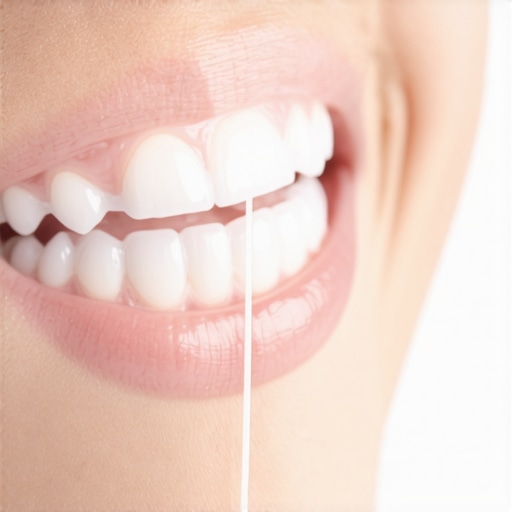
I was halfway through a bucket of movie theater popcorn, eyes glued to the screen, when it happened. That sudden, sharp ‘crunch’ that wasn’t a crunch at all—it was a hull sliding perfectly into the gap between my molar and my gum. I spent the next two hours oblivious to the plot, my tongue doing gymnastics trying to dislodge the intruder. We’ve all been there, haven’t we? That nagging, itchy, painful sensation that feels like a tiny splinter buried deep where you can’t reach it. I’ll be honest: my first instinct back then was to grab a toothpick and go to town. I ended up bleeding, frustrated, and with a gum line that looked like it had gone three rounds in a boxing ring. That was my first big mistake. Today, I’m going to share the actual, gentle methods I’ve learned for the safest way to remove a popcorn kernel stuck in your gums so you can skip the panic and the potential infection. We are going to solve this together, right now, using stuff you probably already have in your bathroom cabinet.
Stop Digging with Random Sharp Objects
When you feel that hull wedge itself deep, the temptation to use a fingernail, a paperclip, or even a fork is real. I know because I’ve tried them all in my early, less-informed days of home dental ‘surgery.’ But here is the reality: your gum tissue is incredibly delicate. According to the American Dental Association, forcing objects into the sulcus—the space between the tooth and gum—can actually push the kernel deeper or cause a periodontal abscess. These little hulls are shaped like tiny curved cups, making them perfect for suctioning onto the root of your tooth. Instead of aggressive prying, we need to focus on gentle irrigation and specialized flossing techniques that leverage family dentistry secrets for at-home care. Have you ever spent an entire movie poking at your teeth with your tongue instead of watching the screen? It’s a miserable experience, but the wrong tool makes it much worse. If you have already irritated the area, you might want to start with the salt water rinse trick for a sore mouth to calm the tissue before attempting the removal.
Will the Kernel Just Dissolve on Its Own?
This is the most common question I get when I talk about this. The short answer is a resounding no. Unlike some foods that break down with saliva, popcorn hulls are made of cellulose, which our bodies cannot digest or dissolve easily in the mouth. If you leave it there, your body treats it as a foreign invader, leading to swelling and eventually a nasty infection. I once waited three days, hoping it would magically disappear, only to wake up with a throbbing jaw and a feverish feeling in my mouth. That delay was a total rookie move. Now I know that the easiest way to remove a stuck popcorn kernel from your gums involves patience rather than power. Don’t let a small snack turn into a big dental bill. We need to act quickly but cautiously to ensure we don’t damage the attachment of the gum to the tooth, which is vital for your long-term oral health.
Rinse Your Way to Relief
First, grab some warm water. If you have a water flosser, now is its time to shine. Set it to a low-pressure setting—you aren’t trying to power-wash the siding of a house here; you’re trying to create a gentle current. Aim the stream directly at the gum line where the hull is hiding. If you do not have a fancy gadget, a vigorous salt water rinse can sometimes create enough movement to wiggle the kernel loose. Think of it like trying to get a leaf out of a gutter; sometimes you just need the right angle of water flow. If you find yourself frequently dealing with food traps, it might be worth checking how to tell if your dental bridge is trapping food or if your natural tooth alignment is the culprit. Sometimes, what feels like a temporary obstruction is actually a recurring issue caused by dental architecture that needs a professional look.
The Knot Method for Stubborn Hulls
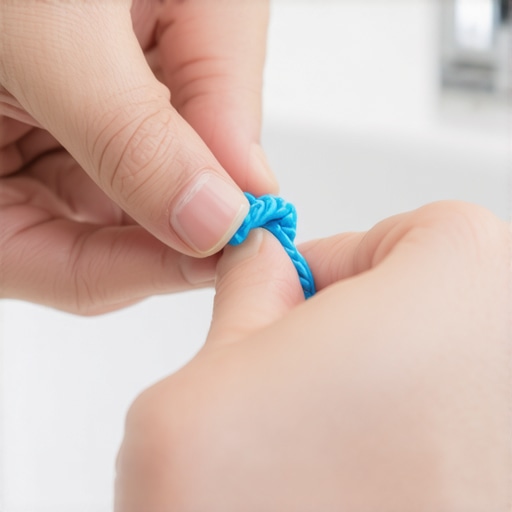
This is my go-to move, and it is a game-changer. Standard flossing often just slides right past the hull because the hull is curved and slick. Instead, take a piece of dental floss and tie a small, simple knot in the middle of it. Slide the floss into the gap between the teeth as you normally would, then gently pull the knot through the space at the gum line. The knot acts like a tiny hook or a shovel, catching the edge of the popcorn hull and dragging it out. I remember one Friday night after a double feature, I was convinced I would need an emergency appointment. I tied three different knots in a piece of minty floss, held my breath, and pulled. On the fourth try, the hull popped out like a cork from a bottle. It was the most satisfying ‘clink’ against the bathroom sink I have ever heard. This method is much safer than using a toothpick and is one of those family dentistry secrets that actually works without causing trauma.
Sweep the Debris with a 45-Degree Brush Angle
Sometimes the kernel isn’t wedged deep, but just tucked under the lip of the gum. Take a soft-bristled toothbrush and use a gentle, circular sweeping motion. Angle the bristles at about 45 degrees toward the gum line. You want the bristles to almost ‘flick’ the debris out. If your gums are already feeling raw from your earlier attempts, you need to be incredibly careful. I have seen people scrub so hard they cause a ‘snagged’ feeling, similar to how to fix a snagged gum from a sharp tortilla chip. The goal is a light touch. If the kernel is really being stubborn, do not force it. Pushing too hard can lead to long-term issues, especially if you have existing dental work. For instance, you do not want to compromise the area if you are already looking into how Invisalign transforms family dentistry or have specialized restorations like crowns that require precise gum health.
Spotting the Signs That You Need Professional Help
There is a fine line between a DIY success and a dental disaster. If the gum starts to bleed excessively, or if you notice a localized swelling that looks like a small pimple (an abscess), you need to stop immediately. I once ignored a persistent ‘tight’ feeling for a week, thinking I could just brush it away. It turns out I had pushed the hull so deep it was starting to irritate the root. If you cannot get it out after a few gentle attempts, it is time to seek professional help. Professionals have specialized tools that can reach spots we simply cannot see in a bathroom mirror. This is especially true if the debris is stuck around complex work like a new dental bridge or a crown. Taking a quick trip to the dentist is a much better alternative than risking a systemic infection from a piece of corn.
While the knot method and the 45-degree brush sweep are great for natural teeth, things get a bit more complex when you have invested in professional restorations. Most people assume that because a crown is made of porcelain or metal, it is basically a suit of armor for the tooth. This is a dangerous myth. In reality, the margin where your crown meets your gum line is a high-stakes zone for plaque and food debris. If a popcorn hull gets lodged under that margin, it can cause localized inflammation that leads to gum recession, exposing the natural tooth structure underneath. This is why why crowns are a game changer in restorative dentistry only if you maintain the gum health around them with surgical precision. If you’ve ever wondered the move to stop a crown from trapping food every time you eat steak, it starts with understanding that the hardware is only as good as the tissue supporting it.
Your Aligners Are Not a Shield Against Debris
Another common misconception involves orthodontic treatments like Invisalign. Some patients believe that wearing their trays for 22 hours a day acts as a physical barrier against food traps. The opposite is actually true. If you don’t thoroughly clean your teeth after eating that movie theater snack, the aligner can actually trap microscopic food particles and bacteria against the enamel and the gum line, creating a localized ‘pressure cooker’ for decay. When you look at Invisalign myths debunked, the idea that they simplify hygiene is usually the first one we have to address. If a kernel hull is stuck and you pop your trays back in, you are essentially forcing that sharp edge into your soft tissue for the next several hours. This is a classic ‘oops’ factor that leads to puffy, bleeding gums during what should be a straightforward smile transformation. Have you ever fallen into this trap? Let me know in the comments.
Can Chronic Gum Irritation Sabotage Your Invisalign Progress?
This is a question I get from my most observant patients, and the answer is a fascinating look into biology. Orthodontic movement relies on a process called bone remodeling. According to a study published in the Journal of Periodontal Research, persistent inflammation in the gingival tissues can actually interfere with the signaling molecules responsible for moving teeth. When a popcorn hull causes an infection or even just mild, chronic irritation, your body’s immune response shifts its focus. Instead of efficiently remodeling the bone to move your teeth into the correct position, it’s busy fighting the ‘invader’ at the gum line. This can lead to ‘lagging’ aligners or trays that suddenly feel like they don’t fit. If you notice why your Invisalign trays feel tighter on some days than others, it might not be the plastic; it might be the inflammation from a piece of food you missed.
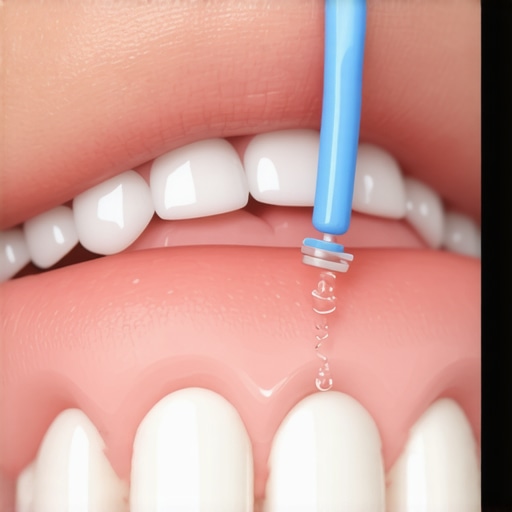
For those with more complex setups, like a bridge or a permanent retainer, the stakes are even higher. I always tell my patients that the family dentistry secrets for longevity involve specialized tools like interdental brushes or super-floss. If you have a restoration that feels slightly ‘off’ after a popcorn incident, you need to be careful not to ignore it. A hull trapped under a bridge can lead to a periodontal pocket that is nearly impossible to clean at home. Sometimes, the sensation of a stuck kernel is actually a sign that your restoration needs adjustment. For instance, knowing how to stop your new crown from feeling too high when you chew is important, but if that ‘high’ feeling only appears after eating, you likely have debris caught in the sulcus causing the tooth to sit slightly higher in its socket due to inflammation. Don’t let a simple snack compromise your dental investment; stay diligent, stay gentle, and keep those margins clean.
To truly scale your oral health and move beyond emergency kernel extractions, you need to think like a professional. I personally swear by the Waterpik Aquarius for my nightly routine. Why? Because manual flossing around specialized dental work is often insufficient. According to Dr. Gordon Christensen at Clinical Research Associates (CRA), oral irrigators can reduce gingival bleeding and inflammation by up to 50% compared to traditional string floss, especially in those hard-to-reach posterior areas. If you have invested in restorations, you should follow choosing the right crown expert advice for long lasting results by using tools that flush out the sulcus without traumatizing the tissue. I’ve found that the ‘orthodontic’ tip on a water flosser is actually the best tool for anyone with tight contacts, not just kids with braces.
Invest in the Right Gear to Save Your Gums
For those who prefer a traditional brush, the pressure sensor on high-end electric models is a life-saver. I used to be a ‘scrubber’ until my dentist pointed out my receding gum line. Now, I use a brush that vibrates red when I press too hard. It is easily the safest way to use an electric toothbrush on sensitive teeth while still ensuring you aren’t leaving a biofilm behind. If you are managing more complex architecture, like a bridge, you must master the best way to clean around a dental implant bridge to avoid inflammation. I recommend using a bridge-and-proxy brush; it looks like a tiny pipe cleaner and is the only thing that really gets under the pontic effectively. 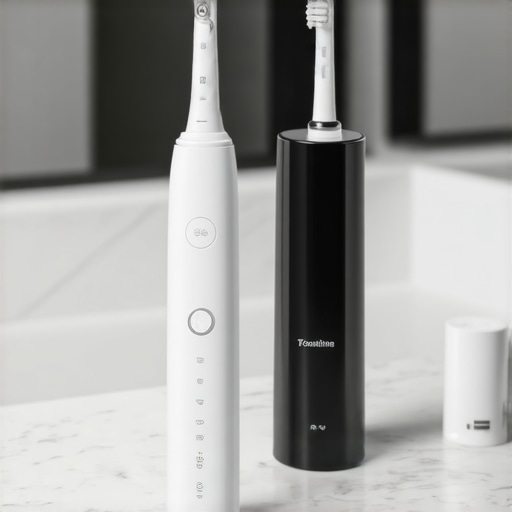
How can I keep my gums healthy for the long haul?
Maintenance isn’t a one-time event; it’s a daily system. Beyond the tools, you need to track the ‘feel’ of your mouth. I tell my friends to implement these top oral health tips for your familys bright smiles: change your brush head every three months and use a tongue scraper. A tongue scraper removes the sulfur-producing bacteria that a toothbrush just moves around. If you notice your gums starting to feel tender despite your best efforts, it might be time to look at your systemic health or even your stress levels. Stress-induced grinding can cause microscopic trauma to the gum attachment, making it easier for food like popcorn to get trapped in the first place.
Look Forward to Smart Tech in Your Bathroom
Looking ahead, the trend is moving toward AI-integrated oral care. We are already seeing toothbrushes that sync with apps to show you exactly which quadrant of your mouth you missed. As we see more Invisalign innovations the future of family dentistry revealed at 1137 am, I predict we will soon have ‘smart’ aligners that can detect changes in the pH levels of your saliva, alerting you to potential decay before it becomes a cavity. This level of bio-feedback will change everything about how we maintain our smiles. For now, I want you to try this one specific tip tonight: After you brush, run your pinky along the very edge of your gum line near your back molars. If it feels ‘tacky’ or rough rather than smooth and squeaky, you’ve got plaque that your current technique is missing. Switch to that 45-degree angle we discussed and focus on that specific spot.
Lessons I Learned the Hard Way About Popcorn Hulls
Looking back at my own dental mishaps, I’ve realized that the most important thing you can bring to a stuck kernel situation is calmness. When I used to panic, I would grab the first sharp thing I saw, which only led to more inflammation. Now I know that your gum tissue is resilient if you treat it with respect. Another lightbulb moment was realizing that popcorn hulls are like little anchors; they do not just wash away with saliva. You have to actively, yet gently, displace them. I’ve also learned that maintaining a tight, healthy gum line through family dentistry secrets like daily flossing makes it much harder for debris to get stuck in the first place. Prevention really is the best cure.
Assemble Your Home Dental First Aid Kit
You do not need a dentist’s office in your bathroom, but a few specific tools will save you a lot of grief. I personally recommend keeping a high-quality water flosser on hand; it is the gentlest way to irrigate the sulcus. I also swear by using a soft-bristled brush, which is the safest way to use an electric toothbrush on sensitive teeth without causing further irritation to a sore spot. For those stubborn hulls, keep a pack of waxed floss nearby because it is easier to tie the knot I mentioned earlier. Following these top oral health tips for your familys bright smiles will ensure you are prepared for the next movie night.
A Healthier Smile is Worth the Extra Effort
At the end of the day, your oral health is a reflection of the small habits you practice every morning and night. Whether you are currently seeing how Invisalign transforms family dentistry in your own life or you are just trying to keep your natural teeth in top shape, being gentle is key. Now that you know the safest way to remove a popcorn kernel stuck in your gums, you can enjoy your snacks without the fear of a dental emergency. Take a deep breath, use the water flosser, and remember that a little patience goes a long way. Have you ever been stuck in a theater trying to fish out a hull with just your tongue for hours? Let me know your worst popcorn story in the comments below!