
Why your smile looks uneven in photos and how to fix it

I remember standing in the middle of a crowded wedding reception, clutching a glass of champagne and feeling absolutely radiant… until the photographer’s flash went off. When I finally scrolled through the digital gallery a week later, I didn’t see the confident person I felt like that night. Instead, I saw a smile that looked—well, crooked. One side of my lip hitched higher than the other, and my teeth seemed to slant at an awkward angle. It was crushing. I spent years avoiding cameras or practicing a ‘tight-lipped’ smirk that just looked forced. If you’ve ever felt that jolt of self-consciousness when a friend tags you in a photo, I want you to know you aren’t alone—and more importantly, you aren’t stuck with it. Today, we are going to break down the anatomical and habits-based reasons for an asymmetrical smile and look at real solutions, from simple muscle exercises to choosing between Invisalign and braces. Have you ever deleted a photo because you felt your face looked ‘off’ or tilted? [IMAGE_PLACEHOLDER]
Stop Blaming the Camera Lens for a Lopsided Look
It’s easy to think it’s just the lighting or a bad angle, but usually, that uneven look comes down to either muscular habits or the way your teeth sit in your jaw. For me, it was a mix of both. I realized I was chewing almost exclusively on my right side because of an old, sensitive tooth, which actually built up the muscle on one side of my face more than the other. This kind of imbalance is incredibly common. Sometimes, the fix is as simple as balancing your bite, perhaps by looking into how crowns boost oral health when a tooth is compromised. According to a study published in the Journal of Oral Rehabilitation, subtle facial asymmetry is actually present in nearly 90% of the population, but it is the dental midline—the vertical line between your two front teeth—that acts as the visual anchor. If that is off, the whole smile appears slanted to the camera lens.
Is It Even Possible to Fix This Without Surgery?
I get it—the thought of ‘fixing’ a face sounds like an expensive, invasive nightmare. You might be worried that the only answer is jaw surgery or thousands of dollars in cosmetic work. But here is the good news: many causes of an uneven smile are functional. Whether it is correcting a bite with modern family dentistry secrets or retraining your facial muscles, most people can see a massive improvement without ever stepping into an operating room. The fear of ‘too much work’ often keeps people from seeking the small adjustments that make the biggest difference.
My Failed Attempt at ‘Manual’ Symmetry
Before I talked to a professional, I tried to ‘fix’ my smile myself. I would stand in front of the mirror for twenty minutes every morning, trying to consciously lift the left side of my mouth to match the right. I looked like I was malfunctioning. It was a disaster because I was treating the symptom, not the cause. I didn’t realize that my teeth were actually crowded, pushing my midline to the left. I was trying to muscle my way through a structural issue. Once I understood that tightly crowded teeth were the culprit, I stopped fighting my own face and started looking at real dental solutions that actually worked.
Once I stopped trying to force my face to look symmetrical through sheer willpower, I had to look at the actual architecture of my mouth. Think of your smile like a bridge; if one of the support beams is shorter or angled poorly, the entire structure sags. This isn’t just about ‘vanity’—it’s about how your teeth and muscles work together. To get that balanced look, you have to tackle the problem from two angles: the way you use your muscles and the physical position of your teeth.
Start With How You Actually Eat Your Food
I never realized I was a ‘one-sided chewer’ until my dentist pointed out the wear on my right molars. Because I had a tooth that was sensitive to cold, I subconsciously shifted every bite of food to the other side of my mouth for nearly three years. This is like going to the gym and only doing bicep curls with your right arm—eventually, one side of your face becomes noticeably bulkier and stronger, pulling your lip upward. If you are constantly wondering why your crown feels sensitive to cold months after it was placed, you might be avoiding that side of your mouth and creating a muscle imbalance without even knowing it. Training yourself to chew evenly is the first ‘soft’ fix for an asymmetrical look.

Level Your Foundation With Clear Aligners
If your muscle habits aren’t the primary culprit, the issue is likely structural. This was the big ‘aha’ moment for me. My teeth were slightly crowded on the bottom, which caused my upper teeth to tilt to compensate. When you have a bite that doesn’t line up, your jaw naturally rests at a slight angle. This is where modern tech makes a huge difference. Looking into the hidden benefits of Invisalign for family dental care in 2025 can show you how minor shifts in tooth position can level out your entire facial profile. Unlike the metal train tracks of the past, clear aligners work like a GPS for your teeth, slowly guiding them back to a centered midline. If you’re torn on the best path, comparing Invisalign vs. braces is the best way to see which fits your daily routine without making you feel like a teenager again.
Fixing Individual Teeth That Break the Line
Sometimes the asymmetry isn’t about the whole jaw, but just one or two ‘problem’ teeth that are the wrong shape or size. For instance, a chipped front tooth or an old, worn-down filling can make one side of your smile look shorter than the other. I had one molar that sat slightly higher than its neighbor, which made my whole jaw feel ‘off’ when I closed my mouth. When I finally got it fixed, I had to learn how to stop your new crown from feeling too high when you chew because my brain was so used to the old, uneven bite. Restoring the height of a tooth with a crown can instantly ‘level’ the visual plane of your smile. Following top oral health tips for your family’s bright smiles ensures that once you get that symmetry, you actually keep it for the long haul.
The Proper Way to Handle Crowded Areas
When teeth are fighting for space, they often overlap, which creates shadows in photos that look like missing teeth or dark gaps. This ‘shading’ contributes heavily to the appearance of an uneven smile. If you are struggling with this, mastering the best strategy for flossing when your teeth are tightly crowded is essential to prevent the gum inflammation that can make certain teeth look lower or ‘puffy’ compared to their neighbors. Keeping the gums healthy ensures that the frame of your smile stays consistent on both the left and right sides.
Let’s dig deeper into the nuances that most people—and even some general dentists—overlook when they start talking about symmetry. Everyone says that a balanced face requires perfectly identical teeth on both sides. In my experience, that is exactly how you end up in the ‘uncanny valley,’ where your smile looks technically perfect but weirdly robotic. The truth is that ‘micro-asymmetry’ is what makes a human face look authentic. According to a study in the Journal of Esthetic and Restorative Dentistry, the most attractive smiles actually possess subtle variations in tooth length and position that reflect light naturally. When you try to erase every single ‘imperfection,’ you often end up with what I call the ‘Piano Key’ effect.
The One Mistake That Makes Teeth Look Like Piano Keys
The most common trap people fall into is requesting a ‘wall’ of white teeth without considering the depth of each individual tooth. This is often the reason your veneers look bulky compared to your natural teeth. Real teeth have translucency and varying heights. If you are getting restorative work done, you have to look at the ultimate guide to crowns for a healthier smile to understand how a technician mimics the way light passes through enamel. If your new teeth are all the same opaque shade and length, they won’t look like yours—they’ll look like a prosthetic. Have you ever fallen into the trap of wanting ‘perfect’ teeth only to realize they didn’t feel like ‘you’? Let me know in the comments.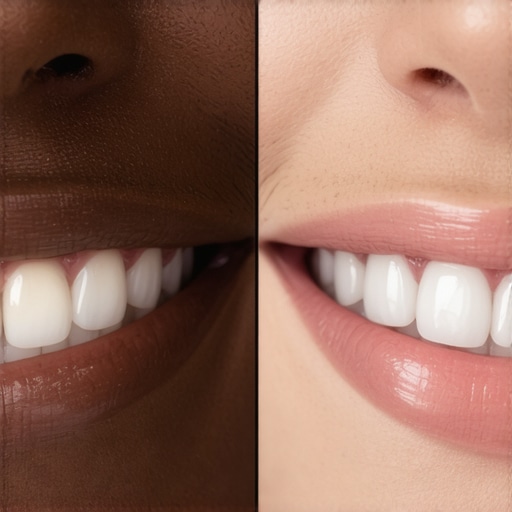
Can You Spot the Difference Between Corrected and Over-Corrected?
Another hidden nuance involves the ‘biological width’—the space between your bone and your gum line. Many patients think they can just ‘move’ their teeth with aligners and the gums will magically follow. But if you don’t account for the underlying structure, you can end up with uneven gum peaks that actually emphasize asymmetry rather than fixing it. This is one of the biggest Invisalign myths debunked: what you need to know today. Effective treatment isn’t just about moving the ‘visible’ part of the tooth; it’s about managing the foundation. If your bite feels off after a procedure, you must address it immediately. Knowing how to stop your new crown from feeling too high when you chew is vital because a single high point can lead to muscle strain that pulls your smile back into a lopsided position over time.
Why Your Foundation Matters More Than the Polish
Ultimately, you want a provider who treats your mouth as a whole system. This is why choosing the right crown expert advice for long-lasting results is better than looking for a quick fix. You aren’t just buying a ‘cap’ for a tooth; you are recalibrating your entire jaw’s harmony. If you ignore the functional aspect of family dentistry secrets for maintaining oral health with modern techniques, you might find that your ‘new’ smile causes headaches or jaw clicking. A symmetrical smile that hurts isn’t a success—it’s a structural failure disguised as a cosmetic win. Let’s focus on the balance between health and aesthetics to get a look that actually lasts.Maintenance is the silent work that keeps your investment from falling apart. I used to think that once the braces were off or the crown was seated, the job was done. It’s actually the opposite; that’s when the clock starts ticking. To keep that symmetry from drifting back into old, lopsided habits, you need a specific toolkit that goes beyond a basic plastic toothbrush.
Stop Scrubbing Your Gums Into Oblivion
I learned the hard way that ‘brushing harder’ doesn’t mean ‘brushing better.’ In fact, if you have been working on your symmetry, aggressive scrubbing can actually cause your gum line to recede unevenly, which throws the whole visual balance off again. I personally switched to a brush with a visible pressure sensor because I didn’t realize I was practically attacking my teeth. Learning the safest way to use an electric toothbrush on sensitive teeth is a game-changer. It’s not just about removing plaque; it’s about preserving the ‘frame’ of your smile. If you irritate the gums around a new restoration, you risk inflammation that can make one side of your mouth look puffier than the other.
Don’t Let Your Hardware Become a Biohazard
If you are using aligners to fix your midline, the biggest hurdle isn’t the movement—it’s the maintenance of the plastic itself. I used to soak mine in mouthwash, which actually made them more porous and prone to staining. Now, I swear by an ultrasonic cleaner. It uses high-frequency sound waves to blast away the biofilm that manual brushing misses. This is the only way to truly figure out how to stop your Invisalign trays from turning yellow over time. If your trays are cloudy or stained, you’ll be less likely to wear them for the required 22 hours a day, and that is exactly how symmetry begins to slip. You also have to be vigilant about your storage; why your Invisalign case smells even after you wash it usually comes down to trapped bacteria in the hinge, which transfers right back to your teeth. #IMAGE_PLACE_HOLDER_D#
How do I maintain my symmetrical results over time?
The short answer is: the retainer is your new best friend for life. Teeth have ‘memory,’ and the ligaments want to pull them back to their original, asymmetrical positions. Beyond just wearing the hardware, you need to master the cleaning process. I recommend a specialized soak twice a week. Understanding the best way to clean your retainers without using any harsh chemicals will save you from the chemical taste that often discourages people from wearing them. Additionally, if you’re a tea or coffee drinker, you have to learn how to keep your aligners clear while drinking tea so you don’t sacrifice your morning ritual for your dental health. Expert dental material researchers, such as those published in the Clinicians Report by Dr. Gordon Christensen, emphasize that ‘occlusal guard’ therapy—wearing a night guard—is often essential to protect high-end restorations from the sheer force of nighttime grinding. I predict that in the next few years, we’ll see AI-integrated toothbrushes that sync with your dentist’s office to track exactly how well you are maintaining your midline symmetry in real-time. For now, the best move you can make is to try the ‘five-second rinse’ immediately after every meal to keep acids from dwelling on your enamel. Check out family dentistry secrets for maintaining oral health to see how these small habits stack up. Try switching to an ultrasonic cleaner for your aligners or retainers this week—it’s the single most effective way to keep your hardware invisible and your smile on track.
Lessons Learned From Chasing the Perfect Midline
Reflecting on my own journey to a balanced smile, I’ve realized that the most important progress often happens when you aren’t looking in a mirror. First, real symmetry is about the functional bite as much as the aesthetic look. If your jaw doesn’t feel relaxed, your smile will never look truly natural in candid moments. Second, patience is your best tool. You cannot rush bone and muscle into a new position overnight without consequences. Third, I discovered that many Invisalign myths debunked: what you need to know today often focus on the vanity aspect, but the true benefit is the long-term health of your jaw joint and the prevention of uneven tooth wear. Finally, remember that your tiny imperfections make you human; we are aiming for harmony and balance, not robotic perfection.
My Toolkit for a Lifetime of Dental Symmetry
If you are serious about keeping your results and preventing a relapse into asymmetry, you need more than just a standard manual toothbrush. Here are the three things that changed the game for me. I swear by an ultrasonic cleaner for my retainers; it is the only way to prevent that cloudy, dull look that happens over time. Next, I focus heavily on the best strategy for flossing when your teeth are tightly crowded because keeping the contacts between your teeth clean prevents the hidden inflammation that causes visual shifts in your smile line. I also recommend checking out how to stop your Invisalign trays from turning yellow if you are currently in active treatment. Lastly, using the safest way to use an electric toothbrush on sensitive teeth protects your enamel from abrasive damage and keeps your gum line perfectly level on both sides.
Your Path to a Balanced and Radiant Look
Taking the first step to address an asymmetrical smile can feel intimidating, but you deserve to feel completely confident every time someone pulls out a camera at a wedding or a party. Whether you choose to consciously adjust your chewing habits, explore the world of clear aligners, or consult a professional about family dentistry secrets for maintaining oral health, the ultimate goal is a version of yourself that feels authentic. You are investing in your future self—someone who smiles without hesitation and laughs without checking the mirror for a tilted lip. Have you ever noticed your smile looking slightly off in a photo, and what was the very first thing you tried to do to fix it? Let me know your story below.