
Why your crown feels sensitive to cold months after it was placed
I still remember the exact moment I realized something was wrong. It was a Tuesday morning, nearly half a year after my permanent crown was cemented. I took a generous gulp of ice-cold water, and—bam—a lightning bolt of pain shot straight through my jaw. I nearly dropped my glass. I thought I was done with this after the initial week of getting used to it. If you’re reading this, you’re probably in that same boat, wondering why on earth your tooth is still acting like a drama queen months later. Today, we are going to get to the bottom of why your crown is throwing a tantrum and what you can actually do to fix it. [image_placeholder_1]
The Cold Truth About Late-Onset Sensitivity
When you first get a crown, you expect a little weirdness. But six months down the line? That’s when the neighborly advice kicks in: don’t just ignore it. I made the classic mistake of thinking my tooth just needed more time to settle, but waiting only led to more discomfort and a very awkward emergency appointment. Usually, if you’re feeling that sharp chill, it’s not just in your head. It could be anything from a microscopic gap at the margin to your gums naturally shifting.
Is it possible my crown is just a total failure?
It’s the fear we all have when we shell out for dental work. You start wondering if the material was cheap or if the prep work wasn’t quite right. According to the American Association of Endodontists, lingering sensitivity to cold can often indicate that the pulp inside the tooth is struggling, a condition known as pulpitis. It’s not necessarily a failure of the crown itself, but rather the living tissue underneath reacting to the changes. Before you panic, remember that why your new crown feels sensitive to cold drinks initially is different from long-term issues. If you’ve been feeling this for a while, it might be time to check if your crown feels taller than your other teeth, which is a common culprit for putting extra pressure on the nerve. Have you ever felt that specific, annoying zing when drinking your morning iced coffee, even though the procedure was months ago? Tell me I’m not the only one who tried to tough it out for way too long. Sometimes the fix is as simple as a minor adjustment. If you are also dealing with other restorations, understanding why your new dental bridge feels like its trapping food or other similar issues can help you see the bigger picture of your oral health. We’re going to look at the specific reasons—from gum recession to bite alignment—that keep that cold sensitivity hanging around.
Find out if your bite is the real culprit
Imagine your teeth as a set of gears in a watch. If one gear is slightly larger than the others, it takes the brunt of every rotation. Over thousands of chews a day, that pressure travels down the crown and hammers the nerve. This is exactly what happened to me four months after my procedure. I felt fine initially, but then I started noticing that the specific reason your crown feels tall when you wake up often boils down to nighttime grinding on an uneven surface. I spent weeks thinking I had a new cavity, but in reality, my tooth was just bruised from the inside out. If your bite isn’t perfectly balanced, the periodontal ligament—the shock absorber for your tooth—becomes chronically inflamed. This inflammation makes the nerve hypersensitive to temperature changes, leading to that sharp sting from your morning juice.
Test your alignment at home
Try this: Bite down slowly and see if that specific tooth touches first. Even a microscopic high spot can cause major issues. You might need a professional adjustment where the dentist uses articulating paper to find and shave down the excess material. It sounds scary to shave down a new crown, but it’s often a five-minute fix that provides instant relief. Don’t ignore it, as what to do when your crown feels taller than your other teeth usually involves this simple recalibration to save the nerve from permanent damage.
Watch the gum line for signs of trouble
As time passes, your gum tissue can shift or recede. If the gums pull back even a fraction of a millimeter, they can expose the margin—the area where the crown meets your natural tooth. Unlike the porcelain of the crown, your tooth root does not have enamel to protect it. It has cementum, which is porous and full of tiny tunnels leading straight to the nerve. If you are wondering why your gums are receding despite brushing twice a day, it might be due to aggressive brushing or even the way the crown was shaped. When ice water hits that exposed root, it is like a direct line to the live wire of your tooth. Check your gum line in a mirror with a bright light. If you see a dark line or a tiny ledge at the base of the crown, that is a common sign of margin exposure.
Seal the gap and protect the root
To fix this, you do not always need a new crown. Sometimes, a dentist can apply a desensitizing agent or a small amount of composite resin to seal the exposed area. In the meantime, switching to a high-fluoride toothpaste can help plug those microscopic tunnels. If the crown was poorly fitted from the start, choosing the right crown expert advice for long lasting results becomes crucial for your next restoration to ensure the seal is airtight. I once tried to power through gum sensitivity by using whitening strips, but the danger of using whitening strips on a tooth with a filling or crown is that the chemicals can seep into those margins and make the pain much worse. Stick to gentle care until a professional can evaluate the seal.
Address hidden inflammation under the porcelain
Sometimes the issue is not the fit or the gums, but what is happening inside the tooth structure itself. If the tooth under the crown had a deep cavity before the crown was placed, the pulp might be in a state of chronic pulpitis. This is essentially a slow-motion inflammatory response by the nerve. Because many crowns act as thermal conductors, they can transfer cold more efficiently than natural enamel. If you have recently dealt with how to manage sensitivity after a deep root planing session, you know how sensitive the whole jaw area can become. Persistent cold pain that lingers for more than thirty seconds usually suggests the nerve is struggling to heal and might eventually need a root canal to fully resolve the internal pressure.
Don’t rush into a root canal just yet
The biggest misconception I see in the dental world is the belief that if a crown still hurts after six months, it is an automatic failure. Most patients—and even some practitioners—assume the nerve is dead and it is time for an invasive procedure. However, in my experience, the ‘wait and see’ approach combined with desensitizing therapy is often overlooked. A study published in the Journal of Endodontics indicates that many teeth with reversible pulpitis can actually recover if the external stimuli—like a high bite or a minor gap—are removed quickly enough. If you are exploring why crowns are a game changer in restorative dentistry, you have to understand that the tooth is a living organ. It needs time to build ‘reparative dentin,’ which is essentially a natural internal scab that insulates the nerve. If you jump to a root canal too early, you are losing more of your natural tooth structure than necessary.
How does the thermal shock theory impact my long-term crown health?
Advanced patients often ask if the material of the crown itself is the problem. It is a brilliant question. Different materials have different rates of thermal conductivity. For instance, gold is a great conductor of heat and cold, whereas zirconia and high-quality ceramics act more like insulators. If you have a metal-based crown, that zing you feel might literally be the metal transferring the temperature of your iced coffee directly to the tooth stump. This is why transforming your smile with crowns requires a deep dive into material science, not just aesthetics. We are looking for materials that mimic the natural expansion and contraction of enamel. If your crown doesn’t match the thermal properties of your natural teeth, you’ll feel that ‘shock’ every time the seasons change or you switch from hot soup to cold water.
The charcoal toothpaste trap you need to avoid
Here is the ‘oops’ factor that almost nobody talks about: the products you use to keep your crown clean might be the very thing making it sensitive. I’ve seen so many people try to brighten their smile using trendy abrasive cleaners, but the truth about charcoal toothpaste and your enamel health is that it’s far too gritty for restorative work. When you scrub a crown with highly abrasive paste, you aren’t just cleaning it; you are potentially micro-scratching the margin where the crown meets the gum. These tiny scratches become a breeding ground for bacteria and make that transition zone even more porous. Instead of the ‘clean’ feeling you’re after, you’re actually inviting the cold to seep into the sensitive root area. Using family dentistry secrets for maintaining oral health means sticking to low-abrasivity, high-fluoride options that seal rather than scrape.
Have you ever fallen into the trap of thinking a more ‘natural’ or ‘aggressive’ cleaning routine would fix your dental pain? It’s a common mistake that can lead to years of unnecessary discomfort. Let me know in the comments if you’ve tried a specific remedy that actually made your sensitivity worse—I’d love to help you figure out why.
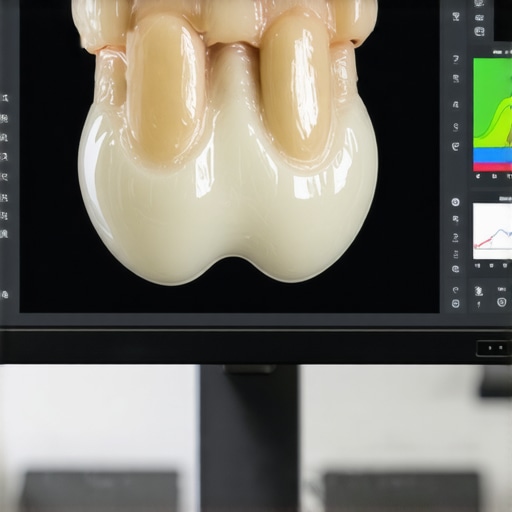
I finally stopped playing the guessing game with my dental health when I realized that a standard X-ray sometimes misses the fine details of a complex restoration. If you are still feeling that phantom cold sting, it might be time to look closer—literally. I’ve found that why finding the best dentistry in Culpeper VA usually starts with a 3d cbct scan is because these three-dimensional views can spot microscopic abscesses or tiny fractures that a flat film simply cannot see. It changed the way I look at my own dental care; I no longer wait for pain to be the signal for action. Instead, I use data to ensure my investment in my smile stays secure.
The toolkit that actually saved my smile
Maintenance is where most of us fail, but I’ve found two specific tools that are non-negotiable for anyone with a crown or bridge. First, let’s talk about the water flosser. I used to be terrified of it, but learning the trick to using a water flosser without making a total mess allowed me to flush out the bacteria hiding under my crown margins without the mechanical scraping of traditional floss. Second, you have to be careful with power. I switched to a pressure-sensitive model because the safest way to use an electric toothbrush on sensitive teeth involves a sensor that stops you from scrubbing your gums into recession. According to a study in the Journal of Oral Rehabilitation, excessive occlusal force—both from brushing and biting—is a leading cause of long-term crown failure. By using tools that mitigate this force, you’re essentially extending the life of your restoration by years.
How do I maintain my dental crowns and overall alignment over time?
Consistency is key, but so is the right strategy. I recommend a ‘low-impact’ approach. This means avoiding the ‘firm’ toothbrush bristles that we were all taught to use as kids. Instead, focus on high-frequency, low-pressure cleaning. If you have multiple crowns, you might also want to look at your overall alignment. I’ve noticed that as my teeth shifted with age, the pressure on my crowns increased. This is why many adults are now looking into how invisalign innovations the future of family dentistry revealed new ways to keep teeth in their proper place, ensuring that one single crown isn’t taking the ‘hit’ every time you chew. Keeping your teeth aligned is the best way to distribute the workload across your entire jaw.
The future of keeping your teeth forever
The trend in modern dentistry is moving away from reactive ‘drilling and filling’ and toward proactive digital monitoring. In the next few years, I predict we will see more home-based AI tools that can scan your smile and alert you to gum recession before it causes that cold sensitivity. We are already seeing this with the hidden benefits of invisalign for family dental care in 2025, where digital tracking ensures everything stays on course. By utilizing family dentistry secrets maintaining oral health with modern techniques, we can shift from being patients who fear the chair to being managers of our own health. If you take one thing away from my experience, let it be this: don’t just treat the symptom of cold sensitivity; investigate the mechanical cause. I challenge you to try the ’90-degree water flosser’ tip tonight—aim it directly at the space between your teeth and your crown on the lowest setting. It might just be the relief you’ve been looking for.
Hard Truths I Discovered While Dealing with a Finicky Crown
After months of trial and error, I realized that the “wait and see” method only works if you are being proactive about the mechanical causes. First, the pain isn’t always about the material—it is often about the pressure. I learned that my crown was taking too much force because of my bite alignment, not because the porcelain was faulty. Second, I found that why crowns are a game changer in restorative dentistry is because they protect the remaining tooth structure, but they do not make it invincible to neglect. Finally, I realized that modern imaging is the only way to be 100% sure; if your regular X-ray looks clear but you are still in pain, you need a more detailed perspective.
The Three Tools I Use to Protect My Dental Work
I no longer leave my comfort to chance. My personal toolkit includes a water flosser used on the lowest setting—I finally mastered the trick to using a water flosser without making a total mess and it has kept my crown margins perfectly clean. I also switched to a brush with a built-in sensor; finding the safest way to use an electric toothbrush on sensitive teeth prevented me from accidentally scrubbing away my gum line. Lastly, I highly recommend reading the ultimate guide to crowns for a healthier smile to understand the long-term maintenance schedule needed to avoid late-onset sensitivity.
Take Back Control of Your Oral Comfort
You do not have to live with a tooth that zings every time you reach for an iced coffee. By investigating the root causes—whether it is an uneven bite, shifting gums, or thermal conductivity—you can finally enjoy your favorite foods without fear. Investing in high-quality restorative dentistry is about more than just a beautiful smile; it is about living a life free from constant dental distractions. Have you ever experienced a sharp cold sensitivity zing that just would not go away? Let me know in the comments below.