
How to handle a metal wire poking your cheek from braces
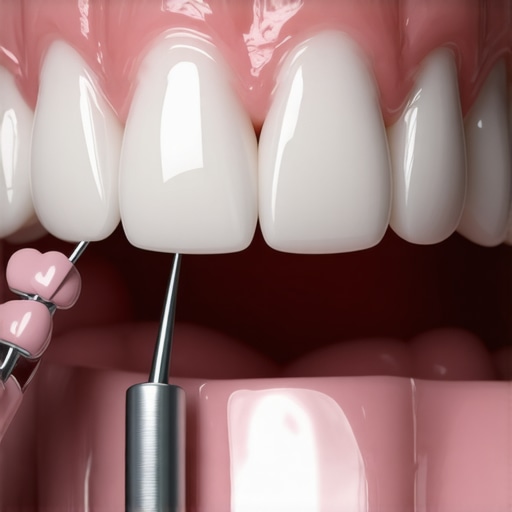
I was halfway through a really good burger when I felt it—that sharp, electric zing of a metal wire digging straight into the soft tissue of my cheek. It wasn’t just annoying; it was relentless. Every time I talked or smiled, that tiny piece of stainless steel reminded me it was there. I’ve been through the trenches of orthodontic work, and let me tell you, I’ve made every mistake in the book, including trying to “tough it out” until the inside of my mouth looked like a piece of raw steak. Most of us just want a perfect smile without the physical combat, but sometimes those wires have a mind of their own.
Stop the Pain and Take Control of Your Braces
If you are currently 按ing your tongue against a sharp point, I feel your pain. Dealing with a poking wire is a rite of passage for anyone with traditional hardware. When I first got my brackets, I didn’t realize how much things shift as your teeth move. I once tried to fix a sharp edge with a regular fingernail clipper I found in my junk drawer—huge mistake. Not only was it clumsy, but I ended up making the wire even sharper and more jagged. If you’re currently struggling with this level of discomfort, you might even be wondering if Invisalign vs braces would have been a better choice for your sanity. Even when we follow top oral health tips for your family’s bright smiles, mechanical issues like a long archwire can happen to the best of us. According to the American Association of Orthodontists, while minor soreness is expected, sharp protrusions are considered an urgent (though often DIY-fixable) issue because they can lead to painful ulcerations.
Is this sharp pain actually worth the straight teeth at the end?
You might be sitting there right now, holding a cold compress to your face, wondering if you’ve made a terrible investment. Trust me, the result is worth it, but you shouldn’t have to bleed for your beauty. It’s a common fear that every poke means a trip to the emergency clinic or that your treatment is failing. It isn’t. Today, I’m going to show you the best way to handle a broken wire on your braces at home using simple tools you actually own. I want to help you bridge the gap between “hurting” and “healing” so you can get back to your day. Have you ever had a wire poke you at the worst possible moment, like right before a big presentation or a first date? I’d love to hear how you handled it! Let’s dive into the literal nuts and bolts of taming that wire before it does any more damage.
Tame the Metal with These Immediate Fixes
Identifying the exact spot where the wire is rubbing is your first priority. If you can’t see it easily, use a small dental mirror or even the front-facing camera on your phone with the flash on. Most of the time, the wire has simply slid around the arch, leaving one end too long at the back. This is incredibly common in the early stages of treatment as your teeth begin to align. Dealing with this is a lot like learning the safest way to use an electric toothbrush on sensitive teeth; it requires a gentle touch rather than force. If the wire is just slightly out of place, you can often solve the problem without a single tool, but most of us need a little extra help to get through the night.
Create a Shield with Orthodontic Wax
Wax is the absolute gold standard for orthodontic relief for a reason. I remember my first week with braces; I didn’t think I needed the wax the office gave me, so I left it in my car’s glove box. By day three, my inner cheek was so raw I was using a piece of sugar-free gum as a desperate substitute. It was a sticky disaster. To apply wax correctly, the area must be dry. The wax will not stick to a wet bracket or wire. Use a cotton swab to dab the offending wire and the surrounding cheek. Pinch off a pea-sized amount of wax, roll it into a ball between your fingers to warm it up, and press it firmly over the sharp end. This creates a smooth buffer that allows your tissue to heal. If you’ve recently switched from traditional hardware to clear aligners, you might find that knowing what to do if your Invisalign tray starts to scratch your cheek follows a similar logic of smoothing out the points of friction.
Nudge the Wire Back into the Tube
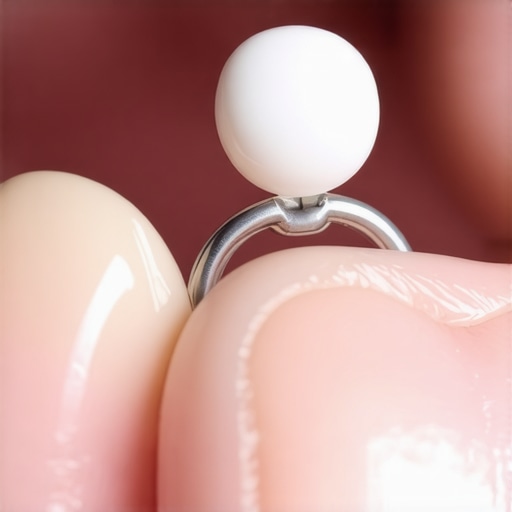
Sometimes the wire hasn’t broken or grown; it has simply migrated through the brackets. You can often fix this using the eraser end of a pencil. I once had a wire pop out during a holiday dinner, and I looked like I was grimacing in every photo. I finally snuck into the restroom, found a clean pencil, and used the eraser to gently push the wire back flush against the tooth. The rubber provides enough grip to move the metal without scratching your enamel or hurting your gums. If the wire is poking out of the very last molar bracket, try to tuck it inward toward the tooth so it’s not pointing at your cheek. This is a delicate process, much like the best way to handle a broken wire on your braces at home when you don’t have immediate access to your orthodontist’s chair.
When You Absolutely Have to Clip It
If the wire is long enough that it’s actually piercing your skin and wax keeps falling off, you might need to trim it. This should be your last resort. Use a pair of small fingernail clippers or wire cutters, but ensure they are sterilized with rubbing alcohol first. Ask a friend or family member to help because seeing into the back of your own mouth is nearly impossible. Use a folded tissue or a piece of gauze to catch the small piece of wire so you don’t accidentally swallow or inhale it. I once tried to do this solo in a dorm room mirror and almost lost the clipped piece down my throat—definitely a mistake I only made once. Much like knowing how to tell if your dental bridge needs to be replaced, recognizing when a situation is beyond a quick home fix is vital. If the wire is too thick or you can’t get a clear angle, stop immediately and contact your dentist. If you’re dealing with other restorative issues, you might also find it helpful to learn how to manage a crown that feels sensitive to air or cold liquids while you wait for your appointment.
Why a Poking Wire is Actually a Good Sign
While we often blame the orthodontist for a “lazy” cut, the truth is that a poking wire often means your teeth are actually moving. As the dental arch narrows or gaps close, the fixed length of the wire naturally protrudes past the last molar. It’s a sign of orthodontic success, yet most patients view it as a failure of the clinic. However, the biggest “oops” I see is people over-relying on wax for weeks at a time. While it’s great for emergencies, plastering your mouth in wax can actually trap food particles and bacteria against the bracket, leading to decalcification or white spot lesions. A study in the Journal of Orofacial Orthopedics suggests that maintaining mechanical integrity is key, and excessive home modifications can sometimes slow down the tooth movement we’re actually paying for. Using wax as a crutch rather than a temporary bridge is a trap that leads to poor hygiene.
Does a “High Bite” Mean Your Crown is Failing?
If you’ve graduated from braces to restorative work, you might encounter a different kind of “poke”—a crown that feels just a little bit too tall. This isn’t just a minor annoyance; it can lead to significant jaw pain and even tooth mobility. Much like the specific reason your crown feels tall when you wake up, a misalignment in your bite can cause the ligament around the tooth to become inflamed. You might think you can just “grind it down” by chewing through the discomfort, but that is a dangerous game that can lead to a fractured porcelain shell. For those looking at long-term restorative health, choosing the right crown expert advice for long-lasting results is about more than just the material; it’s about the precision of the fit. If you notice the reason your crown smells bad when you floss around it, it’s a sign that the seal might be compromised, which is far more serious than a simple wire poke.
The Hidden Nuance of Clear Aligner Comfort
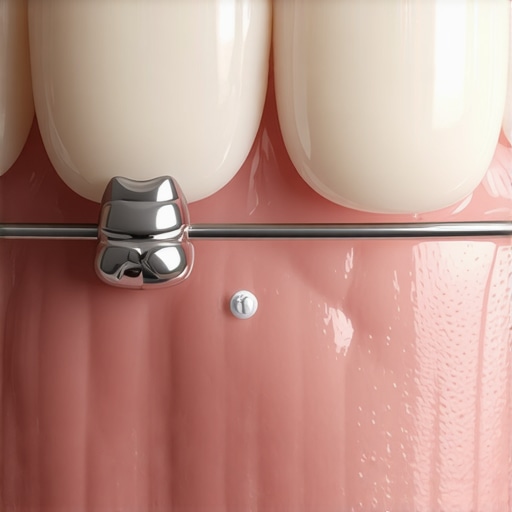
For those who chose the clear route, don’t think you’re totally safe from irritation. One of the most common Invisalign myths debunked is that they are 100% smooth at all times. New trays can have “flash”—tiny plastic burrs from the manufacturing process—that can slice your tongue just as badly as a metal wire. Furthermore, if you’ve noticed why your Invisalign trays feel tighter on some days than others, it’s usually due to minor inflammation or slight shifts in your roots that change how the plastic sits against your gums. The “trap” here is ignoring the sharp edge and letting a mouth sore develop into a full-blown infection. You can actually use a very fine nail buffer to smooth out a scratchy aligner edge, but only on the very perimeter. Have you ever fallen into this trap of trying to ignore a “small” irritation until it became a huge painful ulcer? Let me know in the comments!
Stop the Build-Up with My Personal Cleaning Essentials
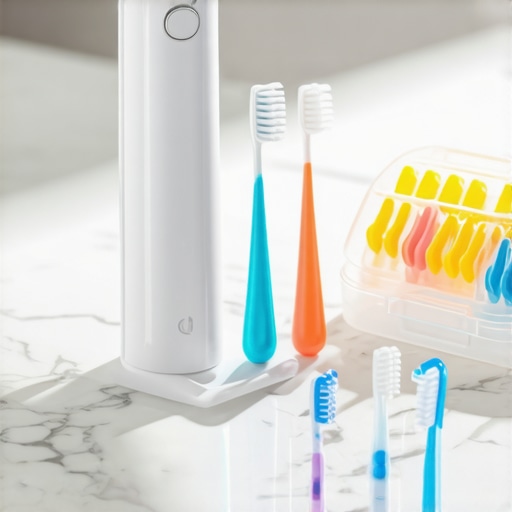
Once you’ve survived the immediate crisis of a poking wire or a scratchy aligner, you realize that the real work begins with daily maintenance. I used to think a standard toothbrush was enough until I looked at my dental x-rays and saw the hidden tartar between my molars. Now, my bathroom counter looks like a mini-clinic. I swear by the high-frequency vibrations of a sonic brush, but you have to know the safest way to use an electric toothbrush on sensitive teeth to avoid wearing down your enamel. For those with braces or permanent retainers, traditional floss is a nightmare. I’ve switched entirely to interdental brushes—specifically the TePe brand—because they reach the ‘col’ area of the gum where most infections start. Using these tools correctly is one of the best family dentistry secrets maintaining oral health with modern techniques at 254 pm that I’ve learned over the years.
How can I keep my dental work in peak condition for years?
Maintenance isn’t just about cleaning; it’s about protecting the investment you’ve made in your mouth. If you have restorative work, you should refer to the ultimate guide to crowns for a healthier smile to ensure you aren’t accidentally shortening their lifespan with abrasive whitening pastes. I personally use a water flosser every single night. It’s non-negotiable, especially when trying to master the best strategy for flossing when your teeth are tightly crowded. According to a landmark study published in the Journal of Clinical Periodontology, interdental cleaning is significantly more effective at reducing gingivitis than toothbrushing alone, yet so many of us skip it because it feels like a chore. If you are mid-treatment with clear aligners, learning how to keep your breath fresh while wearing invisalign trays all day involves more than just mouthwash; it’s about the enzymatic cleaners you use to soak your trays while you eat.
The High-Tech Future of Your Family Dental Care
We are moving toward an era where you won’t have to guess if your teeth are moving correctly. I’m already seeing a massive shift toward AI-integrated dental monitoring. Imagine a world where you take a weekly scan of your mouth with your smartphone and an algorithm tells your orthodontist exactly how your roots are responding. This isn’t science fiction; it’s part of the invisalign innovations the future of family dentistry revealed at 1137 am that are currently rolling out. This level of precision means fewer office visits and much faster results for the whole family. Whether you are following top oral health tips for your family’s bright smiles or preparing for a major procedure, the focus is shifting from reactive fixes to proactive, data-driven prevention. I predict that within five years, we will see 3D-printed ‘smart’ retainers that can sense bruxism and alert you through an app.
Try This Professional Hack Tonight
I want you to try one specific advanced tip: the ‘dry brushing’ method before your regular routine. Spend two minutes brushing with a completely dry, soft-bristled brush to feel exactly where the plaque is ‘fuzzy’ on your teeth. It’s a game-changer for spatial awareness in your mouth. If you’ve been struggling with a wire that won’t stay put or a crown that feels off, don’t wait for the pain to become unbearable. Take a moment to check out family dentistry trends improving oral health for all ages to see how modern tech can simplify your life. If you have questions about your specific hardware, my best advice is to reach out to a professional through a contact us page to get the expert eyes you need on the situation.
Small Shifts That Changed My Dental Game
After years of navigating brackets and wires, I’ve realized that discomfort is often the loudest way your mouth tells you it’s changing for the better. One major lightbulb moment was realizing that proactive care beats reactive repairs every single time. If you wait until you’re bleeding to apply wax, you’ve waited too long. Another hard-earned lesson? Your orthodontic journey is a partnership. If you aren’t using family dentistry secrets maintaining oral health with modern techniques, you’re making the process harder than it needs to be. Finally, remember that “sharpness” is subjective; if it bothers you, it’s a real problem worth fixing immediately, rather than “toughing it out.”
My Personal Ortho Survival Gear
I don’t leave the house without a small “emergency bag” that has saved me more times than I can count. First, I highly recommend Gishy Goo—it’s a silicone-based alternative to wax that stays in place much longer and doesn’t crumble during a meal. Second, for those tricky gaps, nothing beats the precision of TePe interdental brushes. They are far more effective than string floss for those of us with hardware. I also suggest keeping a digital copy of top oral health tips for your family’s bright smiles on your phone to remind you of the “why” behind the daily grind. Lastly, if you ever experience a sharp edge on a tooth itself, knowing how to stop a sharp tooth from cutting your tongue is a skill that translates perfectly from braces to natural dental care.
The Last Mile to Your Best Smile
The journey to perfect alignment is rarely a straight line, but every small fix brings you closer to that final, confident reveal. Whether you’re debating invisalign vs braces or you’re already deep in the metal-and-wire stage, your commitment to comfort and hygiene is what ensures a lifetime of health. Don’t let a single poking wire discourage you from the incredible progress you’ve made. Your future smile is worth every piece of wax and every quick clinic visit. Have you ever had a wire poke you at the absolute worst possible moment? Let me know in the comments how you handled it!