
The trick to eating corn on the cob with dental implants

The smell of charcoal was in the air, my plate was loaded with potato salad, and right there in the middle sat a glistening, butter-slathered ear of corn. I hesitated. My hand literally shook as I reached for it. Just six months prior, I’d invested a small fortune in my smile, and the horror stories of loose screws and ‘clicking’ sounds were playing on a loop in my head. I took one timid bite, felt that weird lack of ‘give’ that only we implant owners know, and immediately put the cob back down. It was embarrassing. I felt like I’d traded my favorite food for a pretty smile. But here is the thing: you don’t have to choose between the two. After a few messy trials—and one very helpful chat with my dentist—I discovered the ‘off-the-cob’ method isn’t the only way to live. Today, I’m sharing the exact technique I use to enjoy every kernel without that terrifying pressure on my jaw. Have you ever sat through a dinner party afraid to take a bite of something crunchy?
Why Your New Smile Feels Different When You Bite
When I first finished my recovery from dental implant surgery, I expected my mouth to work exactly like it used to. I was wrong. Natural teeth are suspended by the periodontal ligament, which acts like a tiny shock absorber. Implants, however, are fused directly to your bone. This is why your dental implant feels different than a natural tooth when you bite; there is zero cushion. Early on, I made the mistake of trying to ‘rip’ the corn off the cob with my front implants just like I did when I was ten. Big mistake. It didn’t break the implant, but the vibration sent a jarring sensation through my skull that made me think I’d ruined everything. According to the American Academy of Implant Dentistry, while implants are incredibly durable, they lack the nerve endings to sense the amount of pressure you are applying, which makes it easy to overdo it.
Are Implants Actually Strong Enough for Summer BBQs?
You might be skeptical. I certainly was. I spent months sticking to soft foods like I was still a fresh surgery patient, even though I was fully healed. I was terrified that a single cob of corn would be the end of my investment. But the truth is, once they are integrated, they are rock solid. The secret to making your dental implants last for the rest of your life isn’t about avoiding food; it’s about changing your mechanics. We’re going to dive into the ‘Lateral Slice’ technique next, which changed my life at the grill.
Forget the Front Teeth: Use the Lateral Slice Instead
The biggest mistake we make is treating our implants like the teeth we were born with. When you bite into corn, you aren’t just applying vertical pressure; you’re applying a shearing force. Since implants don’t have that ‘give’ provided by a ligament, that force goes straight to the bone. To avoid that jarring vibration, I started using the ‘Lateral Slice.’ Instead of biting directly into the cob with my front teeth, I angle my head and use my natural molars to shear the kernels off sideways. It’s like using a pair of scissors instead of a hammer. I remember my first Fourth of July after the procedure. I was so nervous I actually brought a small paring knife to the picnic table. It felt silly until I realized how to stop your dental implant from trapping food every time you eat by simply being more strategic with my angles and choosing the right side of my mouth for the heavy lifting. 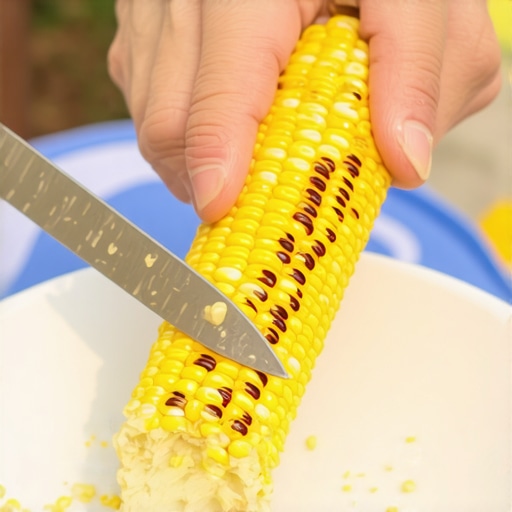
Treat Your New Crown Like a Ceramic Shield
If you have a mix of implants and traditional restorations, you need to realize that the ultimate guide to crowns for a healthier smile usually emphasizes protection over brute force. Think of your crown like a ceramic shield; it’s incredibly strong against compression (crushing) but can be brittle if you try to use it as a lever. When you’re at a BBQ, don’t use your crowned teeth to pry open a pistachio or rip through tough jerky. This is one of those family dentistry secrets maintaining oral health with modern techniques that people often forget: load distribution is everything. If the bite feels ‘high’ or uncomfortable, you might need to investigate why your new zirconia crown feels taller than your other teeth, as an uneven bite will only make eating corn more difficult.
The Three-Finger Rule for Safe Chewing
One trick my dentist taught me is the ‘three-finger rule.’ If the piece of food you are about to bite is wider than three of your fingers, you shouldn’t be biting it with your front teeth—implant or not. Cut it down. At that same BBQ, I finally gave up on the ‘macho’ way of eating corn and just sliced the kernels into a bowl. I added some lime and cotija cheese, making a makeshift elote. Not only was it safer for my jaw, but it also prevented that nagging sensation where your dental implant area feels itchy during the recovery phase from being aggravated by constant, harsh friction against the gums.
Avoid ‘The Rip’ Movement at All Costs
We often use our teeth as tools without thinking. We bite and pull. With a natural tooth, the ligament handles that tension like a bungee cord. With an implant, that tension is a direct tug on the jawbone. If you must eat off the cob, use your canines—they are naturally designed for tearing—and keep the pressure light. If you feel a ‘thud’ or a vibration in your jaw, you’re biting too hard. It’s about retraining your brain to recognize that your new teeth are powerful but rigid. If you’ve ever felt your gums throb after you use a water flosser for the first time, you know how sensitive the surrounding tissue can be to new pressures. Respect the bone-to-metal bond.It is a common misconception that once the titanium is integrated and the porcelain is cemented, your dental journey is finished. I fell into that trap early on. I assumed that because my implant could not develop a cavity, I could be less diligent with my routine. That is a dangerous myth. While the implant itself is immune to decay, the soft tissue surrounding it is actually more vulnerable to inflammation and ‘peri-implantitis’ than the gums around a natural tooth. This is why choosing the right crown expert advice for long-lasting results focuses so heavily on the biological width and the margin where the restoration meets your gum line. If you neglect the base, the most expensive crown in the world won’t save the implant.
The Whitening Trap That Leaves Your Smile Two-Toned
One ‘oops’ factor I see constantly in patient circles is the attempt to whiten a smile after receiving a major restoration. Here is the nuance: porcelain and zirconia are completely resistant to bleaching agents. If you start using high-strength whitening strips, you are only lightening your natural enamel. This often leads to a mismatched look where you wonder why your porcelain crown looks darker than your natural teeth. It didn’t actually change color; everything around it did. Always whiten your teeth before the final crown is color-matched, or you’ll be stuck in a cycle of uneven shades.
Why Do My Implants Feel Colder Than My Real Teeth?
This is a sophisticated question that usually pops up during the first winter or after a large iced coffee. Titanium is a metal, and metals are significantly more efficient thermal conductors than the natural dentin and pulp of a tooth. A study published in the Journal of Prosthetic Dentistry confirms that dental implants can transfer thermal changes to the surrounding bone much faster than natural teeth. This is exactly the reason your dental implant feels colder than your natural teeth. It is not a sign of failure, but a physical reality of having a metal-to-bone connection. 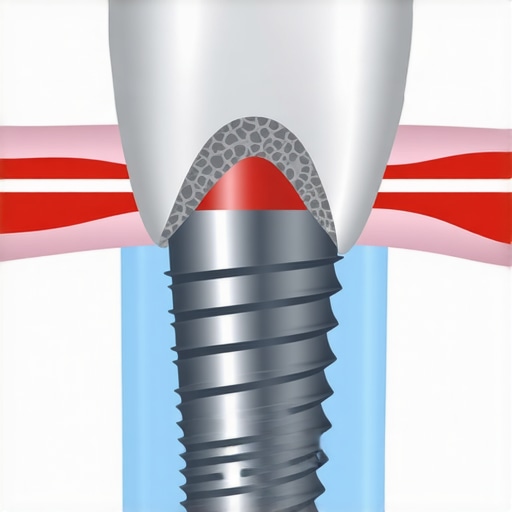
Modern Techniques Require Gentler Tools
Another mistake is over-aggressive cleaning. Many people think they need a ‘heavy duty’ approach to keep their fake teeth clean, but the truth about charcoal toothpaste and its effect on your enamel and restorations is that it can be too abrasive. It can actually micro-scratch the glaze of a crown, making it more susceptible to staining over time. Using family dentistry secrets maintaining oral health with modern techniques means opting for low-abrasive pastes and soft-bristled brushes to protect that polished finish. Even with orthodontic solutions, the ‘hidden’ nuances matter. Some of the most frequent invisalign myths debunked what you need to know today involve the idea that you can leave the trays out for hours. This lack of consistent pressure leads to ‘tooth lag,’ which explains why your teeth feel loose during the middle of invisalign treatment as they are constantly pushed and then allowed to drift back. Have you ever fallen into this trap of thinking your dental work was indestructible? Let me know in the comments.I used to think the surgery was the finish line. I spent months researching and worrying about the procedure, but once the titanium was in and the porcelain was set, I realized the real journey had just begun. If you want to keep that investment looking as good as the day it was placed, you have to upgrade your toolkit. I ditched the traditional string floss almost immediately. Trying to navigate under a fixed bridge with a threader felt like trying to thread a needle in the dark while wearing oven mitts. Instead, I transitioned to a high-powered water flosser. If you have ever felt your gums throb after you use a water flosser for the first time, you know there is a learning curve, but it is the only way to reach the areas where your dental implant is trapping food every time you eat. Use lukewarm water and start on the lowest pressure setting; your gum tissue will thank you.
Stop Fighting Your Gums with String Floss
Beyond the water flosser, I have become obsessed with the ‘Munchie’ technique. If you are currently in the middle of clear aligner treatment, you know the frustration of a tray that just won’t seat properly. Instead of just biting down on your teeth, using a silicone chewing device helps engage the aligner with the attachment. I learned how to seat stubborn invisalign trays using the munchie technique and it drastically reduced my discomfort. For those with restorations, choosing the right crown expert advice for long-lasting results means more than just a good fit; it means having a maintenance plan that includes non-abrasive cleaners. I personally swear by a specific routine for my removable pieces. I found that the vinegar soak that safely sanitizes your retainers and guards is far more effective and less chemical-heavy than those expensive store-bought tablets. 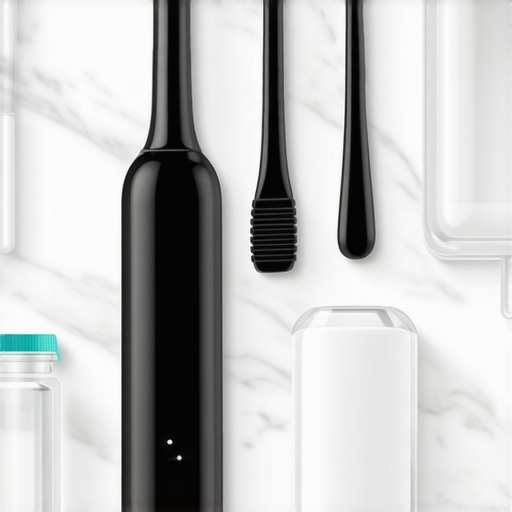
How do I maintain my dental implants and crowns for life?
Long-term success is 90% what you do at home and 10% what happens in the chair. According to a study published in the Journal of Clinical Periodontology, water flossing can be up to 29% more effective than traditional string at removing plaque around implants because it can reach the 360-degree ‘cuff’ of the gum tissue that surrounds the post. I make sure to use a specialized sonic toothbrush with a sensitive head to avoid micro-scratching the glaze on my crowns. This is the secret to making your dental implants last for the rest of your life: treat them like a delicate piece of fine jewelry, not a construction tool.
The Digital Future of Family Dental Care
Looking ahead, I am convinced that the ‘dentist visit’ as we know it is about to change. We are already seeing family dentistry trends improving oral health for all ages through AI-driven diagnostics. I predict that within the next five years, we will be using smartphone attachments to take 3D scans of our own mouths at home, sending the data to our dentists to catch inflammation before it becomes a problem. We already see how invisalign transforms family dentistry in 2025 by using remote monitoring, and this will soon apply to every crown and implant. No more ‘waiting for it to hurt’ before you book an appointment. If you haven’t already, I strongly encourage you to try the vinegar soak for your night guards or aligners tonight. It’s the easiest, cheapest way to keep your hardware fresh and clear. Have you tried any ‘old school’ hacks for your high-tech dental work?
What My Dentist Forgot to Mention About Living with Titanium
After years of navigating the world of restorative dentistry, I realized that the real secret isn’t just the surgery—it’s the daily maintenance. One of the biggest lightbulb moments was realizing that my implants aren’t indestructible shields; they are high-precision instruments that require a different kind of care. I learned that biologic width matters as much as the crown itself, which is why choosing the right crown expert advice for long-lasting results is the most important decision you will make after your initial healing. Another hard-earned lesson? Your gums around an implant are your first line of defense, so don’t ignore them if they feel ‘different’ than your natural teeth. You have to be proactive because the titanium doesn’t have nerves to tell you when something is wrong.
My Personalized Toolkit for a Bulletproof Smile
You do not need a drawer full of gadgets, but you do need the right ones. My daily routine revolves around three non-negotiables. First, a high-quality water flosser is essential for getting under those complex restorations. If your gums throb after you use a water flosser for the first time, do not panic; it is often a sign you are finally reaching the bacteria that traditional string floss misses. Second, I rely on family dentistry secrets maintaining oral health with modern techniques like using low-abrasive paste to keep my porcelain gleaming without micro-scratches. Finally, for anyone with night guards or aligners, the vinegar soak that safely sanitizes your retainers and guards is a total game-changer for keeping things hygienic without harsh chemicals.
#IMAGE_PLACEHOLDER_E#
Own Your Smile Every Single Day
The journey to a perfect smile does not end with the final cementation; it is a living, breathing part of your lifestyle. Staying ahead of family dentistry trends improving oral health for all ages will keep you informed about new ways to protect your investment for decades to come. Your teeth, whether natural or bio-engineered, are the foundation of your confidence and long-term oral health. Do not be afraid to eat, laugh, and live fully. With the right technique and a bit of patience, you will find that your new smile is even more resilient than the one you started with. Have you ever found a specific food that made you nervous after dental work? Let me know your tips for tackling tough bites in the comments!