
Why your dental implant feels loose when you wake up
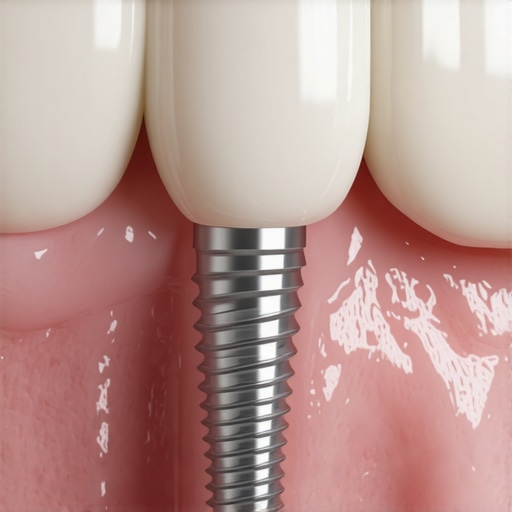
I remember the exact morning the panic set in. I rolled over, reached for my water glass, and my tongue absentmindedly brushed against my lower left molar. My heart skipped a beat. It wasn’t a sharp pain, but a sickening micro-movement—a tiny wiggle that definitely wasn’t there when I went to sleep. I stood in front of my bathroom mirror at 6:15 AM, poking at my gums, convinced that my expensive investment was about to fall out right into the sink. If you are reading this because you just felt that same terrifying shift, take a deep breath. You aren’t losing your mind, and you probably aren’t losing your tooth either. Today, we are going to dive into why this happens specifically overnight and exactly what you need to do before your morning coffee to protect your smile.
Stop the Panic and Check Your Morning Bite
The first thing I did wrong when I felt that wiggle was trying to ‘test’ it by biting down hard. Big mistake. I thought I could somehow snap it back into place, but all I was doing was risking damage to the abutment. What I eventually learned is that your implant isn’t actually a part of your bone in the same way a real tooth is; it is a mechanical assembly. Often, that loose feeling isn’t the metal post in your jaw failing, but rather the crown or the tiny screw inside it coming slightly untucked. It is essential to understand why your dental implant feels different than your natural teeth because it lacks the periodontal ligament that acts as a shock absorber. When you wake up with that ‘off’ sensation, it is usually because you’ve spent eight hours putting lateral pressure on a rigid structure that wasn’t designed to bend. Have you ever woken up with a sore jaw only to notice your tooth feels slightly mobile?
Is my jawbone actually rejecting the metal?
This is the big fear, isn’t it? We assume the worst—that our body is suddenly fighting the titanium. However, according to the American Academy of Implant Dentistry, while implants have a 98% success rate, mechanical issues like a loosening screw are the most frequent minor complication. In my case, the ‘wiggle’ was actually caused by nocturnal bruxism. I was grinding my teeth so hard in my sleep that I was literally unscrewing my own dentistry. If you find yourself in this boat, you might need to look into how to stop grinding your teeth without an expensive night guard to prevent the constant vibration from backing that screw out. Even though the truth about how long dental implants actually last is usually ‘a lifetime,’ that only applies if the hardware stays tight and the surrounding tissue stays healthy. If you’re feeling a bit of tenderness along with the looseness, a quick salt water rinse trick for a sore mouth can help calm the area until you can get to the chair. Let’s look at the mechanical reasons why the morning is the prime time for these discoveries.
The Gentle Finger Test to Gauge the Wiggle
When you first feel that movement, your instinct is to wiggle it constantly with your tongue. Stop. Your tongue is a powerful muscle, and constant nudging can worsen a loose connection. Instead, wash your hands and use your index finger and thumb to gently—very gently—grasp the crown. Try to see if the movement is coming from the tooth itself or if the entire assembly, including the gums, seems to be shifting. Think of it like checking a loose tile on a floor; you want to know if the tile is cracked or if the adhesive underneath has failed. Usually, it is the ‘adhesive’—or in this case, the internal screw—that has backed out. If you notice any redness or swelling during this check, you might be dealing with more than just a mechanical slip, and you should consider the salt water rinse trick for a sore mouth to keep the area clean until your appointment. Unlike a natural tooth, which is held by flexible ligaments, an implant is fused directly to bone, so any movement is a sign that the mechanical hardware needs a literal tune-up. This is one of the many reasons why your dental implant feels different than your natural teeth.
Think of Your Implant Like a Loose Doorknob
I once spent an entire weekend terrified that my implant was rejected by my body, only to find out it was essentially a loose doorknob. My dentist explained that the implant post is the ‘frame,’ and the crown is the ‘knob.’ If the screw holding the knob to the frame gets loose, the door still works, but the handle feels flimsy. That is exactly what happens when your abutment screw loses its torque. 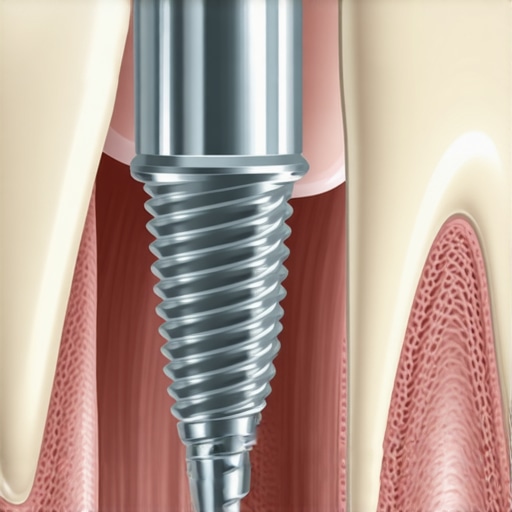 If you feel a strange sensation when speaking, it is likely because the loose crown is creating a tiny gap where air or saliva escapes. This mechanical vibration is actually a common complaint, and understanding why your dental crown feels like it is vibrating can help you distinguish between a minor screw issue and a major bone problem. If the wiggle feels more like a clicking sound, it might be related to your bite alignment. Stress-induced tension often causes us to clench, which is why your jaw clicks more when you are stressed at work and why that extra pressure might have loosened the hardware in the first place.
Stop the Grinding Before It Snaps the Hardware
If your implant feels loose specifically in the morning, the culprit is almost certainly nocturnal bruxism. You are essentially using your jaw as a nutcracker for eight hours straight. To prevent the screw from backing out again once the dentist tightens it, you have to address the force. Learning how to stop grinding your teeth without an expensive night guard can save your investment from snapping under the pressure. High-torque forces can also cause minor damage to the porcelain, which explains why your porcelain crown has a tiny chip on the edge if you have been grinding for months without realizing it.
Protect the Threading at All Costs
Until you can get into the dental chair, you must treat that tooth like it is made of glass. Avoid any ‘sticky’ or ‘chewy’ foods that could create a suction effect and pull the loose crown entirely off the post. Stick to a soft diet, similar to what to eat after getting a new dental crown, to minimize lateral forces. If you are in the middle of a meal and feel a shift, do not try to ‘bite it back into place.’ I once tried to ‘reset’ a loose bridge while eating steak, and I ended up stripping the internal threads of the abutment. If you find yourself in a similar situation, knowing what to do if your dental bridge comes loose during dinner can prevent a simple tightening procedure from turning into a full hardware replacement. Keep the area brushed gently and avoid using a water flosser on high pressure directly against the loose margin, as you don’t want to force bacteria into the gap between the loose crown and the gum line.Let’s dig deeper into a nuance that almost every patient—myself included—gets wrong. We often treat our implants as if they are ‘set and forget’ fortresses, but the reality is they require a more surgical level of hygiene than a standard tooth. The biggest trap you can fall into is believing that if it doesn’t hurt, it isn’t broken. Because implants lack nerves inside the ‘root,’ you won’t feel a cavity or a minor infection until it has already compromised the bone. This is why following top oral health tips for your family’s bright smiles is even more critical when you have metal hardware involved. You might think ‘more pressure equals cleaner,’ but that is a dangerous mistake. In my experience, I used to scrub my implant area with a firm brush, thinking I was being thorough. In reality, I was damaging the mucosal seal—the thin layer of gum that keeps bacteria away from the titanium post. A study published in the Journal of Oral Implantology suggests that mechanical stress, often from poor bite alignment or nocturnal grinding, is a leading cause of screw loosening. If you find yourself over-scrubbing, you need to understand the truth about soft vs hard toothbrushes for receding gums before you accidentally push your gum line away from the abutment.
Why Does My Dental Implant Feel Colder Than My Natural Teeth?
It is a bizarre sensation, isn’t it? When you take a sip of iced water and that one specific spot in your mouth feels like an ice cube is sitting on it. This happens because titanium is a much better thermal conductor than natural dentin and enamel. It isn’t a sign of failure, but rather a quirk of the material. Understanding the reason your dental implant feels colder than your natural teeth can save you from a late-night Google-induced panic. However, if that coldness is accompanied by that ‘wiggle’ we talked about, it means the thermal change is reaching the internal screw through a newly formed gap. The ‘oops’ factor most people miss is ignoring the bite height. When I got my crown, I thought it felt a tiny bit ‘tall,’ but I figured I would just get used to it. That was the ‘trap.’ A crown that is even a fraction of a millimeter too high will take the brunt of every bite, eventually vibrating the screw loose. This is why choosing the right crown expert advice for long-lasting results is about more than just aesthetics; it is about the physics of your jaw. Utilizing family dentistry secrets maintaining oral health with modern techniques at 254 pm means catching these alignment issues before they turn into mechanical failures. Have you ever fallen into this trap of ignoring a ‘tall’ tooth? Let me know in the comments. 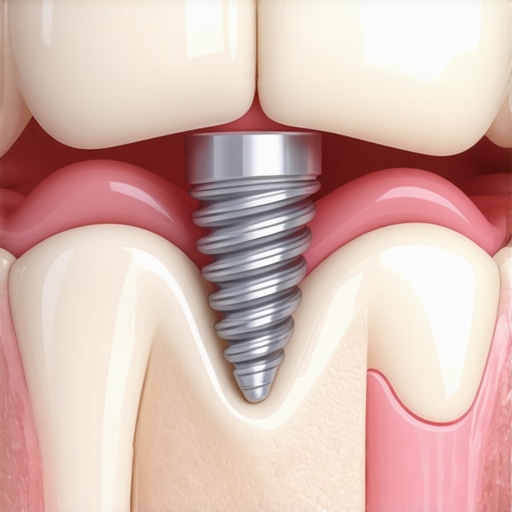
The Specific Gear I Use for a Life with Metal and Porcelain
Once the initial shock of a loose crown or a vibrating implant wears off, you realize that your standard toolkit needs an upgrade. You can’t just go back to the old ways of aggressive scrubbing and hoping for the best. I’ve found that the real secret to longevity isn’t just showing up to the office; it’s the specific high-frequency vibrations of a sonic toothbrush. According to research published in the International Journal of Implant Dentistry, sonic vibrations are significantly more effective at disrupting the biofilm around titanium abutments compared to manual brushing. I switched to a brush that delivers exactly 31,000 brush strokes per minute because it creates the micro-bubbles needed to reach under the gum line without having to press hard. This is the only way to protect that delicate mucosal seal I mentioned earlier. If you are worried about your gums pulling back, you should definitely check out the truth about soft vs hard toothbrushes for receding gums.
Why Your Water Flosser Technique Needs an Overhaul
I used to think my water flosser was a power washer for my mouth. I would crank it up to ten and blast away, only to realize I was potentially driving bacteria deeper into the peri-implant sulcus. Now, I use the ‘low and slow’ method. By keeping the pressure at a three or four, you flush out debris without compromising the attachment. To avoid a soaked bathroom, I learned the trick to using a water flosser without making a total mess, which involves keeping your head down and the tip slightly angled. For those of us with bridges or implants, this tool is non-negotiable for reaching the ‘dead zones’ that traditional floss just slides over. If you’re struggling with food traps, you might also find how to clean a dental bridge without those annoying threaders to be a massive time-saver in your nightly routine.
How do I keep my dental implants healthy for decades?
The long-term play for any implant is managing the forces of your bite. I truly believe that the next five years will bring us integrated bio-sensors inside our crowns that alert our phones when our bite pressure exceeds a certain threshold. Until that future arrives, we have to be our own sensors. This means being hyper-aware of how we clench when stressed. I’ve integrated family dentistry secrets maintaining oral health with modern techniques at 254 pm into my life by using biofeedback exercises to keep my jaw relaxed. Remember, the truth about how long dental implants actually last depends entirely on the stability of the surrounding bone.  If you notice any shift in your alignment, looking into invisalign innovations the future of family dentistry revealed at 1137 am might be the answer to redistributing that pressure before it causes another mechanical failure. My advanced tip for today: try the ‘N-Position’ for your tongue—rest the tip of your tongue on the roof of your mouth behind your front teeth whenever you aren’t speaking or eating. This naturally separates your teeth and prevents the micro-grinding that loosens those internal screws. Give it a shot for just twenty minutes while you’re at your desk today and feel the difference in your jaw tension.
What My Dentist Finally Admitted About Implant Maintenance
The hardest lesson I had to learn wasn’t about the surgery itself, but about the daily physics of the titanium root. No brochure tells you that your implant is essentially a high-precision mechanical assembly that needs a specific kind of respect. Here are the lightbulb moments that changed my perspective:
- The Screw is Often the Weakest Link: We immediately fear bone loss, but 90% of morning wiggles are actually caused by the internal screw losing its torque. It is a mechanical repair, not necessarily a medical emergency.
- Symmetry is Your Best Friend: If your crown feels slightly off, it’s a red flag. Knowing what to do when your crown feels taller than your other teeth can prevent the excess pressure that causes screws to back out in the first place.
- The Mucosal Seal is Sacred: That thin collar of gum tissue around the post is your only barrier against bacteria. Protecting it with soft-touch care is more important than aggressive scrubbing.
My Essential Toolkit for a Forever Smile
Longevity for dental implants requires more than just luck; it requires a curated set of tools that handle the hardware with care. I personally trust a sonic toothbrush to disrupt biofilm without mechanical trauma to the gums. For those hard-to-reach areas, the ultimate guide to crowns for a healthier smile suggests that keeping the area around the abutment pristine is the key to avoiding peri-implantitis. I also recommend checking in with choosing the right crown expert advice for long-lasting results to ensure your bite alignment is checked with 3D technology every few years. These tools aren’t just gadgets; they are the insurance policy for your investment.
#IMAGE_PLACEHOLDER_E#
Why Your Next Morning Check Will Be Stress-Free
Waking up with that tiny shift in your tooth can be terrifying, but it is often just your body’s way of signaling that a mechanical adjustment is needed. By staying proactive and focusing on top oral health tips for your family’s bright smiles, you can ensure that your implant remains a rock-solid part of your life for decades to come. Trust the science, listen to your jaw, and utilize family dentistry secrets maintaining oral health with modern techniques at 254 pm to stay ahead of the curve. Your smile is worth the extra attention. Have you ever noticed your bite feeling slightly different after a stressful week at work? Let me know your experience in the comments below!