
Why your jaw feels sore after a long phone call
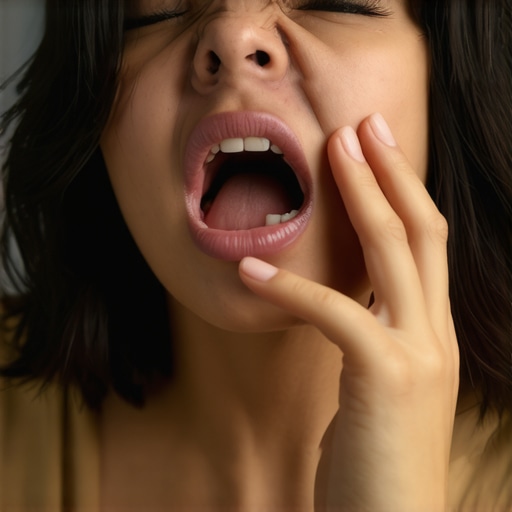
I hung up the phone after a forty-minute catch-up with my sister and felt like I had just gone ten rounds in a boxing ring with my own face. My jaw was throbbing, a dull ache radiated toward my ear, and when I tried to take a bite of my dinner, my teeth didn’t seem to line up quite right. It was a visceral, exhausting sensation that I used to ignore, chalking it up to just being tired. I spent years making the classic mistake of pinning my phone between my shoulder and my ear while I multi-tasked, thinking I was being productive. In reality, I was wreaking havoc on my temporomandibular joint and set myself up for a world of hurt that no amount of ibuprofen could truly fix. We have all been there, lost in a great conversation, only to realize later that our face feels like it is made of lead. Today, I want to share exactly why this happens and how you can stop your smartphone from becoming a source of chronic oral discomfort.
The Sneaky Reason Your Phone Calls End in Face Pain
The truth is that our bodies aren’t designed to hold a plastic brick against our heads for an hour. When we talk, we often subconsciously tense our facial muscles, especially if the conversation is stressful or intense. This muscle guarding leads to something dentists call myofascial pain. I remember one particularly stressful work week where my jaw clicked more when I was stressed, and every phone call seemed to amplify that clicking into a full-blown ache. It isn’t just the muscles, though; it is the position. Holding your jaw in a static, slightly open or shifted position for a long duration creates a massive amount of strain on the joint. If you are already prone to issues, you might find your jaw clicks even more when you are feeling tired after those late-night vent sessions. According to the Mayo Clinic, TMJ disorders can be aggravated by anything from jaw injury to the simple, repetitive strain of muscle tension. Have you ever noticed your face tightening up the moment you see a specific caller ID pop up on your screen?
Is this just a minor annoyance or a sign of something worse?
You might be wondering if a little post-call soreness is actually worth worrying about. For a long time, I thought it was just a quirk of my anatomy. But the reality is that persistent jaw tension can lead to bigger problems, like bruxism. I eventually had to learn how to stop grinding my teeth because those daytime phone habits were bleeding into my sleep. When we overwork these muscles during the day, they don’t just ‘turn off’ at night. They stay hyper-active, leading to that familiar morning soreness. If you have ever felt like your face feels sore after a night of heavy dreaming, your ‘phone jaw’ might actually be the culprit. It is a cycle of tension that starts with a simple ‘hello’ and ends with a compromised smile. We need to look at our oral health as a 24/7 commitment, and that includes how we handle our digital lives. Whether you are dealing with gums that feel like they are vibrating when you talk or a simple dull ache, it is time to change the way we communicate before our joints pay the ultimate price.
Put an End to the Phone-to-Ear Clamp
To stop the cycle of pain, you have to treat your jaw like a precision instrument rather than a vice grip. The first and most non-negotiable step is going hands-free. When you tilt your head to pin a phone, you are effectively asking your neck and jaw muscles to hold a ten-pound bowling ball at a precarious angle. This creates a chain reaction of tension. I forced myself to use a headset for three weeks straight after a particularly nasty episode where I felt like my molars were being crushed. The difference was night and day; the dull ache that usually lived behind my eyes simply didn’t show up.
Master the Tongue-to-Roof Technique
You can actually train your mouth to stay relaxed even during a heated conversation. Try the ‘N-position.’ Gently place the tip of your tongue against the roof of your mouth, just behind your front teeth, as if you were starting to say the letter ‘N.’ This naturally keeps your teeth apart and prevents clenching. It is like a built-in shock absorber for your face. If you find yourself slipping, especially when your jaw clicks more when you are stressed at work, this small adjustment can save you hours of post-work recovery. I started sticking a small post-it note on my monitor that just said ‘N’ to remind me. Within a month, my default jaw state shifted from ‘clenched’ to ‘neutral.’
Address the Structural Damage Before it Spreads
Sometimes the damage from years of poor phone habits has already altered your bite. If your teeth aren’t aligning correctly, no amount of headsets will fix the underlying mechanical failure. This is where how invisalign transforms family dentistry in 2025 comes into play. By gently shifting your teeth into their proper home, you reduce the ‘high spots’ that take the brunt of the force when you tense up. If you already have restorations and notice that your dental crown feels like it is vibrating during a call, it’s a major red flag that your bite is uneven. We are seeing incredible family dentistry trends improving oral health for all ages, focusing on proactive alignment rather than just reactive filling.
Stop the Lock Before It Happens
If you feel that tell-tale tightness creeping in during a long call, do not wait for it to pass. Perform a ‘soft opening.’ Gently open your mouth wide enough for two fingers to fit between your teeth and hold it for five seconds. This resets the muscle memory and prevents the joint from seizing up. Knowing how to stop your jaw from locking while you eat starts with these tiny interventions throughout the day. I used to think I was too busy to stop for five seconds, but I quickly realized I was much busier when I had a migraine and couldn’t open my mouth to chew my lunch.While managing daily tension is vital, there is a deeper layer to this that most people overlook. Most people treat a dental crown like a suit of armor that makes a tooth invincible, but in my experience, the porcelain isn’t the hero—it’s the margin. The common belief is that once a crown is seated, that tooth is ‘saved’ forever. However, the American College of Prosthodontists notes that the average crown lasts between 5 and 15 years, primarily because of marginal leakage where the crown meets the gum line. If your oral hygiene isn’t perfect, bacteria can slip under that expensive porcelain, causing decay that is nearly impossible to see until it’s too late. It’s why family dentistry secrets often revolve around maintaining those tiny transition zones rather than just the visible surface.
Can your brain actually trick you into thinking your bite is normal?
Our mouths have an incredible—and sometimes dangerous—ability to adapt. This is the ‘Oops’ factor I see most often: the ‘walk it off’ mentality. When you get a new restoration and feel like your crown feels taller than your other teeth, do not wait for it to ‘settle.’ Your teeth don’t compress like a pair of new shoes; instead, your jaw muscles just work overtime to avoid the high spot, leading back to that chronic facial pain we discussed earlier. If you ignore that tiny millisecond of early contact, you are essentially asking your temporomandibular joint to compensate 2,000 times a day every time you swallow. This is why how invisalign transforms family dentistry in 2025 is so revolutionary—it isn’t just about a straight smile for photos. It’s about creating a functional harmony where every tooth hits at the exact same time, preventing the kind of uneven wear that leads to cracked molars and failed crowns. If you’ve been following the ultimate guide to crowns, you know that the best crown is one that you literally cannot feel. Anything else is a red flag that your alignment is off. Have you ever fallen into this trap of ‘waiting it out’ with a dental fix? Let me know in the comments.
Waiting it out is usually the most expensive decision you can make in dentistry. I learned this the hard way when I ignored a slight ‘zip’ of sensitivity that eventually led to a root canal. If you want to avoid that outcome, you need better data than just ‘it feels fine.’ This is why I am such a huge advocate for advanced diagnostics. For example, finding the best dentistry in Culpeper VA usually starts with a 3d cbct scan. Unlike traditional flat X-rays, these 3D views let your dentist see the bone density and the exact position of your jaw joint in relation to your teeth. It takes the guesswork out of why your jaw might be clicking or why a specific tooth feels ‘off’ even when it looks perfect to the naked eye. Seeing what a 3d cbct scan reveals that standard x-rays miss entirely changed how I view my own checkups; it is the difference between looking at a map and actually being on the ground with GPS.
How do I maintain my alignment for the long haul?
Maintenance isn’t just about showing up for your six-month cleaning; it is about the tools you use in the trenches every morning and night. If you have been through the process of straightening your teeth, you know that the real work starts the day the attachments come off. To keep those results, you have to be obsessive about hygiene. I personally swear by a two-pronged approach: a high-quality ultrasonic cleaner for my retainers and a specialized cleaning routine. For my night guards, I use the vinegar soak that safely sanitizes your retainers and guards without using harsh chemicals that can degrade the plastic over time. This keeps the material clear and, more importantly, free of the bacteria that can cause gum inflammation while you sleep.
For the teeth themselves, I have moved away from traditional string floss for my daily ‘heavy lifting’ and transitioned to a water flosser. However, most people hate them because they end up soaking their bathroom mirror. The secret is the trick to using a water flosser without making a total mess: keep your head low over the sink and let the water flow out of your mouth naturally rather than trying to swallow it or keep your lips sealed. When you combine this with choosing the right crown expert advice for long lasting results, you create an environment where your restorations can actually beat the 15-year average lifespan. According to a study in the American Journal of Orthodontics and Dentofacial Orthopedics, digital scanning and 3D modeling have increased the accuracy of dental fitment by over 30%, which means your ‘maintenance’ job is much easier because the hardware fits better from day one.
The Future of Your Face is Digital
I predict that within the next five years, we will all have small AI-powered cameras at home that sync with our dentist’s office. We are already seeing invisalign innovations the future of family dentistry revealed at 1137 am that allow for remote monitoring of tooth movement. This trend toward ‘teledentistry’ means your provider can catch a shifting tooth or a receding gum line weeks before you feel any pain. This shift toward proactive, data-driven care is the ultimate ‘secret weapon’ for anyone over thirty. If you want to stay ahead of the curve, my biggest tip is to ask your dentist for a digital ‘baseline’ scan this year. Having a 3D record of your teeth while they are healthy gives you an exact blueprint to return to if you ever suffer an injury or significant wear. Don’t just brush and hope for the best; start tracking your oral health like you track your steps or your budget. Try the water flosser ‘lean-in’ technique tonight and see if it doesn’t change your entire perspective on flossing.
Hard Truths About Your Jaw That Took Me Decades to Accept
After years of navigating my own dental struggles, I have realized that the mouth is the most honest part of the body; it keeps a tally of every stressful phone call and every night spent clenching. The biggest lightbulb moment for me was accepting that my teeth aren’t just isolated islands—they are the final destination of a complex muscular chain. When you realize that a tight shoulder during a work meeting is actually the starting point for a cracked molar, you start to see the value in top oral health tips that focus on the whole person, not just the enamel. I also had to learn that procrastination is the most expensive dental procedure there is. Waiting for a ‘settling’ period that never comes is how we end up needing major restorative work instead of simple adjustments. Finally, I discovered that modern family dentistry secrets aren’t about complicated surgeries, but about the tiny, daily habits—like the N-position—that prevent the need for surgery in the first place.
The Gear That Keeps My Smile Stress-Free
I don’t believe in buying every gadget on the shelf, but there are a few non-negotiables that have fundamentally changed my comfort levels. First, a high-quality set of noise-canceling earbuds is a dental health tool in disguise because it eliminates the physical need to ‘clamp’ a phone to your ear. Second, I cannot recommend the ‘lean-in’ technique with a water flosser enough; it turns a messy chore into a quick, effective way to protect those vulnerable crown margins. Third, for anyone feeling like their bite is constantly shifting, looking into how invisalign transforms family dentistry in 2025 provides a technological roadmap to a balanced, pain-free jaw. I trust these methods because they move away from ‘fixing problems’ and toward ‘maintaining harmony.’
Walk Into Your Next Checkup with Total Confidence
Taking charge of your oral health doesn’t mean you have to be a dental expert; it just means you have to be an expert on how your own face feels. You now have the tools to recognize when a phone call is turning into a physical burden and the knowledge to speak up when a restoration doesn’t feel quite right. Whether you are choosing the right crown or simply trying to stop a clicking jaw, remember that you are the primary advocate for your own comfort. The future of your smile is bright, tech-focused, and, most importantly, within your control. Have you ever noticed that your jaw pain gets worse during specific types of phone calls? Let me know in the comments below.