
The best way to clean your mouth when you have the flu
Last winter, I was flattened by the flu. Truly out for the count. My throat felt like I’d swallowed a handful of thumbtacks, and my head was thumping like a bass drum. But the worst part? My mouth. It felt like a colony of tiny, fuzzy sweaters had moved onto my teeth. I was so exhausted that I skipped brushing for nearly two days—a huge mistake for someone who prides themselves on their knowledge of top oral health tips for your family’s bright smiles. I woke up with a taste so metallic and foul I thought I’d been chewing on pennies. That was my lightbulb moment. You can’t just ignore your mouth when you’re sick; it actually makes you feel worse. Today, I’m going to share the low-effort, high-reward ways to keep your oral health from cratering while you’re stuck in bed. We will solve the fuzzy teeth problem without you needing to stand at the sink for ten minutes.
Stop Letting Flu Breath Make You Feel Worse
When you’re congested, you breathe through your mouth. It’s unavoidable. This dries out your tissues and lets bacteria throw a party. I made the mistake of thinking my cough drops were cleaning things, but many are packed with sugar. You might also notice why your mouth feels dry when you take certain medications like antihistamines or decongestants. It’s a vicious cycle. Have you ever felt like your mouth was more miserable than your actual fever? Let me know in the comments if you’ve faced that same icky struggle. A simple salt water rinse trick for a sore mouth can do wonders, but we need to go deeper into actual cleaning. Research from the Journal of Infectious Diseases suggests that poor oral hygiene can even increase the risk of secondary respiratory infections during viral illnesses. Your mouth is the gateway, and we need to keep the gate guarded even when you are at your weakest.
Is it really worth the effort when I am this tired?
I get it. When your bones ache, the last thing you want to do is scrub. But if you don’t, those hidden spots most people miss while brushing their teeth become breeding grounds for germs that keep you feeling sluggish. I promise, the steps I’m about to show you take less than two minutes and do not require you to even stand up if you’re really struggling. We’ll even cover how to clean your tongue without triggering your gag reflex, which is a total lifesaver when you are already feeling nauseous from the fever. Let’s get into the practical, bed-side routine that saved my sanity during my last bout with the virus.
Build your survival kit before the fever peaks
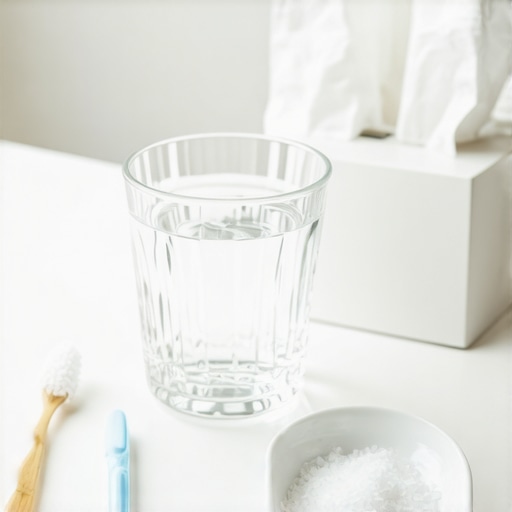
When the aches hit, your motivation to walk to the bathroom vanishes. I remember a particularly nasty bout of the flu where I tried to gargle while lying down—I ended up soaking my pillow and coughing for ten minutes. It was messy and miserable. To avoid that, you need a bedside dental kit. Grab a soft-bristle brush, two cups, a bottle of water, and a small towel. Many people debate the truth about soft vs hard toothbrushes for receding gums, but when you are sick, soft is the only way to go. Your gums are often inflamed from the systemic stress of the virus, and a hard brush will feel like sandpaper. Set this kit on your nightstand so you can manage your hygiene without ever having to find your slippers.
Brush your teeth without leaving the bed
You don’t actually need a sink to keep your teeth clean. Use the first cup to take a small sip of water to moisten your mouth, then apply a tiny pea-sized amount of toothpaste. Brush gently while sitting propped up against your pillows. Focus specifically on the hidden spots most people miss while brushing their teeth, like the very back molars where mucus tends to settle when you’re congested. When you’re done, spit into the second, empty cup. It’s not glamorous, but it’s effective. This prevents that ‘fuzzy’ feeling from turning into actual decay while you’re incapacitated. Think of it like a quick pit stop during a race; you aren’t doing a full overhaul, but you’re keeping the engine from seizing up.
Keep your tongue from becoming a bacterial sponge
Your tongue is basically a thick shag carpet that traps everything. When you have a cold, it collects post-nasal drip and dead white blood cells, which is why it looks white and tastes like old socks. This is the primary source of ‘flu breath.’ You need to scrape that layer off, but doing it while nauseous is a challenge. You have to learn how to clean your tongue without triggering your gag reflex by exhaling through your mouth as you move the brush or scraper forward. If you skip this, you’re just letting a reservoir of bacteria sit right at the entrance of your throat, which can actually prolong that raw, scratchy feeling.
Avoid the hidden sugar trap in recovery meds
Many of the things we use to feel better are actually terrible for our teeth. Cough syrups and lozenges are often loaded with sugar to make the medicine palatable. Since you likely have why your mouth feels dry when you take certain medications like decongestants, you don’t have enough saliva to wash that sugar away. This creates a sticky, acidic environment that eats at your enamel. If you are sucking on cough drops all night, you are essentially giving your teeth a sugar bath. Try to find sugar-free versions, or at the very least, take a swig of water after every dose of syrup. Even if you feel like why your mouth feels dry even when you drink plenty of water, that quick rinse after medicine is a non-negotiable step to prevent cavities. If your throat is too sore for solid food, stick to things like lukewarm broth or yogurt, which are among the best foods to eat when your new braces feel tight because they require zero chewing and won’t irritate your sensitive gum tissues.
Keep your Invisalign in even when you feel like quitting
One of the biggest mistakes I see—and I’ve been tempted myself—is thinking your orthodontic progress can take a ‘sick day.’ People often assume that leaving their aligners out for a few days won’t hurt, but this is one of those invisalign myths debunked by the reality of tooth movement. When your body is fighting an infection, your tissues are already inflamed. If you leave your trays out, your teeth begin to shift back, and when you finally put them back in, you’ll experience a localized inflammatory response. This is why your teeth ache for the first two days of a new aligner tray, and doing that to yourself while you already have a fever is pure misery. Unless you are physically unable to keep them in, stay the course to avoid a massive setback in your treatment timeline.
Does the acid from vomiting actually ruin your dental crowns?
It’s a blunt question, but a necessary one for anyone serious about family dentistry secrets. If your illness includes stomach distress, the gastric acid is far more corrosive than any soda. The ‘oops’ factor here is the instinct to brush your teeth immediately after being sick. Stop! Your enamel is in a softened, demineralized state. Brushing at that moment is like using a wire brush on wet pine; you are literally scrubbing your tooth structure away. Instead, rinse with a mixture of water and baking soda to neutralize the acid. This is vital because you might eventually wonder why your new crown feels sensitive to cold drinks, which can happen if acid has compromised the seal around the restoration. A study in the Journal of the American Dental Association (JADA) confirms that wait times of at least 30 to 60 minutes after acid exposure are crucial to prevent permanent erosive tooth wear.
Protect your investment when your body is at its worst
Staying updated on family dentistry trends means recognizing that oral health is systemic. When you are depleted, your gums are more prone to ‘pregnancy gingivitis’ style swelling, even if you aren’t pregnant, simply due to the immune response. If you have temporary dental work, you have to be tactical. Knowing how to floss around a temporary crown without pulling it off is a skill you’ll be glad you mastered before you’re trying to do it with shaky, feverish hands. Don’t let a temporary virus turn into a permanent dental bill. Have you ever fallen into the trap of letting your dental routine slide during a long illness? Let me know in the comments; I’d love to hear your survival stories.When I talk about maintaining a smile, I am not just talking about the manual toothbrush you get for free at the office. To really keep things working, I have moved almost entirely to high-pressure irrigation. I personally swear by the Waterpik Aquarius because of its ten pressure settings; specifically, I use setting 7 for my gum line and 4 for the delicate areas around my permanent retainers. If you have struggled with the learning curve, you need to learn the trick to using a water flosser without making a total mess—basically, keep your mouth slightly open and look at the sink, not the mirror. This tool is a game-changer for anyone with restorative work because it flushes out the debris that standard floss simply glides over.
How do I maintain my dental results over time?
Consistency is the obvious answer, but the how matters more than the how often. For those with aligners, maintenance means more than just rinsing them. You have to know how to clean a retainer that has sat out for too long using ultrasonic cleaners. I use a small ultrasonic pod with a cleaning tablet every morning. This vibrating bath removes the biofilm that your eyes cannot even see. When you scale this routine to include the whole family, you start to see how how invisalign transforms family dentistry in 2025 by making hygiene a tech-driven habit rather than a chore.
The tech that catches problems before they become expensive
Beyond simple tools, we have to look at the diagnostic side of maintenance. I have realized that why finding the best dentistry in culpeper va usually starts with a 3d cbct scan is because these scans show the bone density around your crowns and implants in ways 2D X-rays never could. A study published in the International Journal of Dentistry highlights that 3D imaging significantly improves the long-term success rates of restorative procedures by identifying sub-clinical periapical lesions. This means we catch the decay under a crown before it reaches the nerve. If you want to transform your smile, you need to be proactive with this level of detail. Looking ahead, I predict we will see a massive shift toward AI-integrated home monitoring. We are already seeing invisalign innovations that use smartphone apps to track tooth movement in real-time. Soon, your toothbrush will likely ping your dentist if it detects a change in the pH levels of your saliva. This is the future of family dentistry trends—moving from fixing it when it hurts to preventing it before it starts. The one advanced tip you should try today? Swap your nightly rinse for a xylitol-based mouthmelt. Xylitol actually disrupts the DNA of cavity-causing bacteria. It is a small tweak, but for long-term preservation of the truth about how long dental implants actually last, it is these chemical micro-habits that make the difference.
The Hardest Lesson I Learned While Stuck in Bed With a Fever
Getting sick taught me that oral health isn’t just about vanity; it’s a critical component of your overall recovery. Here are the lightbulb moments I had during my own recovery that changed how I view sick-day hygiene:
- The 48-Hour Cliff: I realized that skipping just two days of brushing leads to a thick biofilm buildup that can irritate gums for weeks. Don’t wait until you feel ‘well enough’ to get back to the sink; start from bed.
- Sugar is a Hidden Villain: Most liquid medicines and cough drops are syrupy to mask the taste, but they are an absolute disaster for your enamel. I learned the hard way that the truth about alcohol-based mouthwashes and chronic dry mouth is even more relevant when you are already dehydrated from a fever.
- Stress Shows in the Jaw: I noticed the reason your jaw clicks more when youre feeling tired is often due to the systemic inflammation and subconscious clenching that happens when your body is under viral attack.
My Favorite Tools for Low-Energy Dental Hygiene
When you simply can’t stand at the sink for ten minutes, these specific tools change the game. I rely on them to maintain my results without the burnout of a full routine.
First, a high-quality water flosser is non-negotiable. I use it at a lower setting to keep my gums healthy without causing further irritation to my sensitive tissues. Second, I always keep a pack of Xylitol-based tablets on my nightstand; they act like a tiny shield against cavity-causing bacteria when I’m too tired to move. Third, for the long-term, I prioritize checking the status of my existing restorations. Knowing what a 3d cbct scan reveals that standard x-rays miss entirely gives me peace of mind that no decay is hiding under my dental work while my immune system is distracted. These family dentistry secrets are the difference between a quick recovery and an expensive follow-up appointment once you’re healthy.
Protect Your Smile for the Long Haul
It is incredibly easy to let things slide when you are feeling your worst, but remember that your smile is one of your greatest long-term investments. By taking these tiny, two-minute steps from the comfort of your bed, you are ensuring that once your fever breaks, your confidence remains intact. You’ve invested time, effort, and money into your teeth—don’t let a temporary virus derail your orthodontic or restorative progress. Stay hydrated, stay rested, and keep that bedside dental kit within arm’s reach. Have you ever struggled with keeping up your dental routine while you were sick? Let me know your survival tips in the comments below!