
Why your new dental implant makes a clicking sound when you talk
I was sitting across from my best friend, mid-laugh, when I heard it: a tiny, rhythmic click coming from inside my own mouth. I froze. I had just finished my implant journey, and suddenly I sounded like a wind-up toy. My first instinct was pure panic. I thought the titanium post was snapping or that my jaw was rejecting the whole thing. It is a visceral, sinking feeling that makes you want to stop talking entirely. We spend so much time worrying about how long dental implants actually last that when they make a peep, we assume the worst. Today, I am going to walk you through exactly why that clicking happens, why it is usually a simple fix, and how to tell if you actually need to sprint to the dentist chair.
That Frustrating Noise When You Speak
When I first noticed the sound, I made a classic mistake: I ignored it for three weeks. I figured it was just my mouth settling in. That was a huge error on my part because it turned out to be a simple loose abutment screw that could have been tightened in five minutes. Instead, I spent twenty-one days anxious and chewing only on one side of my mouth. While it is true that a dental implant feels different than your natural teeth, it should never be audible. Most of the time, that clicking is just the crown—the tooth part—having a microscopic amount of wiggle room against the metal post. It is a specialized mechanical issue that requires a professional touch, much like how you would need expert advice for long-lasting results with any other restorative work.
Will my implant eventually just fall out?
This is the big fear, right? You think you are going to be mid-sentence and your new tooth is going to launch across the room. While it feels precarious, the sound is often mechanical rather than biological. According to research published in the Journal of Oral Implantology, mechanical complications like screw loosening are relatively common but easily managed by a professional. It does not mean your bone is failing; it usually means the hardware needs a literal tune-up. Think of it like a loose hinge on a cabinet door—it is annoying and makes noise, but the cabinet itself is not rotting off the wall. Have you ever noticed a weird sound or a click after getting dental work done? If you have dealt with this before, or if you are experiencing it right now, you know how much it affects your confidence. It reminds me of the struggle people have when learning the move to stop dentures from clicking. It is an adjustment period, but you should not have to live with a noisy mouth. Let us dive into the specific reasons your hardware might be talking back to you and what you can do about it before your next social outing.
The tiny screw that runs the show
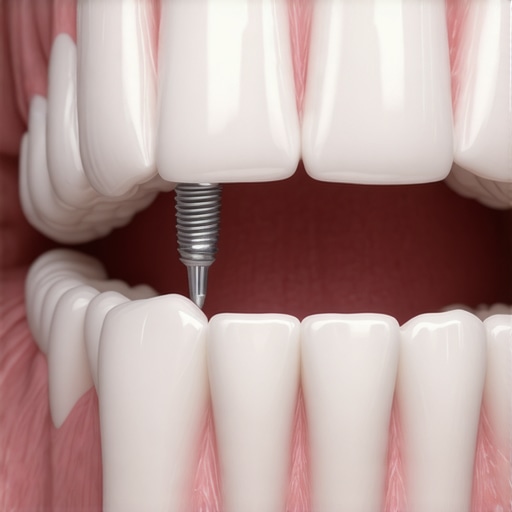
Most people think the implant is one solid piece of metal fused to the bone. In reality, it is more like a high-tech Lego set. You have the post (the root), the abutment (the connector), and the crown (the tooth). That clicking noise is almost always the abutment screw losing its ‘torque.’ Think of it like a lug nut on a car tire. If it is even a fraction of a millimeter loose, the whole thing vibrates. I remember sitting at a steakhouse, halfway through a ribeye, when I felt a distinct ‘thud’ followed by a click every time I chewed. I spent the next hour trying to use my tongue to ‘tighten’ the tooth back into place. Not only did it not work, but I ended up with a tongue cramp and a very sore jaw. It’s a common mechanical hiccup, much like why your dental crown feels like it is vibrating when things aren’t perfectly seated. Keeping up with family dentistry trends improving oral health for all ages means understanding that these mechanical components are designed to be serviced periodically. If you feel this vibration, the fix is usually as simple as the dentist using a tiny, calibrated torque wrench to snug that screw back down to the manufacturer’s exact specifications.#IMAGE_PLACE_HOLDER_B#
Test your bite before you panic
Sometimes the click isn’t the screw at all; it’s the way your teeth are hitting. If the crown on your implant is even a hair too tall, it takes the brunt of the force every time you close your mouth. This can cause the crown to flex slightly against the abutment, creating a rhythmic clicking sound. You might notice the specific reason your crown feels tall when you wake up is often due to nighttime grinding that has stressed the hardware. To check this at home, try to slide a piece of thin dental floss between the clicking tooth and its neighbor. If it’s stuck or if the click happens exactly when those teeth touch, your occlusion is off. This is a common issue where what to do when your crown feels taller than your other teeth involves a quick buffing by the dentist to level the playing field. This is why choosing the right crown expert advice for long-lasting results is so critical during the initial fitting phase.
Why DIY tightening is a disaster waiting to happen
I have heard stories of people trying to use tweezers or even tiny eyeglass screwdrivers to fix their own dental work. Please, do not be that person. These screws are made of specific alloys designed to stretch slightly when tightened to create a perfect seal. If you over-tighten them, you can snap the screw inside the implant post, which turns a five-minute fix into a surgical nightmare. If you notice why your dental implant feels loose when you wake up, it’s a sign that the internal tension has changed and requires a professional touch. Modern transform your smile how crowns boost oral health confidence at 815 am by being precisely engineered, but they still rely on that mechanical bond staying secure. Your dentist will use a specific tool to measure the ‘newton centimeters’ of force to ensure the screw won’t back out again. Identifying this early using family dentistry secrets maintaining oral health with modern techniques at 254 pm can save you from replacing the entire restoration.
The missing shock absorber you never knew you had
Beyond the mechanical screws, there is a biological nuance that almost no one talks about: the absence of a periodontal ligament (PDL). Your natural teeth are actually suspended in their sockets by thousands of tiny, springy fibers that act like shock absorbers. When you bite down too hard on a piece of crusty bread, these fibers signal your brain to let up. Dental implants, however, are osseointegrated—literally fused to the bone. This means they have zero ‘give.’ When a crown is even slightly misaligned, that lack of a buffer causes the metal-on-metal vibration you hear as a click. According to a study published in the International Journal of Implant Dentistry, the sensory feedback in implants is significantly reduced compared to natural teeth, which is why why your dental implant feels different than your natural teeth. This lack of a ‘warning system’ means that by the time you hear the clicking, the hardware has likely been under stress for weeks.
Why ‘breaking in’ a new crown is a dangerous myth
A common mistake I see—and one I personally fell for—is the belief that a new restoration needs a ‘breaking-in’ period. People often assume that if a crown feels a bit tall or makes a slight noise, it will eventually ‘settle’ into the gum line. This is a dangerous trap. While natural teeth can shift slightly to accommodate a new neighbor, an implant is a literal anchor. It is not going anywhere. If the bite is off, the force doesn’t move the tooth; it stresses the screw and the surrounding bone. Using family dentistry secrets maintaining oral health with modern techniques at 254 pm, we know that an improper bite is the leading cause of mechanical failure. If you are waiting for it to feel better on its own, you are actually just waiting for the screw to loosen further. This is where the ultimate guide to crowns for a healthier smile becomes essential reading, as it emphasizes that a perfect fit from day one is non-negotiable.#IMAGE_PLACE_HOLDER_C#
Can a clicking implant lead to bone loss?
The short answer is yes, but not in the way you might think. The clicking itself is a symptom of ‘micro-motion.’ When the crown or abutment wiggles, even by a few microns, it can create tiny gaps where bacteria love to hide. This can lead to peri-implantitis, a form of gum disease that attacks the bone holding the implant in place. It’s why why crowns are a game-changer in restorative dentistry only when they are maintained with surgical precision. If you ignore the sound, you risk the structural integrity of the entire site. I once met someone who thought the click was ‘just part of having a fake tooth’ until the entire post became unstable. Don’t let a simple maintenance issue turn into a total loss. Following top oral health tips for your familys bright smiles means being proactive about every sound and sensation. Have you ever fallen into this trap of thinking your dental work just needed time to settle? Let me know in the comments.
Tools that actually save your screw from loosening
I used to think a regular toothbrush was enough, but after my first scare with a clicking abutment, I realized that generic cleaning doesn’t cut it for titanium. I personally swear by the Waterpik Aquarius, specifically using the ‘Plaque Seeker’ tip. Why? Because the three thin tufts of bristles are the only thing I have found that can actually reach the base of the abutment where the crown meets the gum. Most people struggle with the trick to using a water flosser without making a total mess, but once you master it, it is the best defense against the bacteria that cause the micro-inflammation leading to hardware instability. Using family dentistry secrets maintaining oral health with modern techniques at 254 pm, I’ve learned that keeping the area ‘sterile’ (as much as a mouth can be) prevents the soft tissue from pulling away and letting that screw wiggle.
How do I maintain my dental implants over the long haul?
Maintenance is less about scrubbing and more about precision. You need to treat your implant like a piece of high-performance machinery. This means avoiding high-abrasive ‘whitening’ pastes that can scratch the porcelain or the exposed titanium collar. I recommend a low-RDA (Relative Dentin Abrasivity) toothpaste to keep the surface smooth, as scratches are basically luxury hotels for plaque. Additionally, scheduling a ‘torque check’ every few years—even if you don’t hear a click—is vital. Much like how Invisalign transforms family dentistry in 2025 by using data-driven tracking, your dentist can use a specialized gauge to ensure your implant screw hasn’t backed out by a single micron. #IMAGE_PLACE_HOLDER_D#
Smart sensors might be the next big thing for your smile
The future of this technology is incredibly exciting. We are moving toward ‘smart’ restorations. According to technical specifications from Straumann’s research division, the industry is experimenting with embedded piezo-electric sensors within the implant post. These sensors would theoretically alert your smartphone if the screw loses its tension or if the surrounding bone density changes. This aligns with broader Invisalign innovations the future of family dentistry revealed at 1137 am, where everything is becoming more proactive rather than reactive. Instead of waiting for a clicking sound, your tooth will literally tell you it needs a tune-up before you even feel a difference. It’s part of the top oral health tips for your familys bright smiles to stay informed about these shifts, as they will soon become the standard of care. For a quick win today, I want you to try the ‘Shadow Test’: take a bright flashlight in a dark room and shine it through the back of your implant crown. If you see a dark gap or a line of debris at the gumline that doesn’t move with floss, your seal might be compromised. Don’t wait for it to start talking back to you; get it checked before the click becomes a crunch.
What My Dentist Finally Told Me About My Talking Tooth
I learned the hard way that an implant is a high-precision mechanical system, not just a static piece of metal. Here is the insider wisdom I wish I had on day one. First, your ‘gut feeling’ about your bite is more accurate than any carbon paper test; if it feels off, it is off. Second, never assume a noise is just the implant ‘settling.’ Natural teeth settle, but titanium stays exactly where it is put. Third, the real secret to family dentistry secrets maintaining oral health with modern techniques at 254 pm is understanding that the screw is a consumable part that may need tightening over a decade. Finally, silence is the only acceptable sound for a healthy restoration. If you hear a click, you are essentially hearing the sound of friction, and friction in a dental environment always leads to wear.
The Toolkit That Keeps My Gums Happy
If you want to avoid mechanical failure, you need the right gear at home. I personally rely on the Waterpik Aquarius with the specialized Plaque Seeker tip. It is the only way to flush out the micro-gap where the crown meets the abutment, and mastering the trick to using a water flosser without making a total mess is a game changer for long-term stability. I also suggest using a low-RDA toothpaste like Sensodyne Pronamel to avoid scratching the hardware. For those who want to dive deeper into the technical side, the American Academy of Implant Dentistry (AAID) website is an incredible resource for patient education that goes beyond the basics. Combining these tools with the ultimate guide to crowns for a healthier smile will give you the confidence to manage your oral health like a pro.
Your Mouth Deserves to Stay Quiet and Healthy
You did not invest time and money into a new smile just to live with anxiety every time you chew. Dealing with a clicking dental implant can be stressful, but remember that most fixes are non-invasive and take less than fifteen minutes in the chair. By being proactive and choosing the right crown expert advice for long-lasting results, you ensure that your investment pays off for decades to come. Don’t let a tiny mechanical hiccup steal your confidence. Take charge, get that screw tightened, and get back to enjoying your life without the rhythmic soundtrack in your mouth. Have you ever felt a weird vibration or heard a click in your dental work? Let me know your experience in the comments below!