
Why your jaw clicks specifically when you chew gum or hard candy

I was sitting in a dark movie theater, trying to be discreet with a box of Milk Duds, when my jaw decided to announce itself to the entire row. Click. Pop. It sounded like a dry branch snapping right next to my ear. My date looked over, and I just froze, candy halfway through a chew, wondering if I had just broken something vital in my face. It was one of those moments where you realize your body isn’t as silent or cooperative as you would like it to be. If you have ever felt that weird, jumping sensation in your cheek while working through a piece of bubblegum or a piece of peppermint, you know exactly the mix of annoyance and mild panic I am talking about.
That Annoying Pop in Your Jaw Needs to Stop
For the longest time, I convinced myself this was just a “me” thing. I assumed I just had a loud skeleton. I even made the classic rookie mistake of only chewing on my left side for three months straight, thinking I was giving the “clicky side” a break. In reality, I was just creating a massive muscular imbalance that made the popping even louder once I finally went back to normal. If you have noticed that your jaw clicks more when you’re feeling tired or after a long day of talking, it is a sign that your system is overloaded. We are going to fix that today by looking at why hard textures act like a trigger for your joint and how you can manage the tension without giving up everything you love to eat.
Is a clicking jaw actually a sign of something serious?
This is the skepticism I see most often. “It doesn’t hurt that much, so why should I care?” I used to think the same thing until I learned about the little cushion of cartilage called the articular disc. This disc is supposed to slide smoothly when you open and close your mouth. When you hear that click, it is often that disc slipping out of place and then “recapturing” as you move. While it might feel like a minor quirk, ignoring it can lead to bigger issues down the road. According to the National Institute of Dental and Craniofacial Research, over 10 million people in the U.S. deal with these types of jaw issues, often linked to grinding during a stressful day or simple structural misalignment. When you bite into the specific food that cracks more teeth than anything else, your jaw is under immense pressure. Hard candy and chewy gum require repetitive, high-force movements that your TMJ might not be prepared for, especially if the muscles are already tight. It is like trying to run a marathon on a twisted ankle; eventually, something has to give. Have you ever had your jaw feel like it was “stuck” for a split second after a particularly tough piece of sourdough or a hard candy? [image_placeholder] Drop a comment below if you have experienced that—it is a lot more common than people admit, and honestly, it is terrifying the first time it happens. We aren’t just talking about a noise; we are talking about your comfort and your ability to eat without thinking about it. If your jaw feels sore after a long phone call or a stressful meeting, your chewing habits are likely just the tip of the iceberg. Let’s look at what’s actually happening inside that joint when the sugar hits.
Stop Treating Your Jaw Like a Nutcracker
To get that clicking under control, you have to start with a “soft food reset.” I remember one Saturday morning when I thought I could handle a toasted bagel with extra-thick crust despite my jaw feeling tight. Halfway through the first bite, my joint didn’t just click—it felt like a rubber band snapped inside my ear. I spent the next three days eating lukewarm soup and feeling like a fool. If you are in the middle of a flare-up, you need to mimic what to eat after getting a new dental crown. Think eggs, smoothies, and mashed potatoes. You are essentially putting the joint in a “cast” by not making it work so hard. This gives the inflammation around that articular disc a chance to subside.
Master the Resting Position
Most of us walk around with our teeth clenched without even realizing it. Your teeth should only touch when you are actually chewing or swallowing. For the rest of the day, you should practice the “lips together, teeth apart” rule. Imagine there is a thin grape between your molars that you don’t want to crush. This takes the constant pressure off the joint. If you find yourself clenching, the move to stop your teeth from grinding during a stressful day is to place the tip of your tongue on the roof of your mouth, just behind your front teeth. It is physically impossible to clench your jaw tightly with your tongue in that position. 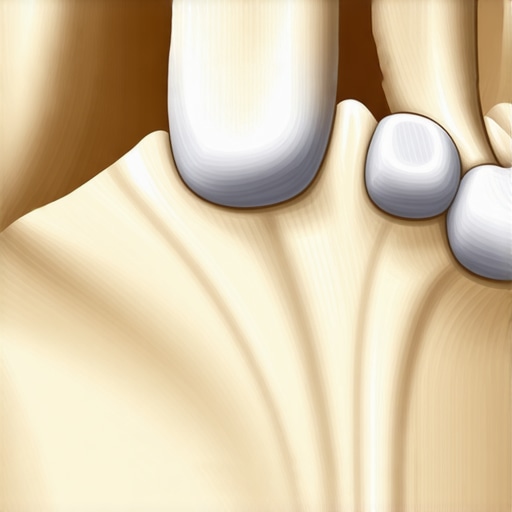
Address the Underlying Alignment
Sometimes, no amount of soft food will fix the click if your “gears” don’t mesh correctly. If your teeth are crowded or tilted, your jaw has to shift sideways just to get them to fit together when you bite. This constant zigzagging is what wears out the disc. Many people find that how invisalign transforms family dentistry in 2025 isn’t just about a straight smile; it is about putting the jaw in a neutral position. Similarly, if you have an old, worn-down filling or a tooth that has shifted, why crowns are a game-changer in restorative dentistry becomes clear: they can rebuild the proper biting height so your muscles don’t have to overcompensate.
Watch Out for Stealth Triggers
It isn’t just the candy; it is the environment. Have you noticed the reason your jaw feels tight after a long flight or a long drive? Dehydration and cabin pressure can actually make your connective tissues less pliable. When you combine that with the tension of travel, your jaw is primed to pop the second you chew on something firm. Carry a water bottle and consciously do “jaw yawns”—gentle, controlled openings—to keep the joint lubricated. If you have been ignoring a click while wearing old dental work, check how to tell if your dental bridge is trapping food or causing an uneven bite, as even a tiny piece of debris can change the way you chew and aggravate the TMJ.
Your Bite is More Than Just a Pretty Picture
Many people mistakenly believe that straightening their teeth is purely for the sake of a vanity project or a better profile in selfies. However, the biggest myth in modern oral health is that alignment is just about aesthetics. In my experience, focusing only on the look of your teeth while ignoring the mechanics of your bite is like putting a fresh coat of paint on a car with a broken transmission. If your molars don’t meet at the exact right micro-second, your jaw muscles have to ‘hunt’ for a comfortable resting place every time you swallow—which happens about 2,000 times a day. This constant searching is often the root cause of that clicking and popping we discussed. Modern [family dentistry secrets](https://familydentistpro.com/family-dentistry-secrets-maintaining-oral-health-with-modern-techniques-at-254-pm) involve looking at the mouth as a moving machine rather than a static photo. For many adults, [how invisalign transforms family dentistry in 2025](https://familydentistpro.com/how-invisalign-transforms-family-dentistry-in-2025) isn’t just about closing a gap; it is about realigning the tracks so the jaw joint can finally stop overworking.
Don’t Ignore the Taller Tooth Trap
One of the most dangerous ‘oops’ factors I see is when a patient gets a new restoration and thinks, ‘It feels a little high, but I’ll probably just wear it down or get used to it.’ This is a recipe for disaster. A crown that is even a fraction of a millimeter too high can cause what dentists call traumatic occlusion. According to a study published in the Journal of Prosthetic Dentistry, hyperocclusion (a high bite) can lead to acute pulpitis, where the nerve inside the tooth becomes inflamed purely from the mechanical shock of hitting its partner too hard. This is why [choosing the right crown expert](https://familydentistpro.com/choosing-the-right-crown-expert-advice-for-long-lasting-results) is vital; they will use articulating paper to ensure the force is distributed perfectly. If you have ever felt like your bite was ‘off’ after a procedure, [what to do when your crown feels taller than your other teeth](https://familydentistpro.com/what-to-do-when-your-crown-feels-taller-than-your-other-teeth) is to head back for a ten-minute adjustment before you trigger a full-blown flare-up of jaw pain. 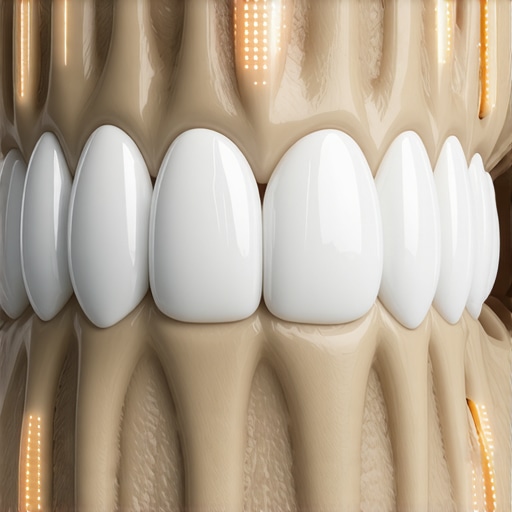
Does your brain actually know when your bite is off by a hair?
The nuance most people miss is the concept of proprioception—the way your brain perceives the position of your jaw. Your periodontal ligaments are packed with sensors that are sensitive enough to detect a piece of hair between your teeth. When you have a misalignment, your brain receives ‘error signals’ constantly, which leads to the protective guarding or clenching that causes [the move to stop your teeth from grinding during a stressful day](https://familydentistpro.com/the-move-to-stop-your-teeth-from-grinding-during-a-stressful-day) to be so difficult to master. This is why [the hidden benefits of invisalign for family dental care in 2025](https://familydentistpro.com/the-hidden-benefits-of-invisalign-for-family-dental-care-in-2025-at-903-am) are so significant; by moving the teeth into a neutral position, you are essentially ‘muting’ those stressful error signals to your brain. Have you ever fallen into the trap of ‘waiting out’ a dental discomfort only to have it turn into a larger issue? Let me know in the comments below, because sharing these experiences is how we learn to stop treating our jaws like nutcrackers and start treating them like the precision instruments they are.
Keep your high-tech dental work running like a Swiss watch
Once you have invested in your smile, the goal shifts from repair to preservation. I have found that the most successful patients are those who treat their mouth like a precision machine that requires regular tuning. To keep everything in sync, I have become obsessed with the water flosser. If you have a bridge or a crown, standard string floss can sometimes feel like you are trying to clean a narrow alleyway with a thread. A water flosser used at a medium-high setting can blast out debris that you did not even know was there, which is vital because how to tell if your dental bridge is trapping food is usually the first sign of a gum infection brewing. I also personally recommend using a high-quality night guard. Even if you think you have mastered the move to stop your teeth from grinding during a stressful day, your subconscious mind often works overtime while you sleep, putting immense pressure on your joints.
How do I maintain my dental results over the next decade?
The biggest mistake is thinking that once the Invisalign is off or the crown is seated, the work is finished. Your teeth are in a state of dynamic equilibrium; they are constantly under pressure from your tongue and cheeks. According to the American Association of Orthodontists, teeth can continue to shift throughout your entire life if not properly retained. This is why I am a stickler for the best way to clean your retainers without using harsh chemicals. If you neglect the retainer, you will find that why your invisalign trays feel tighter on some days than others becomes a permanent reality as your teeth drift out of alignment. Regular check-ups are not just for searching for cavities; they are alignment audits where we ensure that your transform your smile how crowns boost oral health confidence results are not being compromised by a shifting bite or wear and tear.
The future of the chair involves more than just a drill
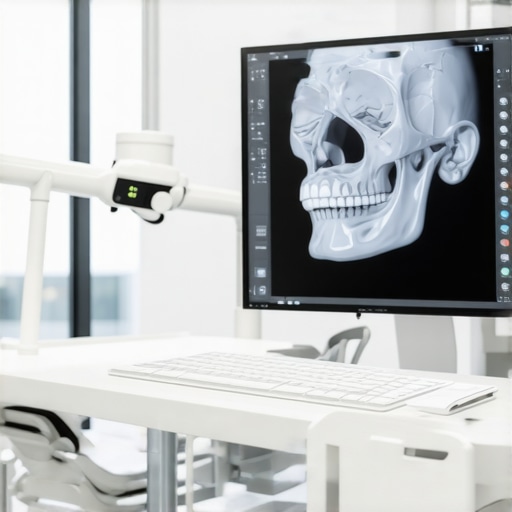
Looking ahead, the shift toward digital diagnostics is changing how we view long-term oral health. Specifically, invisalign innovations the future of family dentistry revealed will likely include AI-integrated apps that monitor your tooth movement via smartphone photos between visits. We are moving toward a world where your phone might notify you it is time for a bite adjustment before you even feel a click in your jaw. Furthermore, why finding the best dentistry in culpeper va usually starts with a 3d cbct scan is already becoming the baseline for care. These scans allow us to see the TMJ joint in three dimensions rather than a flat X-ray, providing a blueprint for your jaw’s health that was impossible a decade ago. A study in the Journal of Oral Rehabilitation confirms that digital intraoral scans now provide a significantly better marginal fit for crowns than traditional putty impressions, meaning your restorations will last longer and fit better than ever before. If you have been feeling a slight imbalance, my best tip is to ask for a ‘bite map’ during your next cleaning to see exactly where the pressure is hitting. Take charge of your alignment today by scheduling a comprehensive bite audit with your provider.
Hard Truths About Jaw Recovery That I Learned the Long Way
Reflecting on my own journey and the hundreds of patients I have seen, there are a few lightbulb moments that changed how I approach oral health. First, most people wait for pain to act, but the clicking is actually your early warning system. By the time it hurts, the inflammation has already taken a foothold. Second, don’t fall for the idea that jaw issues are purely mechanical; common misconceptions found in invisalign myths debunked what you need to know today often prevent people from seeing the connection between alignment and joint health. Finally, realize that fixing your bite is the ultimate gift to your jaw joints. When your teeth work together, your muscles can finally relax.
My Personal Checklist for a Silent Jaw
To keep my own smile in top shape, I rely on a few specific tools and habits that go beyond the basic brush and floss. I never skip the cleaning routine for my dental appliances; using the best way to clean your retainers without using harsh chemicals ensures my gums stay healthy and my bite stays true. I also highly recommend keeping a tension diary for a week to jot down when you feel your jaw tightening. If you are currently dealing with a specific restoration issue, like how to manage a crown that feels sensitive to air or cold liquids, do not ignore it—a tiny imbalance can trigger a massive flare-up. For a deeper dive into long-term care, staying updated on family dentistry trends improving oral health for all ages will help you build a foundation that lasts decades.
[image_placeholder]
Your Path to a Pain-Free Smile Starts Now
You do not have to live with a jaw that sounds like a percussion section every time you enjoy a meal. Whether it is through a soft food reset, practicing the lips together, teeth apart rule, or finally investigating the ultimate guide to crowns for a healthier smile, you have the power to change your comfort levels. Modern family dentistry is about precision and partnership, not just fixing holes. Take that first step toward a quieter, more comfortable bite today. Have you ever felt a clicking sensation that vanished after you changed your diet or stress levels? Let me know in the comments below!