
The reason your gums bleed only when you use an electric toothbrush
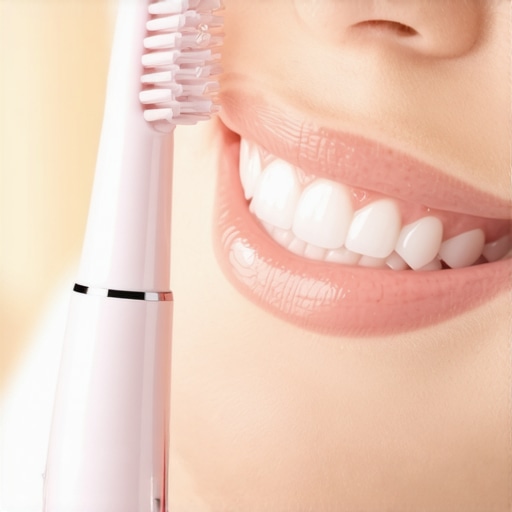
I remember the morning I decided to finally upgrade my morning routine with one of those high-tech sonic toothbrushes. I felt like a dental health superstar until I spat into the sink and saw a swirl of bright pink. My heart dropped. I had been a manual brusher for thirty years without a drop of blood, yet this ‘superior’ tool made it look like I’d just gone three rounds in a boxing ring. If you’ve found yourself staring at a bloody sink only after switching to power brushing, I want you to take a deep breath. You aren’t necessarily dealing with a dental disaster, but your mouth is definitely trying to tell you something about your technique and your [family dentistry](https://familydentistpro.com/family-dentistry-trends-improving-oral-health-for-all-ages) habits. Today, we are going to get to the bottom of why those vibrations are triggering your gums and how you can fix it without going back to your old plastic brush.
The Pink Sink Syndrome That Caught Me Off Guard
For a long time, I made the classic mistake of treating my electric brush like a manual one. I would grip that handle and scrub back and forth with all my might, thinking more friction meant cleaner teeth. This is arguably the biggest blunder you can make with modern dental tech. An electric toothbrush is designed to do the work for you, vibrating at thousands of strokes per minute. When you add manual scrubbing on top of that mechanical power, you aren’t just cleaning; you are essentially power-sanding your delicate gum tissue. This often reveals the [hidden reason your gums bleed even if you floss daily](https://familydentistpro.com/the-hidden-reason-your-gums-bleed-even-if-you-floss-daily), which is often just sheer physical irritation. I had to learn the hard way that the ‘less is more’ rule applies here more than anywhere else in your bathroom. Have you ever felt like you were being too aggressive with your new gadget?
Is my fancy new toothbrush actually a villain?
It is easy to blame the tool when things go wrong, but the reality is more nuanced. While you might fear the device is too powerful, a long-term study published in the Journal of Clinical Periodontology found that electric toothbrush users actually experienced 22% less gum recession over an 11-year period compared to manual users. The problem isn’t the brush; it’s the transition period. When you first introduce those high-frequency vibrations, they can aggravate existing mild inflammation that your manual brush was simply too weak to reach. To get through this, you need to master [the safest way to use an electric toothbrush on sensitive teeth](https://familydentistpro.com/the-safest-way-to-use-an-electric-toothbrush-on-sensitive-teeth). If your gums are bleeding, they are likely already slightly inflamed from bacteria hiding just below the gumline, and the electric brush is finally ‘knocking on the door’ of that debris. I realized that my bleeding wasn’t a sign to quit, but a sign that I needed to be more intentional about my [oral health](https://familydentistpro.com/top-oral-health-tips-for-your-familys-bright-smiles) and give my mouth a few weeks to toughen up and adapt to the new standard of clean.
Stop the Scrubbing Habit Right Now
The most important shift you can make is changing how you hold the brush. Think of the handle as a delicate instrument rather than a scrub brush. Most of us are used to the heavy-handed sawing motion of a manual brush, but that’s a recipe for disaster with a sonic motor. Instead, use a “two-finger grip” to keep the pressure light. When I first started, I was gripping the brush like a hammer, and the resulting irritation was exactly why your teenagers gums are suddenly puffy and red when they first start using power tools. By lightening my grip, I allowed the bristles to oscillate freely. This is one of those family dentistry secrets maintaining oral health with modern techniques at 254 pm that professionals wish everyone knew: the brush does the work, you just guide it.
Hold the Brush at a 45-Degree Angle
If you point the bristles directly at the flat surface of your teeth, you’re missing the most important part—the gumline. Tilt the brush head at a 45-degree angle so the bristles can gently slip just underneath the edge of the gum tissue. This is where the “pink sink” usually starts because bacteria hide in these pockets. If you’ve ever struggled with the safest way to remove a popcorn kernel stuck in your gums, you know how sensitive that area is. Gentle angling ensures you’re cleaning the debris without stabbing the tissue. 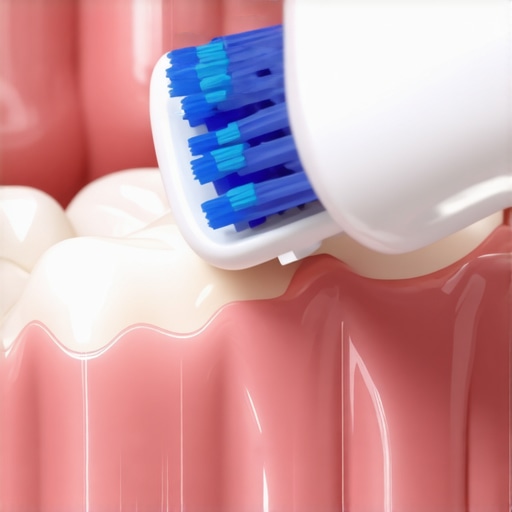
Navigate Tooth by Tooth Without Rushing
Instead of moving the brush back and forth, guide it slowly along the curve of your dental arch. Spend about three to five seconds on each tooth. It feels painfully slow at first, especially if you’re used to the frantic 30-second manual scrub. I remember one Tuesday morning when I was late for a meeting; I tried to “power through” my routine. I ended up with that familiar metallic taste in my mouth because I was dragging the vibrating head too fast across my gums. When you rush, you leave behind plaque, which is why your teeth feel fuzzy even after you just brushed them thoroughly. Slowing down allows the sonic waves to vibrate the fluid between your teeth, cleaning places the bristles can’t even touch.
Start with the Sensitive Setting
Most modern electric brushes come with multiple modes. If your gums are currently bleeding, do not use the “Pro-Clean” or “Whitening” settings right away. These are often higher frequency and can be too jarring for inflamed tissue. Switch to the “Sensitive” or “Gum Care” mode for the first two weeks. This lower intensity allows your gums to desensitize and heal while still providing a superior clean. It’s similar to the easiest way to whiten teeth when you have sensitive gums—you have to prioritize comfort to achieve the long-term result. Once the bleeding stops and your gums feel firmer, you can slowly ramp up the intensity. I found that staying on the sensitive mode for a full month was the only way I could transition without constant irritation. It gave my mouth the time it needed to recover from why your gums feel sore after getting a new dental crown or other dental work I had recently completed.
Your Crown Isn’t a Shield of Invincibility
Many people believe that once a tooth is capped with porcelain, it’s immune to trouble. I call this the “shield myth.” In my experience, a crown doesn’t make a tooth invincible; it actually creates a new 360-degree vulnerability called the margin. This is the tiny seam where the porcelain meets your natural tooth. If you’re still using that aggressive scrubbing technique I mentioned earlier, you might be wearing away the cement or receding the gumline, exposing the tooth structure underneath to bacteria. A study by the International Journal of Dentistry highlighted that recurrent decay at the margin is one of the leading causes of crown failure within ten years. This is why following the ultimate guide to crowns for a healthier smile is so critical: protection starts with the seal, not just the porcelain topper. Have you ever fallen into this trap of thinking your dental work was indestructible? Let me know in the comments.
Wait, can my crown actually get a cavity?
The short answer is yes—but not the porcelain itself. The natural tooth tucked inside can still decay if bacteria sneak past the margin. This is why choosing the right crown expert advice for long-lasting results is so vital; the fit must be microscopic. I’ve seen patients who thought they could skip flossing because “fake teeth don’t rot,” only to find out why your crown feels sensitive to cold months after it was placed. It’s often because the gum has receded, leaving a gap where sugar and plaque can hide. If you aren’t careful, you end up needing a more invasive procedure than the one you started with.
#IMAGE_PLACE_HOLDER_C#
The Invisalign Trap Most New Patients Fall Into
When it comes to how invisalign transforms family dentistry in 2025, most people focus purely on the cosmetic alignment. However, there is a dangerous “oops” factor: the tray-acid trap. If you don’t brush immediately after eating and pop your aligners back in, you are essentially “marinating” your teeth in food particles and acid. Unlike your natural saliva, which helps neutralize acid, the plastic tray creates a vacuum that keeps the bad stuff against your enamel. This is a core part of invisalign myths debunked what you need to know today. Even if you are diligent about how to keep your aligners clear while drinking tea, the residue can lead to white spots—permanent decalcification markers—if you aren’t obsessive about hygiene. It’s one of those family dentistry secrets maintaining oral health with modern techniques at 254 pm that your dentist might not emphasize enough during the first consultation. You aren’t just wearing braces; you’re managing a micro-environment inside those trays.
Why “Too Much” Maintenance Is a Real Problem
Finally, let’s talk about the danger of over-correction. In an effort to keep everything perfect, some people turn to abrasive solutions like the truth about charcoal toothpaste and your tooth enamel. While charcoal might seem “natural,” it’s often too gritty for the high-polished surface of a crown or the bond used for Invisalign attachments. This creates micro-scratches that actually attract more stains and plaque over time. It’s far better to focus on the top oral health tips for your familys bright smiles, like using a non-abrasive fluoride paste and that gentle 45-degree angle we discussed. Your restorative work is a precision investment; treat it with the finesse of a curator rather than the force of a construction worker.
The One Gadget That Saved My Crown Margins
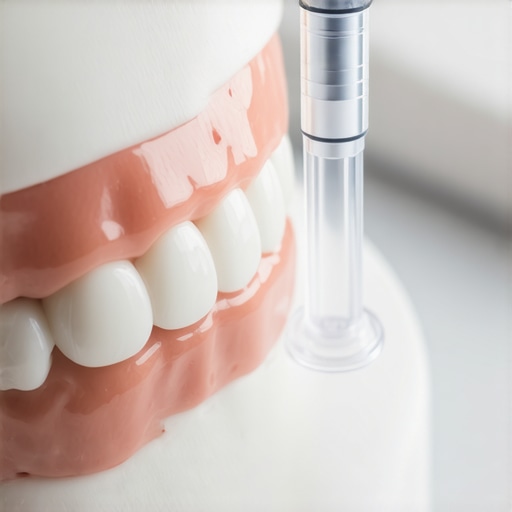
Once I realized that scrubbing was my enemy, I had to find a tool that provided a deep clean without the collateral damage. That is when I integrated a water flosser into my nightly routine. Specifically, I use the Waterpik Aquarius with the ‘Plaque Seeker’ tip. This isn’t just about the novelty of spraying water; those three thin bristle tufts on the tip are designed specifically to target the junction where porcelain meets gum tissue. If you’ve been wondering why your crown feels sensitive to cold months after it was placed, it might be because manual flossing isn’t reaching the microscopic debris at the margin. Research published in the Journal of Clinical Dentistry (2021) demonstrated that water flossing was up to 29% more effective than traditional string floss for overall plaque removal, specifically for those with orthodontic appliances. I found that by using lukewarm water and the ‘massage’ mode, my gums stopped bleeding entirely within ten days. It’s the ultimate way to maintain choosing the right crown expert advice for long-lasting results while keeping the surrounding tissue firm and healthy.
How do I maintain my dental work over time?
Maintenance isn’t just about the gear; it’s about the environmental control. For my friends wearing clear aligners, the biggest challenge is biofilm buildup. I’ve started using ultrasonic cleaners for my trays—small devices that use sound waves to vibrate off plaque without using abrasive brushes. This is a game-changer for how to keep your breath fresh while wearing invisalign trays all day. When you combine this with a ph-neutral mouth rinse, you are creating a hostile environment for the bacteria that cause decay around attachments. This proactive approach is a cornerstone of the hidden benefits of invisalign for family dental care in 2025 at 903 am. We are moving away from reactive ‘drilling and filling’ and toward a model of constant, gentle management.
What Smart Tech Means for Your Bathroom Countertop
I predict that within the next five years, the ‘blind’ brushing we do today will seem primitive. We are already seeing the emergence of invisalign innovations the future of family dentistry revealed at 1137 am that use AI to track tooth movement in real-time. I expect this technology to shrink down into our toothbrushes, where a sensor will alert your family dentist the moment your gum recession changes by even a millimeter. This shift toward biometric data is one of the most exciting family dentistry trends improving oral health for all ages because it removes the guesswork. You won’t have to wonder if you’re brushing too hard; your phone will simply tell you to back off. Until that becomes standard, I challenge you to try the ‘two-finger grip’ on your electric brush tonight—it is the simplest way to instantly reduce the pressure on your gums and protect your enamel for the long haul.
Lessons I Learned the Hard Way About Modern Dental Tech
Reflecting on my journey from a manual scrubber to a tech-savvy brusher, I’ve realized that the tools are only as good as the hands holding them. One of my biggest lightbulb moments was understanding that consistency always beats intensity. I used to think a vigorous clean once a day was enough, but I learned that the 2-minute habit that prevents morning breath better than mouthwash is actually about the frequency and the angle, not the force. Another hard-earned lesson: your gums aren’t a target; they are the foundation. If you treat them with aggression, even the most expensive why crowns are a game-changer in restorative dentistry won’t save you from long-term recession. Finally, I discovered that modern family dentistry trends improving oral health for all ages are moving toward bio-mimicry—tools that help your mouth heal itself rather than just scraping away debris. Patience is a virtue, especially when your gums are adapting to a new vibration frequency.
The Exact Tools That Saved My Gums
I am often asked what is actually worth the counter space. Personally, I don’t go a single night without my water flosser, specifically using the specialized tips designed for dental work. It is the only way I’ve found to truly clean the microscopic gaps around my restorative work without irritation. For anyone navigating the world of clear aligners, I cannot recommend an ultrasonic cleaning pod enough. It is a game-changer for how to keep your breath fresh while wearing invisalign trays all day because it removes the biofilm that a manual brush simply misses. I also suggest keeping a high-quality, non-abrasive fluoride paste in your kit; it protects the natural tooth structure underneath your crowns and veneers without scratching the porcelain. These aren’t just gadgets; they are the defensive line for your smile.
A New Chapter for Your Oral Health
Transitioning to high-tech dental care can feel like learning to drive all over again. There will be bumps, a little blood, and perhaps some frustration, but the long-term rewards of healthier gums and more durable dental work are worth every adjustment. By focusing on finesse rather than force, you are ensuring that your investment in your smile lasts a lifetime. Remember that top oral health tips for your familys bright smiles often start with the simplest changes in habit. Don’t be afraid to take it slow and let your mouth lead the way toward a cleaner, healthier future. You’ve got the tools; now you have the technique to match. Have you ever experienced a ‘learning curve’ with a new electric toothbrush or water flosser? Let me know in the comments below!