
Why your gums look black or dark in some spots
I will never forget the cold sweat that broke out on my forehead when I first noticed a shadowy, dark patch on my gums right above my canine tooth. My mind went straight to the worst-case scenario. I spent hours Googling scary medical terms, convinced I was losing a tooth or worse. It is that visceral ‘oh no’ moment that catches you off guard when you are just trying to brush your teeth before work. For years, I obsessed over every tiny color change, once even making the mistake of scrubbing a dark spot so aggressively with a hard-bristle brush that I caused actual damage—a classic case of how to tell if your gum recession is getting worse because I did not know any better. The truth is, those dark spots—whether they are black, brown, or deep purple—usually have a very logical explanation. Today, I want to walk you through exactly what is going on in your mouth so you can stop the doom-scrolling and start focusing on top oral health tips for your family’s bright smiles. We are going to differentiate between harmless pigmentation and the signs that actually warrant a visit to the dentist.
Those Dark Spots in Your Smile Are Not Always a Crisis
Most people assume that healthy gums must be bubblegum pink, but that is a narrow view of dental health. Just like our skin, gum tissue contains melanin. If you have a darker complexion, it is completely normal to have darker patches on your gums. It is called melanoplakia, and it is about as dangerous as a freckle on your arm. However, I have also seen cases where a dark spot was an ‘amalgam tattoo.’ This happens when a tiny bit of silver filling material gets embedded in the tissue. I remember a friend who thought she had a localized infection, only to find out it was a leftover souvenir from a filling she got ten years ago! It is these little nuances that make family dentistry secrets so fascinating.
Is it actually worth the hype to worry about a little pigment?
You might be wondering if you are just being vain or if this is a legitimate health concern. According to the American Academy of Periodontology, while many gum color changes are benign, sudden dark spots can occasionally signal more serious issues like smoker’s melanosis or even rare oral cancers. So, while you should not panic, you should not ignore a change. Have you ever noticed a new dark spot and immediately assumed the worst? I would love to hear if you have faced this specific problem. Sometimes, what looks like a dark spot is actually a shadow cast by why your veneers look bulky and how to fix them or an old metal-based crown. If the darkness is right at the gum line of a tooth with a restoration, it might just be the metal structure peeking through. This is a common reason why people eventually look into how crowns boost oral health confidence to get those modern, all-ceramic versions that do not leave that ‘black line’ effect.
Determine if the Spot is a Freckle or a Red Flag
Identifying the source of gum discoloration is like being a detective in your own mouth. You need to look at three things: texture, timing, and dental history. If a spot has been there for years and feels flat and smooth, it is likely just a natural variation in pigment. However, if it feels raised or ‘bumpy,’ it is time to pay closer attention. Treat your gums like a fine silk rug; aggressive scrubbing will not remove a deep-seated stain, it will only fray the fabric and lead to more issues. I once spent an entire weekend obsessing over a tiny greyish dot near my back molar, convinced it was a cavity that had tunneled through the bone. After a frantic Monday morning appointment, my dentist gently explained it was an ‘amalgam tattoo’ from a childhood filling. Learning how to tell the difference between a deep cavity and a surface stain would have saved me forty-eight hours of pure anxiety.
Run a Simple Texture Test at Home
Wash your hands and gently run your finger over the area. Healthy, pigmented gums should feel firm and resilient, just like the rest of your mouth. If the dark area feels soft, spongy, or bleeds when you touch it, that is a signal that your body is fighting inflammation. Often, these dark ‘shadows’ are actually pockets of bacteria trapped under the gum line. If you are currently undergoing orthodontic treatment, these shadows can be even more common because it is so easy for food to get stuck. Knowing how to clean the gunk out of your invisalign aligners is essential because trapped debris can actually cause temporary staining of the tissue. 
Check Your Restorations for ‘Metal Show’
If the darkness looks like a thin black line perfectly tracing the edge of a tooth, look closely at that tooth. Is it a crown? Many older crowns have a metal substructure covered by porcelain. Over time, as we age, our gums naturally shift. You might find yourself researching the reason your gums are receding despite good brushing habits, only to realize the recession is simply exposing the dark metal edge of your dental work. This is a purely cosmetic issue, but it is one of the most common reasons patients seek out family dentistry trends like all-ceramic crowns to restore a more natural look.
Watch for Pediatric ‘Blood Blisters’
If you are looking in your child’s mouth and see a localized purple or dark blue spot, do not jump to the worst conclusion. I remember when my nephew’s gums turned an alarming shade of purple overnight. My sister was terrified it was an infection, but it was actually an eruption cyst—a common, harmless fluid-filled sac that forms right before a new tooth breaks through. Understanding why your childs gums look purple where their adult molar is erupting can prevent a lot of unnecessary stress and emergency room visits. Most of the time, these spots resolve themselves as soon as the tooth pops through the surface. Modern advances in how invisalign transforms family dentistry in 2025 also show us that keeping the gums healthy during tooth movement is easier than ever with removable options.Let’s dig deeper into a common misconception: the idea that once a tooth is ‘fixed’ with a crown or straightened with aligners, the hard work is over. I often hear patients say they feel relieved because their crowned tooth is now ‘invincible.’ This is perhaps the most dangerous myth in family dentistry. In reality, your crown is not a suit of armor; it is a precision-engineered cap that still sits on a natural foundation. The most sophisticated restorations can still fail if the ‘margin’—that tiny seam where the crown meets your natural gum line—is neglected. If you have noticed that the reason your crown smells bad when you floss around it is becoming a daily concern, it is usually because bacteria have found a home in that microscopic gap. A study in the Journal of Dentistry found that secondary caries at the crown margin remains the leading cause of restoration failure, often because patients develop a false sense of security and decrease their flossing rigor. Making the right choice during choosing the right crown expert advice for long lasting results means finding a professional who prioritizes that marginal fit just as much as the color match.
Can Invisalign really handle the same cases as traditional metal braces?
For a long time, the answer was a hesitant ‘maybe,’ but that has changed. A common ‘oops’ factor for parents is assuming that clear aligners are only for minor cosmetic tweaks. If you are looking into invisalign myths debunked, you will find that modern attachments—those tiny, tooth-colored bumps placed on the teeth—allow aligners to perform complex root movements that were once only possible with wires. According to research in the International Journal of Environmental Research and Public Health, the efficacy of clear aligners now rivals traditional methods for many complex malocclusions, provided they are managed by an experienced clinician. This shift is a huge part of invisalign innovations the future of family dentistry revealed. 
Don’t let a perfect smile hide a decaying foundation
The trap many fall into is focusing so much on the aesthetics of how invisalign transforms family dentistry in 2025 that they forget the biological basics. You can have the straightest teeth in the world, but if the underlying bone is unhealthy, those results won’t last. I have seen people invest in beautiful restorations only to struggle later because they didn’t understand why your crown feels sensitive to cold months after it was placed. Often, this sensitivity isn’t the crown itself, but the gum tissue reacting to poor hygiene or an uneven bite. We are seeing incredible family dentistry trends that move away from just ‘drilling and filling’ toward total oral systemic health. Have you ever fallen into the trap of thinking a crown meant you could skip flossing that spot? Let me know in the comments. Whether you are weighing invisalign vs braces which solution fits your lifestyle or trying to understand the hidden benefits of invisalign for family dental care in 2025, remember that the best technology is only as good as the daily habits supporting it.To keep a high-end restoration or a perfectly aligned smile looking like day one, you have to move beyond the basic ‘brush and hope’ method. I have found that the transition from standard care to expert-level maintenance is where most people stumble. My own bathroom counter transformed from a single toothbrush holder to what looks like a mini-lab once I realized that specialized dental work requires specialized tools. If you have ever felt that slight catch when flossing or wondered the reason your crown smells bad when you floss around it, you are likely dealing with the limitations of traditional string floss. It is simply not enough for the tight margins of modern restorative work.
The gear that actually saves your smile
Personally, I recommend making the switch to a high-pressure water flosser combined with ultra-fine interdental brushes. A 2019 Cochrane Systematic Review, ‘Interdental cleaning devices for preventing and controlling periodontal diseases and dental caries,’ highlighted that interdental brushes are significantly more effective than standard floss at reducing plaque, especially in patients with complex dental architecture like crowns and bridges. I use a version with a 0.4mm head to navigate those microscopic gaps where bacteria love to congregate. It is about precision, not force. When you combine this with family dentistry secrets like sonic vibration technology, you are essentially performing a professional-grade cleaning at home every single night. 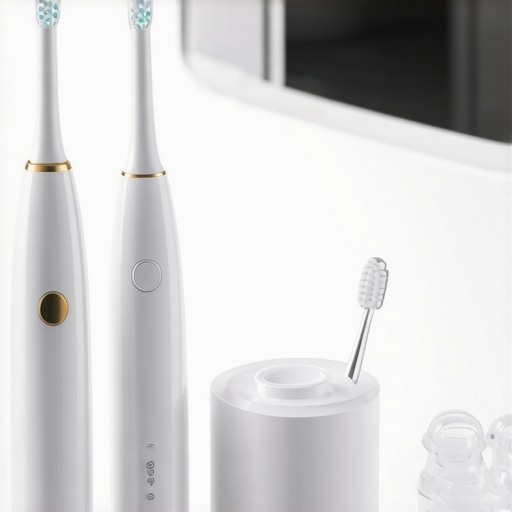
How do I keep my crowns and aligners pristine over the years?
Maintenance is a marathon, not a sprint. For those of us wearing clear aligners, the challenge is double-sided: you are protecting both your teeth and the appliance. I have seen so many people ruin their expensive trays by using the wrong cleaners. You need to master how to keep your aligners clear while drinking tea or coffee, which usually involves a rapid rinse-and-soak routine using non-abrasive crystals. If you are a caffeine addict like me, knowing the secret to avoiding coffee stains on your clear aligners is the difference between a transparent smile and a yellowed one. I always keep a travel-sized kit with me—a portable sonic cleaner and a small supply of interdental picks. This isn’t just about vanity; it is about preventing the acidic buildup that leads to decay under those expensive crowns.
Why your daily routine needs a tech upgrade
Looking ahead, the trend in family dentistry is moving rapidly toward AI-integrated home monitoring. We are already seeing ‘smart’ toothbrushes that map your mouth in real-time, but the next step is remote scanning apps that allow your dentist to track your Invisalign progress or gum health weekly without you ever leaving the house. This shift toward invisalign innovations the future of family dentistry revealed means that we will catch issues like marginal leakage or minor shifts before they become thousand-dollar problems. It is the ultimate insurance policy for your oral health. If you want to stay ahead of the curve, I challenge you to try the 2-minute habit that prevents morning breath better than mouthwash tonight. It focuses on the lingual surfaces and the specific junction where your restorations meet your gums—the ‘danger zone’ for bacteria. Implementing these top oral health tips for your family’s bright smiles will ensure that the work you have done today remains beautiful for decades to come. Stop settling for a ‘good enough’ routine and start using the best strategy for flossing when your teeth are tightly crowded to truly protect your investment.
The Real Truth Behind ‘Permanent’ Dental Work
After years of navigating the world of crowns and aligners, I’ve realized that the term ‘permanent’ is a bit of a misnomer in family dentistry. Here is the insider scoop: first, a crown is only as strong as the gum tissue surrounding it. If your gums recede, that beautiful porcelain edge becomes a liability. Second, your mouth is a living ecosystem; what was a healthy ‘pink’ today might shift tomorrow based on your hydration, hormonal changes, or stress levels. Finally, the most expensive treatment in the world won’t save you if you treat your teeth like tools rather than vital organs. True confidence comes from knowing the difference between a cosmetic change and a biological requirement.
The Toolkit I Actually Use Every Single Day
If you want to maintain that high-end look without the constant anxiety, you need a few specific items that go beyond the basic drugstore aisle. I swear by 0.4mm interdental brushes for getting into the ‘danger zone’ where crowns meet the gum, as they provide tactile feedback that string floss simply cannot match. I also highly recommend exploring The Dental Diet by Dr. Steven Lin—it completely changed how I view the relationship between fat-soluble vitamins and gum resilience. For those with aligners, don’t just soak them in tap water; use specialized cleaning crystals to avoid the cloudiness mentioned in how to clean the gunk out of your invisalign aligners. Also, mastering the 2-minute habit that prevents morning breath better than mouthwash is the easiest win for your daily confidence and bacterial control. #IMAGE_PLACEHOLDER_E#
Your Path to a Stress-Free Smile
Don’t let a mysterious dark spot or a slightly sensitive tooth keep you up at night. The goal of modern family dentistry trends is to empower you with knowledge so you can spot issues before they require major surgery. Whether you are reading the ultimate guide to crowns for a healthier smile or debunking invisalign myths debunked, you are already miles ahead of the average patient. Your oral health is a lifelong journey, not a single destination. Have you ever noticed a sudden change in your gum color that turned out to be completely harmless? Let me know your experience in the comments below!