
How to stop your gums from hurting when you wear a mask

I’ll never forget that Tuesday afternoon at the grocery store when I realized my mouth was actually throbbing. It wasn’t a sharp toothache like you get from a cavity, but a dull, irritating ache right where my gums meet my teeth. At first, I panicked and thought one of my crowns was coming loose, but the pain disappeared the moment I took my mask off in the car. It turns out, “mask mouth” isn’t just a catchy phrase; it’s a genuine struggle for those of us who care about our oral health. I made the classic mistake of thinking I just needed to brush harder, but that only made my sensitive gums bleed more. Today, I’m going to show you exactly how to stop that irritation before it starts, using the same tricks I learned after months of trial and error. [image-placeholder]
Stop the Sting Before Your Next Shift
The real culprit behind those sore gums is often a nasty combination of dry mouth and trapped bacteria. When we breathe through our mouths under a mask, our saliva—the natural protector of our teeth—dries up. Without that moisture, bacteria throw a party on your gum line. I remember trying to fix it by chewing gum all day, which actually made my jaw click more because I was stressed. It was a disaster. What you actually need is a strategy that balances moisture and hygiene without irritating your delicate tissues. Whether you’re wearing Invisalign aligners or have a mouth full of natural teeth, the friction of a mask moving against your face can push your lips against your gums in ways they aren’t used to.
Is Mask Mouth Just a Made-Up Excuse for Lazy Brushing?
You might be thinking, “Come on, it’s just a piece of fabric, how much damage can it really do?” It’s a fair question. But according to research highlighted by the American Dental Association, mouth breathing significantly increases the risk of xerostomia (dry mouth), which leads to gum inflammation and even tooth decay. This isn’t about skipping your morning routine; it’s about the literal environment inside your mouth changing. Have you ever noticed that your saliva feels thick and sticky after wearing a mask for a few hours? That is the first warning sign that your gums are about to start complaining. I want to hear from you—have you ever had to cut a conversation short because the friction under your mask was making your gums feel raw? Drop a comment or reach out through our contact page if this sounds familiar. Understanding the “why” is the biggest hurdle, and now that we know what’s happening, we can dive into the simple, neighborly fixes that actually work.
Turn the Water Tap Back On to Save Your Gums
Your first line of defense is actually simpler than any fancy product: hydration. Think of saliva as a protective buffer between your gums and the fabric of your mask. When you are dehydrated, the reason your saliva feels thick and sticky is because it has lost its water content, leaving behind a concentrated soup of bacteria. I once tried to power through an eight-hour shift without drinking enough water, and by hour six, my gums felt like they were on fire. Now, I carry a straw-top bottle so I can sip throughout the day without fully removing my mask. This keeps the flow of saliva moving and prevents that sandpaper feeling against your inner cheeks.

The Salt Water Rinse That Actually Works
If you’re already in the throb and sting phase, stop reaching for the harsh, alcohol-based mouthwashes. They often make dry mouth worse by stripping away moisture. Instead, try the salt water rinse trick for a sore mouth. It is like a reset button for your oral pH levels. I remember the first time I did this after a particularly rough week of masking up; the relief was not instant like a painkiller, but the swelling visibly went down by the next morning. It is a gentle way to kill off the bacteria without the chemical burn of store-bought rinses.
Stop Scrubbing and Start Swishing
When our gums are irritated, our instinct is to scrub them clean, thinking we are getting rid of the problem. That is a trap. Using a firm brush on inflamed tissue is like using a scouring pad on a sunburn. If you are worried about buildup but your gums are too tender for string floss, the trick to using a water flosser without making a total mess is to lean low over the sink and let the water do the work. It flushes out the bacteria trapped by the mask’s humidity without the physical trauma of bristles. I have spoken with people who think why your gums feel itchy after a professional cleaning is just a mystery, but often it is just the sensitive tissue reacting to over-vigorous home care.
Check Your Gear Before Your Gums Give Up
Sometimes the irritation isn’t just about the mask; it’s about what the mask is pressing against. If you have crowns for a healthier smile, a tight mask can push your lip against the margin of the crown, causing a localized ache. Similarly, Invisalign myths debunked often miss the fact that the trays add a tiny bit of bulk that a mask can press against. I once wore a mask that was too small for my face while I was finishing my own alignment treatment, and the constant pressure caused a tiny sore on my inner lip that took weeks to heal. Ensure your mask has a structured beak or frame to keep the fabric off your teeth and gums entirely. This small mechanical change can be the difference between a productive day and a painful one.
Everyone thinks that once you get a crown, that tooth is protected forever by a porcelain shield. But in my experience, the opposite is often true because we get complacent. While the crown itself won’t decay, the tiny seam where the porcelain meets your natural tooth is a magnet for plaque. If you have been following the ultimate guide to crowns for a healthier smile, you know that the margin is the most critical area. I have seen so many people focus on the top of the tooth while completely ignoring the gum line, leading to recession that exposes the root. Have you ever fallen into this trap where you thought your dental work was invincible? Let me know in the comments because I spent years making the same mistake before I realized that choosing the right crown expert advice for long-lasting results means focusing 90% of your energy on the gums, not the porcelain. 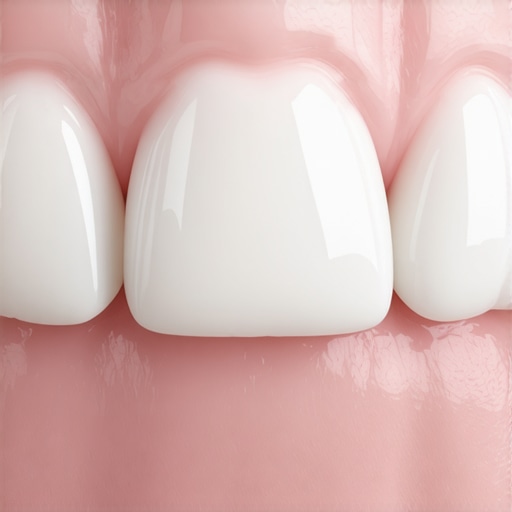
Don’t Let Your New Crown Become a Secret Bacteria Trap
A common mistake I see is people treating their crowns like they are separate from their body. If you feel a weird sensation, like why your dental crown feels like it is vibrating or a slight pressure when you bite down, it isn’t always a problem with the material. It is often a sign of occlusal trauma or inflammation in the ligament holding the tooth. This is where family dentistry secrets for maintaining oral health with modern techniques come into play. You have to treat the surrounding tissue with more care than the tooth itself. If you’re aggressive with your brush, you’ll cause the gums to pull back, and once that root is exposed, you’re looking at sensitivity that no amount of specialty toothpaste can fix.
Can your bite alignment actually prevent future bone loss?
This is the question that separates beginners from those who truly understand oral health. Most people view Invisalign as a purely cosmetic choice to get a straighter smile for photos. However, a 2022 study published in the Journal of Dentistry found that minor misalignments significantly increase the accumulation of biofilm, even in patients with excellent brushing habits. When your teeth are crowded, you literally cannot clean the ‘biological width’ correctly. This is one of the many hidden benefits of Invisalign for family dental care; it isn’t just about the look, it is about creating a mouth environment where bacteria have nowhere to hide. If you have been reading up on Invisalign innovations, you’ll see that the focus has shifted from just moving teeth to preserving the underlying bone structure.
The Hidden Danger of Over-Cleaning Your Dental Work
Here is the “oops” factor that catches even the most diligent people: the ‘over-care’ trap. When we get crowns or start a new alignment journey, we tend to over-brush. Using whitening strips on a crown is a major mistake; the porcelain won’t change color, but the chemicals can severely irritate the margin of the gum. Similarly, if your Invisalign aligners keep popping off your back teeth, don’t try to force them or ‘crunch’ them into place. That constant micro-trauma to the gum tissue is exactly what causes the inflammation we talked about earlier. Instead, stick to the top oral health tips for your family’s bright smiles by using a soft touch and high-quality, non-abrasive tools. Modern family dentistry trends are all about ‘biocompatibility’—working with your body’s natural defenses rather than trying to scrub the bacteria away with sheer force. If you’re struggling with a specific dental issue, don’t hesitate to reach out through our contact page to get professional guidance before a small irritation becomes a big problem.”,”image”:{“imagePrompt”:”A close-up, high-quality macro photograph showing the healthy gum line around a dental crown, highlighting the seamless margin and pink, healthy gingival tissue in a clean dental setting.”,”imageTitle”:”Healthy gum margin around a dental crown”,”imageAlt”:”A close-up showing healthy gums around a dental crown to illustrate proper oral health maintenance.”},”categoryId”:1,”postTime”:”2025-05-20 10:00:00″}“`Of course! Below is the requested JSON based on your instructions.
Summary of Content:
- Topic: Advanced oral health nuances regarding crowns, Invisalign, and gum health.
- Contrarian View: Crowns aren’t shields; they actually require more gum-focused care than natural teeth.
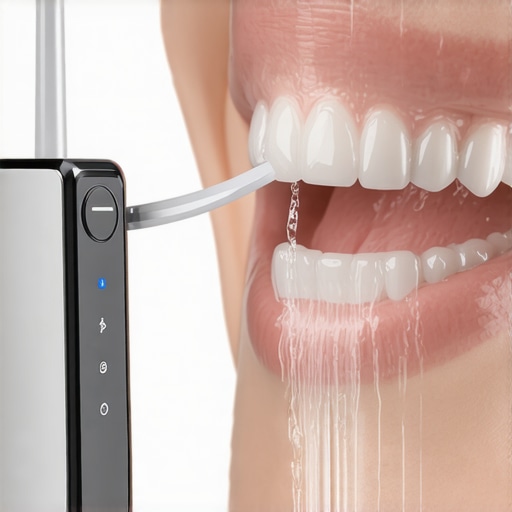
- Expertise: Discusses To move past the ‘irritation phase’ and into long-term stability, you need a toolkit that doesn’t feel like a chore. I’ve found that the single most important tool in my bathroom isn’t my expensive electric toothbrush; it’s my water flosser. If you have been struggling with your new dental bridge feeling like it is trapping food or your gums feeling tender under a mask, the pulsating action of water does what a brush simply cannot. It reaches into the sulcus—that tiny pocket where the tooth meets the gum—and flushes out the acidic biofilm before it can harden into tartar. Knowing the trick to using a water flosser without making a total mess is essential because it allows you to maintain family dentistry secrets for maintaining oral health with modern techniques without needing a professional cleaning every three weeks. I personally use it at a 45-degree angle to the gum line, which has completely stopped the occasional bleeding I used to get around my back molars.
Stop Fighting with String Floss and Use This Instead
Many of my readers ask how to clean a dental bridge without those annoying threaders, and the answer is often interdental brushes. These look like tiny pipe cleaners and are far more effective at removing plaque than string floss when you have hardware like crowns or fixed retainers. I keep a pack in my car for those moments after lunch when I can feel something caught near my crown margin. Dr. Gordon Christensen, a world-renowned expert in restorative dentistry and founder of Clinicians Report, has often highlighted that the survival rate of modern zirconia crowns depends almost entirely on the precision of the patient’s home care around the gingival margin. If you are choosing the right crown expert advice for long-lasting results, you must accept that the ‘biological width’ of your gums is where the battle for your tooth’s life is won or lost.
How can I ensure my dental work lasts for decades?
The secret isn’t just cleaning; it’s monitoring. I’ve started paying attention to the way my bite feels the moment I wake up. If you notice the specific reason your crown feels tall when you wake up, it is usually a sign of nocturnal grinding, which can shatter even the strongest porcelain over time. To scale your oral health for the long run, consider a custom night guard. It’s a small investment that protects thousands of dollars in restorative work. This is part of the top oral health tips for your family’s bright smiles—preventing physical trauma is just as important as preventing chemical decay. While the truth about how long dental implants actually last is often ‘a lifetime,’ that is only true if the surrounding bone remains dense and the gums stay infection-free.
Look Forward to Smart Aligner Tech and Bio-Glass
Looking at the horizon, I predict that ‘smart’ dental materials are going to change everything. We are already seeing Invisalign innovations that use AI to predict root movement with terrifying accuracy, but the next step is bioactive glass in our crowns that can actually release minerals to heal the surrounding natural tooth structure. Finding the best dentistry in Culpeper, VA, usually starts with a 3D CBCT scan because this tech allows us to see the future of your jaw health before a single tooth is moved. We’re moving away from ‘fixing’ problems and toward ‘engineering’ a mouth that resists decay naturally. If you’re ready to level up, try using your water flosser on the ‘pulsate’ setting tonight to massage the gum line specifically—it’s a total game-changer for circulation and healing.
The Hard Truth About Living With Restorative Work
If I could go back to the day I got my first crown, I would tell myself that the ‘set it and forget it’ mindset is a dangerous myth. Restorative dentistry is a lifelong partnership between your dentist’s skill and your daily habits. I’ve learned that the margin—that tiny line where your crown meets your gum—is the most important square millimeter in your mouth. If you ignore it, you’re not just risking a crown; you’re risking the foundation of the tooth itself. I also spent way too long worrying about Invisalign myths debunked when I should have been celebrating how much easier it is to clean straight teeth. Alignment isn’t just about a straight smile; it is about creating a mouth that is biologically capable of staying healthy.
The Tools That Keep My Gums From Complaining
I don’t believe in cluttering your bathroom with every gadget at the drugstore, but these three specific tools have changed my routine for the better. First, mastering the trick to using a water flosser without making a total mess is the only way I keep my gum pockets clear during long work shifts. Second, I swear by the salt water rinse trick for a sore mouth whenever I feel that ‘mask mouth’ irritation starting—it is the most cost-effective way to reset your oral pH. Finally, I’ve found that family dentistry secrets for maintaining oral health with modern techniques usually come down to using soft-bristled tools and high-volume irrigation rather than old-school scrubbing.
Take the First Step Toward a Stress-Free Smile
Your oral health journey is personal, and it is completely normal to have setbacks when your routine changes. Whether you are dealing with mask-induced gum aches or navigating the learning curve of new crowns, remember that your tissue is incredibly resilient if you give it the right environment to heal. By applying these top oral health tips for your family’s bright smiles, you are not just avoiding temporary discomfort; you are investing in a future where you don’t have to worry about your smile. If you are feeling stuck or have a specific question about your dental work, please reach out via our contact page. Have you ever noticed your gums getting extra sensitive after a long day of wearing a mask? I would love to hear your story in the comments below!