
The move to stop a crown from trapping food every time you eat steak
I remember sitting at a local steakhouse last summer, staring down a perfectly seared ribeye. Three bites in, I wasn’t tasting the garlic butter anymore. I was focused entirely on that one spot between my back molar and my shiny new dental crown where a stubborn piece of fiber had decided to set up permanent residency. It’s a miserable feeling. You’re trying to look sophisticated, but you’re actually performing a series of weird jaw gymnastics just to dislodge a morsel. I spent months thinking this was just my ‘new normal.’ I actually made the mistake of assuming all crowns eventually became magnets for debris, and I just kept flossing harder and harder until I caused real irritation. Today, I’m going to walk you through exactly why your crown is acting like a pocket and the moves we can make to finally close that gap for good.
Why Your Ribeye Shouldn’t Stay Stuck in Your Teeth Forever
The technical term for this annoyance is ‘food impaction,’ and it’s more than just a social inconvenience. When I first got my restoration, I didn’t realize that choosing the right crown expert advice meant ensuring the ‘contact point’—the place where the crown touches the neighboring tooth—was tight enough to act as a barrier. If that contact is even a fraction of a millimeter too loose, steak, spinach, and popcorn will find their way in. I ignored it for way too long. Eventually, I started noticing why your gums feel sore after getting a new dental crown, which is often the first sign that trapped bacteria are starting to cause localized inflammation. A study published in the Journal of Indian Prosthodontic Society highlights that nearly 33% of patients experience food impaction near dental restorations, proving you’re definitely not alone in this frustration. If you’ve been wondering what to eat after getting a new dental crown just to avoid the pain of cleaning it out later, it is time to address the fit itself. Have you ever had to leave a dinner table early just to find a piece of floss or a toothpick?
Is it just bad luck or did the dentist mess up?
It’s easy to feel like you just got a ‘bad’ tooth, but the reality is often about the tiny shifts in our mouths. Even a perfectly placed crown can start trapping food if your other teeth shift slightly, a common occurrence as we age or if we struggle with grinding. I used to think I could just live with it, but the constant wedging of food actually acts like a tiny lever, pushing the teeth further apart and making the hole even bigger. If you’ve noticed how to tell if your dental bridge is trapping food, you’ll know the symptoms are identical: pressure, a dull ache after eating, and that constant urge to dig. We need to look at whether the crown needs a simple adjustment or if it’s time for a more permanent fix to restore your peace of mind—and your ability to enjoy a meal without a side of dental distress.
Grab your floss and check the tension
The very first thing you need to do is perform what I call the ‘snap test’ at home. Think of your teeth like a series of interlocking gears; they need to mesh perfectly to function. Take a standard piece of dental floss and slide it between the crown and the neighboring tooth. If the floss slides through like it’s coated in oil with zero resistance, your contact point is too loose. You should feel a distinct ‘snap’ or a bit of friction—that’s the sound of a protected gum line. I used to ignore the lack of resistance until I realized that a loose contact is essentially an open door for plaque. This is a core part of the ultimate guide to crowns for a healthier smile because without that tension, your gums are constantly under siege. If you are struggling with a gap, it is often because the crown was contoured slightly too thin for the space.
The subtle art of the chairside adjustment
When I finally went back to my dentist, I expected a long, painful procedure. Instead, it was surprisingly clinical and quick. If the crown is relatively new, your dentist might be able to add a tiny layer of porcelain to the side of the crown to ‘fatten’ it up and close the gap. This is why why crowns are a game changer in restorative dentistry; they are remarkably adaptable when handled by an expert. I remember sitting there as he used a tiny polishing tool to ensure the new surface didn’t create a ‘high’ spot. If you’ve ever felt like your bite was off after a visit, you probably needed to know how to stop your new crown from feeling too high when you chew. Getting the contact right isn’t just about stopping food; it’s about ensuring your jaw closes evenly. 
When your teeth start drifting away
Sometimes the crown is perfect, but the neighborhood is moving. Teeth are surprisingly mobile; they like to lean forward over time. If you’ve noticed gaps opening up in other areas of your mouth, it might not be a crown failure at all, but rather a tooth alignment issue. In my case, I was grinding my teeth at night, which pushed my molars apart. This is a common realization in modern practice, and it is fascinating to see how Invisalign transforms family dentistry in 2025 by closing those structural gaps that traditional fillings or crowns can’t reach. Using clear aligners to pull that tooth back into a tight hug with the crown is often a more permanent solution than simply making the crown bigger.
Stop the trap before it kills your gums
If you can’t get to the dentist immediately, you have to manage the site like a hawk. Every time food stays trapped, it rots. It sounds harsh, but that’s the reality. I used to carry a small travel kit with an interdental brush—those tiny Christmas-tree-looking things. They are far more effective than floss for clearing out a crown pocket because they scrub the sides of the tooth. Following top oral health tips for your family’s bright smiles means being proactive about this debris. I once let a piece of crusty bread sit in a crown gap for two days while camping, and the resulting gum swelling made the next week miserable. A simple salt water rinse can buy you time by reducing inflammation, but remember: a physical gap requires a physical fix.
Stop waiting for the crown to ‘settle in’
The most common mistake I see in my practice isn’t a bad crown—it’s a patient waiting too long for a ‘settling’ period that shouldn’t exist. Everyone says a new restoration should feel ‘different’ for a few weeks, but in my experience, if you are experiencing food impaction, waiting is the worst move you can make. This is one of the family dentistry secrets that often goes unshared: chronic food wedging leads to localized bone loss faster than almost any other minor dental issue. You might think it’s just an annoyance, but it’s actually a slow-motion wrecking ball for your jawbone. If you’ve been searching for family dentistry secrets for maintaining oral health, you know that early intervention is the only way to prevent permanent structural damage. Have you ever fallen into the ‘it’s just a little food’ trap? Let me know in the comments.
Why does the gap keep returning even after a dental fix?
This is the ‘oops’ factor that catches many off guard. You get the crown adjusted, the contact feels tight, but three months later, the ribeye is stuck again. The nuance here is mesial drift—the natural tendency for teeth to move toward the front of your mouth. A study by the American Academy of Cosmetic Dentistry notes that even sub-millimeter shifts in bite pressure can cause a ‘domino effect’ across the dental arch. This is why looking into Invisalign myths debunked is so crucial; often, the crown isn’t the failure—the alignment is. If your teeth aren’t locked in place, that crown will continue to act as a pivot point rather than a barrier. 
The danger of the invisible tooth shift
Many patients assume that if they aren’t in pain, everything is fine. But the hidden reason your gums bleed even if you floss daily is often that micro-gap that you can’t see but your immune system definitely feels. While some might debate crowns vs veneers which is better for your smile, neither will solve a hygiene problem if the foundation is moving. Furthermore, if you notice the specific reason your crown feels tall when you wake up, it’s a huge red flag that your jaw is trying to ‘grind away’ the interference, which only widens the gaps further. Don’t settle for a mouth that requires a toolkit after every meal. High-level restorative care means your teeth should work together like a seamless machine, not a series of individual traps.
Stop relying on basic string floss for your crowns
While we’re taught from childhood that a bit of waxed thread solves everything, crowns require a different level of tactical care. I’ve found that the only way to truly maintain a healthy gum line around a restoration is by using a high-quality water flosser. It’s not just about the convenience; it’s about the hydraulic pressure that reaches into the ‘col’—the depression in the gum tissue beneath the contact point where food loves to hide. When you look at the safest way to use an electric toothbrush on sensitive teeth, you start to realize that mechanical cleaning is only half the battle. You need that pressurized stream to flush out the acids before they can etch the margin of your crown. Avoid the temptation to use high-pressure settings immediately; start low and build up to ensure you aren’t traumatizing the delicate tissue around the new porcelain.
The 3D scanning tech that finally gets the fit right
We are moving toward a future where ‘goopy’ impressions are a relic of the past. Modern restorative work now relies on intraoral scanners that create a digital twin of your mouth with micron-level accuracy. I predict that within five years, we’ll see AI-driven software that predicts exactly how your teeth will shift over a decade, allowing us to ‘over-engineer’ the contact points of your crown to account for future movement. This is a massive part of family dentistry trends improving oral health for all ages. According to a report by the International Journal of Computerized Dentistry, digital workflows reduce the margin of error in crown seating by over 60%, virtually eliminating the ‘food pocket’ issue before the crown is even made. 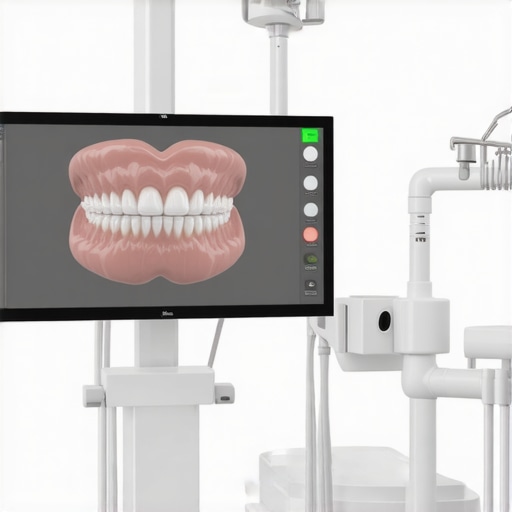
How do I maintain my dental restorations over the next decade?
The secret isn’t just in the brush; it’s in the alignment. If your teeth are constantly migrating, even the best crown will eventually fail. This is why I often discuss how Invisalign transforms family dentistry in 2025 with my crown patients. By locking your bite into place with clear aligners, you provide a stable foundation that prevents the ‘mesial drift’ I mentioned earlier. You can find more about the long-term stability in the ultimate guide to crowns for a healthier smile. Think of it like a retaining wall for your smile; if the ground is shifting, the wall will crack, no matter how strong the bricks are. Furthermore, utilizing the hidden benefits of Invisalign for family dental care in 2025 can ensure that your crown remains a perfect fit by preventing the neighboring teeth from leaning into that space. I want you to try one specific advanced tip this week: switch to ‘tufted’ floss or an interdental brush specifically for the gap around your crown. A study in the Journal of Oral Rehabilitation suggests that interproximal brushes are up to 40% more effective at removing biofilm in wide gaps compared to traditional floss. If you’ve been struggling with sensitivity, checking out why finding the best dentistry in culpeper va usually starts with a 3d cbct scan can help determine if there’s an underlying structural issue causing the trap. Don’t just floss harder—floss smarter.
Lessons I learned while fighting that stubborn back-molar gap
After years of dealing with a crown that felt more like a lint trap than a tooth, I finally realized that “waiting for it to feel better” is just a polite way of letting decay start. Here are a few things I wish someone had told me early on:
- The floss never lies: If your floss doesn’t make that audible ‘snap’ when entering the gap, your contact is loose. No amount of cleaning will change the fact that the space is too wide.
- It’s rarely a “bad dentist” issue: Most of the time, the trap starts because our other teeth are migrating. This is where Invisalign innovations have changed the game, keeping teeth locked in place so crowns don’t have room to fail.
- Gum health is the real prize: We focus on the porcelain, but the gums are the foundation. If you aren’t boosting your oral health confidence by checking those margins, the crown won’t last ten years.
- Technology is your best friend: Always ask for a digital scan. The precision of modern tools far outweighs the old manual impressions I used to get.
#IMAGE_PLACEHOLDER_E#
The small gear shift that saved my dinner parties
I used to carry a wooden toothpick like a secret weapon, but it was actually doing more harm than good. If you want to keep your restoration pristine, here is what I personally use and trust:
- A professional-grade water flosser: It’s the only way to flush the ‘hidden’ area where the crown meets the gum. It’s a core part of top oral health tips for your family’s bright smiles because it removes debris without the hydraulic pressure of a steady stream.
- Interdental brushes: I keep a few in my travel kit. They are shaped like tiny trees and can scrub the vertical walls of the teeth in a way floss simply can’t reach.
- High-quality electric toothbrush: I’ve learned that the safest way to use an electric toothbrush on sensitive teeth is to let the sonic vibrations do the work at the gum line without applying any manual pressure.
Stop settling for a mouth that traps your meals
You shouldn’t have to think twice before ordering a steak or a salad. If your crown is currently acting like a pocket, take it as a sign that your bite needs a little professional attention. Whether it’s a quick chairside adjustment or a shift toward better alignment, the goal of modern family dentistry is to make you forget your dental work even exists. Don’t let a tiny gap turn into a major headache for your jawbone later on. Have you noticed a specific food that always seems to find its way under your dental crown? Let me know in the comments below!