
The safest way to clean a dental crown that feels sticky
I remember sitting at Sunday brunch, mid-mimosa, when my tongue brushed against my molar and I felt it. Not just food, but a tacky, gummy film on my crown that felt like I had chewed a mouthful of Scotch tape. I panicked immediately. Was the cement coming out? Was my crown literally melting away? My first instinct was to grab a toothpick and scrape like a madman—a move I deeply regret now because I ended up with a tiny scratch on my expensive porcelain that I have to live with forever. If you have ever felt that weird, sticky sensation on your dental work, I know the immediate urge is to scrub it into oblivion. But hold your horses. Today, I am going to show you exactly how to lift that residue safely so you do not end up like me, staring at a repair bill you did not plan for.
That Gummy Film Is Usually Just Stubborn Biofilm
Most people assume a crown is invincible because it is made of ceramic or metal, but the reality is that the surface can be quite picky. When you start to get that dirty feeling on your teeth at midday, it is often a sign that a specialized biofilm has attached itself to the restoration. This is not always just a piece of candy; sometimes it is a buildup of proteins and bacteria that find the margin of your crown particularly cozy. In my early days of having dental work, I made the mistake of using a medium-bristled brush with whitening toothpaste to ‘scour’ the stickiness away. Big mistake. According to a study published in the Journal of Prosthodontic Research, dental restorations can actually accumulate biofilm at a significantly faster rate if the surface polish is compromised by abrasive cleaning agents. Basically, by trying to scrub it hard, I made it easier for future gunk to stick!
Is a sticky crown a sign that the restoration is failing?
This is the big fear, right? You feel something tacky and assume the seal has broken. While it is true that your crown might smell bad when you floss if there is a leak, a simple sticky feeling on the top surface is usually just an environmental issue—something you ate or a lack of specific cleaning techniques. However, we cannot ignore it because that stickiness can eventually lead to irritation at the gum line. I have found that why crowns are a game changer in restorative dentistry is exactly because they protect the tooth, but they only work if the surrounding tissue stays healthy. If your crown feels ‘tall’ or sensitive while also being sticky, you might be dealing with something else entirely, like sensitivity to cold months after placement. But for the average ‘gunk’ problem, we need a strategy that involves chemistry, not brute force. Have you ever felt like your crown was ‘fuzzy’ or sticky no matter how much you brushed? Let me know in the comments, because I used to think I was the only one. Now, let’s get into the safe, neighborly way to get that crown sparkling again without the dental office drama.
Stop Scrubbing and Start Dissolving the Residue
The first rule of crown care is that friction is rarely your friend. Think of your crown like a high-end non-stick skillet; if you go at it with steel wool, you destroy the finish. Instead of aggressive brushing, which often leads to receding gums despite your best intentions, you need to use chemical breakdown. When I had that tape-like feeling on my molar, I learned the hard way that baking soda for whitening is often too abrasive for certain dental ceramics. Instead, I started using a dedicated non-alcohol antiseptic rinse. I let the liquid sit over the crown for thirty seconds before even touching it with a brush. This softens the proteins in the biofilm, making them slide off rather than having to be chipped away manually.
Use an Interdental Brush for the Crown Margins
Standard toothbrushes often skim right over the most important part: the margin where the crown meets your natural tooth. This is where the gunk builds its fortress. I used to use a wooden toothpick—a huge mistake that led to bleeding and a tiny scratch on my restoration. Now, I use a soft-bristled interdental brush. It is the easiest way to get sticky food out from under dental work without poking your gums into a frenzy. I remember one specific Tuesday after a particularly chewy steak dinner; the interdental brush pulled out a tiny piece of sinew that my expensive electric brush had missed for three days. The relief was instant, and the sticky sensation vanished immediately.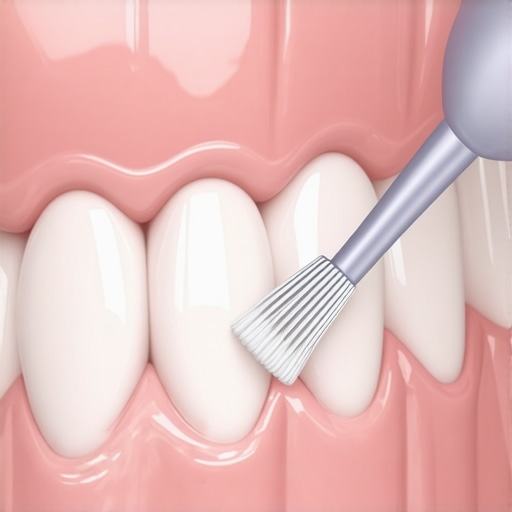
Switch to Low-RDA Toothpaste to Keep the Polish
If your crown feels fuzzy every single morning, your toothpaste might be the culprit. Many whitening pastes use large particles to scrub stains, but these can create microscopic grooves in your crown’s glaze. These grooves are like little parking spots for bacteria. I transitioned to a toothpaste with a low Relative Dentin Abrasivity (RDA) score. This keeps the surface as smooth as glass, which naturally repels that tacky feeling. When you combine this with the safest way to use an electric toothbrush—which involves letting the bristles do the work without pressing down—you create an environment where plaque simply cannot gain a foothold.
The Warm Saltwater Hack for Organic Residue
Sometimes the stickiness is not biofilm; it is literal sugar or starch. If you have just eaten something tacky, a vigorous warm saltwater rinse is more effective than most people realize. The salt acts as a mild solvent, while the warmth increases the solubility of the sugars. This is a classic move taught in modern family dentistry to manage minor irritations. I once had a piece of taffy basically weld itself to my back crown. Instead of prying it and risking pulling the restoration off, I spent five minutes doing warm salt rinses. It dissolved the bond safely, saving me an emergency trip to see a crown expert.
Master the Pull-Through Flossing Technique
When cleaning around a crown, never snap your floss upward. If there is sticky residue at the gumline, snapping the floss can catch the edge of the ceramic and compromise the cement. Instead, always pull the floss through the side. This avoids putting vertical tension on the restoration and is vital for maintaining a healthier smile over the long term. I started doing this after a dental assistant showed me how much more gunk comes out when you wrap the floss in a C-shape and pull it horizontally. It was a messy realization, but seeing that residue on the floss meant it was not staying on my tooth.
Stop Treating Your Crown Like It’s Bulletproof
Most people walk out of the dentist’s office with a new restoration and think they have finally ‘fixed’ that tooth for good. I used to think the same—that the porcelain was a literal suit of armor that protected the underlying tooth from everything. This is a dangerous misconception. While the crown itself cannot decay, the tiny sliver of natural tooth at the gumline, known as the margin, is more vulnerable than ever. In my experience, the biggest mistake is reducing your hygiene vigilance once the ‘fake’ tooth is in place. If you stop being meticulous, you are essentially inviting bacteria to set up camp at the most critical junction of your dental work. When choosing the right crown expert, they should emphasize that the crown doesn’t replace hygiene; it demands a more technical version of it. According to a study published in the Journal of Dentistry, secondary caries—decay that forms right under the edge of a restoration—is the primary reason crowns fail within the first ten years. It isn’t the porcelain breaking; it’s the natural foundation crumbling because we got complacent.
Can a tooth actually rot under a porcelain crown?
This is the nuance most people miss. Because you cannot see the tooth underneath, decay can move silently. This is why that ‘sticky’ feeling is so important; it is an early warning system. If you ignore the biofilm, the bacteria produce acids that seep into the microscopic gap between the cement and your tooth. This is why maintaining a healthier smile requires looking past the surface. I’ve seen cases where a crown looked perfect on the outside, but because the owner didn’t use modern family dentistry techniques like high-frequency rinsing or interdental cleaning, the tooth underneath turned to mush. Have you ever fallen into the trap of thinking your dental work was invincible? Let me know in the comments, because I definitely did until my first ‘surprise’ cavity under a three-year-old crown. 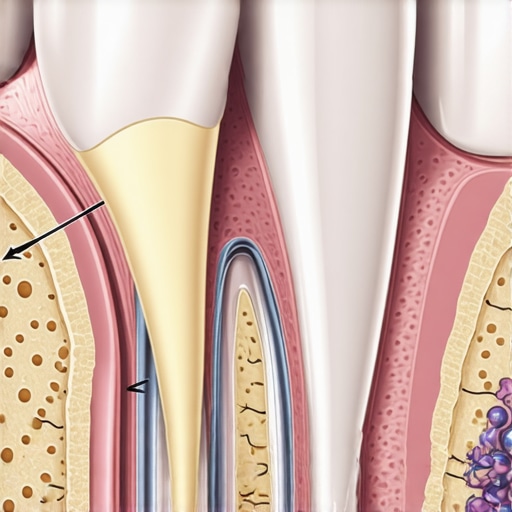
Watch Out for the Whitening Strip Trap
Here is a specific ‘oops’ factor that almost nobody talks about: using DIY whitening products on your dental work. When I felt that sticky film, my first thought was to use a whitening strip to ‘deep clean’ and brighten the area. This is a massive mistake. Whitening agents like carbamide peroxide do nothing to porcelain, but they can significantly irritate the gingival tissue around the crown margin. If those gums become inflamed, they pull back, exposing the root and the margin even further. This often leads to receding gums despite your best intentions. Instead of trying to bleach the stickiness away, you need to focus on stabilizing your oral pH.
The Relationship Between Stress and Crown Sensitivity
Sometimes that weird sensation or ‘tall’ feeling isn’t about gunk at all; it’s about your body’s response to pressure. If you notice your crown feels sensitive or sticky specifically on Monday mornings, you might be clenching your jaw. When you put thousands of pounds of pressure on a restoration, it can slightly inflame the ligament holding the tooth, making it feel ‘different’ or more prone to catching debris. Understanding what that dull ache in your jaw really means can save you from thinking your crown has failed when you really just need a night guard. If you combine stress-induced clenching with an acidic diet, you create a ‘perfect storm’ where the crown’s seal is under constant biological and mechanical attack. Always remember that sensitivity to cold months after placement isn’t always a sign of a bad crown—it’s often a sign that the environment around the crown has changed.
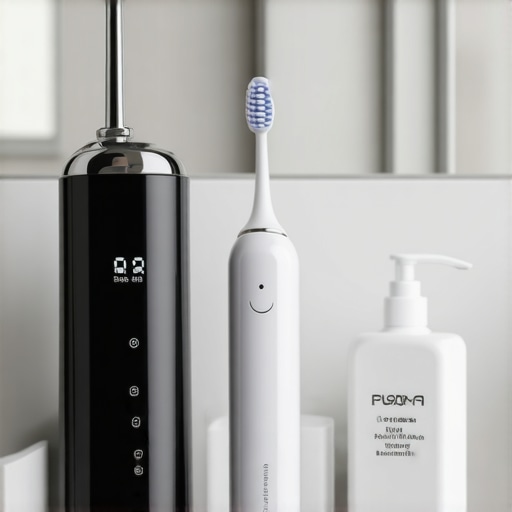
I used to think a toothbrush and some generic floss were the only items I needed in my bathroom cabinet. But after a few scares with gum irritation and that lingering sticky feeling, I realized that high-end dental work requires a high-end toolkit. If you want your investment to last twenty years instead of five, you have to move beyond the basics. Personally, I have become obsessed with the Waterpik. It is not just about convenience; it is about hydrodynamics. When you have a crown, traditional floss can sometimes shred or get caught on the microscopic margin of the restoration. A water flosser flush out the sulcus—the little pocket where your tooth meets your gum—with a precision that manual string just cannot match. It is essentially power-washing your tooth-to-crown interface every single night. This is one of those family dentistry secrets that professionals swear by because it removes the biofilm before it has a chance to calcify into tartar.
The Tech I Actually Use Every Morning
Beyond the Waterpik, I have switched to an electric toothbrush with a pressure sensor. This is non-negotiable. I used to be a ‘scrubber,’ which is the fastest way to wear down the glaze on a crown. My current brush vibrates at a frequency that breaks up plaque without requiring me to press down. It even syncs to an app on my phone to tell me if I missed the back of my molar—the exact spot where most crowns fail. If you are also managing aligners, you should know that cleaning the gunk out of your aligners is just as important as the crown itself, because bacteria from the trays can easily migrate to your dental work. I also keep a stash of specialized tablets to clean your retainers without using harsh chemicals that could otherwise scratch the plastic or the ceramic surfaces of your teeth.
What does long-term maintenance look like for a crown?
Maintenance is a marathon, not a sprint. Over time, the materials in your mouth can undergo ‘fatigue.’ Dr. Gordon Christensen, a world-renowned expert in clinical dentistry and founder of the Clinicians Report, has frequently highlighted that the longevity of a zirconia or porcelain crown is directly tied to the pH balance of the mouth. If your mouth stays acidic from coffee or soda, the cement bond can weaken over a decade. To combat this, I have started using a pH-neutralizing mouthwash. This keeps the environment stable and helps me keep my breath fresh throughout the day. I have even noticed that why your case smells after a few days is often a sign of that same bacterial buildup that attacks your crowns, so I treat my hygiene routine as a holistic system rather than just focusing on one tooth.
A Glimpse into the Future of Dental Care
I predict that in the next five to ten years, we are going to see ‘smart’ crowns equipped with microscopic sensors that can alert your smartphone the second they detect a leak or a change in bacterial acidity. We are already seeing invisalign innovations that use AI to track tooth movement in real-time, so the leap to bio-monitoring dental work is not far off. For now, my best advice is to ditch the manual string and invest in a high-quality water flosser today. It is the single most effective change I have made to stop that ‘sticky’ feeling for good. Go ahead and try it tonight—you will be shocked at what your standard brush was leaving behind.
The Hardest Lessons I Learned Managing My Own Dental Work
After years of trial and error, I realized that the sticky feeling isn’t a failure of the crown, but a failure of my old manual habits. First, consistency beats pressure every single time; you cannot ‘scrub’ away weeks of neglect in one night without damaging your margins. Second, your saliva is your best friend or your worst enemy—if your mouth stays dry or acidic, that sticky biofilm will return within hours regardless of how well you brush. Finally, I learned to stop panicking. A sticky crown is just a signal to adjust your technique, not necessarily a sign that you need a total replacement. By focusing on maintaining a healthier smile through chemistry rather than force, I’ve kept my current restorations looking brand new for over six years.
The Toolkit That Actually Keeps My Crowns Smooth
I stopped buying whatever was on sale and started being tactical. Here is what I actually use: a water flosser for the deep gaps, a pH-neutral mouthwash to stop bacterial acids in their tracks, and a low-abrasivity paste that won’t scratch the porcelain. This combination is part of the family dentistry secrets that truly make a difference. I also recommend checking out expert advice for long-lasting results to ensure you’re using the right materials for your specific type of restoration.
Take the First Step Toward a Gunk-Free Smile
It is easy to feel overwhelmed by the technicalities of dental care, but remember that every small adjustment adds years to the life of your teeth. You’ve invested time and money into your smile, and you deserve to feel confident every time you run your tongue over your teeth. By using modern tools and staying vigilant about biofilm, you can boost your oral health confidence and keep that sticky residue at bay for good. Your dental work isn’t just a fix; it’s a second chance at a perfect smile—don’t let a little biofilm take that away from you. Have you ever noticed that certain foods make your crown feel stickier than others? Let me know in the comments below!