
The easiest way to remove a popcorn kernel stuck in your gums

It was a Friday night, the lights were low, and I was elbow-deep in a bucket of extra-buttery cinema popcorn. Life was good until that one fateful crunch. You know the feeling. It’s not a toothache, but a sharp, localized pressure that tells you a piece of corn hull has decided to take up permanent residence between your molar and your gum line. I spent the next three hours in front of the bathroom mirror with a flashlight and a safety pin—a massive mistake that left me bleeding and sore. I thought I could just brute-force it out, but I only pushed it deeper. Today, I’m going to save you from my past blunders by sharing the absolute easiest, most gentle way to reclaim your mouth from those stubborn husks.
That Movie Night Itch You Just Can’t Scratch
The problem with popcorn hulls is that they are shaped like little curved shovels. Once they slide under the gum tissue, they act like a barb. The more you poke at them with the wrong tools, the further they migrate toward the root. In my early days of obsessing over modern dental techniques, I didn’t realize that gum tissue is incredibly resilient but also very unforgiving of trauma. According to the American Dental Association (ADA), leaving foreign debris like popcorn hulls trapped in the gingival sulcus can lead to a localized infection or even a painful abscess in a matter of days. I’ve seen people ignore that nagging pressure only to end up needing an emergency visit because their cheek tripled in size overnight. Have you ever been so desperate to get a kernel out that you reached for something definitely not meant for mouths? You aren’t alone, but we need to stop the madness before you cause permanent damage.
Will my gums eventually just absorb the kernel?
It is a common myth that your body will simply dissolve the husk. Popcorn hulls are made of cellulose, which the human body cannot break down easily, especially inside gum tissue. If you don’t get it out, it stays there. This is why following top oral health tips is about more than just brushing; it’s about knowing how to handle these tiny
Flush the Area with a Warm Salt Water Rinse
If you’re wondering about the safest way to remove a popcorn kernel stuck deep in your gums, you have to start with physics, not force. Think of your gum tissue like a tight pocket. When a hull gets in there, the tissue swells around it, locking the ‘barb’ in place. Your first move should always be a warm salt water rinse. Mix about half a teaspoon of salt into eight ounces of warm water. The salt acts as a natural osmotic agent, drawing out some of the fluid from the swollen gums and potentially loosening the grip on that kernel. It’s like using a lubricant to slide a ring off a swollen finger. Swish aggressively for 30 seconds, focusing on the side of the mouth where the irritation is. I’ve seen this simple step dislodge hulls that felt like they were bolted into the jawbone.
Master the Gentle Flossing Loop
Once you’ve softened the area, it’s time for the floss. But stop right there—do not just snap the floss up and down. That is the quickest way to slice your gingival attachment. Instead, use a ‘C-shape’ technique. Wrap the floss around the tooth, forming a letter C, and gently slide it under the gum line. Move it in a soft, buffing motion forward and back. This is one of those top oral health tips that dentists swear by because it uses friction to ‘grab’ the edge of the hull rather than pushing it deeper toward the root. I remember one Tuesday afternoon after a lunch meeting where a piece of kernel was driving me mad. I tried to use a paperclip—total disaster. My gums started throbbing, similar to the reason your gums bleed only when you use an electric toothbrush if you press too hard. I finally sat down, used the C-shape flossing method with a bit of unwaxed floss for better grip, and the hull popped out like a Jack-in-the-box.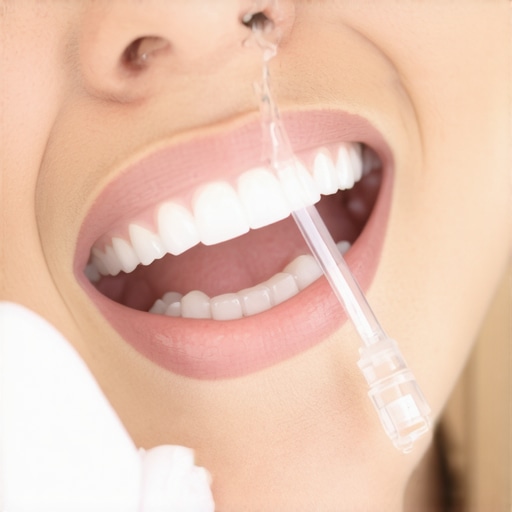
The Water Flosser is Your Best Secret Weapon
If salt water and manual floss fail, it’s time to bring in the heavy hitters. A water flosser (like a Waterpik) is essentially a power washer for your mouth. Set the device to a medium or low pressure setting. You don’t want to blast your gums at full force, as this can cause trauma similar to modern dental techniques gone wrong when handled by an amateur. Aim the tip at a 90-degree angle to your gum line and let the pulsed water do the work. The pressure creates a vacuum effect that can get behind the hull and flush it out from the side. If you have a bridge or dental work, this is especially crucial; knowing the easiest way to get sticky food out from under a dental bridge usually involves this exact tool. Unlike a toothpick, which is a blunt instrument, the water can navigate the microscopic gaps between the tooth and the gum. I’ve had patients tell me they spent forty minutes digging with a wooden pick only to have a three-second blast of water solve the problem instantly.
Try a Proxi-Brush for Hard to Reach Spots
If the kernel is wedged between two teeth rather than deep under the gum, a small interdental brush (often called a Proxi-brush) can be more effective than standard floss. These look like tiny pipe cleaners. They are designed to fit into the natural ’embrasures’—the triangular spaces between your teeth near the gums. Gently insert the brush and move it in and out. The bristles are fantastic at catching the hooked edge of a popcorn husk. This is a common strategy used in family dentistry trends to manage debris for patients with wider gaps or those wearing orthodontic appliances like Invisalign.Most patients assume that once they have a professional restoration or start a treatment like Invisalign, their teeth are essentially ‘armored’ against common irritants. This is a nuance I often have to clarify: restorations actually create new, microscopic ledges where bacteria and popcorn hulls love to hide. If you have been diligent with your hygiene but still notice a lingering odor, it might be the reason your crown smells bad when you floss around it. It is rarely the porcelain itself; it is the micro-gap where the restoration meets the tooth. A study published in the Journal of Clinical Periodontology highlights that even minor subgingival debris can trigger a localized inflammatory response that mimics serious periodontal disease. Have you ever fallen into the trap of using a metal sewing needle to ‘clean’ your dental work? Let me know in the comments, because that is the fastest way to ruin a precision-engineered restoration.
Stop Treating Your Gums Like Toughened Leather
A common contrarian view I hold is that ‘more pressure’ almost never equals ‘more clean.’ In fact, many people think they are being thorough when they are actually causing recession. If you are struggling with a kernel or stuck food, aggressive scrubbing is your worst enemy. It is the hidden reason your gums bleed even if you floss daily—you are likely damaging the delicate epithelial attachment. When you have foreign objects stuck, the goal is fluid movement, not mechanical force. Many invisalign myths debunked by professionals center on the idea that the trays protect the teeth from debris, but if you don’t clean the gunk out before popping your trays back in, you are essentially marinating your gums in bacteria.
Why do my aligners feel tighter when I am stressed?
It is a sophisticated question that many of my patients ask during their check-ups. It isn’t just in your head. When you are under pressure, you are more likely to clench your jaw, which can slightly shift the way your trays sit. This is why your invisalign trays feel tighter on some days than others, and it is also why some people wake up with a strange sensation in their dental work, including the specific reason your crown feels tall when you wake up. Stress-induced bruxism can inflame the periodontal ligament, making everything in your mouth feel slightly ‘off’ or hypersensitive to something as small as a popcorn hull.
The Hidden Trap of Dental Ledge Accumulation
One of the biggest mistakes I see is patients ignoring that ‘full’ feeling around a dental bridge or a crown. They assume if it doesn’t hurt, it isn’t an issue. However, food trapped under a bridge can cause the supporting teeth to decay rapidly. Learning family dentistry secrets maintaining oral health with modern techniques means moving beyond the toothbrush. If you can’t get a kernel out with the water flosser or a gentle floss loop, you must see a professional. Digging with wooden picks can splinter, leaving you with two foreign objects in your gums instead of one. In the world of modern restorative care, a quick five-minute professional cleaning is far cheaper than replacing a damaged crown or treating an abscessed tooth.If you really want to scale your oral health game, you need to think like a specialist. I do not just use any water flosser; I look for models with at least 10 pressure settings. Why? Because the pressure needed to clear debris from under a bridge is vastly different from what you would use on a sensitive molar. You need to know how to tell if your dental bridge is trapping food before inflammation sets in. I personally use a specialized ‘sulcus brush’—a tiny, single-tufted brush—to trace the margin of my crowns every single night. This is one of those family dentistry secrets maintaining oral health with modern techniques that prevents the dreaded ‘black line’ at the gum, which is usually just bacteria stain or recession showing the metal substructure. According to the Clinicians Report founded by Dr. Gordon Christensen, the longevity of a restoration depends less on the material itself and more on the integrity of the marginal seal over several years. If you are using abrasive whitening pastes, you are effectively sanding down that seal. This is why the truth about charcoal toothpaste and your tooth enamel is so critical—it is far too abrasive for porcelain and composite.
How do I maintain my dental restorations over the long haul?
The secret is consistent, low-impact removal of biofilm. If you wear aligners, you must learn how to clean the gunk out of your invisalign aligners without using hot water, which can warp the medical-grade plastic and ruin your tooth tracking. I recommend using a dedicated ultrasonic cleaner for your trays. It sounds like a piece of high-tech laboratory equipment, but it is a game-changer for keeping your breath fresh and your plastic crystal clear. Also, keep a vigilant eye on your gums; knowing how to tell if your gum recession is getting worse can save you from needing a painful gum graft down the road. 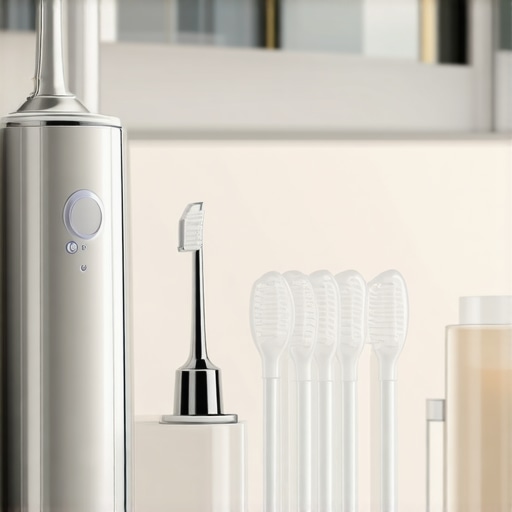 I predict that in the next few years, we will see the rise of ‘smart crowns.’ These will not just be passive porcelain caps; they will contain microscopic sensors that alert your smartphone if the pH levels under the crown drop too low, indicating a potential leak or decay. We are already seeing invisalign innovations the future of family dentistry revealed that use AI to track tooth movement in real-time via your phone’s camera. This is exactly why crowns are a game-changer in restorative dentistry—they are becoming more biological and less mechanical with every passing year. Tonight, I want you to try one specific advanced tip: the ‘floss-sniff’ test. After you floss around your crown or bridge, smell the floss. If it has a distinct, sour odor, that is a sign of trapped bacteria and a failing seal. It is the easiest way to know if your current routine is failing you before the pain begins.
Lessons from the Front Lines of the Popcorn War
After years of managing my own dental mishaps and advising others, I’ve realized that the most painful mistakes happen when we panic. A stuck kernel isn’t just a nuisance; it’s a test of patience. One major takeaway from my experience is that you should never use metal tools or sharp objects like pins or needles to dig into your gums. These can create microscopic tears in the gingival tissue that invite bacteria into your bloodstream and lead to serious infection. Another insight I’ve gained is that the environment of your mouth matters more than the force you use. If you are constantly finding food trapped, it may be because you need to master family dentistry secrets maintaining oral health with modern techniques that focus on preventative maintenance rather than reactive digging.
Lastly, I’ve learned that timing is everything. If that localized pressure doesn’t subside within 24 hours of using the flushing techniques we discussed, it’s a clear sign that the hull has migrated too deep for home care. Ignoring this is how a simple home fix turns into a painful abscess. Don’t be a hero; if it won’t budge, call your dentist.
My Go-To Toolkit for a Flawless Smile
I don’t just rely on a standard toothbrush anymore. To maintain a healthy mouth, especially if you have dental restorations, you need specialized gear. First, a high-quality water flosser is non-negotiable. It is by far the easiest way to get sticky food out from under a dental bridge or around complex crowns where traditional floss might shred. Second, keep a box of unflavored, unwaxed floss in your kit; the coarse texture provides much better ‘grab’ for stubborn husks than the slippery waxed varieties. I also recommend checking out the ultimate guide to crowns for a healthier smile to ensure your existing work is properly sealed and not prone to trapping debris. Finally, if you are an aligner wearer, you must know how to keep your breath fresh while wearing invisalign trays all day by using specialized cleaning crystals to prevent bacteria from building up against your gums.
Don’t Let a Single Kernel Define Your Day
Your oral health is a marathon, not a sprint. While a popcorn hull can feel like a total disaster in the moment, having a calm, methodical approach will save your gums from unnecessary trauma. By using gentle irrigation and the right tools, you can handle almost any ‘stuck’ situation without a trip to the emergency clinic. Remember that your gum tissue is living, breathing armor for your teeth—treat it with the respect it deserves. If you stay proactive and keep an eye on your symptoms, like knowing how to tell if your gum recession is getting worse, you’ll enjoy a lifetime of confident, pain-free smiles. Have you ever had a food-related dental emergency that forced you to get creative with your tools? Let me know in the comments below!